To keep your treadmill running quietly, regularly check and fix belt alignment by ensuring it’s centered and straight, tightening or loosening tension as needed. Lubricate the deck and belt with the right lubricant to reduce friction and wear, following the manufacturer’s instructions. Proper maintenance prevents slipping, noise, and motor strain. Paying attention to these steps will help guarantee smoother, quieter workouts, and if you continue, you’ll discover how to master these maintenance tasks effectively.

Get wellness gear delivered free with Prime
- Fast, free delivery on millions of items
- Prime Video, Amazon Music and more included
- Member-only deals all year
Key Takeaways
- Regularly check and center the belt to ensure proper alignment and prevent uneven wear.
- Adjust belt tension according to the manufacturer’s instructions to reduce noise and slipping.
- Use treadmill-specific lubricant and apply evenly along the deck surface to minimize friction.
- Keep the belt and deck clean to prevent dirt buildup that can cause noise and wear.
- Address issues like slipping or noise promptly, and seek professional repair if problems persist.
As an affiliate, we earn on qualifying purchases.
Why Proper Belt Alignment Is Key to a Quiet, Long-Lasting Treadmill
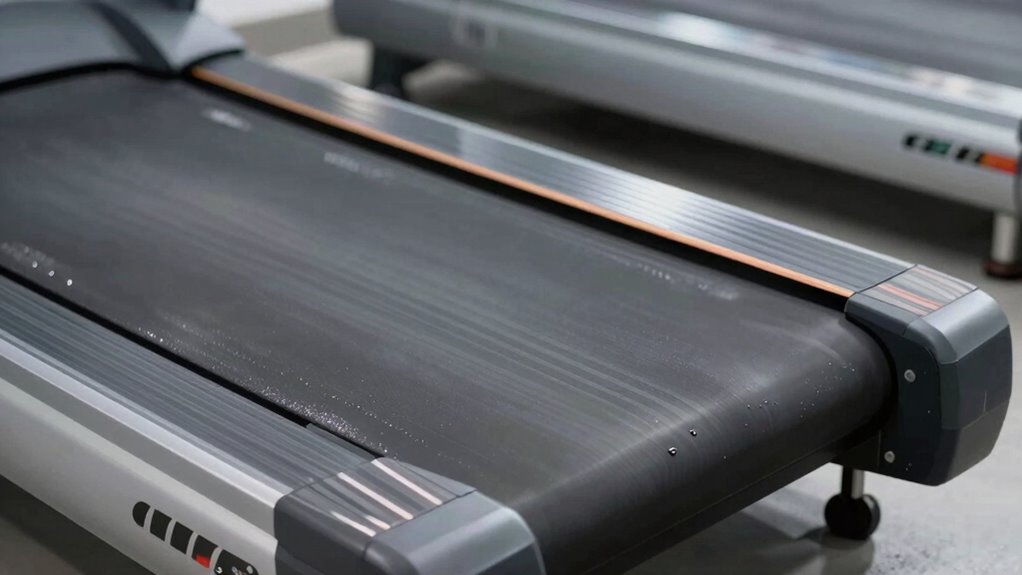
Proper belt alignment is essential because it directly affects your treadmill’s performance and longevity. When the belt isn’t aligned correctly, it can cause uneven wear, increased noise, and strain on the motor. Regular treadmill maintenance includes checking the belt’s position to prevent these issues. Ensuring proper alignment also promotes safety precautions, reducing the risk of the belt slipping or causing injury during use. Misalignment forces the motor to work harder, which shortens the lifespan of your machine. By keeping the belt properly aligned, you maintain smoother operation and quieter runs. Additionally, proper belt tension helps minimize vibrations and noise during operation. Regularly inspecting your drive belt for signs of wear and proper tension can extend the life of your treadmill and improve its overall performance. To further optimize your treadmill, consider understanding treadmill components and their roles in maintaining a quiet, efficient workout.
As an affiliate, we earn on qualifying purchases.
How to Check and Fix Treadmill Belt Alignment Step by Step
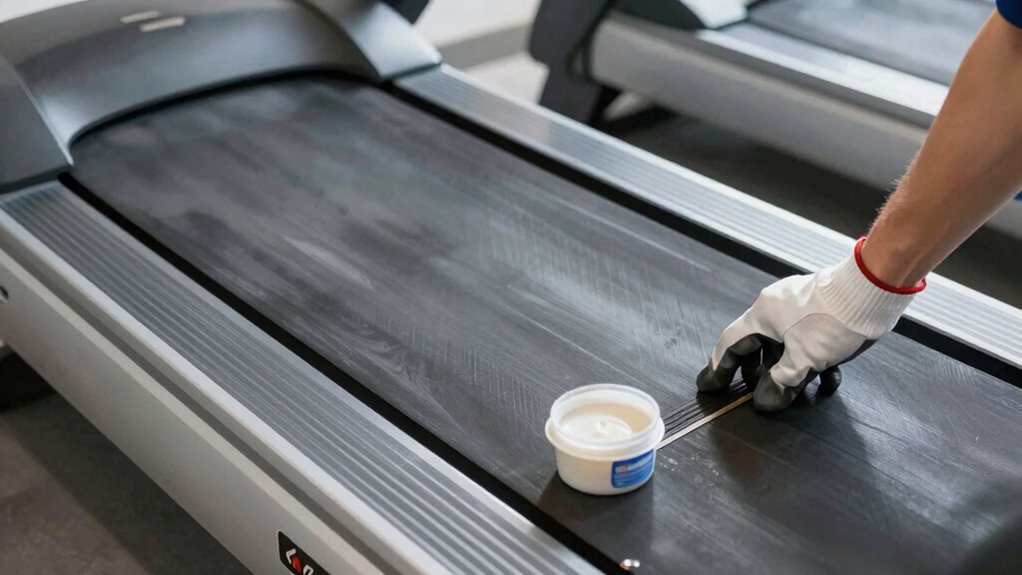
Checking and fixing your treadmill belt alignment is a straightforward process that helps keep your machine running smoothly and quietly. Start by turning off the treadmill and unplugging it. Next, examine the belt to see if it’s centered; it should run straight down the middle of the deck. If it’s misaligned, loosen the tension bolts on the rear roller and gently adjust the belt using the adjustment screws—tighten on the side where the belt shifts away. Ensure the belt tension isn’t too tight, as excessive tension can cause motor noise and strain the motor. After adjustments, retighten the bolts and test the treadmill at low speed. Proper belt alignment and tension reduce motor noise, enhance performance, and contribute to quieter operation. Incorporating connected equipment and fitness apps can also help monitor and maintain optimal treadmill performance over time. Regular maintenance, including belt lubrication, can further prolong the lifespan of your treadmill and keep it running smoothly.
As an affiliate, we earn on qualifying purchases.
Why Regular Lubrication Keeps Your Treadmill Running Smoothly
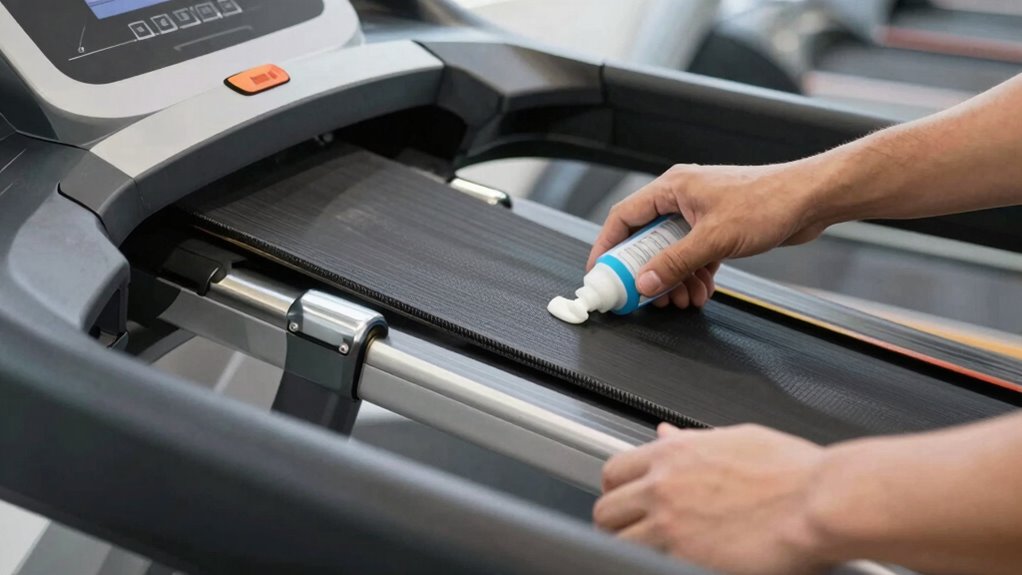
Regular lubrication minimizes friction and reduces wear on your treadmill parts, helping it run more smoothly. It also makes your equipment last longer and keeps noise levels down during use. Staying consistent with lubrication is key to maintaining ideal performance. Additionally, proper maintenance practices ensure your treadmill remains a reliable and safe exercise machine over time. Using the right lubricants specifically designed for treadmill belts can further enhance the longevity and quiet operation of your equipment.
Reduces Friction and Wear
Lubricating your treadmill regularly helps reduce friction between the belt and the deck, preventing unnecessary strain on the motor and moving parts. When the belt is properly lubricated, it moves smoothly, lowering the wear on both the belt and the deck surface. Maintaining correct belt tension is also essential, as loose belts can increase friction and cause uneven wear. Proper lubrication minimizes the need for frequent motor maintenance by reducing the workload on the motor, helping it run efficiently. Less friction means fewer heat build-up and less stress on components, extending the overall lifespan of your treadmill. Regular lubrication combined with attention to belt tension keeps your equipment running quietly and smoothly, saving you money and hassle in the long run. Additionally, understanding the importance of net worth and other personal factors can motivate consistent maintenance.
Extends Equipment Lifespan
Because consistent lubrication reduces friction and minimizes wear on moving parts, it directly contributes to extending your treadmill’s lifespan. Proper lubrication helps protect critical components like the circuit board and motor by preventing overheating and reducing strain during operation. When the belt and deck are well-lubricated, the motor doesn’t have to work as hard, lowering the risk of motor failure. Additionally, regular lubrication makes routine motor maintenance easier, catching issues early before they cause significant damage. Keeping these parts well-maintained ensures your treadmill runs smoothly over time, saving you money on repairs or replacements. Ultimately, consistent lubrication acts as a preventative measure, helping your equipment stay functional and reliable for years to come.
Maintains Quiet Operation
Proper lubrication keeps your treadmill running quietly by reducing friction between moving parts. When you regularly lubricate the deck and belt, you minimize noise, supporting effective treadmill noise reduction. Well-lubricated parts glide smoothly, preventing squeaks and rattles that can disturb your workout. Additionally, maintaining proper belt tension through adjustments ensures the belt runs evenly and quietly. Too loose or tight belts can increase noise levels and cause uneven wear. Regularly inspecting and adjusting belt tension, along with applying lubricant as recommended, helps your treadmill operate smoothly and quietly over time. Consistent maintenance not only enhances your workout experience but also extends the lifespan of your equipment. Keep your treadmill in top shape for quieter, more efficient performance with these simple care practices. Sound mitigation techniques can further help reduce operational noise and create a more pleasant workout environment. Regular lubrication is especially important for preventing component wear, which can lead to increased noise and mechanical issues if neglected.
As an affiliate, we earn on qualifying purchases.
How to Choose the Best Lubricant and Apply It Correctly
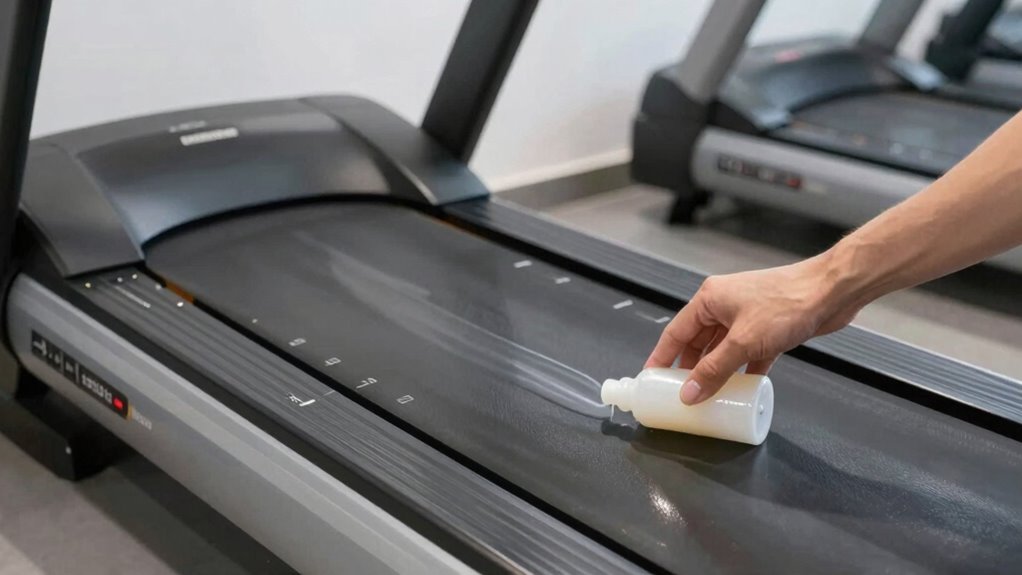
Choosing the right lubricant is essential for keeping your treadmill in top shape, so make sure it’s compatible with your machine. Proper application techniques guarantee even coverage and prevent damage, saving you time and money. Regularly using vetted lubricants designed specifically for treadmills can extend the lifespan of your equipment and improve performance. Let’s go over how to select the best lubricant and apply it correctly for maximum performance.
Selecting Suitable Lubricant
Selecting the right lubricant for your treadmill is crucial to guarantee smooth operation and prevent unnecessary wear. When choosing a lubricant, ensure it’s specifically designed for treadmill belts, as using the wrong type can cause issues during treadmill troubleshooting or complicate belt replacement techniques. Avoid generic oils or household lubricants, which may damage the belt or rollers. Check your treadmill’s manual for recommended lubricants, usually silicone-based or specialized treadmill lubricants. Applying the correct lubricant at the right intervals keeps your belt running quietly and extends its lifespan. Remember, over-lubricating can attract dirt and debris, causing more problems. Always select a high-quality product suited for your treadmill model to guarantee superior performance and avoid costly repairs. Proper application techniques and understanding the appropriate maintenance schedule can further enhance your treadmill’s longevity. Additionally, understanding the lubricant application process helps ensure you apply the correct amount and avoid common mistakes. Choosing a compatible lubricant that matches your treadmill’s specifications is essential for optimal results and avoiding potential damage.
Proper Application Techniques
To guarantee your treadmill runs smoothly, it’s essential to apply lubricant correctly and choose the best product for your machine. First, ensure the belt tension is just right—too tight causes strain, too loose causes slipping. Use a quality lubricant designed for your treadmill type, and apply it evenly along the center of the deck, avoiding the edges. Proper application minimizes wear, reduces noise, and supports motor maintenance. Remember, over-lubricating can attract dust, while under-lubricating increases friction. Here’s a quick guide: Use the recommended lubricant, apply sparingly and evenly, clean before applying, avoid over-lubricating, and regularly check belt tension. Ensuring you understand the importance of belt alignment can significantly improve your treadmill’s performance and lifespan.
Common Belt and Lubrication Problems and How to Fix Them
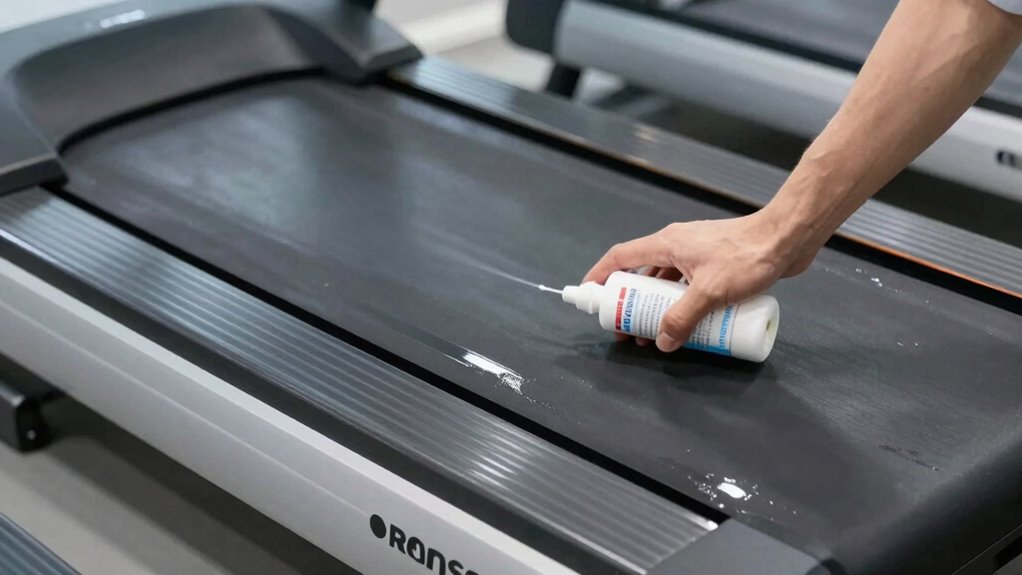
Belt and lubrication issues are common problems that can disrupt your treadmill’s performance. If the belt is too loose, you’ll notice slippage and uneven movement, which also increases belt tension and can cause the motor to work harder, leading to motor noise. Conversely, if the belt is too tight, it puts unnecessary strain on the motor and bearings, causing squeaking or grinding sounds. Insufficient lubrication can result in increased friction, making the belt harder to run smoothly and producing more noise. To fix these issues, regularly check and adjust belt tension according to your treadmill’s manual. Additionally, apply the recommended lubricant evenly across the belt’s surface to reduce friction, quiet the motor, and prolong your treadmill’s lifespan. Proper maintenance not only ensures quieter operation but also preserves the longevity of your equipment. Regularly inspecting and maintaining your treadmill helps prevent more serious mechanical problems, saving you time and money in the long run. Incorporating routine maintenance into your treadmill care can further enhance its performance and durability. Being aware of common treadmill issues can help you address problems promptly before they escalate. For example, understanding how ear wax odor or other odors might indicate underlying issues can help you stay alert to potential malfunctions.
Easy Tips to Keep Your Treadmill Quiet and Running Well Over Time
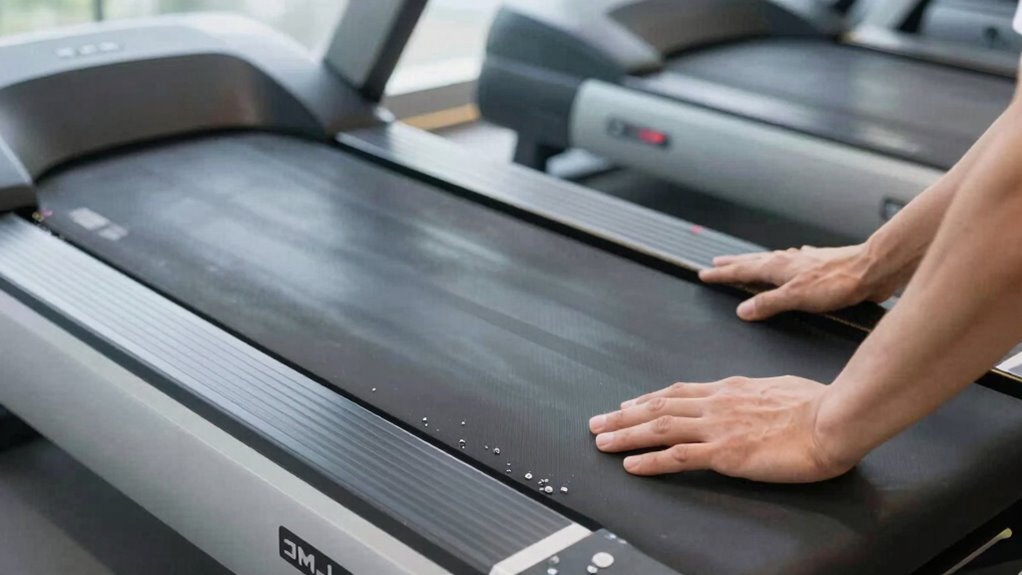
Regular maintenance is key to keeping your treadmill quiet and running smoothly over time. To sustain treadmill safety and user comfort, keep the belt aligned and lubricated regularly. Check the belt tension and adjust if it feels loose or tight. Clean the deck and belt surface to prevent dust buildup, which can cause noise. Lubricate the belt as recommended by the manufacturer to reduce friction and wear. Use the following tips:
| Tip | Benefit |
|---|---|
| Check belt alignment | Prevents slipping and reduces noise |
| Lubricate regularly | Ensures smooth operation, minimizes noise |
| Keep it clean | Maintains efficiency, improves user comfort |
Additionally, understanding the belt tension and how it impacts performance can help you maintain optimal operation. Proper treadmill maintenance routines can extend the lifespan of your equipment and keep it functioning quietly. Regularly inspecting and adjusting these components promotes treadmill longevity and helps prevent unexpected breakdowns. Consistent care, including paying attention to belt alignment, helps keep your treadmill operating quietly and efficiently.
When to Call a Professional for Treadmill Belt or Lubrication Repairs
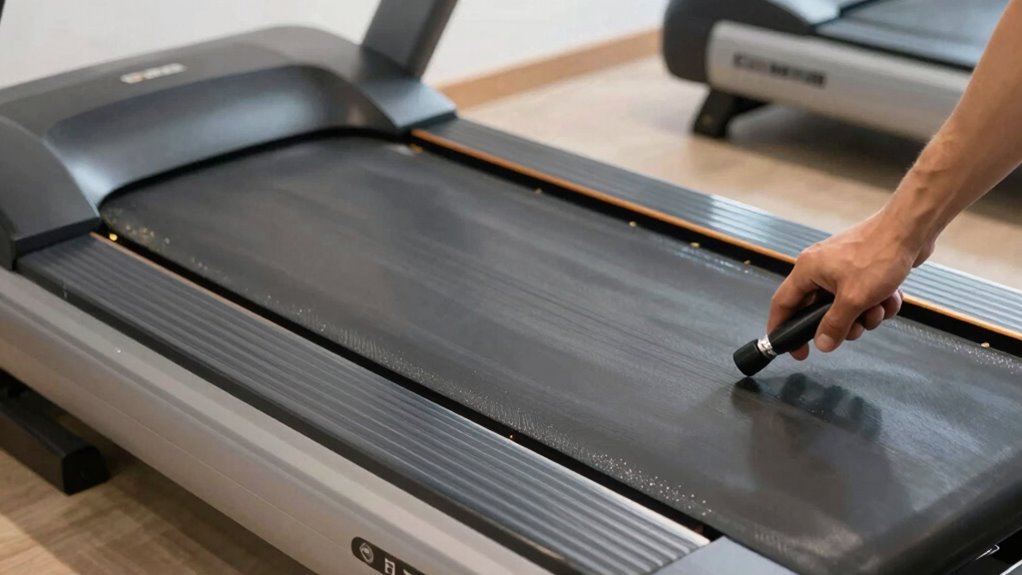
While routine maintenance can often resolve minor issues, there are times when calling a professional becomes necessary. If you notice unusual noises, slipping belts, or inconsistent movement, it’s time to seek expert help. Emergency repairs should be addressed immediately to prevent further damage or injury. Additionally, if your treadmill is still under warranty, attempting repairs yourself could void coverage, so contact the manufacturer or authorized service provider. Don’t ignore persistent problems like belt misalignment, excessive noise, or lubrication issues that don’t improve after basic maintenance. Professionals have the tools and expertise to diagnose and fix complex problems safely and effectively, ensuring your treadmill runs quietly and reliably without risking warranty concerns.
Frequently Asked Questions
How Often Should I Check Belt Alignment?
You should check belt alignment every 3 to 6 months as part of your maintenance schedule. Regularly inspecting the belt helps catch issues early and keeps your treadmill running smoothly. If you notice slipping or uneven wear, it’s a sign to troubleshoot and adjust the belt promptly. Staying consistent with these checks ensures quieter runs and extends your treadmill’s lifespan, making maintenance easier and more effective.
Can Improper Lubrication Damage My Treadmill?
Improper lubrication can seriously damage your treadmill. When you neglect treadmill maintenance, dry or excessive lubrication causes friction, which leads to overheating and wear. This can compromise treadmill safety, resulting in costly repairs or unsafe operation. To prevent this, use the correct lubricant and follow manufacturer instructions. Regularly checking and applying proper lubrication ensures smooth, silent runs and keeps your treadmill in top shape, protecting both your equipment and your safety.
What Signs Indicate Belt Misalignment?
You’ll notice belt misalignment if the treadmill’s belt drifts to one side or feels uneven during your runs. Check for uneven wear or a wobbling belt, which can be caused by incorrect belt tension or motor alignment issues. If the belt isn’t centered or seems loose, it’s a clear sign to adjust the belt tension and make certain the motor is properly aligned. Regular inspections help prevent further misalignment problems.
Are There Eco-Friendly Lubricants Available?
Yes, eco-friendly options for treadmill lubricants are available. You can choose sustainable lubricants made from natural ingredients like plant-based oils, which are safer for the environment and your health. These sustainable lubricants reduce chemical impact and often come in recyclable packaging. Always look for products labeled as eco-friendly or biodegradable, ensuring you maintain your treadmill while supporting environmentally responsible choices.
How Long Does a Typical Belt Lubrication Last?
Like a well-tuned instrument, your treadmill’s belt needs proper care. Typically, belt lubrication lasts between 40 to 50 hours of use, but it depends on belt tension and usage frequency. Regularly check these factors, and if the belt feels dry or makes noise, it’s time to apply more lubricant. Keep up with maintenance, and your treadmill will run smoothly and quietly for miles to come.
Conclusion
By maintaining proper belt alignment and regularly lubricating your treadmill, you can enjoy quieter, more reliable workouts. For example, Sarah neglected her treadmill’s upkeep and faced noisy runs and costly repairs. After following simple steps, she restored smooth operation and extended its lifespan. Remember, a little effort goes a long way—staying proactive with maintenance guarantees your machine stays quiet and runs like new for years to come.
Halloween Picks
halloween
As an affiliate, we earn on qualifying purchases.