TL;DR

Get wellness gear delivered free with Prime
- Fast, free delivery on millions of items
- Prime Video, Amazon Music and more included
- Member-only deals all year
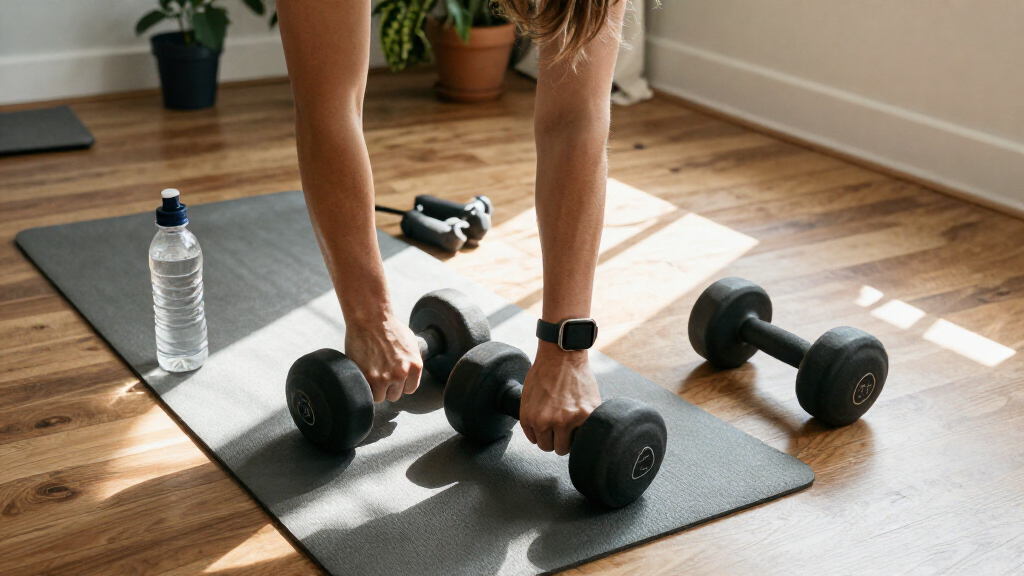
Fit&Well reported a dumbbell routine designed by personal trainer Pippa Sealey for people who want to build strength at home without gym equipment. It includes seven listed movements, arranged in supersets, with prescribed sets, reps, rest periods and tempo for two exercises; the source excerpt cuts off during the final exercise instructions.
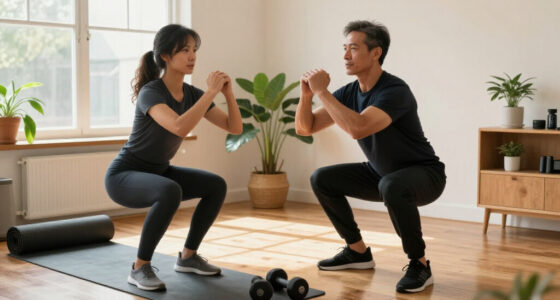
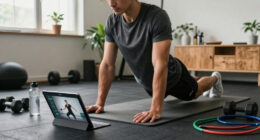
Fit&Well has published a home dumbbell workout put together by personal trainer Pippa Sealey for people seeking a strength routine without going to a gym. The plan uses a pair of dumbbells and body-weight movements, arranging exercises in supersets and prescribing sets, repetitions, rest and controlled tempo.
The routine is organized into exercise pairs. For each superset, the instructions say to complete all repetitions of exercise A, then exercise B, before taking the listed rest and repeating until the prescribed sets are finished. Sealey says supersets can add intensity to a home session, while adding sets, repetitions or a more challenging tempo can make it harder.
The first pair combines deficit calf raises (three sets of 10–12) with single-leg bridges (three sets of 10–12 per side). The second pair is a dumbbell goblet squat (four sets of 12–15) and dumbbell Romanian deadlift (four sets of 10–12). Both use a 3111 tempo: three seconds lowering, a one-second pause, one second to rise and another one-second pause.
The third pair combines a half-kneeling single-arm dumbbell press (three sets of eight to 12 per side) and dumbbell reverse lunges (three sets of 10–12 per side). The final listed movement is a dumbbell side bend, prescribed for three sets of 10–12 per side. The provided source excerpt ends before its instructions are complete and does not show any further exercises or a full-session time estimate.
A Strength Plan Beyond the Gym
The routine offers readers a structured option for training at home with limited equipment. Its combination of squats, hinges, lunges, presses and core work covers several movement patterns, rather than relying on a single exercise or muscle group. That may help people plan a session when gym access is inconvenient, though the source does not report results from a controlled trial or establish that this plan matches every gym program.
Sealey’s emphasis on tempo and supersets describes ways to adjust the challenge without adding machines or heavier equipment. The article says slower repetitions increase time under tension and can help promote muscle growth; that is the trainer’s explanation, not evidence that every reader will gain strength or muscle from this particular routine. Loads, training history, recovery and consistent practice all affect individual outcomes.
adjustable dumbbells for home workout
As an affiliate, we earn on qualifying purchases.
As an affiliate, we earn on qualifying purchases.
How the Routine Is Structured
The Fit&Well report frames the workout as an answer to the limited variety of equipment available at home. Its author says they had shifted to home dumbbell training after moving and not finding a gym they enjoyed, then asked Sealey to create a session intended to mimic a varied gym-based workout using a pair of dumbbells.
In the tempo notation provided, the four numbers describe the duration of each part of a repetition. For the squat and Romanian deadlift, 3111 means lowering for three seconds, pausing for one second, returning upright in one second and pausing again for one second. The other listed exercises do not have tempo prescriptions in the supplied excerpt.
dumbbell workout set for strength training
As an affiliate, we earn on qualifying purchases.
As an affiliate, we earn on qualifying purchases.
Limits of the Published Details
The supplied report excerpt does not provide a publication date, a recommended weekly frequency, a warm-up, or a total workout duration. It also cuts off partway through the side-bend instructions, so the complete movement cues and any subsequent exercises cannot be verified from the material provided.
The report does not specify dumbbell weights or give modifications for different fitness levels, injuries or mobility needs. Its description of muscle-growth stimulus is attributed to the trainer, and no study or measured outcome for this specific routine is cited in the source material. Readers should select manageable loads and stop if an exercise causes pain; people with existing health conditions or injury concerns can seek advice from a qualified professional before starting.
As an affiliate, we earn on qualifying purchases.
Check the Full Exercise Instructions
Readers following the plan should consult the complete Fit&Well article for the full side-bend guidance and any details beyond the supplied excerpt. Before training, they can check that they have a stable step for the deficit calf raises, enough space to move safely and dumbbells they can control through the prescribed repetitions.
The source gives no schedule for when or how often to repeat the workout. Any progression should be gradual: Sealey’s stated options include adding sets, repetitions or a more challenging tempo, but the report does not prescribe a progression plan. Good form and appropriate recovery remain relevant when increasing a session’s demands.
As an affiliate, we earn on qualifying purchases.
Key Questions
What equipment does the workout require?
The report describes a workout built around a pair of dumbbells and body-weight movements. Deficit calf raises also require a stable step or raised surface, according to the instructions.
How does the 3111 tempo work?
For the goblet squat and Romanian deadlift, the notation means taking three seconds to lower, pausing one second, taking one second to rise and pausing one second at the top.
Does every exercise use supersets?
The routine groups movements into pairs, with exercise A followed by exercise B. The instructions call for no rest between the two exercises, then list 60–90 seconds of rest after the second movement in the first three pairs.
How often should someone do this workout?
The supplied source does not give a weekly schedule or say how often to repeat the session. Readers should account for their training experience and recovery rather than treating an unspecified frequency as a recommendation.
Is the complete side-bend guidance available here?
No. The provided excerpt ends during the side-bend instructions. The full Fit&Well report would be needed to verify the remaining form cues or any exercises that follow.
Source: rss
Cold & flu season Picks
humidifiers
As an affiliate, we earn on qualifying purchases.