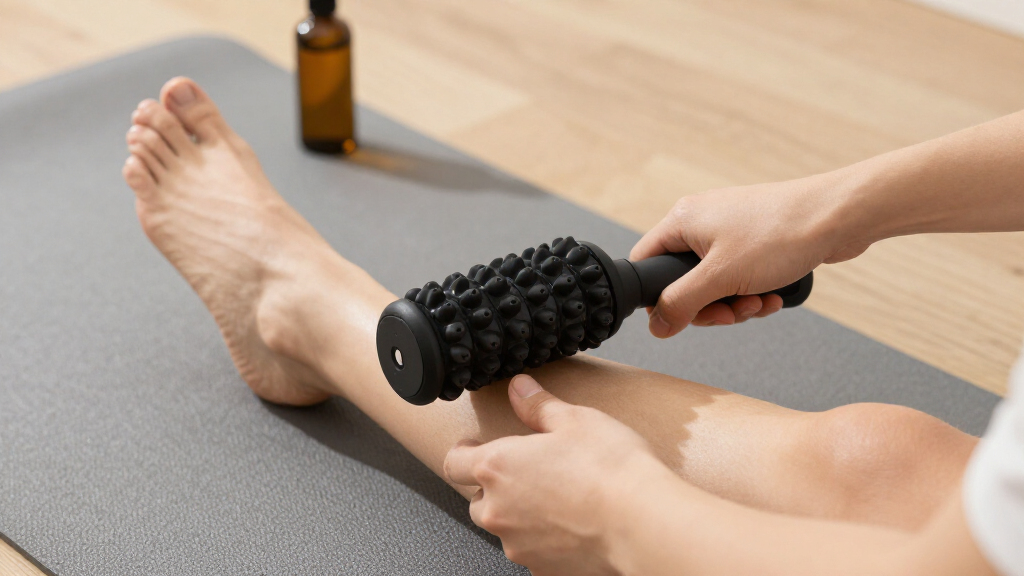
The best electric foam massage roller overall is the Therabody WaveRoller for buyers who want a vibration-focused option from a recognized recovery brand. The VibePro Flow stands out for its five massage modes, while the FITINDEX four-speed roller gives shoppers a simpler way to vary intensity. The main choice is between stronger, adjustable vibration and a gentler, more basic rolling experience; size, surface firmness, and charging needs matter too. Some picks are powered rollers, while the TriggerPoint models are non-vibrating alternatives for people who value foam texture over motorized sensation. Read on for how all nine options compare and which tradeoffs fit your routine.

Get wellness gear delivered free with Prime
- Fast, free delivery on millions of items
- Prime Video, Amazon Music and more included
- Member-only deals all year
Key Takeaways
- Therabody WaveRoller is the premium vibration pick, while its higher-end positioning makes more sense for buyers who will use powered massage regularly.
- VibePro Flow and the five-speed rechargeable roller emphasize adjustability; more modes can help tailor sensation, but they add controls that some beginners may not need.
- FITINDEX offers two distinct entry points: choose the four-speed version if intensity options matter, and compare the simpler model if you prefer fewer settings.
- The 17-inch Vulken and 13-inch TriggerPoint Grid serve different priorities: more length can help with broad body areas, while a shorter roller is easier to store and position.
- Not every useful option is electric: TriggerPoint Grid and CORE trade vibration for straightforward, lower-complexity rolling, with the CORE’s softer compression suited to buyers seeking a gentler feel.
| Vulken 17-Inch Vibrating Foam Roller |  | Best for Broad Muscle Coverage | Length: 17 inches | Weight: 2.1 pounds | Vibration modes: Three intensity levels and auto-pulsating mode | VIEW LATEST PRICE | See Our Full Breakdown |
| FITINDEX Vibrating Foam Roller for Exercise |  | Best for Adjustable Surface Texture | Vibration settings: 5 | Vibration speed: 1,500–3,200 RPM | Density patterns: 3: high, medium, and low | VIEW LATEST PRICE | See Our Full Breakdown |
| FITINDEX Vibrating Foam Roller with 4 Speeds |  | Best for Longer Sessions | Vibration intensity levels: 4 | Vibration speed: 1,400–2,600 RPM | Charging time: About 3 hours | VIEW LATEST PRICE | See Our Full Breakdown |
| VibePro Flow Vibrating Foam Roller – 5-Mode Electric Massage Roller for Deep Tissue Muscle Relief |  | Best for Multi-Zone Vibration | Modes: 5 | Vibration range: 2,000–3,700 RPM | Battery life: Hours of cordless use; exact duration not specified | VIEW LATEST PRICE | See Our Full Breakdown |
| TriggerPoint Performance Therapy Grid Foam Massage Roller (13″) – Blue |  | Best Non-Electric Alternative | Dimensions: 13 × 5.5 inches | Material: EVA foam and plastic core | Recycled content: 80% | VIEW LATEST PRICE | See Our Full Breakdown |
| Electric Massage Roller with Hands-Free Base |  | Best for Hands-Free Massage | Rollers: 8 independent textured rollers | Speed settings: 5 | Direction control: Reverse by double-tapping the power button | VIEW LATEST PRICE | See Our Full Breakdown |
| Rechargeable Vibrating Foam Roller with 5 Speeds |  | Best for Adjustable Workout Recovery | Material: High-density EVA foam | Vibration settings: 5 speeds plus 1 variable-speed mode | Frequency: 800–3600 RPM | VIEW LATEST PRICE | See Our Full Breakdown |
| TriggerPoint CORE Foam Massage Roller with Softer Compression for Exercise, Deep Tissue and Muscle Recovery – 12, 18, 36 inches |  | Best Non-Electric Alternative | Material: EVA foam | Length options: 12, 18, and 36 inches | Package weight: 0.18 kg | VIEW LATEST PRICE | See Our Full Breakdown |
| Therabody WaveRoller High-Density Foam Roller with Vibration |  | Best for App-Controlled Vibration | Size: 12 x 5 in | Material: Hypoallergenic high-density EVA foam | Vibration settings: 5 | VIEW LATEST PRICE | See Our Full Breakdown |
| electric foam massage roller | Material |
|---|---|
| Vulken 17-Inch Vibrating Foam | EPP foam |
| FITINDEX Vibrating Foam Roller | — |
| FITINDEX Vibrating Foam Roller | — |
| VibePro Flow Vibrating Foam Ro | EVA foam |
| TriggerPoint Performance Thera | EVA foam and plastic core |
| Electric Massage Roller with H | — |
| Rechargeable Vibrating Foam Ro | High-density EVA foam |
| TriggerPoint CORE Foam Massage | EVA foam |
| Therabody WaveRoller High-Dens | Hypoallergenic high-density EVA foam |
More Details on Our Top Picks
Vulken 17-Inch Vibrating Foam Roller
The Vulken 17-Inch suits buyers who want vibration across a longer rolling surface for the back or legs. Its three intensity levels and auto-pulsating mode offer more choice than the four-speed FITINDEX 15.8-inch roller, while the 3,800 RPM maximum is the highest stated speed among these five products. At just 2.1 pounds, it is also easier to carry than the three-pound FITINDEX model, and the included bag supports gym or travel use. The tradeoff is a firm EPP build that may feel too intense for sensitive users. Battery life and recharge time are not specified, so I would favor the FITINDEX if predictable runtime matters more than extra length.
Pros:- 17-inch surface covers more of the back or legs per pass than the shorter FITINDEX models.
- Three intensity levels and an auto-pulsating mode provide different vibration options.
- At 2.1 pounds, it is light to carry.
- Includes a carrying bag and rechargeable charging system.
Cons:- Firm construction may feel too intense for beginners or sensitive users.
- Battery life and recharge time are not specified.
Best for: People who want a lightweight vibrating roller with a longer surface for working across the back and legs at home, the gym, or while traveling.
Not ideal for: Massage beginners or sensitive users who may find firm EPP foam uncomfortable, and buyers who need stated battery runtime or charging time.
- Length:17 inches
- Weight:2.1 pounds
- Vibration modes:Three intensity levels and auto-pulsating mode
- Motor speed:Up to 3,800 RPM
- Material:EPP foam
- Color:Black
- Included:Carrying bag and charging system
Our verdict“Choose the Vulken if longer muscle coverage and portability matter more to you than softer pressure or clearly stated battery performance.”
FITINDEX Vibrating Foam Roller for Exercise
The FITINDEX Vibrating Foam Roller for Exercise stands apart by combining five vibration settings with three density patterns, giving buyers more variation in surface feel than the single-material Vulken. That makes it a useful choice for people who want to adjust both vibration and contact across different muscle groups. Its 11.4-inch length is more compact than the FITINDEX four-speed model at 15.8 inches, which helps with portability but gives less room for broad back or leg passes. USB-C charging is convenient, though a five-hour recharge is a real planning drawback; runtime is only just over two hours at the highest speed. I would choose the four-speed FITINDEX instead for longer sessions between charges.
Pros:- Five vibration settings allow a range of intensity choices.
- Three density patterns offer different contact feels for various muscle groups.
- USB-C charging supports convenient portable charging.
- Compact dimensions make it easier to carry than longer rollers.
Cons:- A full charge takes about five hours.
- Runtime is just over two hours per charge at the highest speed.
- Its 11.4-inch length offers less coverage per pass than the longer FITINDEX four-speed model.
Best for: Active users who want several vibration settings and distinct surface textures in a compact roller for targeted recovery or physical therapy.
Not ideal for: People who need a longer roller for broad back or leg coverage, or those who want a quick recharge and extended use at maximum speed.
- Vibration settings:5
- Vibration speed:1,500–3,200 RPM
- Density patterns:3: high, medium, and low
- Charging port:USB-C
- Charging time:5 hours
- Runtime:Over 2 hours at highest speed
- Dimensions:11.4 × 4.7 inches
- Weight:3 pounds
Our verdict“Pick this FITINDEX if compact size and varied surface textures matter more than long coverage or quick charging.”
FITINDEX Vibrating Foam Roller with 4 Speeds
For buyers who prefer fewer charging interruptions, the FITINDEX four-speed roller has the clearest battery advantage here: it provides over four hours of use per charge after about three hours plugged in. That is more than the compact five-setting FITINDEX, whose stated runtime is just over two hours at its highest speed. The 15.8-inch length also offers broader coverage than that smaller model, while the 2.1-pound weight keeps it portable. Its four settings and 1,400–2,600 RPM range are less varied than the Vulken’s three levels plus auto-pulsating mode and higher stated maximum speed. I would choose the Vulken for a longer roller, but this FITINDEX is the better fit when runtime matters most.
Pros:- Provides over four hours of use per charge.
- Four intensity settings allow adjustment for different sessions.
- At 15.8 inches, it covers more area per pass than the compact FITINDEX model.
- Weighs 2.1 pounds, making it relatively easy to transport.
Cons:- Requires about three hours to fully charge.
- Its 2,600 RPM maximum is below the stated maximums for the Vulken and VibePro Flow.
Best for: People who want a rechargeable vibrating roller for regular exercise or recovery sessions and value longer stated runtime between charges.
Not ideal for: Buyers seeking the highest stated motor speed, the widest range of modes, or a particularly compact roller for targeted muscle work.
- Vibration intensity levels:4
- Vibration speed:1,400–2,600 RPM
- Charging time:About 3 hours
- Use per charge:Over 4 hours
- Dimensions:15.8 × 5.8 inches
- Weight:2.1 pounds
- Charging:Rechargeable
Our verdict“Choose this FITINDEX if you want broad-enough coverage and longer stated runtime, rather than the highest vibration speed or most modes.”
VibePro Flow Vibrating Foam Roller – 5-Mode Electric Massage Roller for Deep Tissue Muscle Relief
The VibePro Flow is the most feature-led electric option in this group for shoppers who want multiple modes and a shaped contact surface. Its five modes and multi-zone design offer a more tailored feel than the four-setting FITINDEX, while its stated 2,000–3,700 RPM range reaches higher than that model’s maximum. A 15-minute smart timer adds a defined session limit, and the EVA foam construction is paired with an ergonomic design for rolling different muscle groups. It is shorter than the 17-inch Vulken, however, and the description only says “hours” of cordless use without giving a runtime figure. I would favor the FITINDEX four-speed roller if known battery duration is a priority; the VibePro makes more sense for varied modes and surface zones.
Pros:- Five vibration modes offer several intensity choices.
- Multi-zone surface is designed to target different muscle groups.
- Stated vibration range reaches up to 3,700 RPM.
- 15-minute smart timer provides a set session limit.
Cons:- Battery life is described only as hours, with no precise runtime.
- Requires a 3.5-hour charge before use.
- At 13 inches, it is shorter than the Vulken and the longer FITINDEX model.
Best for: Users who want several vibration modes and a multi-zone surface for targeted recovery across different muscle groups.
Not ideal for: Buyers who need a stated battery runtime, want the longest roller in this group, or prefer a simpler option with clearer charging expectations.
- Modes:5
- Vibration range:2,000–3,700 RPM
- Battery life:Hours of cordless use; exact duration not specified
- Charge time:3.5 hours
- Dimensions:13 × 5.25 inches
- Material:EVA foam
- Timer:15-minute smart timer
Our verdict“Choose the VibePro Flow if multi-zone contact and five modes are more important than a precisely stated battery runtime.”
TriggerPoint Performance Therapy Grid Foam Massage Roller (13″) – Blue
The TriggerPoint Grid is the outlier here: it is not electric and has no vibration modes, so it cannot replace the powered massage of the Vulken or FITINDEX rollers. Its place in this roundup is for buyers who want a firm, textured manual roll without charging or motor noise. The three-dimensional, multi-density surface and hollow core create a different kind of pressure, while 80% recycled materials give it a sustainability detail the electric picks do not specify. At 13 inches, it is compact, but its firm feel may be unforgiving for beginners or sensitive users. I would choose the VibePro Flow for powered, multi-mode relief; the Grid is the straightforward pick for those who prefer direct pressure and no battery upkeep.
Pros:- Multi-density, three-dimensional surface offers varied manual pressure.
- Made with 80% recycled materials.
- Hollow core provides a firm structure for rolling.
- Online instructional videos are included.
Cons:- It is not electric and provides no vibration assistance.
- Firm construction may be uncomfortable for beginners or sensitive users.
- At 13 inches, it offers less coverage per pass than the 17-inch Vulken.
Best for: Experienced foam-rolling users who prefer firm, textured manual pressure and want to avoid charging or relying on a motor.
Not ideal for: Shoppers specifically seeking an electric vibrating roller, or beginners and sensitive users who may find its firm surface too intense.
- Dimensions:13 × 5.5 inches
- Material:EVA foam and plastic core
- Recycled content:80%
- Color:Blue
- Surface:Multi-density, three-dimensional design
- Core:Firm, hollow core
- Included:Access to online foam-rolling instructional videos
Our verdict“Choose the TriggerPoint Grid only if you want firm manual rolling instead of the vibration and adjustable modes offered by the electric picks.”
Electric Massage Roller with Hands-Free Base
The hands-free support frame sets this cordless roller apart from the Rechargeable Vibrating Foam Roller with 5 Speeds: it is designed to roll against the body without requiring you to hold a handheld massager in place. Its eight textured rollers and five speed settings offer adjustable, continuous movement for areas ranging from the back and shoulders to the calves and feet. A double-tap reverses direction, giving you another way to change the massage without a complicated control system. Unlike the TriggerPoint CORE, which relies on your body weight and manual movement, this pick is powered and supported by its frame. The tradeoff is limited product detail: battery runtime, charging time, dimensions, and weight are not stated, so it is harder to judge between sessions or plan around storage.
Pros:- Stable support frame enables hands-free rolling
- Eight textured rollers provide continuous contact
- Five speeds allow adjustments to massage intensity
- Cordless rechargeable design suits use in different locations
Cons:- Battery runtime and charging time are not provided
- Dimensions and weight are not stated, limiting storage and portability planning
Best for: People seeking cordless, hands-free rolling across several body areas without having to move a traditional foam roller manually.
Not ideal for: Buyers who need a known battery runtime, charging time, or compact dimensions before choosing a rechargeable massager.
- Rollers:8 independent textured rollers
- Speed settings:5
- Direction control:Reverse by double-tapping the power button
- Power:Rechargeable battery
- Design:Cordless with stable support frame
- Suggested areas:Back, neck, shoulders, arms, waist, thighs, calves, and feet
Our verdict“Choose this if hands-free, cordless rolling matters more than having detailed battery and size information.”
Rechargeable Vibrating Foam Roller with 5 Speeds
This high-density EVA foam roller combines the familiar body-weight pressure of a standard roller with adjustable vibration, making it a more workout-focused option than the hands-free Electric Massage Roller with Hands-Free Base. Its five speeds and variable-speed mode offer several ways to change the sensation, while the stated 800–3600 RPM range gives a clearer sense of its vibration range than the TriggerPoint CORE, which has no motor. The 4000 mAh battery is listed for approximately four to eight hours per charge, although actual use time may vary with settings. That rechargeable portability suits warm-ups, cooldowns, and recovery away from home. The main compromise is intensity: strong vibration may feel uncomfortable for some people, and the recommended 15-minute session limit makes it less suited to prolonged rolling.
Pros:- Five vibration speeds plus a variable-speed mode
- High-density EVA foam combines rolling pressure with vibration
- 4000 mAh rechargeable battery with approximately 4–8 hours of stated use per charge
- Suitable for targeting muscles and trigger points across multiple body areas
Cons:- Strong vibration may be uncomfortable for vibration-sensitive users
- Recommended session length is limited to 15 minutes
Best for: Active users who want adjustable vibration for short warm-ups, cooldowns, or post-workout sessions and can tolerate firm vibration.
Not ideal for: People sensitive to strong vibration or anyone seeking long, uninterrupted rolling sessions beyond the recommended 15 minutes.
- Material:High-density EVA foam
- Vibration settings:5 speeds plus 1 variable-speed mode
- Frequency:800–3600 RPM
- Battery capacity:4000 mAh
- Battery life:Approximately 4–8 hours per charge
- Recommended session length:Up to 15 minutes
Our verdict“Pick this for portable, adjustable vibration during short workout-recovery sessions, but skip it if strong sensations or session limits are a concern.”
TriggerPoint CORE Foam Massage Roller with Softer Compression for Exercise, Deep Tissue and Muscle Recovery – 12, 18, 36 inches
The TriggerPoint CORE is the outlier in this electric-roller roundup: it has no vibration or motor, so it depends on body weight and manual movement rather than powered massage. That makes it a straightforward choice for buyers who want a softer-compression foam roller and do not need adjustable electric intensity. Compared with the Rechargeable Vibrating Foam Roller with 5 Speeds, it gives up vibration modes and a rechargeable battery, but avoids charging and motor controls altogether. Its 12-, 18-, and 36-inch length options also let buyers select a roller for different storage and body-area needs; the 36-inch version may suit broader coverage better than the Therabody WaveRoller’s 12-inch body. The tradeoff is that the softer feel may not satisfy users seeking firm pressure, and it does not meet the electric foam roller brief as closely as the powered picks.
Pros:- Multi-density EVA foam is designed for targeted compression
- Three length options: 12, 18, and 36 inches
- No battery or charging routine
- Online instructional videos are included
Cons:- No motor or vibration, unlike the electric rollers in this roundup
- Softer compression may not suit users seeking firmer pressure
Best for: People who want a softer-feeling, manually operated foam roller and are willing to trade powered vibration for a simple, charge-free design.
Not ideal for: Buyers specifically seeking an electric massage roller, adjustable vibration, or firm compression for deeper-feeling pressure.
- Material:EVA foam
- Length options:12, 18, and 36 inches
- Package weight:0.18 kg
- Model number:3328
- Manufacturer:Implus Footcare, LLC
- Included components:Foam roller and online instructional videos
Our verdict“Choose the CORE if you prefer simple manual rolling and softer compression; choose a powered option if vibration is a requirement.”
Therabody WaveRoller High-Density Foam Roller with Vibration
The Therabody WaveRoller is the most connected choice here, pairing five vibration settings with Bluetooth app access. That gives it a different appeal from the Rechargeable Vibrating Foam Roller with 5 Speeds, whose modes are built into the roller and do not list app connectivity. Its wave-grooved, high-density EVA surface adds traction and pressure while you roll, while the 12-by-5-inch body stays more compact than the 36-inch TriggerPoint CORE option. The listed battery life of up to 180 minutes helps set expectations, and the carrying pouch makes transport easier. The tradeoff is control: the supplied information says the app is needed to adjust vibration settings, so this is less appealing to buyers who want to change intensity directly on the roller or avoid phone-based setup.
Pros:- Five vibration settings with Bluetooth app connectivity
- Wave grooves add traction and pressure during rolling
- Compact 12 x 5 in size
- Includes a protective carrying pouch and power adapter
Cons:- App is needed to adjust vibration settings
- Battery requires charging and is rated for up to 180 minutes
- Shorter 12-inch length offers less broad coverage than longer roller options
Best for: Buyers who want a compact vibrating roller with app-based setting control and a carrying pouch for transport.
Not ideal for: People who prefer on-device vibration adjustments, want a long roller for broad body coverage, or do not want to rely on an app.
- Size:12 x 5 in
- Material:Hypoallergenic high-density EVA foam
- Vibration settings:5
- Battery:12V internal lithium-ion
- Battery life:Up to 180 minutes
- Connectivity:Bluetooth; Therabody app
- Included accessories:Protective carrying pouch and power adapter
Our verdict“Choose the WaveRoller if app-controlled vibration and a portable form matter more than direct controls or full-length coverage.”

How We Picked
I ranked these rollers around the choices that matter specifically for powered self-massage: how adjustable the vibration is, whether the roller’s length and surface suit different body areas, how easy the controls and charging routine appear to manage, and whether the design gives a clear reason to choose it over a simpler roller. I also weighed the practical tradeoffs of carrying, storing, and maintaining a motorized device. Where specifications were not supplied, I avoid assuming a particular battery life, vibration strength, noise level, or durability.
The powered models lead because they answer the electric-roller search directly, with the WaveRoller and VibePro Flow distinguished by their vibration-focused features and the FITINDEX options by their accessible controls. The Vulken and rechargeable five-speed model earn places for their size or range of settings, but those features only help when they match the user’s routine. TriggerPoint Grid and CORE rank as useful non-electric alternatives rather than direct powered rivals: they suit buyers who prefer simpler rolling and do not need vibration. This order reflects category fit and decision usefulness, not a claim that one device works best for every body.
| electric foam massage roller | Material |
|---|---|
| Vulken 17-Inch Vibrating Foam | EPP foam |
| FITINDEX Vibrating Foam Roller | — |
| FITINDEX Vibrating Foam Roller | — |
| VibePro Flow Vibrating Foam Ro | EVA foam |
| TriggerPoint Performance Thera | EVA foam and plastic core |
| Electric Massage Roller with H | — |
| Rechargeable Vibrating Foam Ro | High-density EVA foam |
| TriggerPoint CORE Foam Massage | EVA foam |
| Therabody WaveRoller High-Dens | Hypoallergenic high-density EVA foam |
Factors to Consider When Choosing Electric Foam Massage Rollers
Before choosing an electric foam roller, I would start with how and where it will be used, not the number of speed settings. A motor can add another sensation, but it cannot make an uncomfortable shape or an awkward size work for your routine.
Match Vibration Control to Your Comfort Level
More settings are useful when you want to adjust gradually between a warm-up and focused recovery, but they are not automatically better. A first-time user may find a few clear levels easier to manage than a long list of modes. If you are sensitive to pressure or vibration, start gently and avoid treating a higher setting as a better result. Check whether the controls can be reached while positioned on the roller, since difficult controls can interrupt a session. Choose a simpler model if you expect to use one familiar setting most of the time.
Choose Length for the Areas You Actually Roll
A longer roller can provide a broader platform for the back and legs, while a compact one may be easier to position around smaller muscle groups and store at home. Buyers sometimes choose the longest model assuming it will be the most versatile, then find it awkward to carry or use in a limited space. Think through your usual routine and the space needed to roll safely on the floor. If you travel with recovery gear, dimensions and weight may matter more than extra coverage. A shorter roller can still work well when your sessions focus on targeted areas.
Treat Surface Firmness as a Comfort Choice
The roller’s foam and surface shape affect how pressure feels, independent of the vibration motor. Softer compression may feel more approachable for a new user or someone who dislikes intense pressure, while firmer textures can feel more focused. A common mistake is choosing the most aggressive-looking surface because it seems more effective. Foam rollers do not need to cause sharp discomfort to be useful, and personal tolerance varies. If you are unsure, prioritize a surface you can use consistently over one that promises a more intense sensation.
Account for Charging and Motorized Upkeep
Electric models add charging and electronic components to a tool that would otherwise need little attention. Before buying, check the manufacturer’s instructions for charging, cleaning, and storage, and confirm that the charging method works with your routine. A powered roller left uncharged may not be ready when you want it, while a non-electric option is always available without battery planning. Do not assume that every model offers the same runtime or charging speed unless those details are stated. If low maintenance is your priority, the TriggerPoint Grid or CORE may be a more practical fit.
Decide Whether You Need an Electric Roller at All
Vibration is an added feature, not a requirement for foam rolling. It can appeal to buyers who want a powered sensation, but it also adds controls, charging, and another potential point of failure compared with a basic roller. If your main goal is a simple rolling surface, a non-electric TriggerPoint model may meet that need with less setup. If you already know you want vibration, compare the available modes and form factor rather than selecting by the word ‘electric’ alone. This distinction helps prevent paying for a motor you rarely use or skipping a powered model that suits your routine.
Frequently Asked Questions
Should I choose the Therabody WaveRoller or the VibePro Flow?
I would compare them by what you value more: a vibration-focused premium option or an explicit range of massage modes. The WaveRoller is the roundup’s premium powered pick, while the VibePro Flow is described with five modes for buyers who want settings to choose between. Neither description alone establishes which one feels stronger or lasts longer, so check verified specifications for runtime, charging, and dimensions before deciding. If you expect to use several modes, the VibePro may better match that preference. If brand positioning and a dedicated vibration roller matter more, the WaveRoller is the stronger shortlist candidate.
Is a four-speed or five-speed roller worth choosing over a simpler model?
Extra speeds are useful when you want to adjust sensation across different body areas or build up gradually. They matter less if you usually select one setting and keep it there. More controls can also make a device less straightforward, particularly for someone new to vibration massage. Compare the FITINDEX four-speed model and the rechargeable five-speed roller by checking their handling, size, and charging details, not just the number of settings. I would favor the simpler option when easy operation matters more than fine adjustment.
Can I buy a TriggerPoint roller if I specifically want an electric massager?
The TriggerPoint Grid and CORE are non-electric choices, so they do not provide motorized vibration. They are included as useful comparisons for shoppers deciding whether they need powered massage or simply want a foam roller for pressure and movement. The Grid offers a shorter 13-inch format, while the CORE is offered in multiple lengths and has softer compression. If vibration is a firm requirement, focus on the powered models in this list. If you are open to a simpler tool with no charging routine, either TriggerPoint option may be a better match.
How should I choose between a 17-inch roller and a shorter model?
Start with the body areas you plan to work and the space available for rolling. A 17-inch roller may offer more room for positioning across broad areas, while a shorter model can be easier to carry, store, and maneuver for targeted work. Length alone does not tell you whether the roller’s firmness or surface will feel comfortable. Measure your storage space and consider whether you will use it at home, at a gym, or while traveling. If portability matters more than broad coverage, a shorter option is often the more practical choice.
Is an electric roller a good choice for a beginner?
It can be, provided the user can start at a comfortable intensity and operate the controls easily. A beginner does not need the most settings or the strongest sensation; clear controls and a tolerable foam surface are more useful starting points. The FITINDEX models are worth comparing if straightforward speed selection appeals, while the softer-compression TriggerPoint CORE is a non-electric alternative for someone who prefers gentler pressure. Begin with short, light sessions and stop if the sensation feels painful or unusual. Buyers with medical concerns should ask a qualified health professional before using a massage device.
Conclusion
For the best overall powered choice, I would start with the Therabody WaveRoller; it is the clearest premium vibration pick in this lineup. For value and straightforward adjustability, compare the FITINDEX four-speed roller with the simpler FITINDEX version and choose based on whether extra settings will see regular use. For beginners, the softer-compression TriggerPoint CORE is a gentler non-electric starting point, while the FITINDEX models are better candidates for someone set on vibration. For a specific need, pick the 17-inch Vulken for a longer format, the VibePro Flow or five-speed rechargeable model for varied settings, and the 13-inch TriggerPoint Grid for a compact, non-electric option. My short version: buy powered massage if vibration is central to your routine; otherwise, keep the choice simpler and prioritize comfort, size, and ease of use.
Cold & flu season Picks
humidifiers
As an affiliate, we earn on qualifying purchases.