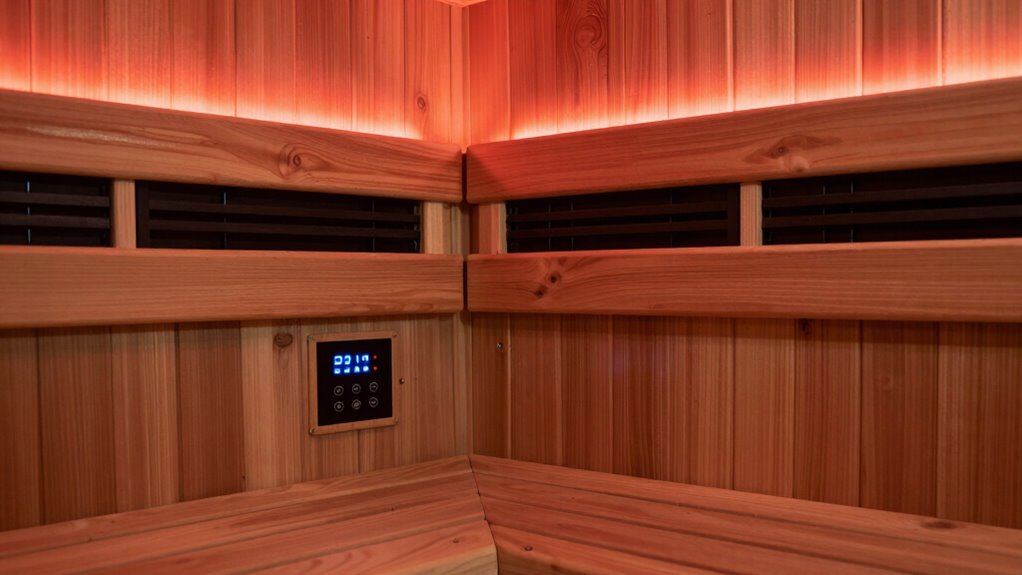

To maintain your infrared sauna, regularly clean the wooden surfaces with a soft cloth and mild cleaner to prevent dirt buildup, and apply wood sealant as needed to safeguard the material. Check the heater for signs of damage, ensure all wiring is secure, and clean dust from the surfaces. Finally, improve airflow by ventilating properly after sessions, which helps reduce moisture and odors. Keep these tips in mind to keep your sauna safe and in top shape.

Get wellness gear delivered free with Prime
- Fast, free delivery on millions of items
- Prime Video, Amazon Music and more included
- Member-only deals all year
Key Takeaways
- Regularly clean wood surfaces with mild, non-abrasive cleaners and apply protective sealant to maintain appearance and durability.
- Conduct visual and performance inspections of infrared heaters, checking for damage, secure wiring, and even heat distribution.
- Promote proper ventilation by opening vents or doors after use and ensuring vents are unobstructed to reduce moisture and odors.
- Monitor components like sensors and control panels for malfunctions, performing routine checks to prevent operational issues.
- Perform routine cleaning, humidity control, and component inspections to extend sauna lifespan and ensure safe, effective operation.
As an affiliate, we earn on qualifying purchases.
How to Clean and Maintain Your Infrared Sauna’s Wooden Interior
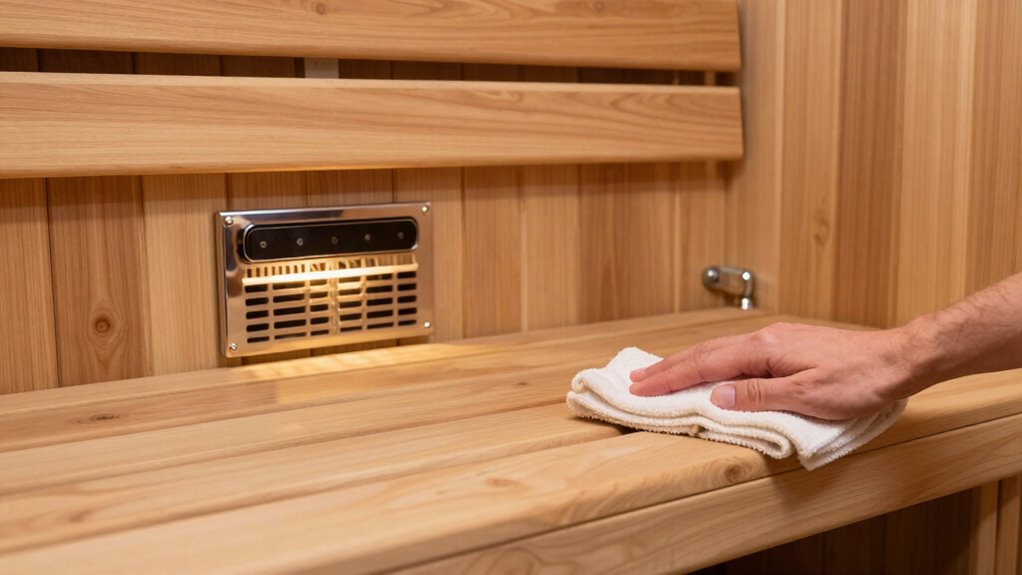
Maintaining the wooden interior of your infrared sauna is essential for ensuring its longevity and a pleasant experience. Regular wood cleaning helps remove sweat, oils, and dirt that can accumulate over time. Use a soft cloth or sponge with a mild, non-abrasive cleaner designed for wood surfaces. Avoid harsh chemicals that can damage the finish. Moisture control is equally important; excessive humidity can cause wood warping or mold growth. Keep the sauna well-ventilated after use, and wipe down the interior to remove excess moisture. Consider using a wood sealant or protective oil periodically to preserve the wood’s natural appearance and resistance. Incorporating proper maintenance techniques can further extend the life of your sauna. Focusing on proper wood cleaning techniques and moisture control will help your sauna stay in top shape for years to come. Regular inspections and understanding wood preservation methods can also contribute to maintaining optimal conditions inside your sauna. Additionally, monitoring the heater performance ensures consistent heat output and prevents potential damage.
infrared sauna heater inspection kit
As an affiliate, we earn on qualifying purchases.
As an affiliate, we earn on qualifying purchases.
How to Check and Service Your Sauna’s Infrared Heater Safely
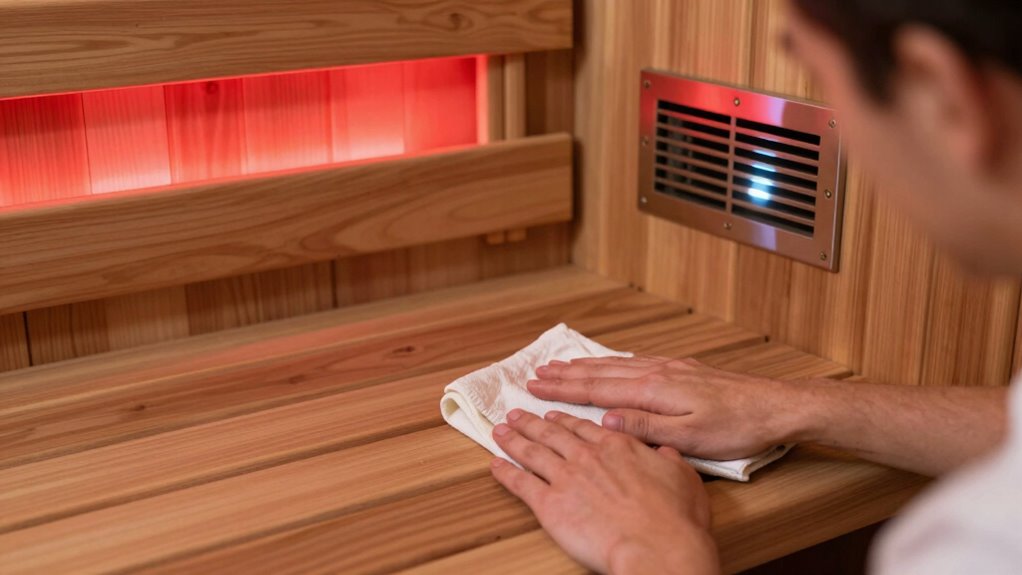
Since your sauna’s infrared heater is the core component responsible for generating heat, it’s important to regularly check and service it to guarantee safe and efficient operation. Start by inspecting for signs of damage or wear, such as cracks or scorching. Ensure the wiring is intact and connections are secure. Test the heater to verify it heats evenly and reaches the desired temperature. Always unplug the sauna before servicing. Use this table as a quick reference:
| Step | Action |
|---|---|
| Visual Inspection | Look for damage, cracks, or scorching |
| Check Wiring | Ensure connections are tight and intact |
| Test Heating Performance | Confirm even heat distribution and temperature accuracy |
| Clean Heater Surface | Remove dust and debris for excellent heater performance |
| Reassemble and Test | Power on and verify safe operation |
Proper maintenance boosts infrared heater safety and keeps your sauna running at peak performance. Regular inspections can help identify potential issues early, preventing costly repairs and ensuring your sauna remains safe to use.
As an affiliate, we earn on qualifying purchases.
How to Ventilate Your Sauna Properly to Keep It Safe and Fresh
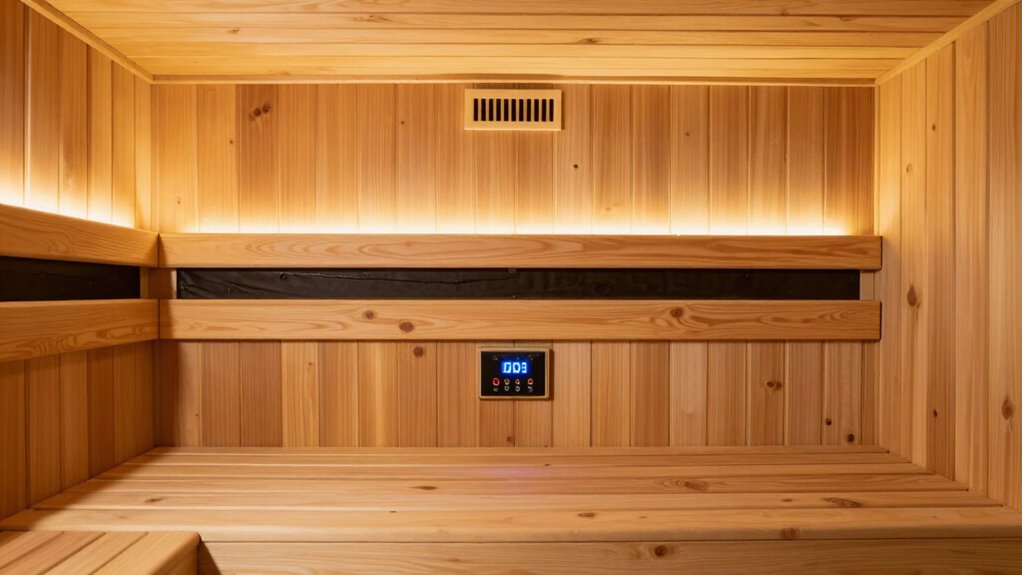
Proper ventilation is essential for keeping your sauna safe, comfortable, and free of excess moisture. Good airflow improves air quality, helping to remove stale air and prevent mold or mildew buildup. To ventilate effectively, open the vents or doors after each session to let fresh air in and humid air out. Install adjustable vents that allow you to control airflow based on your needs. Proper ventilation also aids in odor control by reducing the accumulation of lingering smells caused by sweat, lotions, or cleaning products. Keep the vents unobstructed and clean to ensure continuous airflow. Regularly ventilating your sauna helps maintain a healthy environment, preserves the wood, and ensures you enjoy a fresh, odor-free experience every time. Understanding how deep-sky imaging setups are compared can help you optimize your ventilation system for better airflow and equipment longevity. Additionally, ensuring proper air circulation can prevent the buildup of moisture, which is vital for maintaining the integrity of the wood and avoiding structural issues. Incorporating ventilation design principles can further enhance airflow efficiency and overall sauna safety, especially when considering airflow optimization techniques for improved performance.
sauna cleaning and maintenance tools
As an affiliate, we earn on qualifying purchases.
As an affiliate, we earn on qualifying purchases.
Signs Your Sauna Components Need Repair or Replacement
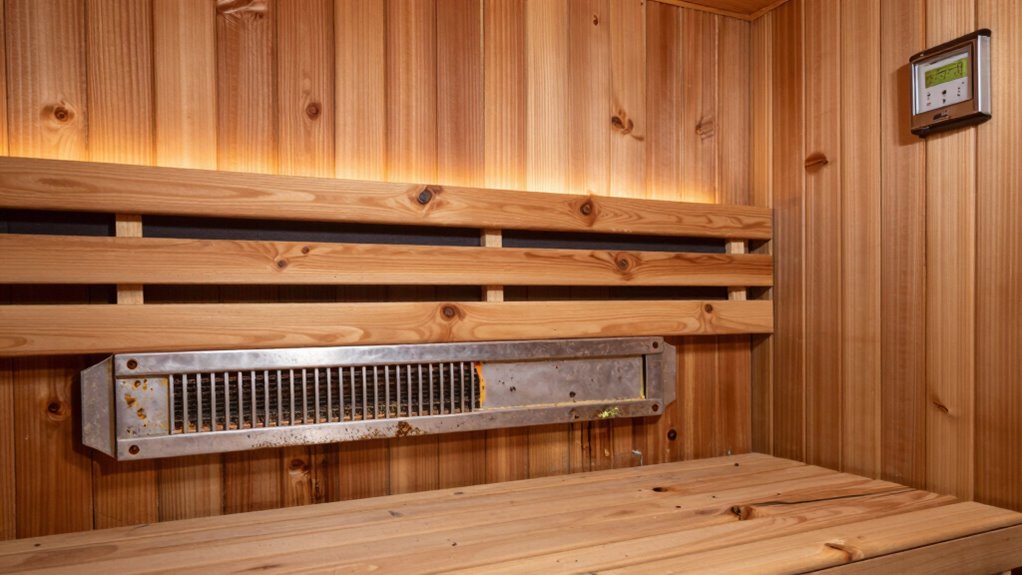
Your sauna components will start showing signs when they need repair or replacement, and recognizing these early helps prevent further damage. Watch for sensor malfunctions, which can cause inconsistent heat or safety shutdowns. Control panel issues may manifest as unresponsive buttons or incorrect readings. If you notice irregular temperature displays or the heater turns on/off unexpectedly, it’s time to inspect your system. Regular ventilation checks can also prevent buildup of excess heat or moisture that may damage components over time. Additionally, proper maintenance routines can extend the lifespan of your sauna parts and ensure safe operation. Being aware of the essential oils that support health can also help you maintain a relaxing and beneficial sauna experience. Monitoring the temperature sensors regularly can help detect early issues before they lead to more costly repairs. Incorporating smart sensors that provide real-time data can further enhance your sauna’s safety and efficiency.
Routine Maintenance Tips to Keep Your Infrared Sauna in Top Shape
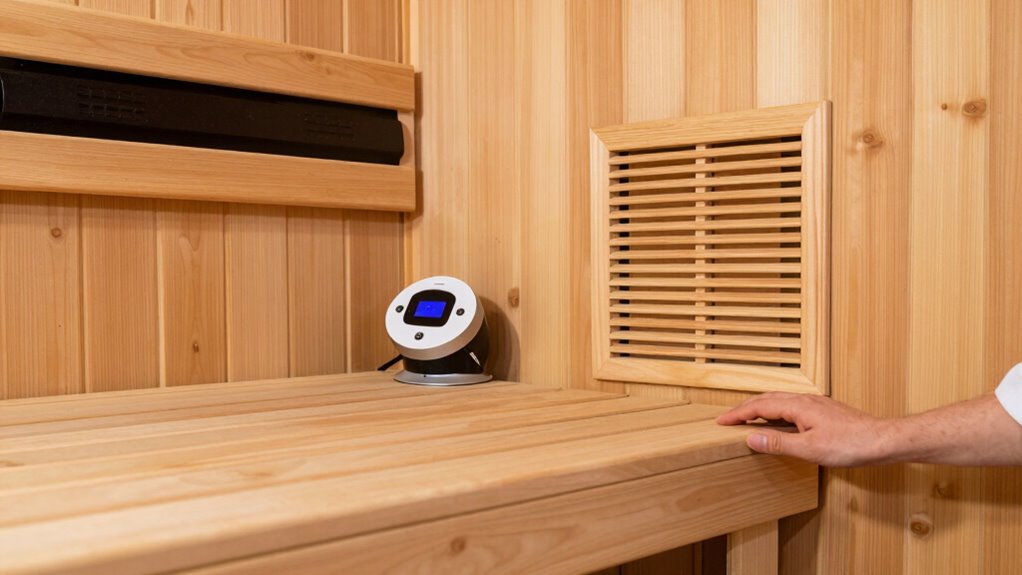
Regularly maintaining your infrared sauna guarantees it performs safely and efficiently for years to come. Keep the interior clean by setting a consistent cleaning frequency, such as wiping down surfaces after each use and deep cleaning weekly. This prevents dirt, sweat, and bacteria buildup. Humidity control is also essential; ensure proper ventilation to prevent excess moisture, which can damage wood and components over time. Use a hygrometer to monitor humidity levels, and adjust ventilation or use dehumidifiers if needed. Regular inspections of heating elements, electrical connections, and wood surfaces help catch issues early. By sticking to a routine of cleaning and humidity management, you’ll preserve your sauna’s appearance, ensure safe operation, and extend its lifespan. Incorporating routine maintenance checks can further help identify potential problems before they escalate.
Frequently Asked Questions
How Often Should I Apply Protective Wood Treatments to My Sauna?
You should apply protective wood treatments to your sauna every 6 to 12 months to guarantee proper wood preservation. The treatment frequency depends on how often you use your sauna and the environmental conditions. Regularly inspect the wood for signs of wear or damage, and reapply treatment as needed. This maintenance helps maintain the sauna’s durability, prevents cracking, and keeps the wood looking great over time.
What Are the Best Materials for Sauna Ventilation to Prevent Mold?
For sauna ventilation, choose materials like stainless steel or treated aluminum vents, which resist moisture and prevent mold growth. Good ventilation helps manage humidity control, reducing excess moisture that can cause mold. Incorporate proper sauna insulation around vents to maintain airflow without losing heat. Regularly check and clean vents to guarantee they function well, keeping your sauna fresh, dry, and mold-free.
How Can I Tell if My Heater Is Functioning Efficiently?
You can tell if your heater is functioning efficiently by monitoring its performance and energy efficiency. If it heats up quickly, maintains consistent temperature, and uses less power over time, it’s working well. Check for uneven heating or strange noises, which could indicate issues. Regularly inspecting the heater and ensuring proper ventilation helps maintain its performance and keeps your sauna energy-efficient and safe.
Are There Specific Cleaning Products Safe for Infrared Sauna Components?
For sauna cleaning, use gentle, non-abrasive cleaning products that are safe for infrared sauna components. Avoid harsh chemicals, as they can damage the wood and heating elements. Look for products specifically labeled as safe for saunas or designed for delicate electronics. Always check the label for product safety, and test a small area first. Regular cleaning with the right products helps maintain your sauna’s performance and longevity.
How Do Seasonal Changes Affect Sauna Maintenance Routines?
Seasonal temperature shifts and humidity fluctuations directly impact your sauna maintenance routines. You should regularly inspect and adjust ventilation to prevent moisture buildup, clean and treat wood surfaces to combat dryness or swelling, and check heater functionality as seasonal changes can stress components. By staying proactive, you guarantee your sauna remains safe, comfortable, and well-maintained year-round, regardless of seasonal variations.
Conclusion
Regular maintenance is key to keeping your infrared sauna safe and enjoyable. By cleaning the wood, checking the heater, and ensuring proper ventilation, you’ll extend its lifespan and enjoy healthier sessions. Did you know that neglecting routine upkeep can reduce your sauna’s efficiency by up to 30%? Staying proactive means fewer repairs and more relaxing, rejuvenating experiences. Keep up with these simple steps, and your sauna will remain a warm, safe haven for years to come.
Halloween Picks
halloween
As an affiliate, we earn on qualifying purchases.