
To find your neutral spine, focus on maintaining the natural curves of your neck, upper back, and lower back by engaging your core muscles and aligning your head, shoulders, and hips. Keep your chin parallel to the ground, ears aligned with shoulders, and avoid arching or rounding your back excessively. Use visual cues like mirrors or tactile feedback from your hips and ribs. Mastering these tips will help you stay safe and healthy, and there’s more to discover if you keep exploring.
Key Takeaways
- Identify bony landmarks like hips, ribs, and head to assess proper spinal alignment.
- Engage core muscles to support and stabilize the spine during posture checks.
- Use mirrors or tactile cues to observe and correct your head, shoulders, and pelvis position.
- Maintain gentle inward curves in the neck and lower back, avoiding excessive arching or rounding.
- Practice posture awareness exercises regularly to reinforce understanding and maintenance of neutral spine.
Understanding the Importance of a Neutral Spine

Understanding the importance of a neutral spine is crucial because it helps prevent injuries and promotes efficient movement. When you maintain a neutral spine, you support spinal flexibility, allowing your back to move freely without strain. This position also helps correct muscle imbalance, ensuring that no muscle group overcompensates, which can lead to pain or injury. If your spine isn’t in a neutral position, certain muscles may tighten while others weaken, creating instability and increasing the risk of strains. By focusing on maintaining a neutral spine, you encourage balanced muscle engagement and preserve spinal health. This foundation is essential for proper movement, whether you’re lifting, stretching, or exercising, reducing the likelihood of long-term damage and enhancing overall performance.
Identifying Your Natural Spinal Curves

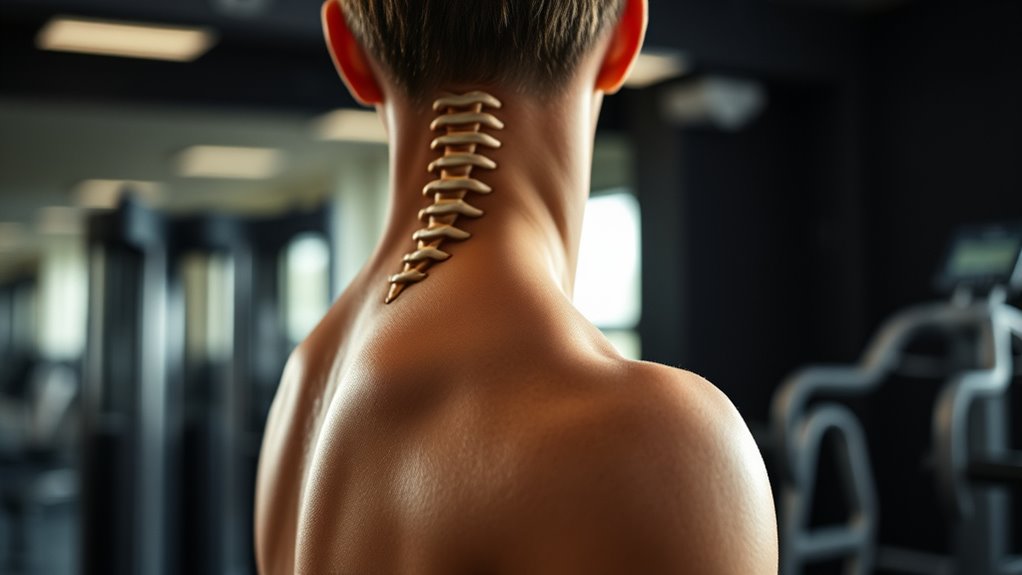
Your natural spinal curves are essential to maintaining a healthy and balanced posture. To identify them, pay attention to how your spine naturally aligns when standing or lying down. Spinal flexibility varies from person to person, influencing these curves. Recognizing muscle imbalances that may alter your curves helps you understand your unique alignment. Additionally, understanding sound design techniques can help you develop a deeper awareness of bodily movements and their impact on posture. Consider these points:
- Observe the gentle inward curve in your neck (cervical lordosis).
- Notice the slight outward curve in your upper back (thoracic kyphosis).
- Feel the inward curve in your lower back (lumbar lordosis).
- Track how these curves support your movements and balance.
The Role of Proper Posture in Spinal Alignment

Keeping your head properly aligned helps maintain your spine’s natural curves and prevents strain. Engaging your core muscles supports your back and promotes good posture throughout the day. When you focus on these simple adjustments, you’ll improve your spinal health and reduce discomfort.
Maintain Correct Head Position
Maintaining the correct head position is essential for supporting proper spinal alignment. When your head is properly aligned, it reduces strain on your neck and back muscles. Focus on avoiding excessive head tilt, which can misalign your spine. Keep your eye position level with your screen or horizon to prevent unnecessary strain. To help, consider these tips:
- Keep your chin parallel to the ground to avoid head tilt.
- Align your ears with your shoulders to support neutral spine.
- Maintain eye level with your monitor or book.
- Avoid looking down or up for prolonged periods.
- Be aware of how projector image quality impacts your viewing posture, as clearer images help reduce the need for adjusting your head position frequently.
Engage Core Muscles Properly
Engaging your core muscles plays a vital role in supporting spinal alignment, especially when you focus on proper posture. Core activation stabilizes your spine, preventing unwanted shifts that can lead to misalignment. To do this effectively, incorporate controlled breathing techniques—inhale deeply to expand your diaphragm, then exhale to engage your core muscles actively. This helps you maintain a neutral spine during movement or prolonged standing. Focus on tightening your abdominal muscles without holding your breath, ensuring your core remains engaged throughout the task. Proper core engagement creates a solid foundation, reducing strain on your back and promoting better posture. Additionally, performance tuning kits can be used as a metaphor for fine-tuning your body’s stability and strength, enhancing overall alignment. Regularly practicing these techniques will help you develop awareness of core activation, making it easier to sustain proper spinal alignment naturally.
Techniques to Find Your Neutral Spine
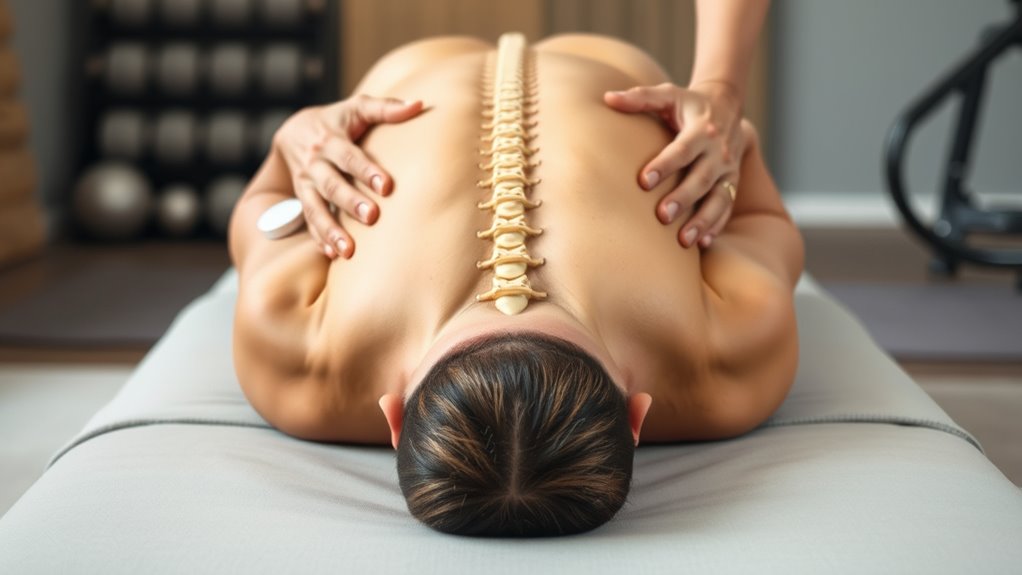
To find your neutral spine, start by palpating key landmarks like your hips and ribs to feel their natural positions. Use a mirror to check your alignment and make adjustments as needed. These simple techniques help you develop awareness and lock in the proper spinal posture. Being aware of your spinal alignment can also reduce the risk of injury during physical activities.
Palpate Key Landmarks
How do you accurately find your neutral spine? By palpating key spinal landmarks and feeling for muscle tension, you can identify your natural alignment. Start by locating bony prominences like the lumbar vertebrae and sacrum. Use gentle pressure to palpate around these areas, noting where muscles feel relaxed or engaged. To improve your accuracy:
- Identify the tips of your iliac crests (hip bones).
- Locate the spinous processes of lumbar vertebrae.
- Feel for the sacrum’s ridges at the base of your spine.
- Notice muscle tension or relaxation around these landmarks.
This muscle palpation helps you understand your spinal architecture, ensuring you find and maintain neutral spine safely during movement or exercise. Additionally, understanding the anatomy of the spine can enhance your ability to maintain proper alignment and prevent injury.
Use Mirror for Alignment
Did you know that using a mirror can considerably improve your ability to find and maintain your neutral spine? Mirror exercises allow you to observe your posture and ensure proper alignment cues are met. Stand in front of a mirror and gently shape your body into a neutral position, checking for even shoulders, a straight back, and aligned hips. Use the mirror to make small adjustments, focusing on maintaining a natural curve in your spine. By consistently practicing with a mirror, you develop better body awareness and muscle memory. This visual feedback helps you identify when you’re out of alignment and correct your posture in real-time, making it an effective technique to master neutral spine safety.
Common Mistakes That Disrupt Spinal Neutrality

One of the most common mistakes that disrupts spinal neutrality is improper alignment during movement or exercise. This often happens when you engage in incorrect lifting techniques or wear poor footwear that affects stability. These errors can cause your spine to shift out of its natural curve, increasing injury risk.
Improper alignment during movement or exercise can disrupt spinal neutrality and increase injury risk.
To avoid these pitfalls, be mindful of:
- Incorrect lifting — bending at the waist instead of the hips, leading to strain.
- Poor footwear — shoes that don’t support your arches or cushion impact.
- Ignoring posture cues — slouching or overextending during activities.
- Rushing movements — sacrificing form for speed, disrupting spinal alignment.
Tips for Maintaining a Neutral Spine During Activities

Maintaining a neutral spine during activities requires mindfulness and consistent practice to counteract common misalignments. To stay aligned, set up an ergonomic workstation with proper chair height and monitor placement. Incorporate simple yoga stretches, like cat-cow or spinal twists, to improve flexibility and awareness. Focus on engaging your core and avoid slouching or overextending. Regularly check your posture and adjust as needed to prevent strain. Here’s a quick reference: Posture Awareness can significantly contribute to spinal health and proper alignment.
Frequently Asked Questions
Can I Find My Neutral Spine While Lying Down?
Yes, you can find your neutral spine while lying down. Lie on your back with a pillow under your knees for lumbar support, and gently flatten your lower back against the floor. Focus on maintaining a natural curve, which helps with posture correction. Adjust your position if needed until you feel balanced and comfortable, ensuring your spine stays in a neutral position for ideal safety and support.
How Often Should I Check My Spinal Alignment Daily?
Like a trusty steed in a medieval saga, you should check your spinal alignment about 3-4 times daily. Focus on maintaining core stability and make ergonomic adjustments as needed. Regularly evaluating your posture helps prevent strain and keeps your spine in a safe, neutral position. Listening to your body, especially if you feel discomfort, ensures you’re staying aligned and protected throughout the day.
Are There Specific Exercises to Improve Spinal Neutrality?
Yes, you can improve spinal neutrality with exercises that focus on core engagement and posture awareness. Try planks or bird-dogs to strengthen your core, which supports a neutral spine. Also, practice mindful posture checks throughout the day, ensuring your shoulders are relaxed and your pelvis is aligned. Consistently incorporating these exercises and awareness techniques helps maintain proper spinal alignment, reducing discomfort and preventing injury.
Does Age Affect My Ability to Maintain a Neutral Spine?
Imagine your spine as a flexible yet steady bridge; age considerations may make maintaining neutral spine feel more challenging, but it’s still possible. As you age, you might need to focus more on posture adjustments and gentle strengthening exercises. Regularly practicing mindful movement helps preserve your spinal health, ensuring you stay balanced and upright. Remember, with patience and awareness, your ability to maintain neutral spine remains within reach at any age.
Can Wearing Certain Footwear Impact My Spinal Posture?
Wearing certain footwear definitely impacts your spinal posture. Shoes with poor support can cause misalignment, leading to discomfort and strain on your spine. On the other hand, footwear with good shoe support helps maintain proper alignment, reducing the risk of pain and injury. Always choose shoes that provide adequate arch support, cushioning, and stability. Your footwear impact plays a vital role in keeping your neutral spine safe and healthy during daily activities.
Conclusion
Finding your neutral spine is like tuning a fine instrument—you need the right balance to perform at your best. When you maintain proper alignment, you reduce injury risk and move with greater ease. Remember to identify your natural curves, practice good posture, and stay mindful during activities. With consistency, you’ll feel more stable and confident, like a ship steady on calm waters. Keep practicing, and your spine will thank you for the care you give it.