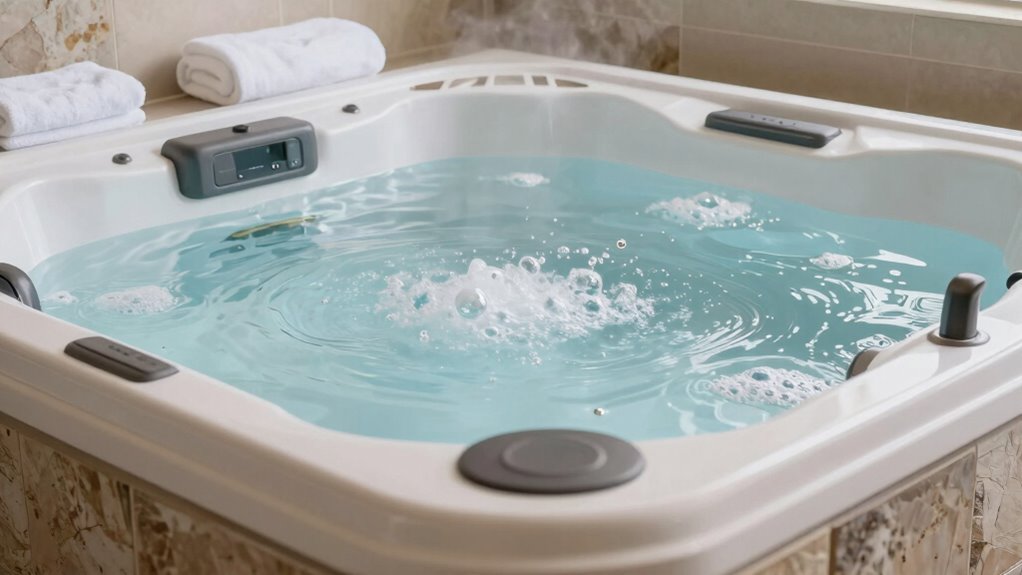

To keep your hot tub safe and prevent rashes, you need to maintain proper hygiene and water chemistry. Regularly test and balance the pH, alkalinity, and sanitizer levels, and clean or replace filters often. Shower before and after use to remove oils and dirt, and store chemicals safely. If you follow these tips, you’ll reduce skin irritation risks and enjoy a cleaner, healthier hot tub experience—stick around to learn more about keeping your hot tub pristine.

Get wellness gear delivered free with Prime
- Fast, free delivery on millions of items
- Prime Video, Amazon Music and more included
- Member-only deals all year
Key Takeaways
- Regularly test and balance water chemistry, including pH, alkalinity, and sanitizer levels, to prevent bacteria growth and skin irritations.
- Clean filters, drain, and sanitize the hot tub periodically to maintain water clarity and reduce bacterial buildup.
- Handle and store chemicals properly with protective gear, in labeled containers, away from children and pets.
- Shower before and after using the hot tub to remove oils, lotions, and bacteria that can cause rashes or water contamination.
- Seek professional help if water remains cloudy, develops odors, or if equipment malfunctions occur, to ensure safety and proper maintenance.
As an affiliate, we earn on qualifying purchases.
Why Hot Tub Hygiene Is Essential for Your Health
Have you ever wondered why maintaining proper hot tub hygiene is so important? The answer lies in hot tub bacteria, which can thrive in warm, damp environments if not properly managed. These bacteria can cause skin irritation, rashes, or even infections, compromising your health. Following a hygiene checklist helps verify you’re keeping the water clean and safe. Regularly checking and controlling pH levels, disinfectant levels, and filtration ensures bacteria don’t multiply. Skipping these steps increases the risk of unpleasant health issues. Staying consistent with your hygiene routine isn’t just about comfort—it’s about protecting yourself and anyone else using the hot tub. Prioritizing hygiene reduces health risks, allowing you to enjoy your hot tub experience worry‑free. Implementing smart monitoring systems can further help maintain optimal water quality and safety.
As an affiliate, we earn on qualifying purchases.
How to Properly Clean and Sanitize Your Hot Tub
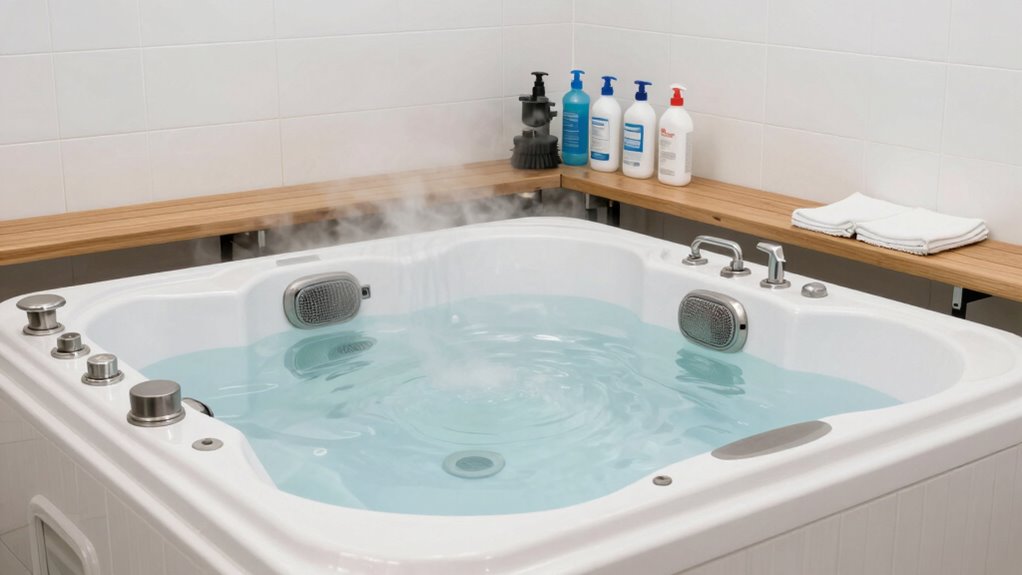
To keep your hot tub safe and inviting, you need to clean and sanitize it regularly with the right techniques. Start by draining the water and thoroughly cleaning the spa interior, including jets and corners, to remove buildup. Next, focus on filter maintenance: remove the filter and rinse it with a hose to clear debris. For deep sanitation, use a spa-safe disinfectant or sanitizer, following the manufacturer’s instructions. Additionally, understanding water chemistry can help you maintain proper pH and sanitizer levels, preventing issues like cloudiness or bacteria growth. Proper maintenance schedules can further ensure your hot tub remains hygienic and in good working condition. Regularly testing your water with appropriate testing kits allows you to monitor water quality and make timely adjustments. Finally, refill the hot tub with fresh water, ensuring all surfaces are dry before turning it on. Remember, consistent cleaning not only keeps the spa interior pristine but also prevents bacteria growth, making your hot tub a safe and enjoyable retreat. Regular attention to these steps helps maintain water quality and extends the life of your hot tub.
As an affiliate, we earn on qualifying purchases.
Maintain Water Chemistry to Keep Water Safe and Clear
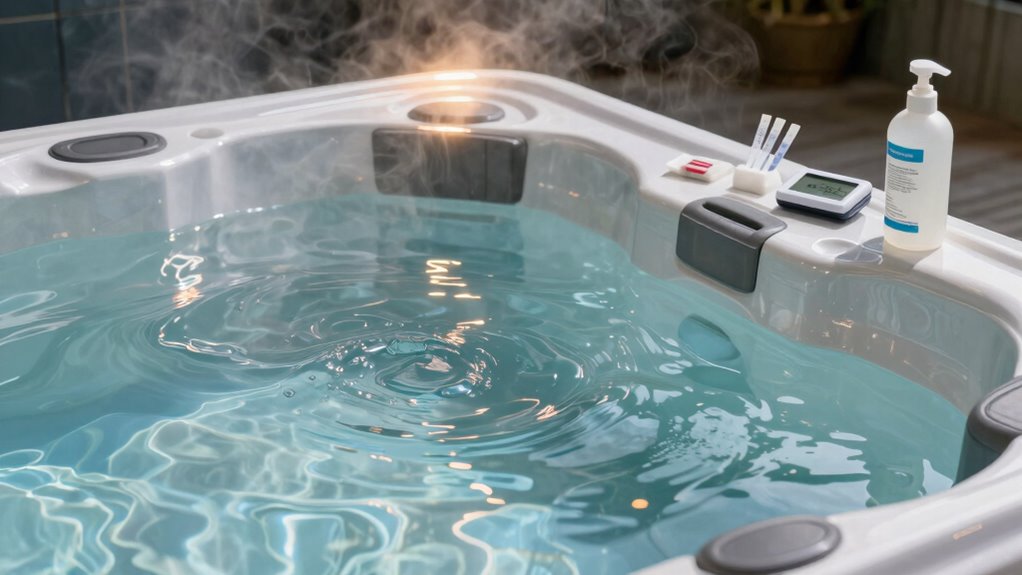
To keep your hot tub water safe and clear, you need to regularly test and balance the chemicals. Proper chemical maintenance guarantees bacteria and algae don’t thrive, making your soak healthier. Staying on top of these tasks keeps your hot tub inviting and safe for every use. Additionally, understanding the importance of water chemistry can help you better maintain a balanced and hygienic environment, reducing the risk of rashes and infections. Regular testing of water parameters helps prevent imbalances that can lead to skin irritations or health issues. Using appropriate test kits and following manufacturer guidelines ensures your water remains clean and safe, fostering a more enjoyable experience. Incorporating knowledge about air quality can also help you create a healthier overall environment around your hot tub area, minimizing airborne contaminants.
Regular Testing and Balancing
How often you test and adjust your hot tub’s water chemistry directly impacts its safety and clarity. Proper testing guarantees ideal spa safety and keeps water filtration effective. To maintain balanced water, focus on these three key steps:
- Test water pH, alkalinity, and sanitizer levels at least 2-3 times weekly.
- Adjust chemicals promptly to stay within recommended ranges.
- Run the water filtration system regularly to remove contaminants.
Additionally, understanding the importance of water chemistry can help you optimize your hot tub maintenance routines.
Proper Chemical Maintenance
Maintaining proper chemical levels is essential for keeping your hot tub water safe, clear, and comfortable. You need to regularly check and adjust chlorine levels to ensure effective sanitation, preventing bacteria and algae growth. Proper chlorine levels also reduce the risk of skin irritation and rashes. Equally important is pH balancing; keeping the pH between 7.2 and 7.8 ensures chemicals work efficiently and minimizes water cloudiness. If the pH is too high or low, it can cause corrosion or scaling, impacting both water quality and equipment lifespan. Use test strips or a testing kit to monitor these levels frequently, especially after heavy use. Consistent chemical maintenance keeps your hot tub inviting, safe, and free of potential health hazards. Additionally, understanding the concept of Free Floating chemicals can help you better manage water quality by ensuring chemicals distribute evenly throughout the water. Regularly circulating water helps maintain consistent chemical levels and prevents stagnation, which can lead to bacterial growth. Proper filtration also plays a critical role in removing debris and contaminants, supporting overall water clarity and safety. Incorporating automatic chemical feeders can further simplify maintaining consistent chemical levels and improve water quality management. Being aware of water testing accuracy ensures you are making correct adjustments and maintaining optimal water chemistry.
As an affiliate, we earn on qualifying purchases.
Troubleshoot Water Quality Problems Quickly
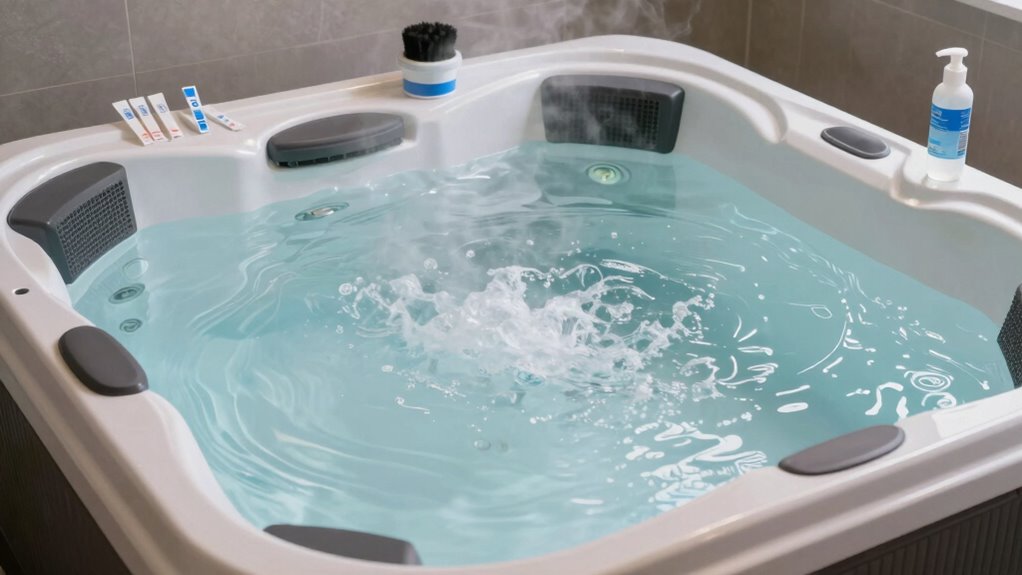
When water quality issues arise in your hot tub, addressing them promptly can prevent bigger problems down the line. Start by checking for algae buildup, which can turn water green and slippery. Next, inspect and maintain your filter regularly to ensure proper water circulation and removal of debris. If water looks cloudy or smells off, follow these steps:
- Test water chemistry and adjust pH and sanitizer levels.
- Clean or replace the filter to improve filtration.
- Shock the water with a sanitizer to eliminate bacteria and algae.
- Consider using automated water testing systems that can monitor and alert you to chemical imbalances in real time.
Regular maintenance and proper water chemistry management are essential for keeping your hot tub water safe and clear. Proper filter maintenance helps prevent the buildup of contaminants and supports healthy water quality. Timely action keeps water clean and safe. Don’t ignore signs like murkiness or foul odors, as they indicate underlying issues. Quick troubleshooting helps maintain a healthy hot tub environment and prolongs equipment life.
Best Practices for Showering Before and After Hot Tub Use
To keep your hot tub water clean and safe, it’s essential to shower thoroughly before and after each use. This practice aligns with hot tub etiquette and prioritizes guest safety by reducing contaminants like oils, lotions, and dirt. When you shower, use soap and rinse thoroughly to remove impurities that can cause skin rashes or water quality issues. After using the hot tub, shower again to wash away sweat, chemicals, or any residual bacteria. This simple routine helps maintain clear, hygienic water, prolongs the life of your hot tub, and respects fellow users. Proper water sanitation practices are crucial for preventing the spread of bacteria and ensuring a safe experience for everyone. Additionally, implementing appropriate ventilation considerations can help reduce humidity and maintain a fresh environment around your hot tub area. Regular water testing can further ensure that water chemistry remains balanced and safe for all users. Maintaining good hygiene practices not only protects your skin but also preserves the overall water quality and safety of your hot tub.
How to Safely Use Hot Tub Chemicals
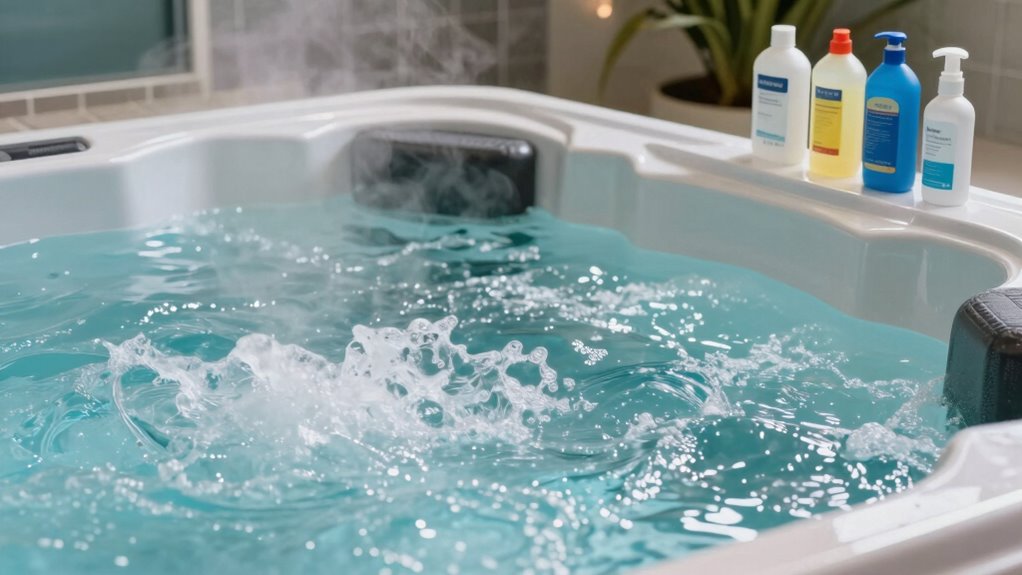
Handling hot tub chemicals safely is essential to protect yourself and maintain clean water. You should always follow proper techniques when measuring and adding chemicals, and regularly check your water’s levels. Additionally, storing chemicals properly and disposing of them responsibly helps prevent accidents and environmental harm. Using the appropriate storage conditions for chemicals ensures their effectiveness and safety.
Proper Chemical Handling Techniques
Using hot tub chemicals safely is essential to guarantee accidents and make certain your water remains clean and balanced. To ensure proper chemical safety, always follow handling protocols carefully. First, wear protective gear like gloves and goggles to prevent skin and eye irritation. Second, measure chemicals precisely using the recommended tools to avoid overdosing. Third, store chemicals in a cool, dry, well-ventilated area, away from children and pets. Always handle chemicals in a well-ventilated space to prevent inhalation of fumes. Never mix different chemicals directly, as harmful reactions can occur. Proper handling protocols minimize risks and keep your hot tub water safe and healthy. Remember, following these steps guarantees your safety and the longevity of your hot tub equipment.
Monitoring Chemical Levels Regularly
Regularly monitoring your hot tub’s chemical levels is essential to maintaining safe and clean water. You need to check both pH balance and sanitizer levels consistently to prevent bacteria growth and skin irritation. Use test strips or a digital tester to measure these levels accurately. Keep the pH between 7.2 and 7.8, and maintain sanitizer levels as recommended by the manufacturer. Regular testing helps you catch imbalances early, avoiding cloudy water or rashes. Here’s a quick guide:
| Parameter | Ideal Range | Testing Frequency |
|---|---|---|
| pH Balance | 7.2 – 7.8 | Weekly |
| Sanitizer Levels | 3-5 ppm | Weekly |
| Additional Tests | Alkalinity & Calcium | Monthly |
Consistent monitoring guarantees safe, comfortable hot tub use.
Safe Storage and Disposal
Maintaining proper storage and disposal practices for hot tub chemicals helps guarantee safety for both users and the environment. Always keep chemicals in a cool, dry place away from children and pets. Use a secure, labeled container for chemical storage to prevent accidental spills. When not in use, cover your hot tub with a sturdy spa cover to protect chemicals from contamination. To dispose of chemicals safely:
- Never pour chemicals down the drain or on the ground.
- Follow local regulations for hazardous waste disposal.
- Store unused chemicals out of reach and in original containers with labels intact.
Prevent Hot Tub Skin Rashes and Irritations
To prevent hot tub skin rashes and irritations, it’s essential to keep the water clean and balanced. Regularly test and adjust pH and sanitizer levels to prevent bacteria and algae growth, which can cause skin irritation. Shower before entering, especially if you’ve been sweating or using lotions, to reduce contaminants. Avoid using harsh soaps or oils that can linger in the water and cause irritation. Proper water maintenance helps minimize allergy prevention issues and keeps skin healthy. Also, change the water as recommended and clean the hot tub surfaces frequently. Wearing waterproof, breathable swimwear can further protect your skin from direct contact with potentially irritating residues. By maintaining proper hygiene, you reduce the risk of skin irritation and enjoy a safer, more comfortable hot tub experience.
Protect Sensitive Skin and Allergies in Your Hot Tub
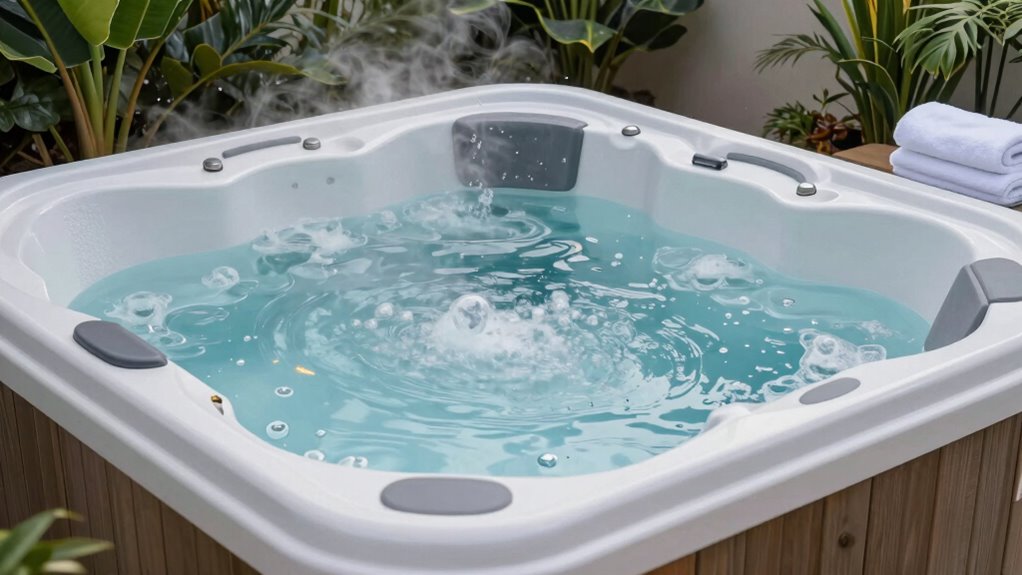
If you have sensitive skin or allergies, keeping your hot tub safe requires extra attention. To prevent allergic reactions and protect skin sensitivity, consider these steps:
- Use hypoallergenic or skin-friendly sanitizers to reduce irritation risk.
- Shower thoroughly before and after soaking to remove oils, lotions, and contaminants.
- Maintain proper water chemistry to minimize irritants and prevent allergy triggers.
Signs You Need Professional Help With Your Hot Tub
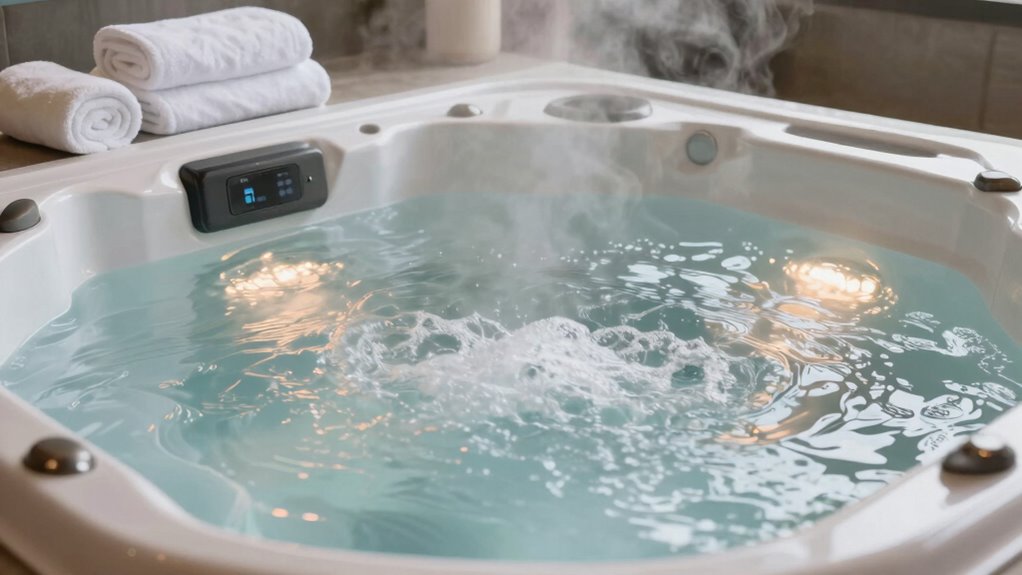
Sometimes, despite your best efforts, issues with your hot tub require professional attention. If you notice persistent problems like cloudy water, strong odors, or skin irritation, it’s a sign of a chemistry imbalance that’s hard to remedy on your own. Equipment malfunction is another red flag; if jets stop working, the heater isn’t maintaining temperature, or you hear strange noises, it’s time to call in a pro. These issues can compromise water safety and your hot tub’s longevity. Trying to troubleshoot complex problems without expertise can worsen the situation. When you see these signs, don’t hesitate to seek professional help to restore proper function, ensure safe water conditions, and prevent costly repairs down the line.
How Often Should You Clean and Maintain Your Hot Tub?
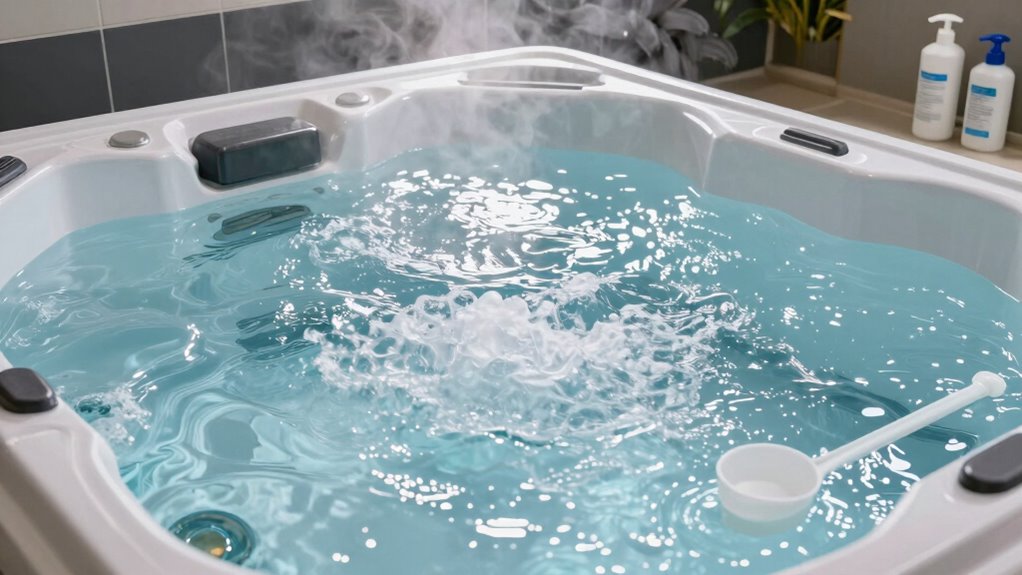
You should clean your hot tub regularly to keep the water fresh and safe. Testing the water frequently helps you catch imbalances early and prevent issues. Sticking to a consistent cleaning schedule guarantees your hot tub stays inviting and healthy for every use.
Regular Cleaning Schedule
Maintaining a clean hot tub is essential for both your health and the longevity of the equipment. To keep it safe and functioning well, follow a regular cleaning schedule. First, inspect and replace the filter every 3 to 4 months to prevent buildup and ensure proper filtration. Second, clean your hot tub cover monthly to prevent mold and dirt accumulation, which can affect water quality. Third, drain and refill your hot tub every 3 to 4 months, depending on usage, to keep water fresh. Additionally, regularly wipe down surfaces and check for signs of wear or damage. Consistency is key—sticking to this schedule helps prevent rashes, reduces chemical imbalances, and extends your hot tub’s lifespan.
Water Testing Frequency
How often should you test your hot tub water to make certain it stays clean and safe? You should check the water quality and chemical balance at least 2-3 times a week, especially during frequent use. Regular testing helps you catch imbalances early, preventing bacteria growth and skin irritations. Use test strips or a digital tester to evaluate pH, sanitizer levels, and alkalinity. If any readings fall outside recommended ranges, adjust the chemicals promptly. Maintaining proper chemical balance not only keeps the water safe but also prolongs your hot tub’s lifespan. During heavy use or warm weather, test more frequently. Consistent testing ensures your hot tub remains inviting, hygienic, and free from rashes or infections.
Frequently Asked Questions
Can Hot Tub Bacteria Cause Long-Term Health Issues?
Yes, hot tub bacteria can cause long-term health issues. If bacteria like Pseudomonas or Legionella grow unchecked, you might face long-term infections or bacterial resistance, making treatment difficult. Regularly sanitizing your hot tub and maintaining proper water balance helps prevent bacterial buildup. Ignoring these steps increases your risk of persistent health problems, so always prioritize hygiene to keep your hot tub safe and enjoyable.
Are There Natural or Eco-Friendly Sanitization Options Available?
Yes, you can use natural or eco-friendly sanitization options for your hot tub. Organic alternatives like herbal disinfectants and mineral sanitizers, such as bromine or copper, help keep water clean without harsh chemicals. These options reduce chemical exposure and are gentler on your skin and the environment. Regular use of mineral sanitizers, in particular, provides effective bacteria control while maintaining a more natural hot tub experience.
How Does Temperature Affect the Growth of Harmful Microorganisms?
Temperature plays a vital role in controlling microbial proliferation in your hot tub. Thermal regulation at higher temperatures, typically around 104°F, inhibits many harmful microorganisms, reducing their growth. However, if the water is too warm or too cool, it can promote microbial proliferation, increasing risks of rashes and infections. Maintaining ideal temperature carefully balances comfort and safety, ensuring harmful microorganisms don’t thrive while keeping your hot tub enjoyable.
What Are the Risks of Sharing a Hot Tub With Multiple People?
Sharing a hot tub with multiple people increases your risk of group infections and skin irritations. When several bodies share the water, bacteria and fungi can spread easily, especially if hygiene isn’t maintained. You might think it’s just a fun way to relax, but a coincidence of poor sanitation or skin cuts can turn into uncomfortable skin irritations or infections. Always shower before and after, and limit the number of swimmers to stay safe.
Can Hot Tub Water Contamination Be Transmitted to Other Household Areas?
Yes, hot tub water contamination can lead to household spread through water cross contamination. If you don’t properly disinfect the hot tub, bacteria and viruses can transfer onto towels, clothing, or surfaces, then spread to other areas of your home. Always rinse off after using the hot tub, clean your towels regularly, and maintain proper water sanitation to prevent the risk of transmitting contaminants to other household spaces.
Conclusion
Remember, a clean hot tub is a happy hot tub. Regular cleaning, proper maintenance, and good hygiene practices keep your water safe and your skin irritation-free. Don’t wait for problems to surface—catch them early like a gardener tending to delicate blooms. By staying vigilant, you guarantee relaxing, rashes-free dips every time. After all, an ounce of prevention is worth a pound of cure, so keep your hot tub pristine and your health protected.
Columbus Day / Indigenous Peoples' Day Picks
long weekend sales
As an affiliate, we earn on qualifying purchases.