To enhance your chair massage experience, try simple mindfulness techniques like deep breathing and body scans. Focus on slow, controlled breaths to calm your nervous system and bring awareness to each part of your body. As you relax into the massage, notice sensations without judgment and visualize tension release. Incorporating these practices creates a deeper sense of relaxation and mental clarity. Keep exploring ways to combine mindfulness and massage for even greater benefits.
Key Takeaways
- Practice slow, deep breathing during massage to activate relaxation and reduce stress hormones.
- Use body scan techniques to focus awareness on different areas, releasing tension gradually.
- Engage actively with physical sensations rather than passively relaxing to deepen mindfulness.
- Visualize tension releasing with each exhale to enhance relaxation and mental clarity.
- Incorporate mindfulness routines regularly to transform massages into holistic stress-relief practices.
Mindfulness and massage are a powerful combination for reducing stress and enhancing overall well-being. When you blend these practices, you create a calming experience that helps you reconnect with your body and clear your mind. One effective way to deepen this sense of relaxation is by incorporating simple meditation techniques into your massage routine. You don’t need specialized equipment or a quiet retreat—just a few minutes and some focus on your breath and body.
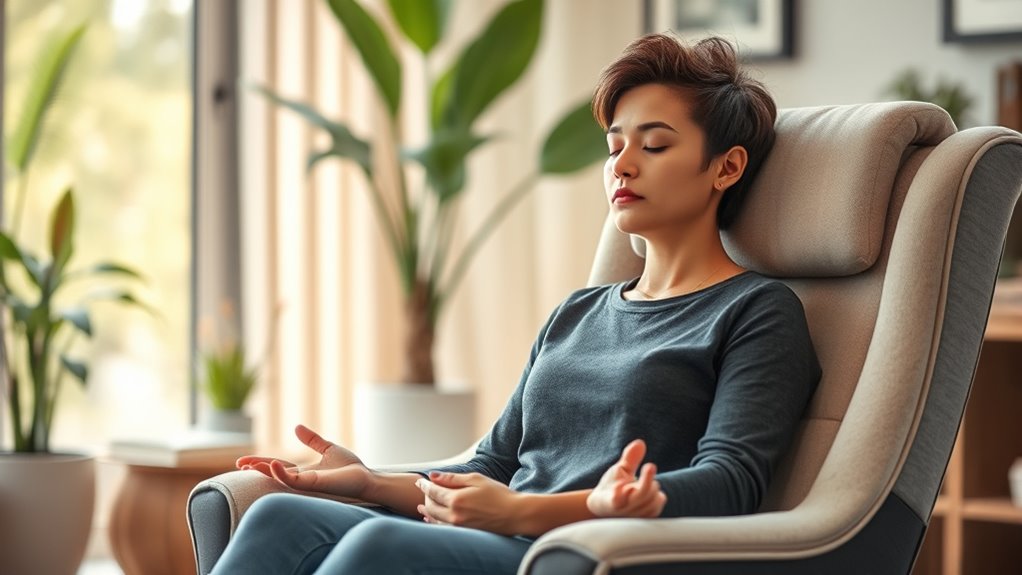
Breathing exercises are a great starting point. As you settle into your massage or relaxation session, take a moment to focus on your breath. Breathe slowly and deeply, filling your lungs completely, then exhale fully. Pay attention to how your chest and belly rise and fall with each breath. This simple practice helps to calm your nervous system, lowering stress hormones and promoting a sense of tranquility. Breathing exercises are easy to do anywhere, and they serve as an anchor to keep you present during your massage, preventing your mind from wandering into worries or distractions.
Focus on your breath during massage to promote calm and stay present.
Alongside breathing, body scan techniques can intensify your mindfulness experience. To do a body scan, start by bringing your awareness to your toes. Notice any sensations—tingling, warmth, tension, or relaxation. Gradually move your focus upward through your legs, belly, chest, arms, neck, and face. As you do this, acknowledge each area without judgment. If you notice tension, imagine releasing it with each exhale. The body scan encourages you to observe your physical sensations calmly, fostering a deeper connection between your mind and body. It also helps to identify areas of built-up tension that might benefit from targeted massage or stretching.
Practicing these techniques during your massage enhances how you experience the session. Instead of simply lying passively, you actively engage with your body, making the massage more effective. As you breathe deeply, you signal your nervous system to relax, amplifying the soothing effects of the massage. When performing a body scan, you learn to recognize tension patterns, which can guide your therapist or your own self-care efforts afterward. Over time, these mindfulness practices can become a natural part of your routine, helping you manage stress more effectively even outside of massage sessions.
Incorporating breathing exercises and body scan techniques into your massage routine creates a holistic approach to relaxation. It’s not just about the physical touch but about cultivating awareness and presence. By doing so, you turn a simple massage into a mindful experience that nurtures your mental, emotional, and physical health, leaving you feeling more centered and refreshed. Additionally, understanding industry trends can help you find new methods to improve your mindfulness and massage practices over time.
Frequently Asked Questions
Can Mindfulness Techniques Improve Overall Posture During Massage?
Yes, mindfulness techniques can improve your overall posture during massage. By practicing posture awareness, you become more conscious of how you hold your body, which helps you make real-time adjustments. Incorporating breathing techniques also relaxes your muscles, reducing tension that may cause poor posture. With consistent practice, these techniques help you stay aligned, making massage sessions more effective and enhancing your overall posture even after the massage ends.
Are There Specific Massage Styles Best Suited for Mindfulness Practice?
Think of massage styles as different musical instruments, each capable of creating a calming symphony when paired with mindfulness. Aromatherapy integration and guided visualization techniques work beautifully with Swedish or lymphatic drainage massages, enhancing relaxation and mental clarity. These styles encourage you to tune into your body and breath, making your mindfulness practice more profound. Opt for gentle, flowing techniques that invite your mind to drift into a peaceful, meditative state.
How Long Should a Mindful Massage Session Typically Last?
A mindful massage session should typically last around 15 to 30 minutes, allowing you to fully relax and experience the benefits. Shorter sessions can still offer significant relaxation benefits, especially if you’re pressed for time, while longer ones deepen your mindfulness practice. Focus on your breath and sensations during the session to maximize relaxation benefits, making each moment count without feeling rushed.
Can Mindfulness Reduce Massage-Related Muscle Soreness?
Mindfulness benefits can indeed help reduce massage-related muscle soreness. By practicing mindfulness, you become more aware of your body’s signals, allowing you to relax more deeply during a massage. This heightened awareness can decrease tension and improve recovery, easing soreness faster. When you focus on your breath and bodily sensations, you promote relaxation, making your massage more effective and helping your muscles heal more efficiently.
Is It Effective to Combine Mindfulness With Self-Massage at Home?
Yes, combining mindfulness with self-massage at home is effective. It enhances the benefits of breathing, relaxation, and mindfulness, helping you stay present and reduce stress. By focusing on your breath and sensations during massage, you deepen relaxation and improve muscle tension relief. This practice fosters a calming routine, making your self-care more mindful and effective, ultimately promoting overall well-being and easing muscle soreness.
Conclusion
Practicing mindfulness and massage in your chair can considerably reduce stress and boost your mood. Did you know that just a few minutes of mindfulness daily can lower cortisol levels by up to 30%? By incorporating these simple techniques into your routine, you’ll feel more relaxed and centered, even during busy days. So, take a moment for yourself—your body and mind will thank you for it. Give these methods a try and notice the positive change!