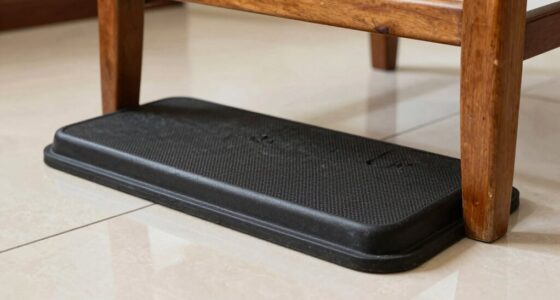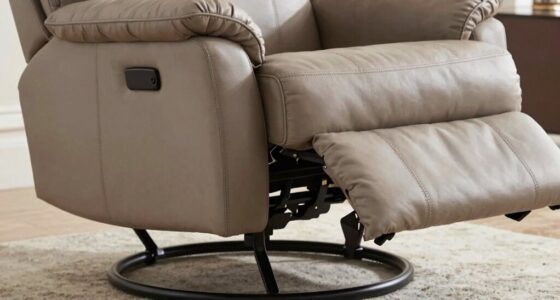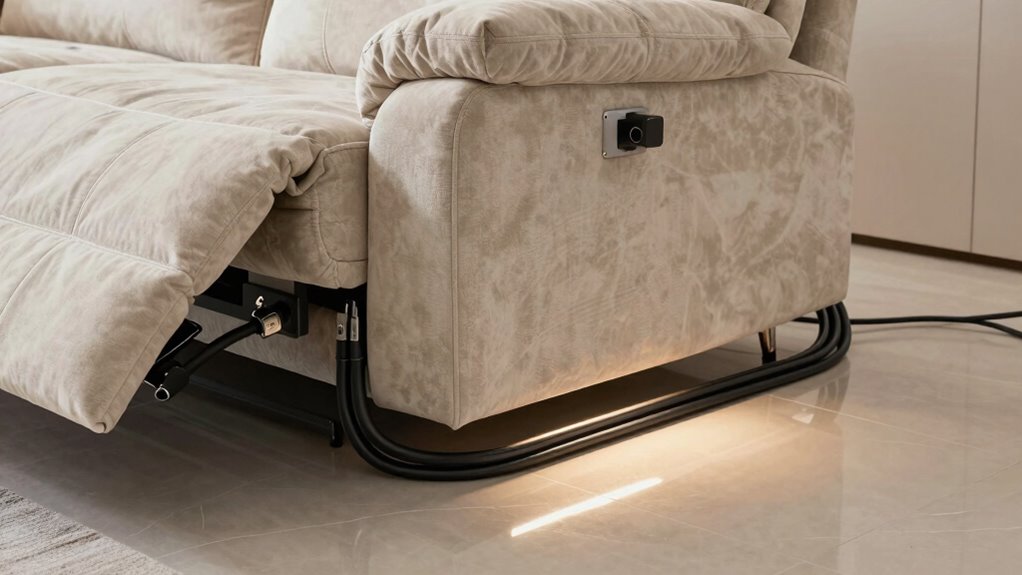

To route power cables around recliners and bed bases safely and neatly, plan your layout to avoid stretching or tangling cords. Secure cords along furniture edges or walls using cable clips, adhesive mounts, or zip ties, and bundle multiple cables with sleeves or tubing. Use cable covers or floor protectors to prevent tripping and damage. Regularly check for wear, and distribute devices across outlets to prevent overloads. Keep exploring for more tips on smart cable management.

Get wellness gear delivered free with Prime
- Fast, free delivery on millions of items
- Prime Video, Amazon Music and more included
- Member-only deals all year
Key Takeaways
- Route cables along furniture edges and walls to keep them hidden and prevent tripping hazards.
- Use cable clips or adhesive mounts to secure cords securely along recliners and bed frames.
- Bundle multiple cables with sleeves or tubing for organized, clutter-free routing.
- Avoid running cords across walkways or under rugs to reduce damage and safety risks.
- Regularly inspect and maintain cables for wear, and use surge-protected power strips mounted out of the way.
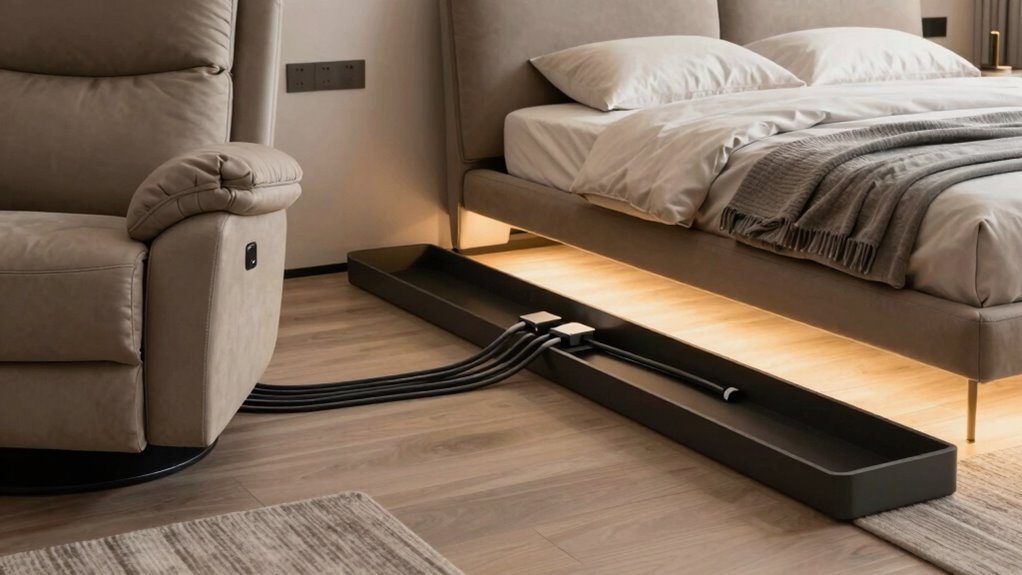
Have you ever struggled with tangled, cluttered power cables that disrupt your workspace or pose safety hazards? If so, you’re not alone. Managing power cords around recliners and bed bases can be a real challenge, but with proper wire management, you can create a safer, neater environment. Good wire management isn’t just about aesthetics; it’s also about safety considerations. Loose cables can trip you up, cause equipment damage, or even lead to electrical hazards. The key is to plan your cable routing carefully and use the right tools to keep everything organized.
Proper wire management enhances safety and keeps your space neat and clutter-free.
Start by evaluating your space and identifying where your cables run. Take note of the outlets, and determine the most direct, unobtrusive paths for your cords. You want to avoid running cables across walkways or under rugs, which can be risky. Instead, use cable clips, adhesive mounts, or zip ties to secure cords along the edges of furniture or along walls. This keeps cables out of the way and reduces the chances of tripping or accidental unplugging. When routing cables around a recliner or bed base, consider using cable sleeves or tubing. These not only keep multiple cords together but also prevent wear and tear from friction or bending. Additionally, using wire management accessories can further streamline your setup and enhance safety. Properly securing cords also helps prevent accidental disconnections that can happen during daily use. Incorporating cable protection options like floor covers can also help prolong the lifespan of your cords while maintaining safety. Regularly inspecting your wiring for signs of damage is essential to ensure ongoing safety and functionality.
Another smart move is to utilize power strips with built-in surge protection. Place them in accessible spots, but ensure they’re mounted or secured so they don’t become a tripping hazard. If your setup involves multiple devices, organize the cords with labeled cable ties or Velcro straps. This way, you can easily identify and disconnect when needed, reducing clutter and preventing accidental disconnections. For added safety, avoid overloading outlets—spread out your devices across multiple outlets if possible. This reduces the risk of overheating and electrical fires. Remember that wire durability plays a role in safety, so selecting quality cords and accessories can make a difference. When dealing with cords that run under or behind furniture, make sure to use appropriate cord covers or floor cord protectors. These not only prevent tripping but also shield cables from damage. Using proper cable length ensures that cords are not stretched or bent excessively, which can compromise their integrity. Regularly inspect your wiring to catch any signs of wear or damage early. Keeping your cords tidy and well-maintained minimizes safety risks and prolongs their lifespan. Remember, safety considerations should always be your top priority. By proactively managing your cables, you create a safer, more comfortable space that’s free from the hazards of tangled or loose wiring. Proper cable organization also contributes to a more relaxing and stress-free environment. With a few simple strategies, you can enjoy a clutter-free environment that’s both functional and safe.
As an affiliate, we earn on qualifying purchases.
Frequently Asked Questions
How Do I Prevent Tripping Hazards With Routed Power Cables?
To prevent tripping hazards with routed power cables, focus on cable concealment and secure routing. Use cable covers or clips to keep cables flat against the floor, reducing slack and preventing tangling. Guarantee cables run along walls or furniture edges, away from walkways. Regularly check for wear and reposition cables if needed. These steps help with trip hazard prevention, making your space safer and more organized.
What Types of Cable Organizers Work Best for Recliners?
For recliners, cable organizers that excel in cable concealment and aesthetic solutions include flexible cable sleeves, adhesive cable clips, and under-furniture cable channels. These options keep cables neatly tucked away, prevent tripping hazards, and maintain a clean look. Choose the ones that suit your space best, ensuring they blend seamlessly with your decor while providing easy access for maintenance or adjustments. Prioritize safety and style with the right cable management tools.
Can I Use Wireless Charging Instead of Power Cables?
Yes, you can use wireless charging instead of power cables for your recliner or bed base. Wireless charging is convenient for battery-powered devices like smartphones and small electronics, reducing cable clutter. Just make sure your device supports wireless charging technology, and position it correctly on the charging pad. This setup minimizes the need for routing power cables around furniture, offering a cleaner, safer, and more streamlined space.
How Often Should I Inspect Routed Cables for Damage?
In the age of dial-up connections, you should inspect routed cables for damage at least once a month. Regular checks help guarantee cable durability and prevent hazards. Look for frays, kinks, or exposed wiring, and tighten any loose connections. If you notice wear or damage, replace the cable immediately. Staying attentive to inspection frequency keeps your setup safe and prolongs the life of your power cables, avoiding costly repairs down the line.
Are There Safety Standards for Routing Power Cables Around Furniture?
Yes, there are safety standards for routing power cables around furniture to guarantee electrical compliance and furniture safety. You should follow guidelines from organizations like the National Electrical Code (NEC) and local regulations, which recommend avoiding pinched or stressed cables and keeping cords away from high-traffic areas. Properly secured and concealed cables reduce the risk of damage, electrical hazards, and tripping, keeping your space safe and compliant.
As an affiliate, we earn on qualifying purchases.
Conclusion
By mastering these cable-routing tricks, you’ll turn what once was a tangled nightmare into a smooth, effortless setup. Imagine a world where your cables stay perfectly in place, never tripping you up or ruining your decor—it’s practically magical! So, take charge now, and transform your space into a sleek, cable-free paradise. After all, when you control the cords, you control your comfort—and that’s a power no one should underestimate!
As an affiliate, we earn on qualifying purchases.
surge protector power strips with mounting
As an affiliate, we earn on qualifying purchases.
As an affiliate, we earn on qualifying purchases.
Halloween Picks
halloween
As an affiliate, we earn on qualifying purchases.