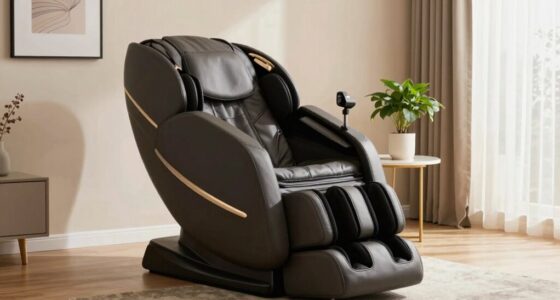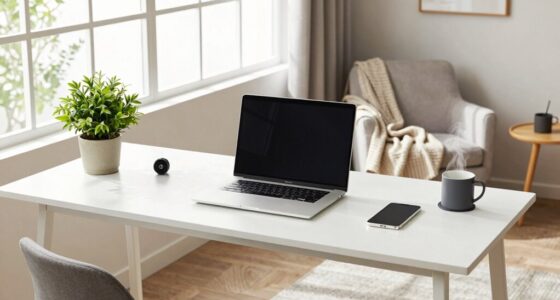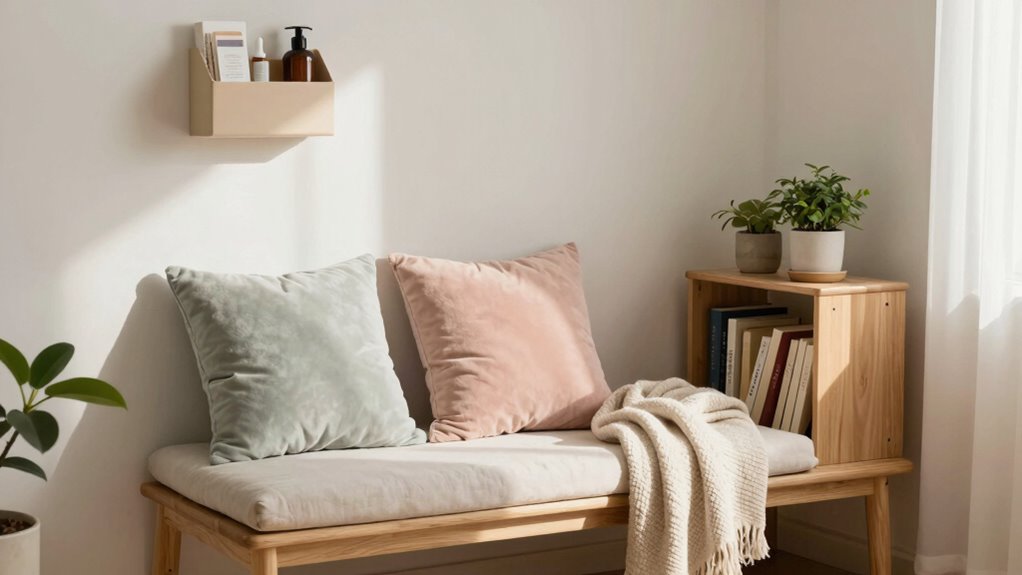

To build a recovery corner that doesn’t take over your room, choose a quiet, small area and keep furniture minimal—like a cozy chair or floor cushion. Use calming decor with soft colors and gentle lighting, such as lamps or string lights. Incorporate natural elements like plants and soothing scents to create serenity. Keep the space uncluttered and free from electronics, making it a personal retreat for daily relaxation. If you want practical tips to create this peaceful spot, stay tuned for more guidance.
Key Takeaways
- Choose a small, dedicated corner with minimal furniture to create a focused, non-intrusive recovery space.
- Use soft, neutral decor and gentle lighting to maintain a calming atmosphere without overwhelming the room.
- Incorporate natural elements like plants and textures to enhance serenity without clutter.
- Keep electronics out of the space to prevent distractions and promote mindfulness practices.
- Establish a routine for using the corner regularly, maintaining simplicity and intentionality in its design.
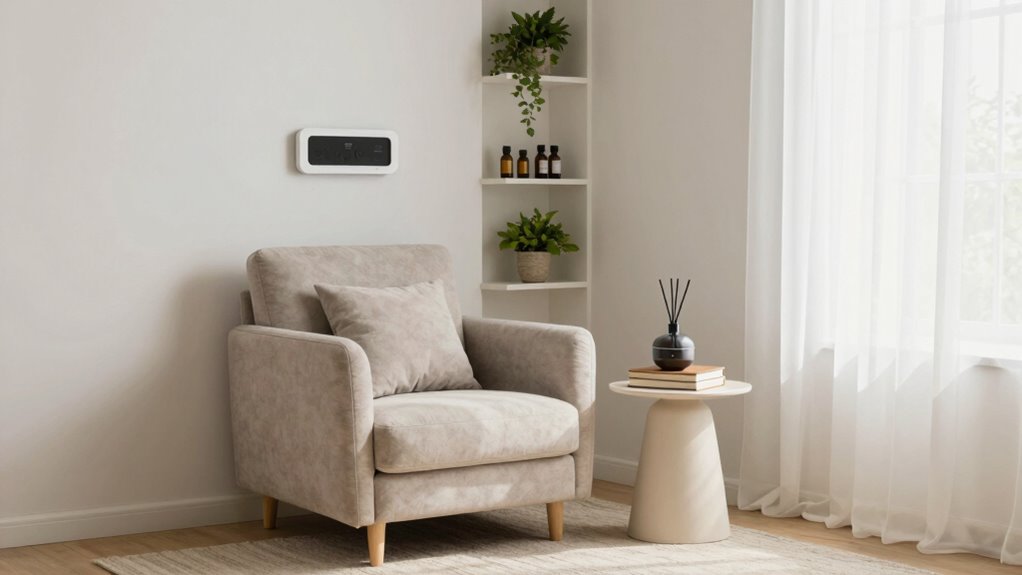
Have you ever considered creating a dedicated space in your home to support your recovery and well-being? A recovery corner doesn’t need to dominate an entire room; instead, it can be a cozy, intentional nook where you feel safe and centered. The key is to keep it simple and intentional, focusing on elements that promote relaxation and mindfulness. Incorporate mindfulness techniques into your routine by designing the space to encourage presence and calm. Use calming decor—think soft, neutral colors, gentle lighting, and natural textures—to create an environment that invites tranquility.
Start by choosing a quiet corner or a small section of a room where you won’t be easily distracted. You don’t need a lot of space to make it effective. Keep the furniture minimal—perhaps a comfortable chair, a small side table, or a floor cushion—so the area remains uncluttered. Clutter can be distracting and counterproductive to your recovery efforts. Add a few personal touches like a soft blanket, a few meaningful objects, or plants that help bring a sense of life and serenity to the space. Plants not only improve air quality but also serve as natural decor that fosters mindfulness and calmness.
Lighting plays an essential role in creating a soothing atmosphere. Opt for soft, warm lighting—use a small lamp or string lights to provide gentle illumination. Avoid harsh overhead lights that can feel overwhelming. Consider adding a diffuser with calming essential oils like lavender or chamomile, which can enhance relaxation and support mindfulness techniques such as deep breathing or meditation. Incorporating child development resources can also inspire creative ways to make your recovery corner more engaging and nurturing. Additionally, using relaxation techniques can deepen your sense of calm and help reinforce your habits. Creating a dedicated space for mindfulness practices can promote consistency in your recovery routine. Remember, the more you use this space for intentional recovery activities, the more it will become a powerful tool in your healing process.
Furthermore, incorporating natural elements not only enhances the aesthetic appeal but also contributes to a more soothing environment. Keep the space free of electronics or distractions that might pull you away from your practice. Instead, focus on creating a sanctuary where you can disconnect and center yourself. To make your recovery corner more effective, set a routine around it. Use it consistently for mindfulness techniques like meditation, deep breathing exercises, or journaling. The more you use this space for intentional recovery activities, the more it will become a powerful tool in your healing process. Remember, you don’t need to overhaul your entire home—small, thoughtful details make a big difference. By designing a space that’s calm, clutter-free, and inviting, you create a sanctuary that encourages healing without taking over the whole room. This corner becomes your personal retreat—a dedicated spot to nurture your well-being every day.
cozy reading chair for small space
As an affiliate, we earn on qualifying purchases.
As an affiliate, we earn on qualifying purchases.
Frequently Asked Questions
What Are the Best Small Furniture Options for a Recovery Corner?
To create a cozy recovery corner, opt for small furniture like a compact armchair or a cushioned bench that fits comfortably in tight spaces. Add decorative lighting, such as a small lamp or string lights, to create a calming atmosphere. Incorporate wall artwork to personalize the area without cluttering. These choices keep your space functional and inviting without overwhelming the room’s size.
How Can I Make the Space More Private and Cozy?
Think of your recovery corner as a cozy cocoon. To make it more private, add a folding screen or curtain for privacy enhancement, creating a sense of separation. Incorporate soft, plush pillows, warm lighting, and cozy decor like textured throws to invite relaxation. You can also place potted plants or fabric wall hangings to add a layer of intimacy, making your space a soothing retreat tailored just for you.
What Safety Features Should I Include in the Recovery Corner?
You should include safety features like soft, non-slip rugs and rounded furniture edges to prevent injuries. Add easily accessible calming tools, such as stress balls or calming scents, to support mental health. Install gentle lighting and guarantee proper ventilation to create a soothing environment. Keep emergency contact info visible, and consider a small lockable storage for personal items. These elements promote safety while fostering calming techniques and mental health support.
How Do I Organize Supplies for Easy Access?
You should organize supplies by using clear, labeled containers to enhance decor organization and guarantee everything is easy to find. Keep frequently used items at eye level or in accessible drawers, and store less-needed supplies on higher shelves or in closed cabinets. Use baskets or bins to group similar items together, promoting supply accessibility. Regularly declutter and update your setup for a tidy, functional recovery corner that’s both practical and visually pleasing.
Can a Recovery Corner Be Portable or Moved Easily?
Ever wondered if your recovery corner can be a portable setup? Absolutely! Opt for a movable design with lightweight furniture, rolling carts, or foldable storage. This way, you can easily shift your space as needed—whether for cleaning, guests, or changing needs. A portable recovery corner keeps essentials within reach and flexible enough to adapt to your lifestyle, offering comfort without sacrificing convenience or space.
soft ambient string lights for relaxation
As an affiliate, we earn on qualifying purchases.
As an affiliate, we earn on qualifying purchases.
Conclusion
Now, imagine your cozy recovery corner, a peaceful retreat nestled in a quiet corner of your room. Soft cushions invite you to sit, calming colors soothe your mind, and gentle lighting wraps you in warmth. This space becomes your personal sanctuary—small enough to feel intimate, yet enough to offer refuge whenever you need it. With just a few thoughtful touches, you’ve created a calming haven where you can breathe, relax, and recharge whenever life gets overwhelming.
essential oil diffuser for calming scents
As an affiliate, we earn on qualifying purchases.
As an affiliate, we earn on qualifying purchases.
indoor houseplants for relaxation
As an affiliate, we earn on qualifying purchases.
As an affiliate, we earn on qualifying purchases.