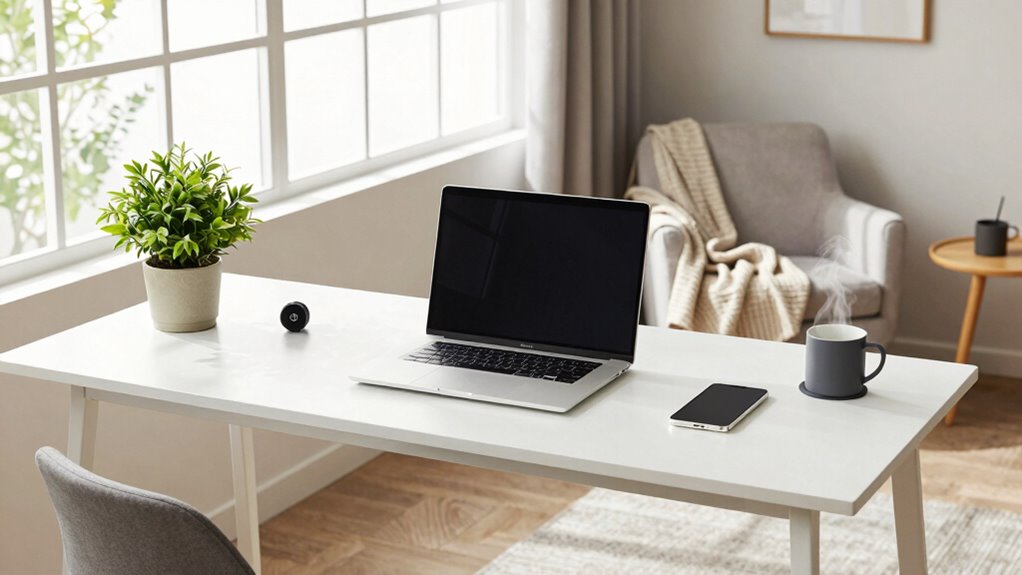

To create a better work-and-recover layout in your home office, prioritize ergonomic furniture like supportive chairs and adjustable desks to keep your posture comfortable. Clearly define separate zones for work and relaxation using decor, rugs, or plants, and guarantee proper lighting—maximize natural light and add layered artificial options. Incorporate calming elements in your recovery area and develop routines to seamlessly switch between zones. Keep exploring ways to optimize your space for comfort and productivity.
Listen free for 30 days with Audible
Thousands of audiobooks and originals — cancel anytime.
As an affiliate, we earn on qualifying purchases.
Key Takeaways
- Designate separate zones for work and relaxation using visual cues like rugs, plants, or decor.
- Incorporate ergonomic furniture to support proper posture in both work and recovery areas.
- Maximize natural light and use layered artificial lighting to enhance focus and create a calming atmosphere.
- Use adjustable furniture and sit-stand desks to promote movement and prevent fatigue.
- Maintain clear routines and visual separation to facilitate smooth transitions between activities.
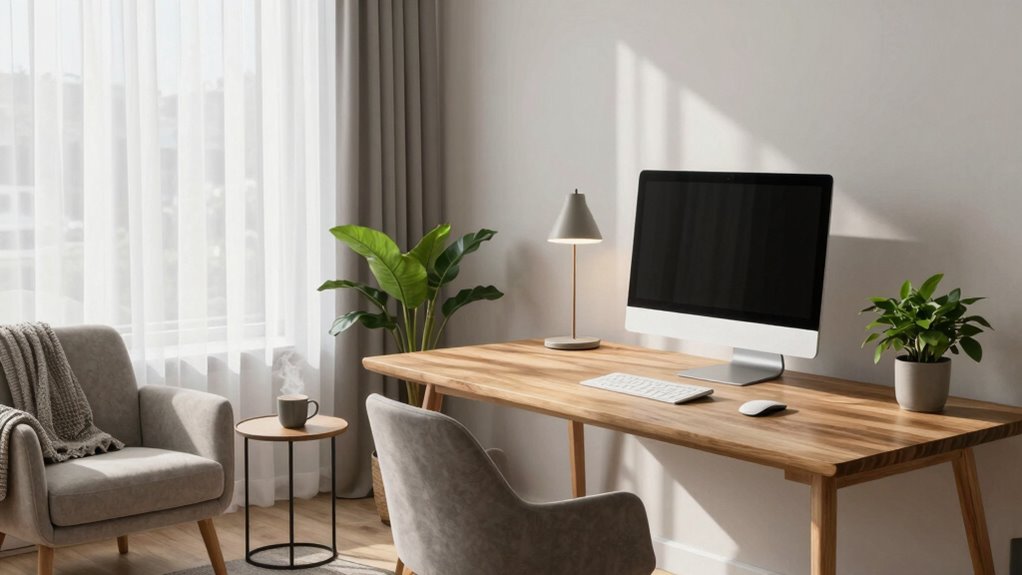
Balancing work and recovery in a single home office can be challenging, but with intentional layout choices, you can create a space that promotes productivity and relaxation. One of the most effective ways to do this is by focusing on ergonomic furniture. When you spend hours working at your desk, your body’s comfort is essential. Invest in a quality ergonomic chair that supports your lower back and encourages good posture. Pair it with a desk that’s adjustable or at a height that keeps your wrists straight and your shoulders relaxed. Incorporate a sit-stand desk if possible, so you can alternate between sitting and standing throughout the day. This movement helps prevent stiffness and fatigue, making it easier to switch from work mode to relaxation mode when needed.
Prioritize ergonomic furniture to support comfort, posture, and seamless transition between work and relaxation.
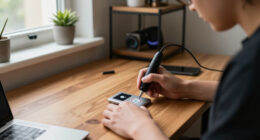
Lighting optimization plays an indispensable role in creating a functional work-and-recover layout. You want your workspace to be well-lit during work hours, ideally with natural light, which reduces eye strain and boosts your mood. Position your desk near windows if you can, and use sheer curtains to diffuse harsh sunlight. Supplement natural light with layered artificial lighting—an adjustable desk lamp provides focused illumination for detailed tasks, while ambient lighting helps create a warm, inviting atmosphere for downtime. Avoid harsh overhead lights that can cause glare and discomfort. Proper lighting not only enhances your focus during work but also helps you unwind when it’s time to relax, signaling a clear shift between work and recovery. Incorporating lighting optimization techniques can further improve your workspace environment and overall well-being.
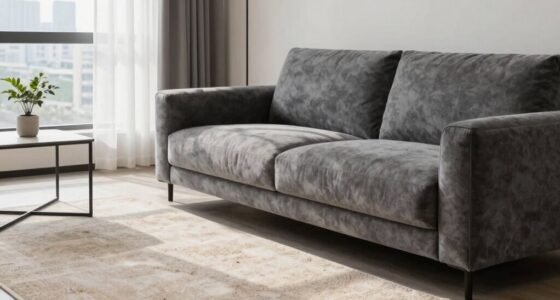
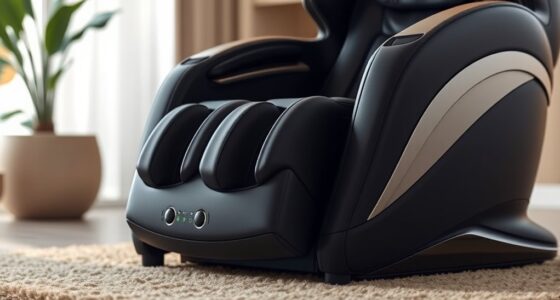
Create distinct zones within your home office, even if space is limited. Dedicate a specific corner or area for work, furnished with your ergonomic furniture and proper lighting. Reserve another spot for relaxation—perhaps with a comfortable chair or a small sofa—where you can read, meditate, or simply disconnect. Use visual cues like rugs, plants, or different decor styles to differentiate these zones, making it easier to switch your mindset from work to rest. When you’re in your recovery zone, avoid work-related screens or tasks. Instead, focus on calming activities that help you decompress. Additionally, incorporating ergonomic furniture can further enhance comfort and support your well-being during both work and relaxation. Developing a consistent routine can also help your mind transition smoothly between these spaces and activities. Maintaining proper posture throughout your day is also crucial for preventing discomfort and promoting overall health, especially when working in a multi-purpose space. Regularly reviewing and adjusting your layout can help ensure that your zones remain functional and supportive as your needs evolve.
ergonomic office chair with lumbar support
As an affiliate, we earn on qualifying purchases.
As an affiliate, we earn on qualifying purchases.
Frequently Asked Questions
How Can I Minimize Distractions in My Home Office?
To minimize distractions, you should prioritize noise reduction and focus enhancement. Use noise-canceling headphones or install soundproofing materials to block out background noise. Keep your workspace organized and designate specific areas solely for work to reduce visual clutter. Limit interruptions by setting boundaries with family or housemates, and consider using focus apps that help you stay on task. These strategies help create a peaceful, productive environment.
What Are the Best Ergonomic Practices for Small Spaces?
You should prioritize ergonomic chair placement, ensuring your chair supports your lower back and allows your feet to rest flat on the floor. Adjust your keyboard and monitor height so your elbows are at a 90-degree angle and your eyes are level with the screen. In small spaces, choose compact furniture and use vertical storage to maximize your area, maintaining comfort without clutter.
How Do I Incorporate Natural Light Effectively?
You should maximize natural light by strategically placing your desk near windows, allowing sunlight to brighten your workspace. Use window placement to your advantage by arranging your work area to avoid glare and shadows, ensuring comfortable, consistent lighting. Keep window treatments like blinds or sheer curtains handy to control light levels throughout the day. This setup boosts productivity, improves mood, and creates a pleasant environment for work and recovery in your home office.
What Storage Solutions Optimize Space and Organization?
You discover the secret to maximizing space with smart storage solutions like vertical shelving and multifunctional furniture. These choices keep your essentials organized without cluttering your workspace. Vertical shelves reach towards the ceiling, offering ample storage, while multifunctional furniture, like desks with built-in drawers or fold-out beds, transforms your room effortlessly. This clever setup guarantees you stay productive and relaxed, seamlessly blending work and recovery zones in your home office.
How Can I Personalize My Work-And-Recover Area?
You can personalize your work-and-recover area with creative touches like personalized decor, such as framed photos, inspiring artwork, or unique accessories that reflect your style. Incorporate customized fixtures, like adjustable lighting or custom shelving, to make the space more functional and suited to your needs. This approach helps you feel more comfortable and motivated, seamlessly blending your work and recovery zones into a space that truly feels like yours.
As an affiliate, we earn on qualifying purchases.
Conclusion
Creating a dedicated work-and-recover layout boosts productivity and well-being. Studies show that having a clear separation between work and relaxation areas can increase focus by up to 25%. By optimizing your space, you’ll find it easier to switch modes and reduce stress. Remember, a well-designed home office isn’t just about aesthetics—it’s about making your workday smoother and more enjoyable. Take the time to refine your setup, and reap the benefits of a balanced work-and-recovery environment.
As an affiliate, we earn on qualifying purchases.
home office decor zone separation
As an affiliate, we earn on qualifying purchases.
As an affiliate, we earn on qualifying purchases.
Fall Picks
fall essentials
As an affiliate, we earn on qualifying purchases.