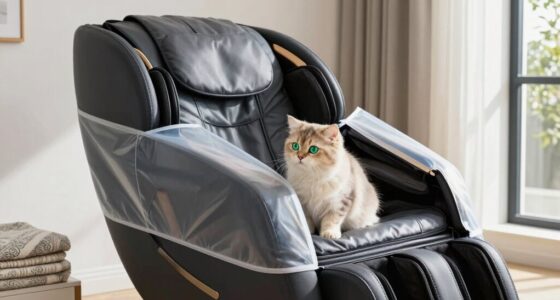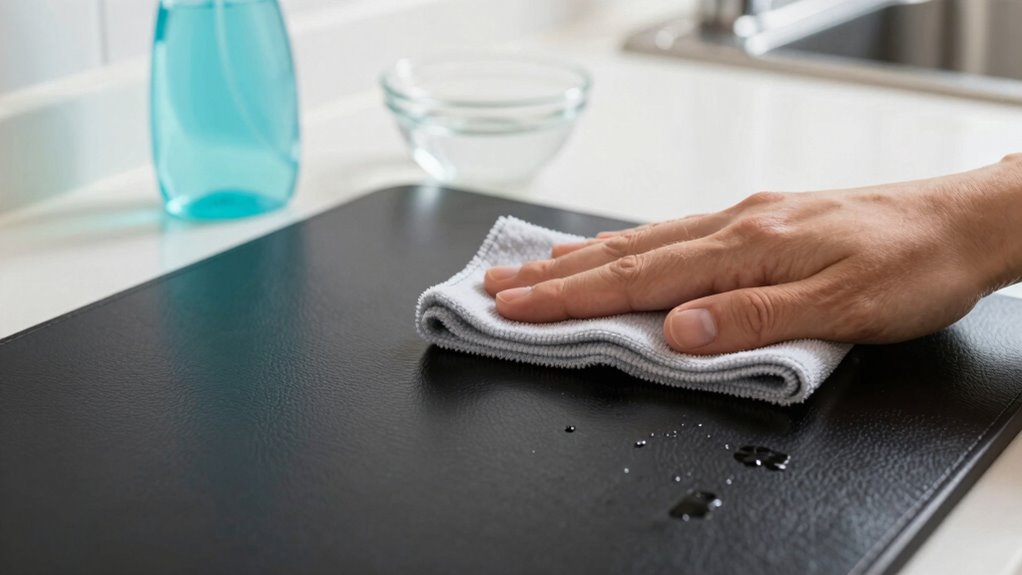

To clean faux leather without leaving it dry or sticky, use a soft microfiber cloth dampened with a gentle, pH-balanced soap and water mixture. Wring out excess moisture and clean in circular motions, paying attention to seams. Afterward, wipe off any remaining moisture with a dry cloth and avoid oversaturating the surface. Regular, careful cleaning with appropriate products helps keep your faux leather soft and flexible—stay tuned for more tips to keep it looking its best.

Get wellness gear delivered free — and shop member deals
- Fast, free delivery on millions of items
- Access to Prime Big Deal Days deals on October 6–7
- Prime Video, Amazon Music and more included
Key Takeaways
- Use a mild, pH-balanced soap and water mixture, applying it with a damp, not soaked, microfiber cloth.
- Wring out excess water to prevent oversaturation and avoid moisture seeping into seams.
- Clean in gentle circular motions and immediately dry with a clean, dry cloth to remove residual moisture.
- Test cleaning solutions on small, hidden areas to prevent discoloration or sticky residues.
- Regularly apply conditioners or protective sprays designed for faux leather to maintain suppleness and prevent dryness.
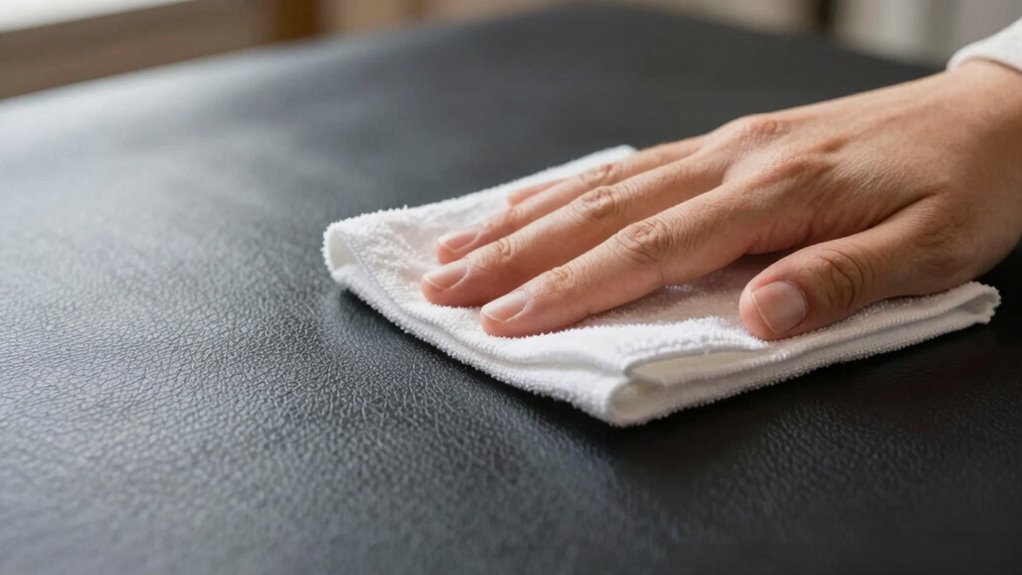
Cleaning faux leather might seem tricky, but with the right approach, you can keep it looking fresh and new. The key is to use proper cleaning tools and follow simple maintenance tips that prevent it from becoming dry or sticky. First, gather your cleaning tools—soft microfiber cloths are ideal because they won’t scratch the surface. A gentle, pH-balanced cleaning solution, like a mix of mild soap and water, works best to remove dirt and grime without damaging the material. Avoid harsh chemicals or alcohol-based cleaners, which can strip the faux leather’s finish and cause it to dry out or become sticky over time.
Use soft microfiber cloths and gentle soap solutions to clean faux leather without damage or stickiness.
When you clean your faux leather, start by dusting off the surface with a dry microfiber cloth. This removes loose dirt and debris, preventing scratches during the subsequent cleaning process. Next, dampen another clean cloth with your mild soap solution, making sure it’s not soaking wet. Wring out excess water thoroughly to avoid oversaturating the material. Gently wipe the surface in a circular motion, paying attention to creases and seams where dirt can accumulate. Always avoid scrubbing aggressively, as this can damage the faux leather’s coating and lead to peeling or stickiness. Additionally, using gentle cleaning techniques can help maintain the surface’s integrity and appearance.
After cleaning, it’s essential to follow up with a dry cloth to remove any residual moisture. This step helps prevent excess water from seeping into seams or edges, which can cause deterioration over time. To maintain the softness and flexibility of faux leather, regularly apply a conditioner or protective spray formulated specifically for synthetic materials. These products help keep the faux leather moisturized, preventing it from drying out and cracking. Remember, proper cleaning techniques and regular maintenance are crucial because they extend the lifespan of your furniture or accessories. Incorporating proper cleaning techniques can significantly extend its lifespan and appearance. Additionally, using appropriate cleaning solutions tailored for synthetic materials can further protect the surface from damage and residue buildup. Also, avoiding excessive water when cleaning helps prevent the buildup of residues that can make the surface sticky.
When cleaning, avoid using abrasive tools like steel wool or rough scrub brushes, as they can scratch the surface. Instead, stick to soft cloths and gentle motions. Also, steer clear of excessive water or harsh cleaning solutions, because they can leave behind sticky residues or cause the material to become stiff. If you notice any stubborn stains, test your cleaning solution on a small, inconspicuous area first to ensure it doesn’t cause discoloration. Proper maintenance and gentle cleaning techniques will help you preserve the appearance and texture of your faux leather, keeping it looking fresh without the risk of drying out or becoming sticky. Additionally, keeping faux leather out of direct sunlight can prevent fading and damage caused by UV rays, which is an often overlooked aspect of faux leather care.
As an affiliate, we earn on qualifying purchases.
Frequently Asked Questions
Can I Use Vinegar to Clean Faux Leather?
Yes, you can use vinegar to clean faux leather, but with caution. Vinegar safety is important, so dilute it with water—about one part vinegar to two parts water—to prevent any damage. As an alternative cleaner, vinegar works well, but always test it on a small, hidden area first. Avoid harsh chemicals, and don’t let vinegar sit too long to keep your faux leather from drying out or becoming sticky.
How Often Should I Clean Faux Leather Items?
You should clean your faux leather items every 2-4 weeks to maintain their appearance and prevent stains. Regular cleaning helps with stain prevention and keeps the material looking fresh. Remember to use a gentle cleaner and follow up with leather conditioning to keep the faux leather soft and prevent it from drying out or becoming sticky. Consistent care guarantees your faux leather stays looking great longer.
Is It Safe to Use Baby Wipes on Faux Leather?
Did you know that over 90% of parents use baby wipes regularly? Yes, you can safely use baby wipes on faux leather, but with caution. Most wipes are gentle, but some contain alcohol or fragrances that can cause faux leather damage over time. Always choose fragrance-free, alcohol-free baby wipes, and test a small area first. This way, you keep your faux leather clean without risking dryness or stickiness.
Can Cleaning Products Damage Faux Leather Over Time?
Cleaning products can damage faux leather over time if you don’t use them correctly. Harsh chemicals may cause cracking or stickiness, especially with frequent cleaning. To safeguard it, apply a leather conditioner occasionally and stick to a gentle cleaning frequency. Always test a small area first, and avoid abrasive cleaners. Proper care ensures your faux leather stays soft, shiny, and undamaged for years to come.
What Should I Do if My Faux Leather Gets Stained?
If your faux leather gets stained, act quickly by gently wiping the stain with a damp cloth. Avoid harsh cleaners to prevent color fading or damage, and consider using a specialized faux leather cleaner. For scratches, apply a color-matched repair balm to restore appearance. Regular cleaning and prompt stain removal help maintain your faux leather’s look, preventing long-term damage like fading or persistent marks.
pH-balanced faux leather cleaner
As an affiliate, we earn on qualifying purchases.
As an affiliate, we earn on qualifying purchases.
Conclusion
Keeping your faux leather clean and conditioned is key to maintaining its appearance and longevity. Regular gentle cleaning prevents buildup and keeps it looking fresh without drying out or becoming sticky. Did you know that faux leather accounts for nearly 30% of the leather market? By following simple cleaning tips, you can guarantee your faux leather stays vibrant and durable, saving you money and effort in the long run. With proper care, your faux leather pieces will remain stylish and comfortable for years to come.
As an affiliate, we earn on qualifying purchases.
As an affiliate, we earn on qualifying purchases.
Fall Picks
fall essentials
As an affiliate, we earn on qualifying purchases.