
Vibration and kneading feel totally different because they activate different nerve receptors and tissue responses. Vibration creates quick, tingling sensations by stimulating mechanoreceptors like Pacinian corpuscles, giving an energizing, superficial effect. Kneading applies steady, deep pressure that engages deeper tissues and sensors like Merkel cells and Ruffini endings, promoting relaxation and tension release. Understanding why these sensations differ helps you choose what best suits your needs—keep exploring to find out more.
Key Takeaways
- Vibration delivers rapid, oscillating stimuli that stimulate superficial nerve endings, creating a tingling or buzzing sensation.
- Kneading involves slow, sustained pressure and rolling motions that target deeper tissues, producing a grounding, firm feeling.
- Vibration activates mechanoreceptors sensitive to high-frequency stimuli, resulting in quick neural responses.
- Kneading stimulates Merkel cells and Ruffini endings, engaging deeper tissues with steady pressure for a more prolonged sensation.
- The differing sensations arise from the distinct movement patterns, pressure depth, and neural pathways each technique engages.
As an affiliate, we earn on qualifying purchases.
What Are Vibration and Kneading Massage Techniques?
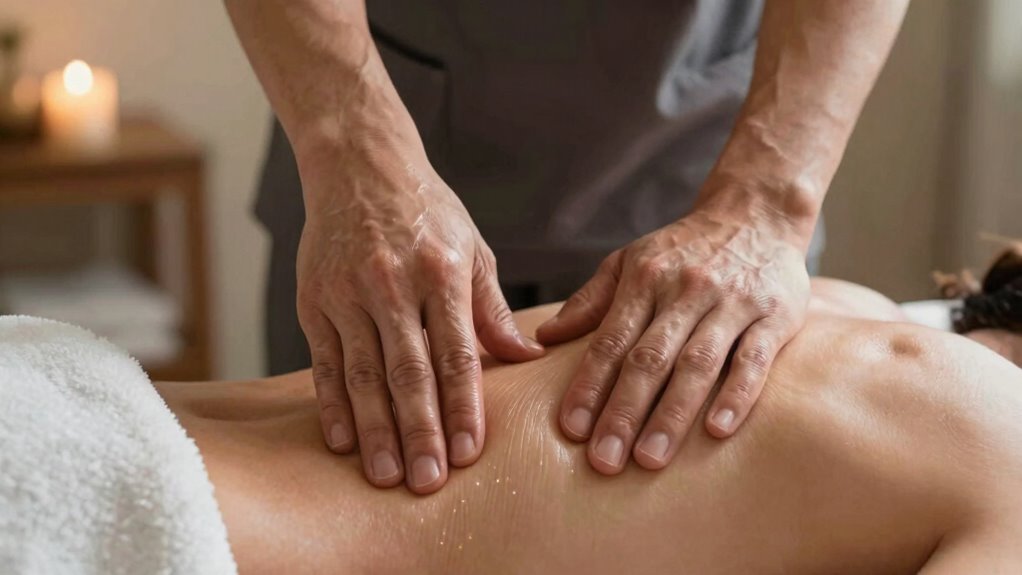
Vibration and kneading are two popular massage techniques that target muscle tension and promote relaxation. When using these methods, massage oils can help reduce friction and improve glide, making the experience smoother. If your skin is sensitive, choosing the right massage oils is essential to avoid irritation. Vibration involves rapid, oscillating movements that stimulate nerve endings and increase blood flow, often feeling like a buzzing sensation. Kneading, on the other hand, uses slow, rhythmic presses and stretches that mimic kneading bread, working deeply into muscle tissue. Both techniques can be adapted based on skin sensitivity, ensuring comfort and effectiveness. By understanding these basic methods, you can better appreciate their distinct sensations and benefits for your muscles and overall relaxation.
As an affiliate, we earn on qualifying purchases.
How Do Vibration and Kneading Stimuli Interact With Skin and Muscles?
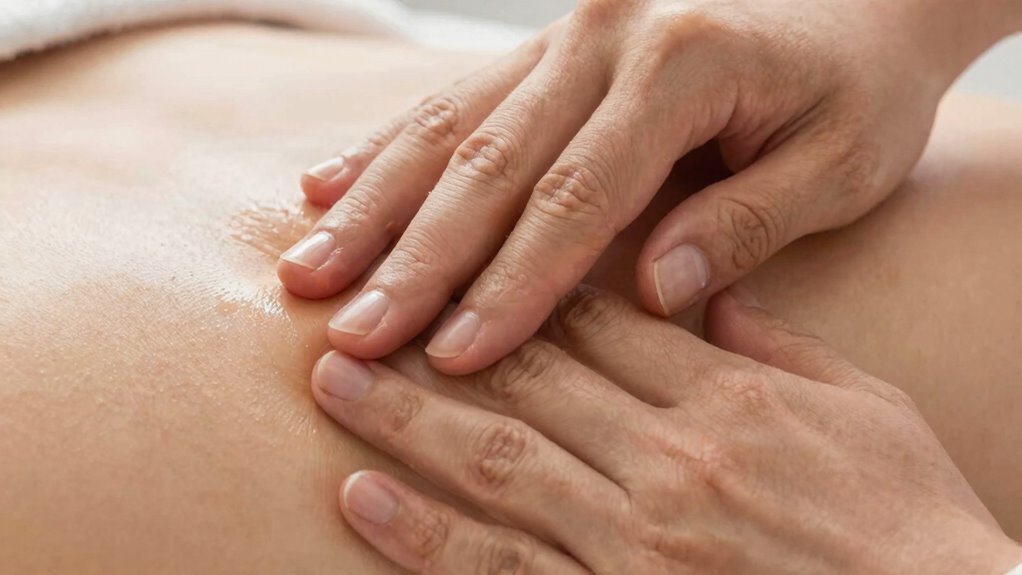
Both vibration and kneading massage techniques influence how your skin and underlying muscles respond to touch. Vibration stimulates tactile feedback by sending rapid, rhythmic signals to your skin, which can enhance sensory awareness. It also promotes muscle activation by encouraging muscles to contract and relax quickly, helping relieve tension. Kneading, on the other hand, applies sustained pressure and rolling motions that engage deeper layers of tissue. This stimulates tactile receptors more gradually and encourages blood flow, leading to muscle relaxation and improved flexibility. While vibration offers quick, sharp sensations that heighten sensory input, kneading produces a more sustained, comforting feeling that deeply engages muscles. Additionally, natural pools can be integrated into backyard spaces to create a soothing environment that complements massage therapy. Understanding how these stimuli interact with sensory receptors can help optimize their benefits for relaxation and recovery. Moreover, knowing the different types of stimuli and their effects can assist in customizing massage techniques to individual preferences and needs. Recognizing the body’s response to touch can further enhance the effectiveness of these techniques for relaxation and healing, as awareness of sensory processing is key to tailoring treatments effectively.
massage oils for deep tissue massage
As an affiliate, we earn on qualifying purchases.
As an affiliate, we earn on qualifying purchases.
How Does Your Nervous System Perceive These Stimuli?

Your nervous system detects vibration and kneading through different neural pathways, each sending specific signals. Vibration prompts a quick response, alerting you almost instantly, while kneading targets deeper tissues for a more sustained effect. Understanding how your nerves perceive these stimuli helps you appreciate their unique impacts on your body. Additionally, research into how the nervous system processes these sensations reveals that sensory pathways are specialized to handle different types of tactile inputs, ensuring precise perception. The distinct neural mechanisms involved in processing these sensations further emphasize their different roles in sensory experience. Moreover, the neural adaptation to these stimuli varies, influencing how we perceive prolonged versus brief tactile inputs. Maintenance and durability considerations, as outlined in the maintenance costs of equipment, also play a role in understanding the long-term effects of repeated stimuli on your nervous system.
Different Neural Pathways Activated
When you experience vibration or kneading, your nervous system activates distinct neural pathways that process these stimuli differently. Vibration primarily triggers neural activation in mechanoreceptors called Pacinian corpuscles, which are sensitive to rapid, high-frequency stimuli. These receptors send signals via specific sensory neurons dedicated to detecting vibrations. In contrast, kneading activates different mechanoreceptors, such as Merkel cells and Ruffini endings, responsible for sustained pressure and texture. This specialized sensory processing allows your brain to distinguish between the quick, pulsating sensation of vibration and the steady, kneading pressure. Your nervous system effectively routes these signals through separate neural pathways, ensuring each sensation is interpreted accurately. This neural activation difference underpins why vibration and kneading feel so distinct to you.
Vibration Triggers Rapid Response
Vibration triggers a rapid response in your nervous system because specialized sensory receptors quickly detect these high-frequency stimuli. When you experience vibration, your tactile feedback system kicks in immediately, providing instant information about the stimulus. These receptors are highly sensitive to rapid changes, allowing your nervous system to respond swiftly. However, with continuous vibration, sensory adaptation occurs, reducing the receptors’ sensitivity over time, which lessens your perception of ongoing stimuli. This quick detection and adaptation enable your body to prioritize new or more intense sensations. As a result, vibration feels sharp and fleeting, engaging your nervous system in a rapid, high-fidelity communication loop that keeps you alert to subtle changes in your environment. Additionally, the body’s ability to detect high-frequency stimuli allows for quick reflexes and responses to potentially harmful or important stimuli. Furthermore, research into sensory adaptation reveals how our nervous system modulates perception based on stimulus duration and intensity.
Kneading Engages Deeper Tissues
Kneading stimulates deeper tissues by applying sustained pressure that penetrates beyond the surface layer of the skin. This technique actively engages muscles, prompting a strong sensory response from your nervous system. As you feel the pressure, your brain perceives increased tissue depth and muscle engagement, signaling that deeper structures are being worked. Unlike vibrations, which primarily stimulate surface receptors, kneading’s sustained force reaches deeper tissue layers, enhancing relaxation and releasing tension in muscles. Your nervous system interprets this sensation as a more profound, grounding experience. This deeper engagement triggers a powerful feedback loop, encouraging the release of endorphins and improving circulation. Additionally, hydrotherapy techniques often utilize kneading motions to maximize therapeutic benefits. Recognizing how sensory perception varies between these stimuli can help tailor therapeutic approaches to individual needs. Moreover, understanding the nervous system response to these different stimuli can inform more effective massage techniques for relaxation and therapy.
A deeper understanding of tissue engagement can also optimize therapy sessions for individual comfort and effectiveness.
As an affiliate, we earn on qualifying purchases.
Vibration vs Kneading: How Do They Feel and Which Is Right for You?
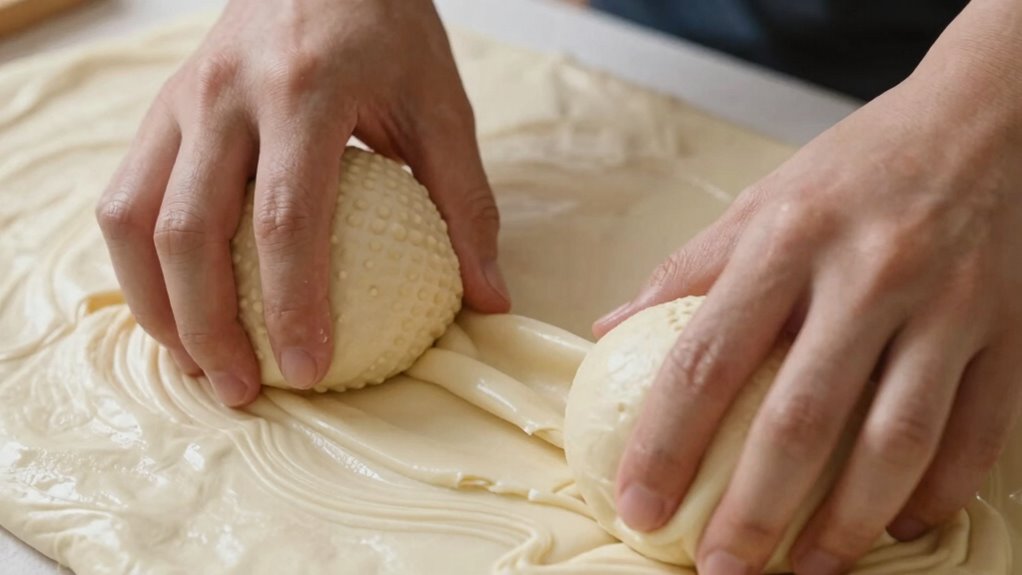
Understanding how vibration and kneading feel can help you choose the right massage method for your needs. Vibration delivers rapid, rhythmic pulses that create a tingling or buzzing sensation, often feeling light and invigorating. It’s great for promoting circulation and relaxation without deep pressure. Kneading, on the other hand, involves slow, firm strokes that mimic a kneading motion, providing a deeper, more targeted touch. This technique benefits muscle tension relief and stimulates blood flow to deeper tissues. The main technique differences shape how you experience each method: vibration offers a more superficial, energizing feel, while kneading delivers a more intense, muscle-focused experience. Knowing how each feels helps you select the massage benefits you want, whether it’s relaxation, muscle recovery, or increased circulation.
How Are Vibration and Kneading Applied in Massage Therapy?
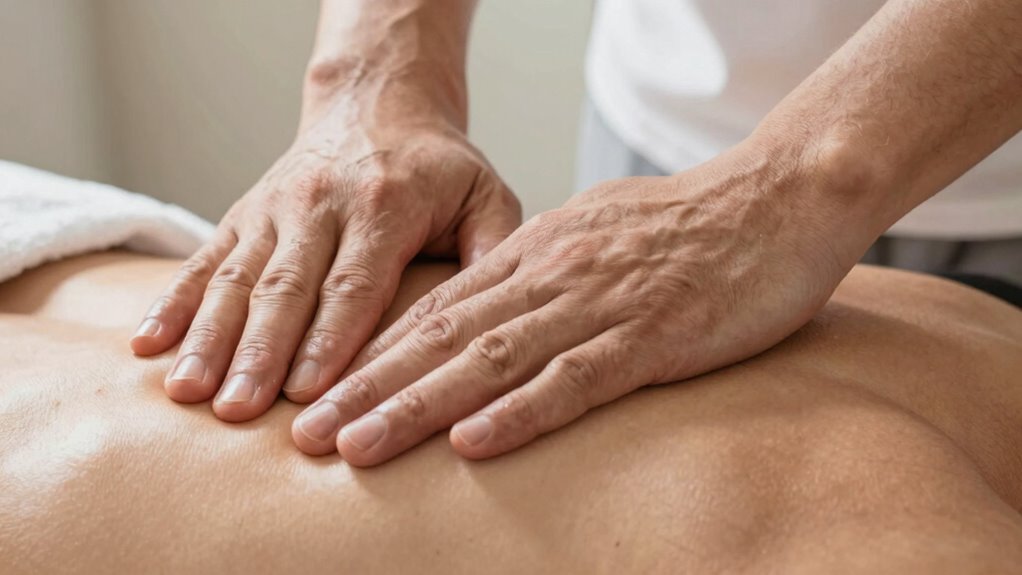
In massage therapy, both vibration and kneading are applied through specialized techniques that target different muscle layers and sensations. Vibration uses rapid oscillations to stimulate nerves and relax muscles, often combined with massage oils to reduce friction and enhance skin sensitivity. Kneading involves deep, rhythmic compression to loosen muscles and improve circulation, also benefiting from massage oils for smoother movement. The choice depends on your goals—whether to invigorate or relax. To deepen your understanding, consider this: tissue response plays a crucial role in determining the effectiveness of each technique. Additionally, muscle layers can respond differently to each method, influencing the overall therapeutic outcome. Understanding how different massage techniques interact with tissue types can help tailor treatments for optimal results, especially when considering the different sensations these methods produce. Furthermore, the application of pressure levels can significantly impact the effectiveness and comfort level during therapy sessions.
When Should You Use Vibration or Kneading to Boost Circulation or Relax Muscles?
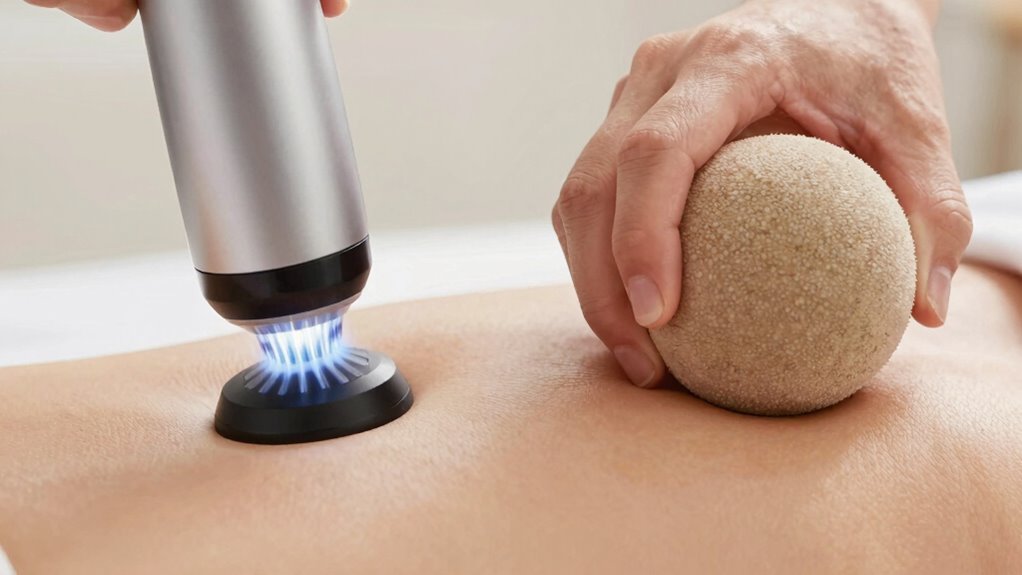
Deciding when to use vibration or kneading depends on your specific goal—whether to boost circulation or relax muscles. If you want to increase blood flow and improve muscle tension, vibration is effective because it stimulates deeper tissue quickly, promoting better circulation and loosening tight muscles. Use vibration when your muscles feel tense or stiff, as it can enhance skin elasticity and loosen accumulated tension. On the other hand, kneading is best when you’re seeking relaxation, especially for areas with persistent muscle tension or knots. It’s gentler and encourages blood flow gradually, helping to relax and stretch muscles while improving skin elasticity over time. Choose vibration for rapid stimulation and kneading for soothing, sustained pressure based on your needs. Additionally, understanding muscle response can help you select the most appropriate technique for your comfort and health benefits. Being aware of tissue sensitivity can further assist in choosing a method that minimizes discomfort and maximizes effectiveness. Recognizing individual tolerance is also important to prevent overstimulation and ensure a comfortable experience. Considering tissue response to pressure can help tailor your approach for optimal results and comfort.
How Personal Preferences Shape Your Choice of Massage Technique
Your sensory preferences play a big role in choosing a massage technique; some people prefer gentle, soothing touches, while others seek more vigorous pressure. Your past experiences with massages also influence what feels best for you and what you tend to favor. By paying attention to how different techniques make you feel, you can select the method that provides the most comfort and relief.
Sensory Preferences Influence Choices
Personal preferences play a significant role in choosing a massage technique, as sensory experiences directly influence comfort and relaxation. Your sensory adaptation can make certain sensations more appealing or overwhelming, guiding your preference for vibration or kneading. For example, if you’re more sensitive to deep pressure, you might favor gentle vibrations that don’t trigger discomfort. Emotional responses also shape your choice; if a specific sensation makes you feel calm or energized, you’re more likely to seek out that experience regularly. Your past experiences with different techniques can reinforce these preferences, creating a feedback loop that influences future selections. Ultimately, understanding how your sensory preferences and emotional responses impact your comfort helps you pick the massage style that best supports your relaxation and well-being.
Experience Shapes Technique Preference
Experience with different massage techniques naturally influences which methods you prefer, as repeated exposure helps you recognize what feels most effective and enjoyable. Over time, your sensory adaptation to certain sensations makes some techniques more appealing, while others become less stimulating. This familiarity builds your confidence in selecting techniques that suit your needs, whether it’s the deep pressure of kneading or the gentle rhythm of vibration. Your awareness of technique versatility also grows, allowing you to appreciate how different methods target specific issues or relaxation goals. As you experiment, you develop a clearer sense of what resonates with your body, shaping your preferences based on personal comfort and effectiveness. Ultimately, your experience guides you toward the massage techniques that feel best for you.
Should You Use Vibration or Kneading for Relaxation and Self-Care?
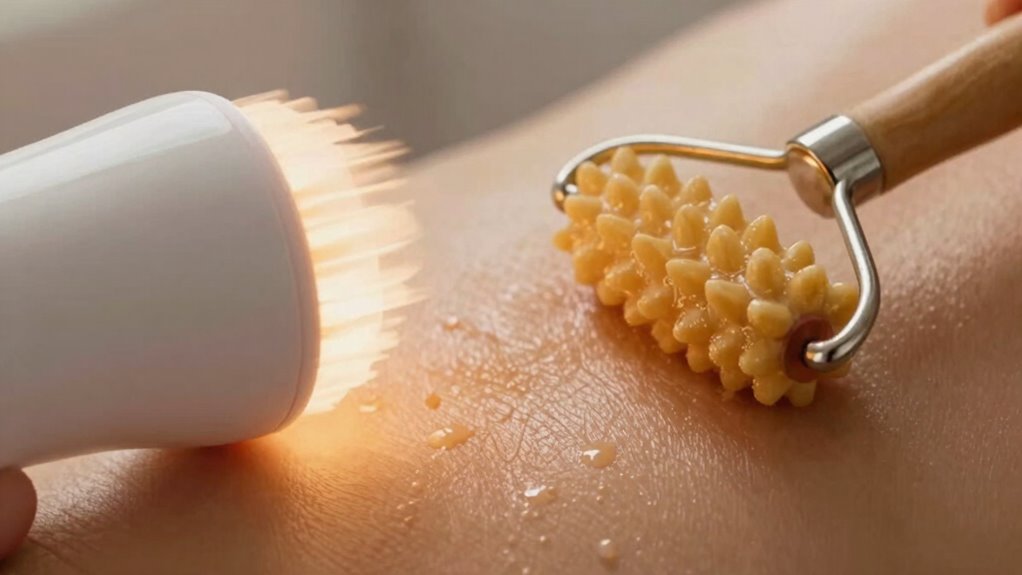
Deciding between vibration and kneading for relaxation depends on your specific needs and preferences. Many massage misconceptions suggest that one method is universally better, but therapy myths often overlook individual comfort and goals. If you seek quick relief and a gentle, soothing sensation, vibration might be your best choice, as it promotes relaxation through rhythmic pulses. On the other hand, kneading offers a deeper, more targeted approach, helping to work out tension and stiffness. Consider what feels best for your body and what you’re hoping to achieve—whether it’s calming your mind or loosening tight muscles. Ultimately, both techniques can be effective, but your personal response and comfort level should guide your choice for ideal self-care.
How to Pick the Best Technique for Your Goals and Comfort
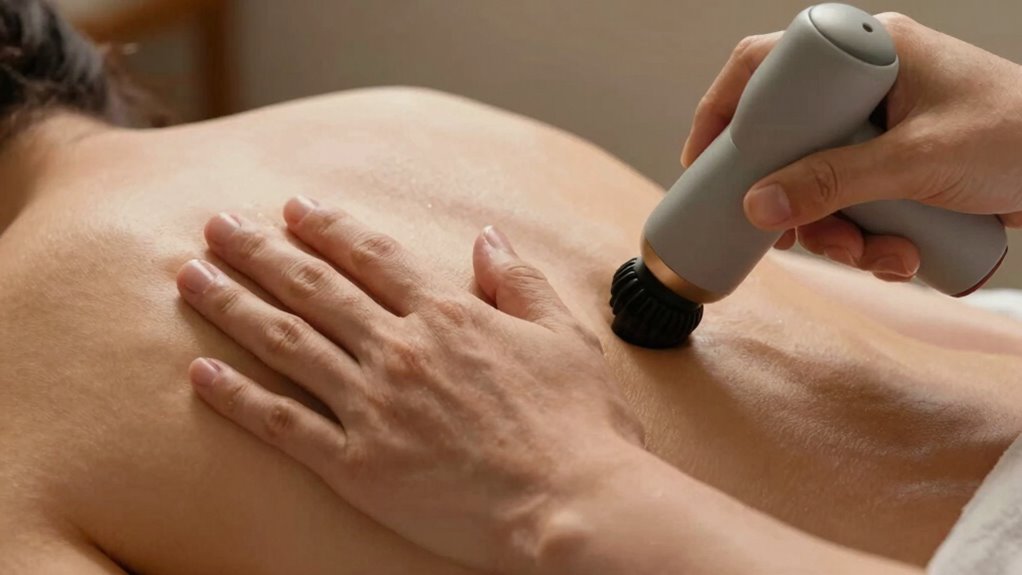
To choose the best technique, start by clarifying your goals—whether it’s relaxation, muscle recovery, or pain relief. Then, consider your comfort and personal preferences, since enjoying the process matters just as much as the results. Making an informed decision guarantees you stay motivated and get the most benefit from your choice.
Choosing Based on Goals
Choosing the right technique depends on your specific goals and comfort level. If your aim is deep muscle relief or targeted therapy, kneading offers massage innovation that allows for precise pressure and muscle engagement. It’s ideal for therapy customization, helping you address specific tension points. Conversely, vibration techniques excel at promoting relaxation and circulation, making them suitable if your goal is stress relief or gentle recovery. Consider how each sensation aligns with your desired outcome—whether you seek intense, focused therapy or a calming, soothing experience. Your comfort should guide your choice; if one feels too aggressive or too mild, experimenting with the other can help find the best fit. Ultimately, understanding your goals ensures you select a technique that maximizes benefits and enhances your overall well-being.
Prioritizing Comfort and Preference
When selecting between vibration and kneading techniques, your comfort and personal preference should be key guides. Your hobby exploration and awareness of cultural differences can help you find the most enjoyable choice. Consider how each sensation makes you feel—relaxed, energized, or simply more at ease. Trust your instincts and don’t be afraid to experiment.
- Discover which technique sparks joy during your relaxation routine
- Embrace cultural differences that influence how techniques are perceived worldwide
- Prioritize what feels best for your body, not just trends
- Remember, your comfort can turn a simple activity into a rewarding experience
What Science Says About the Effects of Vibration and Kneading
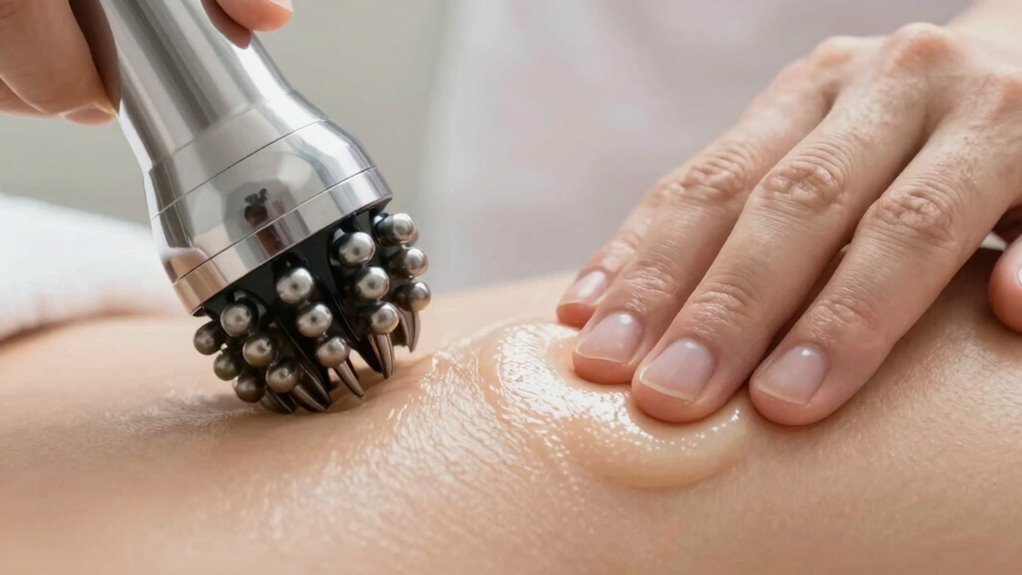
Scientific studies reveal that both vibration and kneading therapies impact muscle tension and blood flow differently. Vibration stimulates a rapid neural response, activating sensory receptors that increase blood circulation and reduce muscle stiffness. However, with repeated exposure, sensory adaptation occurs, lessening the sensation over time. Kneading, on the other hand, elicits a more sustained neural response by applying steady pressure, which promotes deeper muscle relaxation and improved circulation. Unlike vibration, kneading’s effects are less prone to sensory adaptation, maintaining its efficacy longer during a session. Research suggests that vibration’s quick neural stimulation is ideal for immediate relief, while kneading’s steady pressure fosters longer-lasting relaxation. Understanding these mechanisms helps you choose the therapy that best aligns with your needs.
Frequently Asked Questions
Can Vibration or Kneading Help Alleviate Chronic Muscle Pain?
Yes, vibration and kneading can help alleviate chronic muscle pain by promoting muscle relaxation and providing pain relief. Vibration stimulates blood flow and reduces tension, while kneading loosens tight muscles and eases stiffness. Both techniques encourage your muscles to relax, which can lessen discomfort and improve mobility. Incorporating these sensations into your routine may offer effective, non-invasive pain relief, especially when combined with other therapies or regular self-care.
Are There Any Risks Associated With Overusing Vibration Therapy?
Overusing vibration therapy can pose risks, like skin irritation or nerve sensitivity. For example, a person who used it excessively experienced increased discomfort. To avoid issues, follow safety precautions, such as limiting session duration and frequency. While short-term use is generally safe, long-term effects aren’t fully understood, so it’s wise to consult a healthcare professional and monitor your body’s response regularly to prevent potential complications.
How Do Age and Skin Type Influence Sensation Differences?
Your age and skin type substantially influence how you perceive vibration and kneading sensations. If you have sensitive skin, you might find vibration more intense or uncomfortable, especially as you age and experience age-related changes like reduced skin elasticity. Younger skin tends to be more resilient, so sensations feel milder. Understanding your skin sensitivity helps you choose the right therapy, ensuring a comfortable experience tailored to your age and skin type.
Is One Technique More Effective for Sports Recovery Than the Other?
Think of your muscles as a busy highway; vibration acts like a quick sweep, breaking up congestion, while kneading is a slow, detailed repair. Both boost circulation and relieve muscle tension, but vibration’s rapid pulses may help you recover faster after intense activity. If you need quick relief and enhanced circulation, vibration’s your best bet. For deeper muscle relaxation, kneading offers targeted tension release, making either technique effective depending on your recovery needs.
Can Combining Vibration and Kneading Enhance Overall Relaxation Benefits?
Yes, combining vibration and kneading can enhance overall relaxation benefits through multi sensory integration, creating a relaxation synergy. When you experience both sensations together, your nervous system receives diverse stimuli that promote deeper calmness and stress relief. This multi sensory approach can improve circulation, reduce muscle tension, and elevate your sense of well-being more effectively than using either technique alone. Give it a try for a more all-encompassing relaxation experience.
Conclusion
Ultimately, whether you prefer vibration or kneading, choosing the right technique depends on your personal needs and comfort. Think of it like selecting your own magic potion—each offers unique benefits to soothe your muscles and relax your mind. Don’t be afraid to experiment, just like explorers of old charted new worlds. Trust your senses and find what feels best; after all, your relaxation journey is uniquely yours.