If you have a pacemaker, using a massage chair can be safe if you follow some precautions. Keep the chair at a safe distance from your chest, avoid direct contact over the device, and start with low settings for short sessions. Always consult your cardiologist before use, and monitor how you feel during and after. By staying cautious, you can enjoy benefits without risking your device—learn more to guarantee safe use.
Key Takeaways
- Consult your cardiologist before using a massage chair to assess personal safety and device compatibility.
- Maintain a safe distance from the pacemaker site and avoid direct contact during massage sessions.
- Use low-intensity settings and short durations initially, monitoring for adverse symptoms.
- Follow manufacturer guidelines and warnings regarding electronic interference and device safety measures.
- Limit exposure to other electronic devices like cell phones and microwaves during massage therapy.
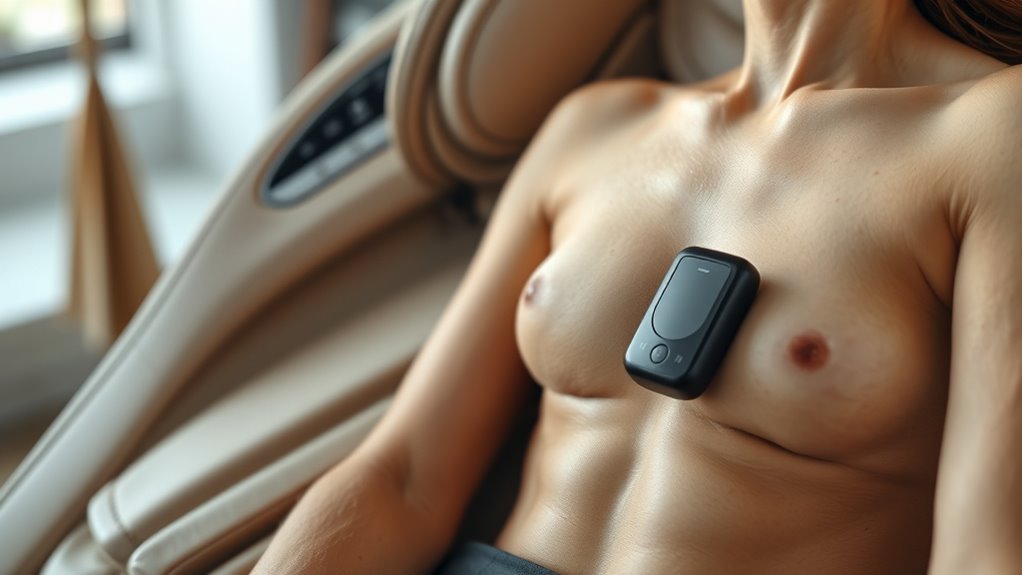
If you have a pacemaker, using a massage chair might seem risky, but understanding how these devices interact can help you make safe choices. The primary concern revolves around electrical interference, which can potentially disrupt your pacemaker’s function. Massage chairs generate electrical signals through their motors and electronic components, and these signals might interfere with the delicate electronics of your medical device. To guarantee medical device safety, it’s essential to know which areas to avoid and how to recognize signs of interference.
Most modern pacemakers are designed to be resistant to typical electrical interference, but this doesn’t mean they’re entirely immune. Certain features of massage chairs, such as vibratory or pulsing settings, could cause electromagnetic disturbances that might affect your device’s performance. The risk is generally low if you follow recommended guidelines, but it’s critical to stay informed. You should keep the massage chair at a reasonable distance from your chest, avoiding direct contact over the pacemaker site. This helps minimize any potential electrical interference that could compromise your device’s function.
In terms of medical device safety, consulting your cardiologist is an essential step before using a massage chair. They can advise you on specific precautions based on your pacemaker model and health condition. Some devices have built-in shielding or filtering features that reduce interference, but it’s always safer to err on the side of caution. When you do try a massage chair, start with low-intensity settings and short sessions to monitor how your body reacts. If you experience dizziness, irregular heartbeat, or discomfort, stop immediately and seek medical advice.
Understanding the importance of electrical interference and how it relates to your pacemaker’s safety allows you to use massage chairs responsibly. If your device manufacturer provides guidelines or warnings, review them carefully. Many recommend avoiding placement of the massage chair directly over the device or in close proximity for extended periods. Additionally, be aware that other electronic devices, such as cell phones or microwaves, can also generate interference, so keep those away from your pacemaker area. Electrical interference can be minimized by maintaining a safe distance and following medical advice.

FURNIMAT Massage Chair Full Body Zero Gravity Recliner, 2026 New Version
- Full Body Massage Design: Includes touchscreen, zero gravity, heated areas
- 14 Shiatsu Rollers: Maximize massage with 14 rollers for full coverage
- Deep Tissue Relief: Airbags and rollers provide targeted deep tissue massage
As an affiliate, we earn on qualifying purchases.
As an affiliate, we earn on qualifying purchases.
Frequently Asked Questions
Can Massage Chairs Affect Other Types of Medical Implants Besides Pacemakers?
Yes, massage chairs can affect other medical implants besides pacemakers. They may cause electromagnetic interference that disrupts implant function, especially if the device isn’t compatible with such interference. You should always check your implant’s compatibility with electromagnetic fields and consult your healthcare provider before using a massage chair. Being cautious helps prevent potential complications and guarantees your implant’s safety during massage therapy.
Are There Specific Massage Techniques Safer for Pacemaker Users?
You should stick to gentle techniques and avoid electrical stimulation when using a massage chair if you have a pacemaker—it’s better to play it safe than sorry. Gentle massage techniques reduce the risk of interfering with your device. Always consult your healthcare provider before trying new massage methods, and follow the manufacturer’s guidelines. Remember, when it comes to health, a little caution goes a long way.
How Long Should I Wait After a Pacemaker Implantation Before Using a Massage Chair?
You should wait at least 4 to 6 weeks after your pacemaker implantation before using a massage chair. This recovery period allows your body to heal and reduces the risk of displacing or damaging the device. During this time, avoid any activities that involve direct pressure or vibration near the implantation site. Always consult your doctor for personalized timing restrictions and make sure you’re fully recovered before resuming massage therapy.
Do All Massage Chair Brands Meet Safety Standards for Pacemaker Users?
You might think all massage chair brands meet safety standards for pacemaker users, but that’s not always true. Not every chair guarantees massage chair safety or pacemaker compatibility. Always check for specific certifications and consult your healthcare provider before purchasing. Look for brands that explicitly state their products are safe for pacemaker wearers. Your safety depends on choosing a chair with proper safety features and adhering to manufacturer guidelines.
What Signs Indicate a Pacemaker Might Be Affected During Massage Therapy?
If you experience electrical interference or abnormal sensations like tingling, discomfort, or fluttering during massage therapy, your pacemaker might be affected. These signs indicate potential disruption of your device’s function. You should stop the massage immediately and consult your healthcare provider. Always inform your therapist about your pacemaker beforehand, and follow safety guidelines to minimize risks and guarantee your health and safety during treatment.

BestMassage | Portable Massage Chair | Dark Black | Folding Tattoo Chair
- Adjustable Face Cradle and Armrest: Customizable comfort for clients
- High-Density Foam Cushion: Supports heavy salon use
- Lightweight and Foldable Design: Easy to transport and store
As an affiliate, we earn on qualifying purchases.
As an affiliate, we earn on qualifying purchases.
Conclusion
To stay safe and sound, always heed the guidelines when using massage chairs with pacemakers. Prioritize precautions, and prevent potential problems by being cautious and conscious. Careful consideration and consistent communication can create comfort and confidence. Remember, safety starts with you—so stay informed, stay attentive, and enjoy the soothing benefits without the stress. Your well-being is worth the wisdom of wise, wary use.

COMFIER Back Massager with Heat, Vibration Massage Seat Cushion with 8 Massage Nodes & 5 Modes, Adjustable Chair Massager Pad for Home Office, Heated Chair Pad, Gifts for Women Men Mom Dad
- Multiple Massage Modes: 5 massage modes with 8 motors
- Adjustable Heat Settings: Two temperature options for warmth
- Customizable Vibration Intensity: 4 vibration levels for personalized comfort
As an affiliate, we earn on qualifying purchases.
As an affiliate, we earn on qualifying purchases.
FURNIMAT Massage Chair Full Body Zero Gravity Recliner, 2026 New Version
- Full Body Massage Design: Includes touchscreen, zero gravity, heated areas
- 14 Shiatsu Rollers: Maximize massage with 14 rollers for full coverage
- Deep Tissue Relief: Airbags and rollers provide targeted deep tissue massage
As an affiliate, we earn on qualifying purchases.
As an affiliate, we earn on qualifying purchases.