
To adjust a chair for shared family use without losing precision, set the height, lumbar, armrests, tilt, and seat depth to suit each user. Use quick-release levers and mark preferred positions with stickers or tape for easy switching. Make certain each adjustment aligns with ergonomic principles, promoting comfort and proper posture. Keep these settings consistent across users, and you’ll maintain a precise fit. Continue exploring tips to make sharing even smoother and more comfortable for everyone.

Get wellness gear delivered free with Prime
- Fast, free delivery on millions of items
- Prime Video, Amazon Music and more included
- Member-only deals all year
Key Takeaways
- Mark and label adjustable settings, such as height and lumbar support, for quick, consistent positioning by different users.
- Use removable stickers or tape to indicate preferred positions without altering the original adjustments.
- Incorporate adjustable features like tilt and armrests to accommodate individual ergonomic needs easily.
- Train family members on proper adjustment procedures to maintain precision and comfort.
- Regularly verify and readjust settings to ensure ergonomic alignment for each user.

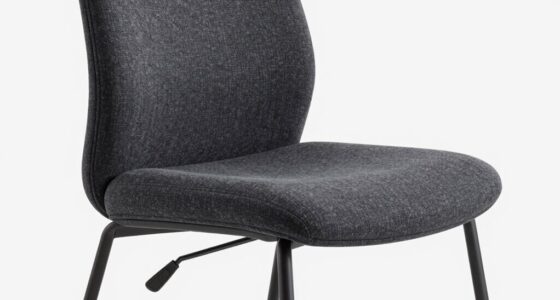
Adjusting a chair for shared family use guarantees everyone can sit comfortably and safely. When you set up a chair for multiple users, it’s crucial to consider ergonomic posture and comfort customization. Proper adjustments help prevent discomfort and potential health issues, making sure each family member can work or relax without strain. To start, check the chair’s height. Ensure it’s set so that your feet rest flat on the floor, with knees at a 90-degree angle. This position promotes good ergonomic posture and reduces pressure on your lower back. If the chair has a gas lift or height adjustment lever, use it to find that ideal position quickly. For a family setting, it’s helpful to set a height that suits the average user or to mark preferred positions with a sticker or tape, so everyone can quickly find their comfort zone.
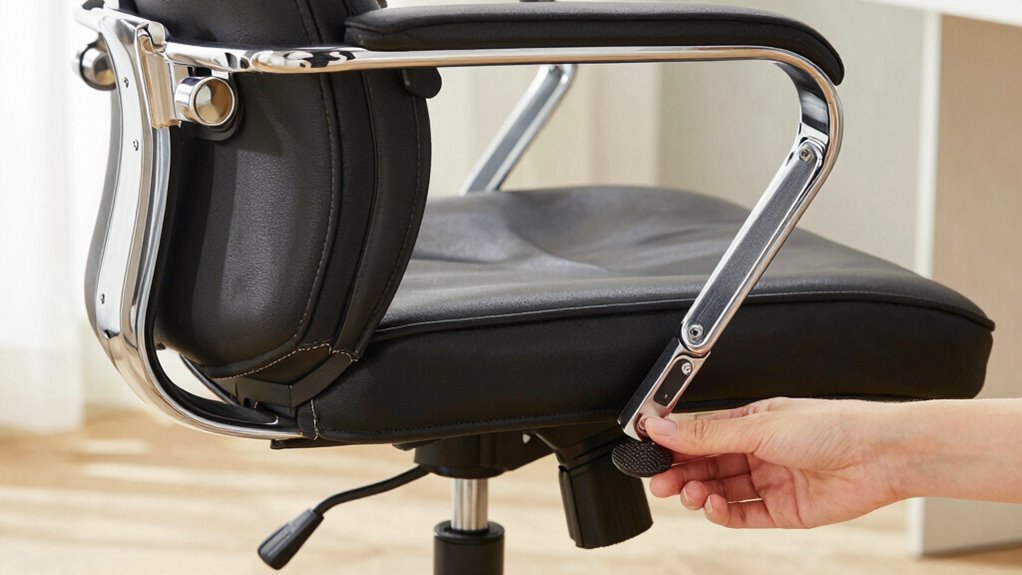
Next, focus on the lumbar support. Good lumbar support encourages proper spine alignment and helps prevent slouching. Adjust the lumbar curve so it fits the natural inward curve of your lower back. Some chairs have adjustable lumbar pillows, while others require you to reposition the support mechanism. Making sure the lumbar support is positioned correctly allows each user to maintain an ergonomic posture, reducing back fatigue over long periods. The armrests are also crucial for comfort customization. Adjust them so your shoulders are relaxed, elbows are close to your sides, and forearms rest comfortably. Avoid raising your shoulders or straining to reach the armrests since that can lead to shoulder tension. If armrest height isn’t adjustable, consider adding cushions or pads to improve comfort for different users. Proper armrest positioning is essential for maintaining relaxed shoulders and reducing strain during extended sitting. Additionally, ensuring the armrests are adjustable or well-padded can significantly improve overall comfort for multiple users. To maximize comfort, it’s also beneficial to evaluate the adjustment options available on the chair, as a variety of features can enhance individual support and adaptability.
The chair’s tilt and recline features can greatly impact comfort, especially during extended use. Adjust the tilt tension so that leaning back feels natural and supported, without requiring excessive effort. For shared use, setting a moderate recline that suits most users helps maintain ergonomic posture while still allowing relaxation. Remember to check the seat depth—if it’s adjustable, set it so that there’s about a two-finger space between the edge of the seat and the back of your knees. This prevents pressure on your thighs and promotes healthy circulation. Also, consider the adjustability options available on the chair, as different features can enhance comfort and support for diverse users. Incorporating ergonomic principles into your chair setup can further optimize comfort and safety for everyone. When all adjustments are made, double-check that the chair provides consistent support across different positions, ensuring everyone can sit comfortably and safely. By paying attention to these details, you create a flexible, ergonomic setup that caters to your family’s diverse needs without sacrificing precision.
ergonomic adjustable office chair
As an affiliate, we earn on qualifying purchases.
As an affiliate, we earn on qualifying purchases.
Frequently Asked Questions
How Often Should the Chair Be Readjusted for Different Users?
You should readjust the chair for different users each time someone new sits down, ensuring they maintain ergonomic posture. Adjustment frequency depends on how often the chair is used by different people, but a good rule is to check and tweak settings whenever a new user takes a seat. This keeps comfort ideal and prevents strain, promoting good ergonomics and proper support for everyone.
What Tools Are Needed for Making Adjustments?
Investigation suggests that proper tool calibration enhances adjustment accuracy, ensuring safety and consistency. To adjust your shared family chair safely, you’ll need a screwdriver, an Allen wrench, or adjustable pliers, depending on the chair’s mechanisms. Always prioritize adjustment safety by turning tools slowly and carefully to avoid damage. Confirm that all parts are securely tightened after adjustments, maintaining precision for every user. Regularly inspect tools for wear to keep them effective.
Can Children Safely Adjust the Chair Themselves?
Children shouldn’t adjust the chair themselves because it can compromise child safety and adjustment safety. Instead, you should supervise and guide them through the process. Make certain they understand how to handle the adjustments carefully, and only allow them to make minor changes under your watch. This approach guarantees the chair remains safe and properly adjusted, preventing accidents or damage. Always prioritize safety and clear instructions during adjustments.
How Do I Ensure the Chair Remains Comfortable After Adjustments?
To keep the chair comfortable after adjustments, focus on maintaining ergonomic posture and padding support. Guarantee the seat height and tilt align with your natural posture, keeping your feet flat and knees at a 90-degree angle. Use padding support if needed, like cushions or lumbar rolls, to reduce strain. Regularly check and tweak these settings to stay comfortable and promote good posture during extended use.
Are There Recommended Maintenance Tips for Shared Chairs?
Keep your shared chairs in top shape by regularly cleaning the fabric, which prevents dirt buildup and prolongs their life. Don’t forget to spot clean or deep clean with suitable fabric cleaners. If the cushions become worn or saggy, replacing them is a quick fix to maintain comfort and support. Think of it as giving your chair a little tune-up, ensuring it stays inviting and functional for everyone.
chair height and lumbar support adjustment
As an affiliate, we earn on qualifying purchases.
As an affiliate, we earn on qualifying purchases.
Conclusion
Now that you’ve tuned your chair into a perfect fit for everyone, it’s like setting the stage for a smooth family dance. With each adjustment, you’re choreographing comfort and precision into your daily routine, turning an ordinary seat into a trusty partner. Keep these tips in mind, and your chair will be ready to adapt as easily as a chameleon changing its colors—always blending seamlessly into your family’s rhythm. Now, sit back and enjoy the harmony!
As an affiliate, we earn on qualifying purchases.
As an affiliate, we earn on qualifying purchases.
Halloween Picks
halloween
As an affiliate, we earn on qualifying purchases.