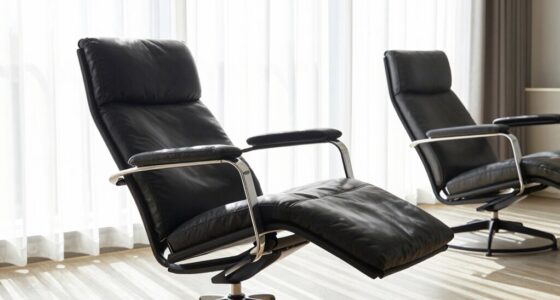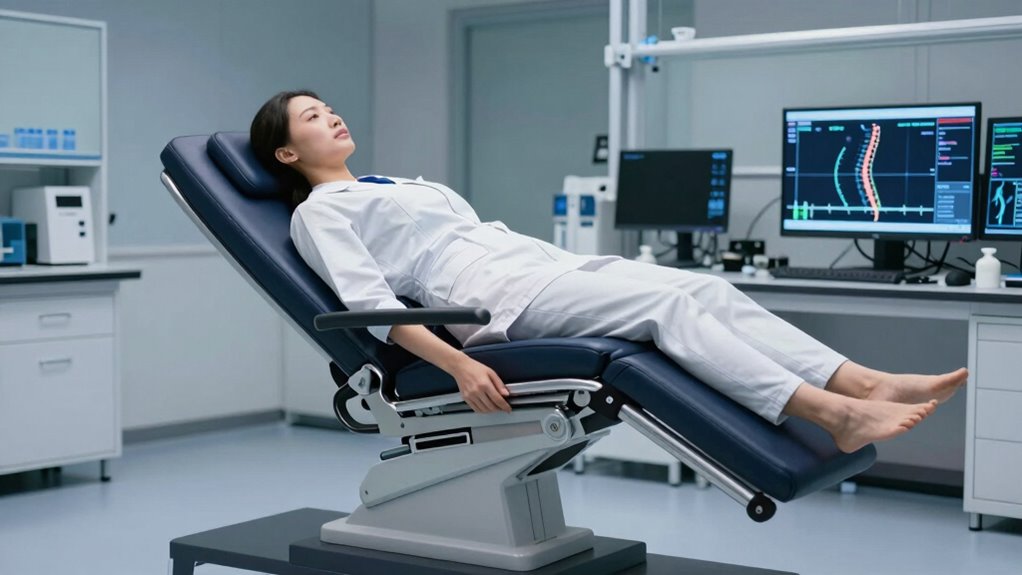
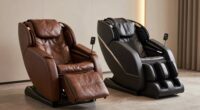
Adjusting the recline angle can considerably change how much load your spine bears. When you sit upright at 90°, it increases pressure on your lumbar discs and muscles, leading to more strain. Reclining back shifts your weight, lightly unloading your spine and reducing compression. Leaning back in a relaxed position helps protect your spinal health. Keep exploring to discover how ergonomic adjustments can optimize your back’s well-being and mimic some benefits of zero-G environments.
Key Takeaways
- Increasing the recline angle reduces lumbar disc and muscle pressure, mimicking zero-G spinal decompression benefits.
- A more reclined position shifts weight away from the lower back, decreasing spinal load during sitting.
- Proper recline angles help prevent strain and maintain spinal alignment, similar to zero-G effects.
- Reclining to a relaxed angle unloads vertebrae, supporting long-term spinal health and comfort.
- Ergonomic adjustments in recline mimic space’s zero-G benefits, promoting back health in daily activities.
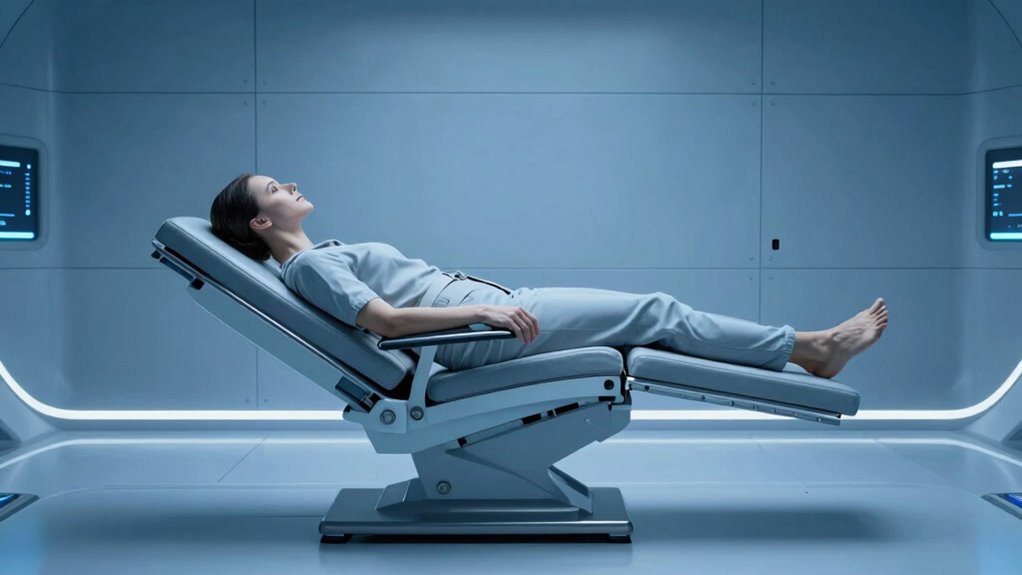
Have you ever wondered how zero-gravity environments impact spinal health? When you’re in space, the absence of gravity means your spine experiences markedly less compression than it does on Earth. This reduction in load can lead to temporary elongation of your spine, which is why astronauts often return with increased height. However, to prevent discomfort and long-term issues, understanding how to mimic some of these benefits on Earth becomes essential. That’s where ergonomic design and posture correction come into play, especially when considering reclining or adjusting your seating angle.
Zero gravity reduces spinal compression; ergonomic adjustments can help mimic these benefits for better back health.
The recline angle of your chair dramatically influences the load on your spine. Sitting upright at a 90-degree angle places more pressure on your lumbar discs and spinal muscles, which can lead to strain over time. By increasing the recline angle, you effectively reduce this load. When you lean back, even slightly, your body shifts weight away from your lower back, allowing your spinal muscles to relax and your discs to experience less compression. This is especially important for long periods of sitting, where maintaining proper posture can prevent chronic pain and spinal degeneration. Additionally, proper ergonomic positioning can help sustain spinal health over extended periods.
Ergonomic design focuses on creating a seating environment that supports your spine’s natural curves and promotes posture correction. Features like adjustable lumbar support, headrests, and seat depth help you find a position that minimizes strain. When you adjust your recline to a more relaxed angle, you’re aligning your body closer to the zero-gravity effects observed in space. This position unloads your vertebrae, reducing compression and helping maintain spinal integrity. It’s a simple but effective way to mimic some of the spinal decompression benefits astronauts experience, which can be particularly beneficial if you spend hours at a desk or in a car. Additionally, understanding the impact of spinal load can guide better ergonomic choices for daily comfort. Incorporating proper seating posture habits can further enhance these benefits and support long-term spinal health.
Posture correction isn’t just about sitting comfortably; it’s about supporting your spine’s health in the long run. By choosing an ergonomic chair with adjustable recline and lumbar support, you can make micro-adjustments that keep your spine in a neutral position. This reduces uneven pressure on discs and muscles, preventing fatigue and discomfort. Incorporating these features into your daily routine encourages better posture habits, reducing the risk of misalignment and chronic issues. Furthermore, spinal health can be significantly improved by simple ergonomic adjustments, emphasizing the importance of mindful seating. Maintaining awareness of body mechanics can also help you adapt your posture throughout the day to prevent strain. Paying attention to how your body responds during different activities can further enhance your spinal well-being. Developing consistent ergonomic habits ensures that these benefits are sustained over time.
In essence, understanding the impact of recline angle helps you make smarter choices about your seating setup. Emulating the spinal unloading experienced in zero-gravity isn’t just a space-age concept—it’s a practical approach to protecting your back on Earth. When you prioritize ergonomic design and posture correction, you’re not only enhancing comfort but also safeguarding your spine’s health for years to come.
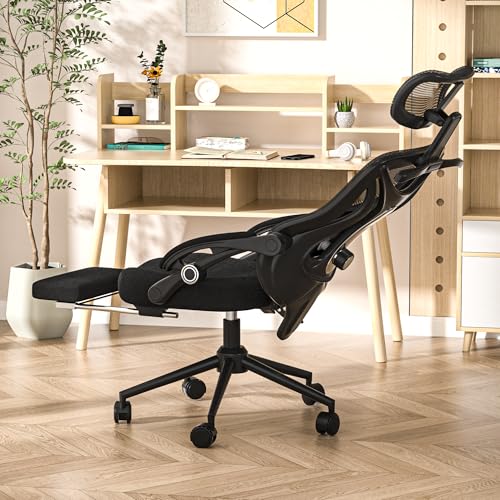
Ergonomic Office Chair with Footrest – Adjustable Lumbar Support & Headrest, 90-160° Reclining Mesh Back Computer Chair – Home Office/Gaming, 350lbs Capacity
This is more than a chair; it's a personalized comfort zone for work, rest, and play. We've meticulously…
As an affiliate, we earn on qualifying purchases.
As an affiliate, we earn on qualifying purchases.
Frequently Asked Questions
How Quickly Does Spinal Load Decrease When Adjusting the Recline Angle?
When you adjust the recline angle, spinal load decreases almost immediately, providing quick lumbar relief. As you lean back, your posture aligns better, reducing pressure on your spine. This change can happen within seconds, offering almost instant relief and promoting better comfort. Keep in mind, maintaining a slightly reclined position helps sustain lumbar support and encourages proper posture alignment throughout your sitting period.
Does Reclining Fully Eliminate Spinal Compression?
Reclining fully doesn’t completely eliminate spinal compression, but it considerably reduces it. When you lean back, lumbar support and proper posture alignment help distribute your weight more evenly, easing pressure on your spine. Adjusting the recline angle improves comfort and minimizes strain, yet some compression remains due to the body’s natural structure. To maximize relief, make sure your chair provides adequate lumbar support and encourages good posture.
Are There Any Long-Term Benefits to Specific Recline Angles?
Ever wondered if certain recline angles offer long-term benefits? Yes, they can, especially when designed with ergonomic principles. Specific angles support better posture alignment, reducing strain and promoting spinal health over time. By choosing the right recline angle, you help maintain proper posture, which can prevent chronic discomfort and improve overall well-being. So, investing in ergonomic design isn’t just about comfort—it’s about your long-term health too.
How Does Individual Body Type Affect Spinal Load in Zero-G Positions?
Your body type influences how zero-G positions affect your spinal load because muscle engagement and posture alignment vary. If you have a denser build, you might experience more strain, requiring extra core activation to maintain proper posture. Conversely, a leaner physique could adapt more easily, reducing strain. Adjusting recline angles to suit your body helps optimize spinal load, promoting comfort and reducing long-term stress on your spine.
Can Zero-G Recline Positions Improve Spinal Health Beyond Comfort?
Zero-G recline positions can improve spinal health beyond comfort by promoting better ergonomic design and posture alignment. When you adjust the recline angle, you reduce spinal load, easing pressure on your discs and muscles. This encourages proper alignment, prevents strain, and supports long-term spinal health. By adopting these positions regularly, you can enhance overall posture, decrease discomfort, and foster healthier spinal mechanics, especially if you spend long hours sitting.

TRALT Office Chair – Ergonomic Desk Chair with Adjustable Lumbar Support, Mesh Computer Chair, Executive Chairs for Home Office Comfortable Lumbar Support (Black)
Ergonomic Office Chair: Experience unparalleled support with our ergonomic office chair, designed to provide comprehensive assistance for your…
As an affiliate, we earn on qualifying purchases.
As an affiliate, we earn on qualifying purchases.
Conclusion
So, as you’ve learned, adjusting your recline angle in Zero-G chairs truly impacts your spinal load, offering relief much like a modern-day equivalent of a medieval throne’s comfort. Don’t forget, finding that perfect angle isn’t just about relaxation but about safeguarding your spine’s health. Embrace this knowledge, and with a little bit of savoir-faire, you’ll navigate your comfort like a seasoned courtier of old, all while preventing future aches and pains.
Ergonomic Office Chair with Footrest – Adjustable Lumbar Support & Headrest, 90-160° Reclining Mesh Back Computer Chair – Home Office/Gaming, 350lbs Capacity
This is more than a chair; it's a personalized comfort zone for work, rest, and play. We've meticulously…
As an affiliate, we earn on qualifying purchases.
As an affiliate, we earn on qualifying purchases.

Sweetcrispy Zero Gravity Chairs, Set of 2 Portable Recliner Beach Camping Patio Outdoor Folding Lounge Chair with Cup Holder Trays and Adjustable Pillow for Poolside, Garden, Backyard, Lawn (Grey)
【Portable Design】Lightweight outdoor folding chair weighs 15.43 lbs. Sweetcripy beach chair can be fully assembled and folded into…
As an affiliate, we earn on qualifying purchases.
As an affiliate, we earn on qualifying purchases.