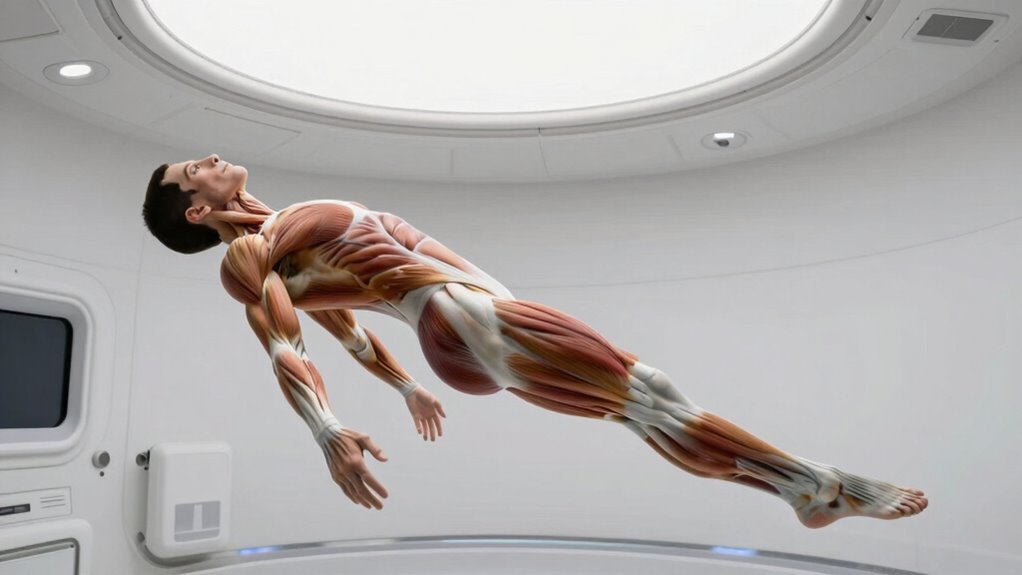

In zero-G, your muscles instinctively tighten to protect you, and your nervous system needs time to trust this new environment. This muscle guarding happens in stages, with initial tension giving way to relaxation as your body adjusts. Gradually, as you focus on steady breathing and proper posture, you’ll notice muscles loosening and movement becoming smoother. Continuing this process helps your nervous system adapt more quickly, guiding you toward full relaxation in microgravity.
Key Takeaways
- Muscle guarding in zero-G is an instinctual reflex triggered by nervous system interpretation of the environment.
- Relaxation occurs gradually as the nervous system reduces muscle tension through focused breathing and posture adjustments.
- Initial high alertness causes intense muscle guarding, which lessens over time with repeated relaxation practices.
- Developing body awareness and mindfulness helps the nervous system trust the environment, enabling staged relaxation.
- Relaxation in zero-G is a process of neuroadaptation, where muscles loosen progressively as the body adjusts.

When encountering zero-gravity environments, your muscles often respond by tightening or guarding as a protective measure, even though there’s no gravity to support or resist. This reaction is instinctual, rooted in your body’s attempt to maintain stability and protect itself from unfamiliar sensations. In space, the usual cues from gravity disappear, and your nervous system still tries to interpret what’s happening, often resulting in muscle tension. Acknowledging this response as natural can help you approach relaxation with patience and persistence. To counteract this, focusing on breathing techniques becomes essential. Deep, controlled breaths help calm your nervous system, signaling to your muscles that it’s safe to relax. When you breathe steadily and intentionally, you create a sense of grounding, even in the weightless environment. This can reduce muscle guarding and promote a greater sense of ease. Practicing diaphragmatic breathing or rhythmic inhalation and exhalation can be particularly effective, as they encourage relaxation and help reprogram your body’s response to zero-G.
Posture alignment also plays a critical role in managing muscle guarding in space. In microgravity, the usual cues that maintain your posture are absent, causing your body to drift into awkward or tense positions. Consciously adjusting your posture helps prevent unnecessary tension and reduces the risk of muscle strain. For example, maintaining a neutral spine and aligning your limbs correctly can stabilize your body, making movement more efficient and less stressful on your muscles. Proper posture also supports ideal breathing, allowing you to utilize breathing techniques more effectively. Recognizing the importance of muscle memory can facilitate quicker adaptation to the environment and improve your overall comfort during extended periods in zero-G. Developing good body awareness can further enhance your ability to adjust and relax in this unique environment. Additionally, understanding how your nervous system responds to stress responses can assist in developing strategies to promote relaxation more effectively. Building neuroplasticity through consistent practice can help your body adapt more swiftly to the environment and ease tension over time. Moreover, cultivating a sense of mindfulness can help you stay present and reduce anxiety during these adjustments, further aiding in relaxation.
It’s important to understand that relaxation in zero-G doesn’t happen all at once. Instead, it often occurs in stages, as your body gradually adapts to the environment. Initially, muscle guarding might be intense, as your nervous system is still on high alert. Over time, with consistent focus on breathing and posture, you’ll notice a shift—muscles begin to loosen, and your movements become more fluid. This staged relaxation is natural and necessary, as your body learns to trust the new environment and release tension.
diaphragmatic breathing exercises
As an affiliate, we earn on qualifying purchases.
As an affiliate, we earn on qualifying purchases.
Frequently Asked Questions
How Does Gravity Affect Muscle Guarding During Relaxation?
Gravity influence plays a significant role in muscle guarding during relaxation. When you’re upright, gravity increases muscle tension to support your posture, making it harder for muscles to fully relax. Conversely, lying in zero-G reduces this tension, allowing muscles to relax more easily. So, gravity helps maintain muscle guarding when you’re upright, but in low-gravity environments, muscles can release tension more smoothly, easing the relaxation process.
Can Muscle Guarding Be Completely Eliminated With Zero-Gravity Therapy?
Imagine you’re in a zero-gravity environment, and your muscle tension suddenly eases, but some guard remains. Zero-gravity therapy can markedly reduce muscle guarding, but it may not eliminate it completely because gravity’s influence on muscle tension persists indirectly. While this therapy relaxes muscles more effectively, individual differences and underlying issues might prevent total elimination. So, you might experience profound relief, yet residual tension could still linger.
What Are the Signs That Muscle Guarding Is Reducing?
You’ll notice muscle guarding reducing when muscle tension lessens and pain relief begins to take effect. Signs include a feeling of increased ease in muscles, less stiffness, and a decreased sense of tightness or discomfort. You might also find your movements become more fluid and relaxed. As muscle tension diminishes, your body naturally relaxes, indicating progress in easing muscle guarding and promoting overall comfort and relaxation.
How Long Does It Typically Take to See Progress in Relaxation?
You might notice progress in relaxation within a few sessions, but it varies based on your muscle tension and stress levels. Usually, as you practice stress reduction techniques and body awareness, your muscle tension begins to ease gradually. Consistent effort helps your body adapt, and relaxation often happens in stages. Be patient, stay committed, and celebrate small improvements—they signal your nervous system is calming, leading to better overall relaxation over time.
Are There Specific Techniques to Accelerate Muscle Relaxation Stages?
You can accelerate muscle relaxation by practicing deep breathing exercises, which help calm your nervous system and release tension faster. Incorporating massage therapy also works well, as it directly targets muscle guardings and promotes relaxation. Combining these techniques regularly can speed up the stages of relaxation, allowing you to experience relief more quickly. Stay consistent, and you’ll notice improvements in how swiftly your muscles relax over time.
posture correction support pillow
As an affiliate, we earn on qualifying purchases.
As an affiliate, we earn on qualifying purchases.
Conclusion
Just like the gentle unfolding of a flower, relaxation often happens in stages, especially when muscle guarding is involved. In zero-G environments, your body’s natural tendency to protect itself can linger, but patience and awareness can help ease this process. Remember, progress may be slow but steady—each small release is a step toward freedom. Embrace the journey, and let relaxation bloom gradually, like a sunrise chasing away the darkness.
As an affiliate, we earn on qualifying purchases.
muscle relaxation aids for space
As an affiliate, we earn on qualifying purchases.
As an affiliate, we earn on qualifying purchases.