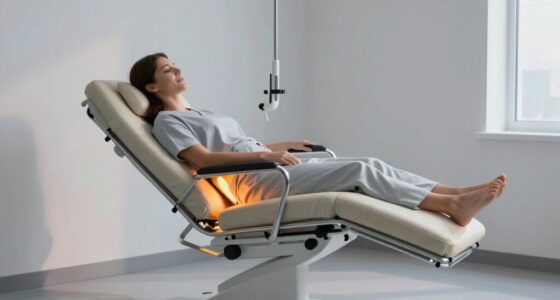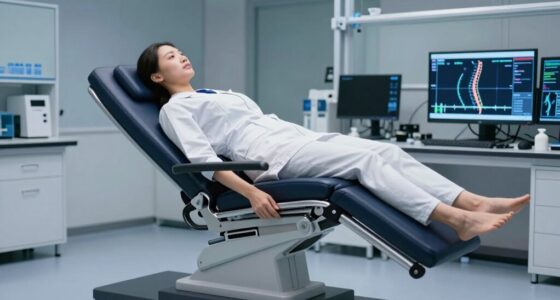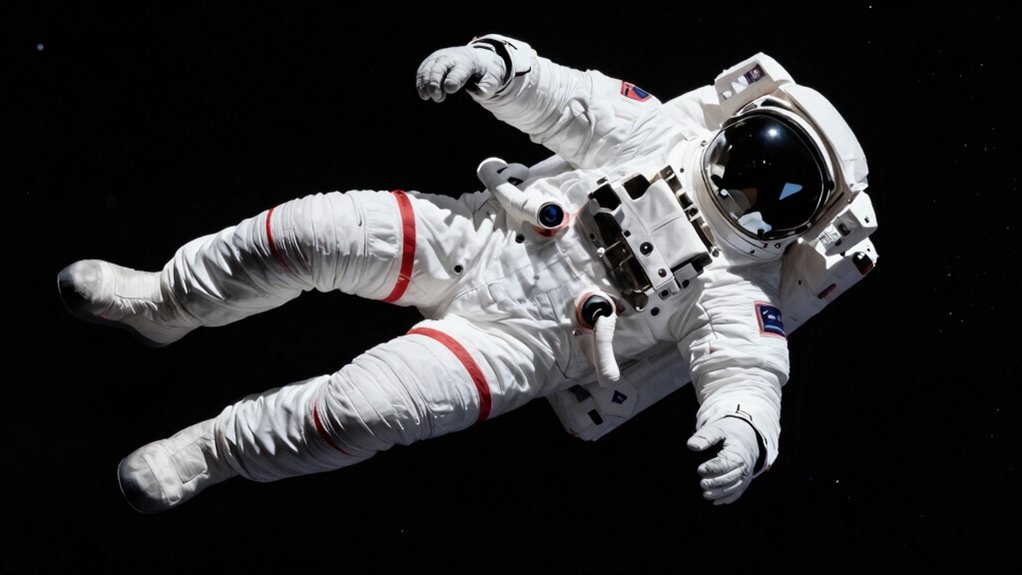
In zero gravity, your lower back and hips experience a significant drop in pressure because the usual downward force from Earth’s gravity disappears. Without this pull, the mechanical pressure that normally supports your body and helps maintain bone density fades away. As a result, muscles relax more, and bones lose strength over time. This shift in pressure affects your body’s structure and health. If you’re curious to understand how these changes impact your body further, there’s more to explore ahead.
Key Takeaways
- Zero gravity eliminates the downward force that normally exerts pressure on the lower back and hips.
- Reduced mechanical loading decreases internal pressure signals that support bone density.
- Lack of gravitational pull causes muscles in these areas to relax and weaken over time.
- The absence of pressure distribution impacts overall body structure and physical sensation.
- Countermeasures like resistance exercises are necessary to simulate pressure and maintain health.
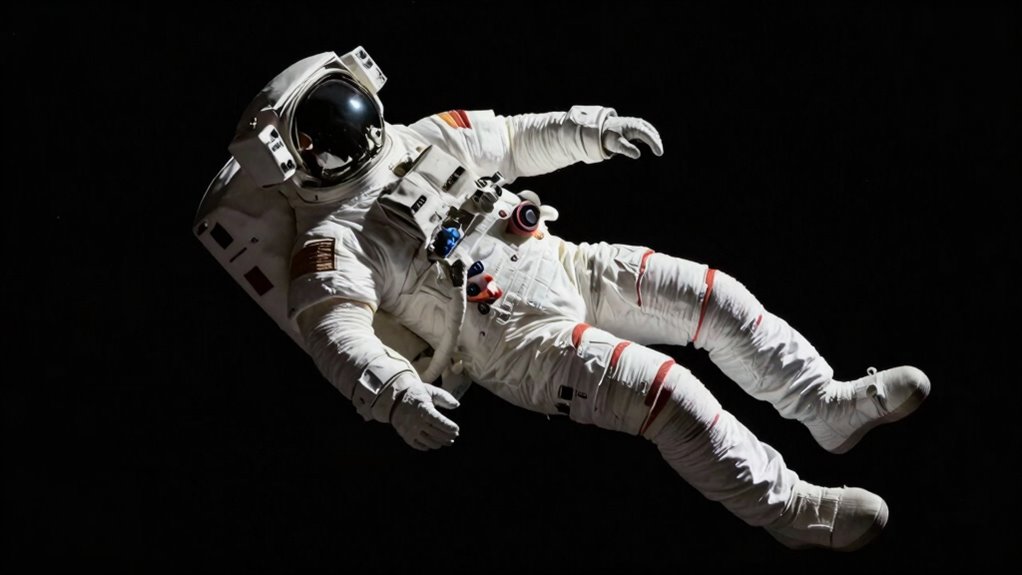
Have you ever wondered how pressure behaves differently in the absence of gravity? When you’re floating in space, the usual forces that press down on your body vanish, and your body responds in surprising ways. In zero gravity, the pressure on your lower back and hips drops significantly because gravity no longer pulls weight onto these areas. This shift affects more than just how you feel physically; it influences your body’s internal health, especially in terms of muscle relaxation and bone density.
Without the constant pull of gravity, your muscles in the lower back and hips don’t need to work as hard to support your body. As a result, these muscles tend to relax more than they do on Earth. This muscle relaxation can lead to muscle atrophy over time if not properly managed, because your muscles aren’t being actively engaged to maintain strength. It’s a delicate balance—your muscles need to stay active to prevent weakening, even when gravity isn’t doing the work for you. That’s why astronauts perform regular resistance exercises during missions—they stimulate muscle activity to counteract relaxation and maintain strength.
Muscles relax and weaken in space unless regularly exercised to stay strong.
Meanwhile, your bones face a different challenge. On Earth, gravity constantly stimulates bone tissue, encouraging maintenance of bone density through weight-bearing activities. In space, the absence of gravity means this stimulation diminishes, and your bones can lose density at a faster rate. This phenomenon, known as spaceflight osteopenia, makes bones weaker and more prone to fractures when you return to Earth’s gravity. The decrease in pressure on your skeletal system means your bones aren’t receiving the usual mechanical signals to stay dense and strong. To combat this, astronauts rely heavily on resistance training and other weight-loading exercises to mimic the effects of gravity, helping to preserve bone density and prevent long-term health issues. Understanding pressure distribution in space provides valuable insights into how gravity influences skeletal health on Earth as well.
The difference in pressure distribution in zero gravity fundamentally alters how your body maintains its structure and function. Your muscles tend to relax, which can lead to weakness if not countered with specific exercises. Meanwhile, your bones risk losing density without the usual mechanical stress that keeps them healthy. Recognizing these changes underscores the importance of targeted physical activity in space, not only to keep astronauts healthy but also to shed light on how gravity influences your body’s internal systems. Interestingly, pressure changes can also provide insights into medical conditions on Earth related to muscle and bone health. So, while floating might seem freeing, maintaining your health in zero gravity requires careful management of pressure-related effects on your muscles and bones.

Myosource Kinetic Bands Space Saver Gym Resistance Bands Exercise Equipment for at Home Fitness Workout | Resistance Band Wall Anchor with 1 Rail, 1 Rail Car (Without Resistance Bands)
What Does it Do? Our space saving home gym is ideal for easy access and freedom to workout…
As an affiliate, we earn on qualifying purchases.
As an affiliate, we earn on qualifying purchases.
Frequently Asked Questions
How Long Do Astronauts Typically Experience Pressure Changes in Zero Gravity?
You experience pressure changes during gravity simulation missions, which can last from days to several months depending on the experiment. Your body undergoes pressure adaptation as your cardiovascular system adjusts to zero gravity, usually within a few days. Long-term missions require ongoing monitoring to manage these changes effectively. The duration varies, but your body continuously adapts as you remain in zero gravity, affecting pressure in your lower back and hips.
Can Zero Gravity Cause Long-Term Damage to the Lower Back and Hips?
Zero gravity can cause long-term damage to your lower back and hips, but it’s not as catastrophic as a hurricane, so don’t panic. Prolonged weightlessness leads to muscle atrophy and decreased bone density, weakening bones and muscles over time. While astronauts adapt during their missions, extended exposure might result in lasting issues. Regular exercise helps mitigate these effects, but some risks remain if exposure is prolonged without countermeasures.
How Do Astronauts Manage Discomfort Caused by Pressure Shifts?
You manage discomfort caused by pressure shifts through targeted exercises and onboard therapy. Astronauts perform resistance workouts to combat muscle atrophy and maintain bone density, which helps reduce pain and stiffness. Regular movement keeps blood flowing and muscles engaged, easing pressure on the lower back and hips. These strategies help you adapt to zero-gravity, preventing long-term damage and maintaining your overall health during space missions.
Are There Specific Exercises to Counteract Zero-Gravity Pressure Effects?
Think of your body as a ship steering zero gravity’s uncharted waters—you need the right exercises to steer clear of pressure problems. You should do muscle strengthening routines and posture correction exercises, like core workouts and stretching, to counteract zero-gravity effects. These targeted movements help maintain muscle tone, support your back, and keep your hips aligned, ensuring you stay comfortable and healthy during space missions.
How Does Zero Gravity Affect Blood Flow in the Lower Back and Hips?
In zero gravity, blood flow to your lower back and hips decreases, which can lead to muscle atrophy and reduced bone density. You might notice less circulation, causing discomfort or weakness. To counteract this, astronauts perform exercises that stimulate blood flow, helping maintain muscle mass and bone strength. Staying active and doing targeted workouts are essential in zero gravity environments to keep your lower back and hips healthy.

Konbison Portable Workout Resistance Training Tool | Space-Saving Home Fitness Equipment For Light Exercise, Daily Movement & Low-Impact Training For Men & Women Working Out.(Black 2pcs)
【Lightweight & Space-Saving Design】: I Deal for Small Home Gyms, Apartments, or Travel. Easy to Store And Carry…
As an affiliate, we earn on qualifying purchases.
As an affiliate, we earn on qualifying purchases.
Conclusion
As you experience zero gravity, you’ll notice how pressure shifts, relieving your lower back and hips. You’ll feel less strain, less discomfort, and more freedom in movement. You’ll learn how your body adapts, how it adjusts, how it transforms. Embrace this change, understand its benefits, and appreciate the relief it brings. In zero gravity, you’ll find a new sense of balance, a new sense of comfort, a new way to see how your body can thrive.

Lianjindun 5 Pcs Professional Resistance Bands. Latex-Free, Pilates Band, Work Out Bands, Stretch Bands for Working Out Women or Men, Exercise Bands Set for Pilates, Physical Therapy, Yoga
5 Level Resistance(3-20pounds): You will get a set of resistance bands including five colors, different colors represent different…
As an affiliate, we earn on qualifying purchases.
As an affiliate, we earn on qualifying purchases.

Home Resistance Training Kit, Suspension Trainer Straps with Adjustable Extension, Door Anchor, and Carry Bag – Strength Training Equipment for Full Body Bodyweight Workouts at Home or Outdoors
Complete Suspension Trainer System for Full Body Workouts: This bodyweight training kit helps target upper body, lower body,…
As an affiliate, we earn on qualifying purchases.
As an affiliate, we earn on qualifying purchases.