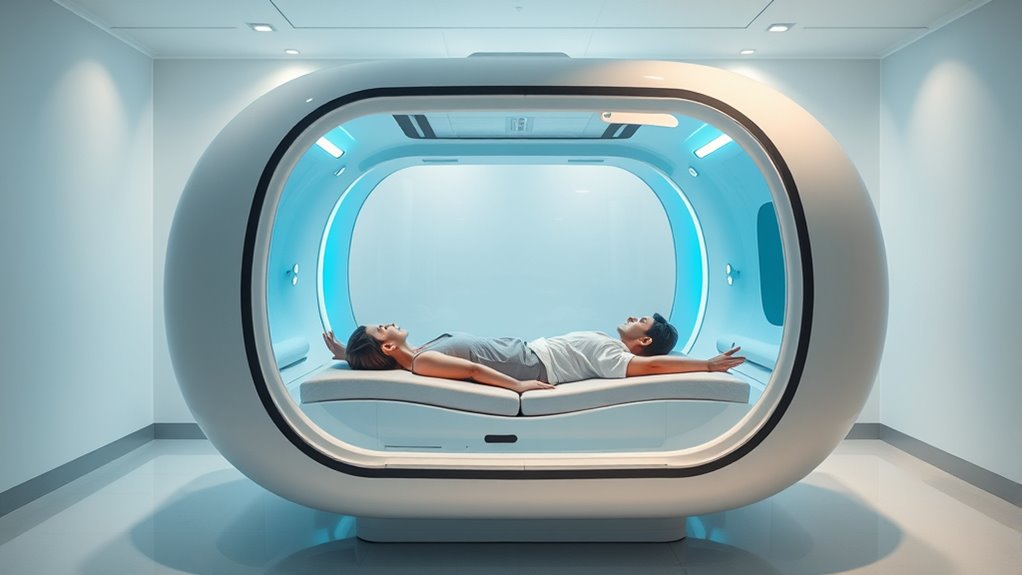
Research shows that zero gravity positions effectively reduce spinal pressure and promote back pain relief by supporting proper alignment and decompressing the spine. When you adopt a zero gravity posture, it helps distribute your weight evenly, easing stress on discs and muscles. This ergonomic approach can improve mobility, reduce inflammation, and alleviate nerve compression. Keep exploring how these positions can help you manage back pain more effectively and enhance your comfort.
Key Takeaways
- Research indicates zero gravity positions reduce spinal pressure, aiding in back pain relief through ergonomic decompression.
- Scientific studies show zero gravity supports natural spinal alignment and decreases nerve compression.
- Consistent use of zero gravity furniture promotes circulation, relaxes muscles, and alleviates back discomfort.
- Zero gravity positions help in decompressing discs, reducing inflammation, and improving mobility.
- Evidence suggests ergonomic zero gravity designs enhance long-term back health and complement treatments like physical therapy.
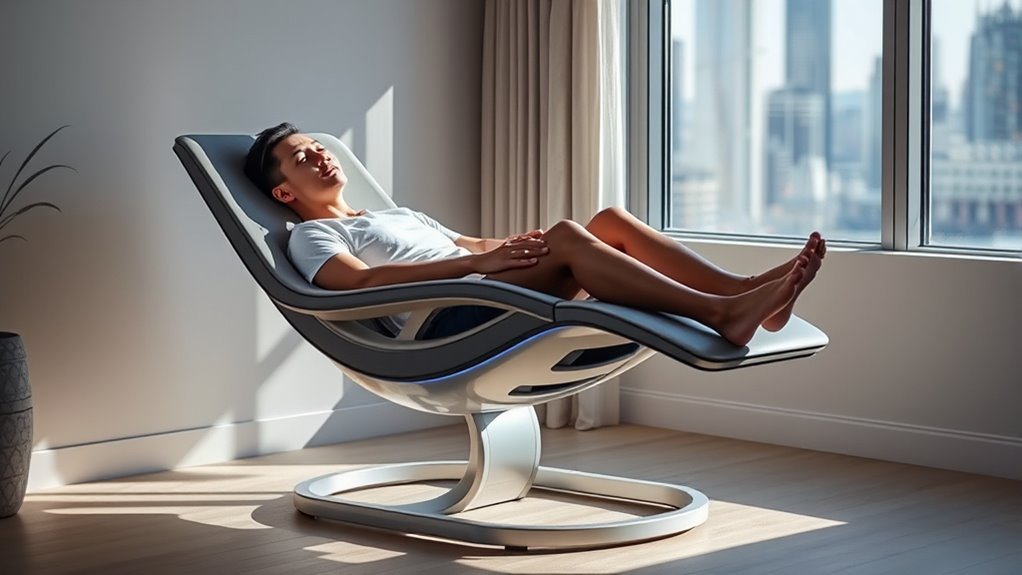
If you’re struggling with back pain, exploring innovative solutions can make a real difference. One approach gaining attention is the use of zero gravity positions, which aim to reduce pressure on your spine and alleviate discomfort. This concept isn’t just about feeling weightless; it’s rooted in ergonomic design principles that support your body’s natural alignment. When you sit or lie in a zero gravity position, your body adopts a posture similar to what astronauts experience in space—legs elevated above the heart, back supported, and hips open. This position helps distribute your weight evenly, reducing stress on your spinal discs and surrounding muscles.
Research suggests that zero gravity positioning can promote spinal decompression, which is critical for relieving back pain caused by herniated discs, degenerative disc disease, or muscle strain. By reducing the compressive forces exerted on your vertebral discs, this position allows your spine to gently stretch and decompress, creating space between vertebrae. This process can alleviate nerve pressure, decrease inflammation, and improve mobility. Many ergonomic design features in zero gravity chairs and loungers are specifically crafted to support your lumbar region and optimize spinal decompression, making them effective tools for managing back discomfort.
Zero gravity positioning promotes spinal decompression, alleviating nerve pressure and reducing back pain through ergonomic support.
The benefits of zero gravity therapy extend beyond mere comfort. Scientific studies indicate that spending time in this position can enhance circulation, reduce muscle tension, and promote relaxation—all of which contribute to pain relief. When your spine is decompressed, there’s less strain on your muscles and ligaments, which often become tight and painful due to poor posture or injury. The ergonomic design of zero gravity chairs ensures that your body maintains proper alignment, preventing the development of new issues caused by slouching or improper support.
Furthermore, the ergonomic design of zero gravity furniture plays a crucial role in supporting spinal health and maximizing decompression benefits. If you’re considering zero gravity solutions, look for models that emphasize ergonomic design to maximize spinal decompression. Features like adjustable headrests, cushioned lumbar support, and smooth recline mechanisms help tailor the experience to your specific needs. Regularly using these chairs can complement other treatments, such as physical therapy or chiropractic care, further enhancing your back health. Remember, the key is consistency—incorporating zero gravity positioning into your routine can lead to noticeable improvements over time.
Ultimately, understanding how zero gravity positions function through ergonomic design and spinal decompression gives you a powerful tool in managing back pain. It’s a simple yet effective way to alleviate pressure, promote healing, and improve your overall quality of life. With the right chair and a commitment to regular use, you can experience relief and feel more in control of your back health.
Frequently Asked Questions
How Long Should I Use Zero Gravity Therapy for Optimal Relief?
For ideal relief, follow the duration guidelines of 15 to 30-minute zero gravity therapy sessions, usually 2 to 3 times a week. You should listen to your body and avoid overdoing it. Consistency is key, so stick to your session schedule, and adjust based on how you feel. If pain persists, consult your healthcare provider to tailor the session duration and frequency to your needs.
Are There Any Risks Associated With Zero Gravity Back Therapy?
Imagine someone with osteoporosis trying zero gravity therapy; they might face risks or contraindications like fractures due to fragile bones. Generally, the risks are minimal, but certain conditions, such as severe heart issues or pregnancy, could pose contraindications. Always consult your healthcare provider before starting, as personalized risks vary. While rare, staying informed guarantees you use zero gravity therapy safely and effectively.
Can Zero Gravity Therapy Replace Traditional Back Treatments?
Zero gravity therapy can be a helpful alternative treatment, but it shouldn’t substitute traditional back treatments without medical advice. Many patients find relief through zero gravity, yet individual experiences vary. You might consider it as a complement to your current plan, especially if traditional methods haven’t fully worked. Always consult your healthcare provider to determine if zero gravity therapy fits your specific needs and to ensure safe, effective pain management.
Is Zero Gravity Therapy Suitable for All Types of Back Pain?
Think of zero gravity therapy as a versatile tool in your back care toolbox. It’s effective for many types of back pain, especially when combined with spinal decompression and posture correction. However, it might not suit everyone, particularly those with certain medical conditions or severe issues. Always consult your healthcare provider to determine if zero gravity therapy fits your specific back pain situation.
How Does Zero Gravity Compare Cost-Wise to Other Pain Relief Methods?
Zero gravity therapy tends to be more expensive upfront than traditional pain relief methods like medication or physical therapy. However, when you consider the affordability analysis, it might save you money long-term by reducing the need for ongoing treatments or medications. The cost comparison varies depending on treatment frequency and duration, so weigh these factors carefully to determine if zero gravity therapy fits your budget and needs.
Conclusion
Imagine floating effortlessly in space, your back free from gravity’s pull. That’s what zero gravity therapy aims to do for your back pain—relieve pressure and promote healing. While research shows promising results, it’s not a miracle cure for everyone. Think of it like a gentle reset button for your spine. If you’re tired of suffering in silence, trying zero gravity could be your first step toward feeling weightless and pain-free again.