
TL;DR

Get wellness gear delivered free with Prime
- Fast, free delivery on millions of items
- Prime Video, Amazon Music and more included
- Member-only deals all year
A Fit&Well writer reports doing child’s pose and a standing forward fold for about a minute each after daily walks, after noticing stiffness on hilly routes. Physiotherapist Helen O’Leary says the positions stretch lower-back soft tissues and may ease post-walk discomfort, but the report is a personal routine, not evidence that the stretches work for everyone.
A Fit&Well writer says they now do child’s pose and a standing forward fold after daily walks, following stiffness in their legs, hips and back after moving to a hilly area. The routine takes a few minutes, according to the writer, while physiotherapist Helen O’Leary says the positions can stretch lower-back soft tissues and may ease discomfort after walking.
The writer describes walking for up to an hour each day as their only daily form of exercise. They had assumed that walking did not call for a recovery routine because it was low-impact and did not leave them sweating. After noticing stiffness following walks in hilly surroundings, they began holding each of two stretches for about one minute.
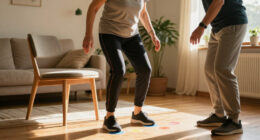
For child’s pose, the report instructs readers to kneel with their knees wider than hip-width, reach their arms forward and sit their hips back. For the standing forward fold, it says to stand with feet hip-width apart, lower the arms toward the feet and keep the knees bent; stop when a stretch is felt in the hamstrings. The instructions are from the report, not a prescription tailored to individual readers.
O’Leary, identified as a physiotherapist at Complete Pilates, says stiffness or aching after walking is fairly common, particularly after a long walk, and that certain stretches can alleviate discomfort. She explains that both positions flex the spine and stretch soft tissues in the lower back. The article also describes linking the stretches to walking as “habit stacking”—joining a new action to an established routine—to help make stretching regular.
A Short Routine After Hilly Walks
The report highlights that a low-impact activity can still leave some people feeling stiff, especially when routes involve hills or walks are prolonged. Its practical point is modest: adding a few minutes of movement after a walk may be manageable for someone who wants to address post-exercise tightness, and linking it to an existing habit may help with consistency.
That is not evidence that the routine prevents injury, treats a condition or produces the same result for everyone. The writer’s experience is personal testimony, and O’Leary’s comments describe a possible rationale for the positions. Readers should treat any stretch as optional and stop if it causes pain or feels unsuitable.
non-slip yoga mat for stretching and child pose
As an affiliate, we earn on qualifying purchases.
As an affiliate, we earn on qualifying purchases.
Why the Writer Changed Their Routine
The Fit&Well account contrasts the writer’s earlier assumption—that easy walking required no recovery—with their experience after moving to a hilly area. They report stiffness in the legs, hips and back after some walks, prompting them to select stretches aimed at those areas. The report does not state how long the stiffness lasted or how often it occurred.
O’Leary’s explanation focuses particularly on the lower back. She says the spine is usually neutral or slightly extended while standing, a position that loads its small joints, and that flexion in the two poses can open space between those joints and stretch nearby soft tissues. This is her explanation of why the movements may feel useful; the supplied report does not describe a clinical trial or a measured test of the routine.
““It is quite common to feel a bit stiff or achy after walking, particularly following a long walk, and certain stretches can alleviate that discomfort.””
— Helen O’Leary, physiotherapist at Complete Pilates, as quoted by Fit&Well
yoga knee pad cushion for kneeling stretches
As an affiliate, we earn on qualifying purchases.
As an affiliate, we earn on qualifying purchases.
Limits of the Personal Account
The report does not provide a publication date in the supplied material, nor does it give controlled evidence comparing these stretches with other ways of recovering after a walk. It also does not establish that the routine will relieve tightness for everyone, or that it addresses the cause of persistent pain. The writer’s stiffness and reported improvement are individual experiences; the frequency, severity and duration of symptoms are not specified.
O’Leary’s advice about adding a side bend is also not accompanied by detail on who should avoid the movement or how it might need to be adapted. Anyone with an existing injury, a health condition or pain that persists should seek guidance from a qualified health professional rather than relying on a general article.
stretching strap for hamstring flexibility
As an affiliate, we earn on qualifying purchases.
As an affiliate, we earn on qualifying purchases.
How to Try the Two Positions
The report offers no scheduled follow-up or new study. Readers who want to test the routine can follow the described positions gently after a walk, keeping a bend in the knees during the forward fold and holding each stretch for about a minute as the writer does. The article suggests that child’s pose can be adjusted by walking the hands to one side and sitting the hips back; it says to repeat on the other side.
Comfort should guide the movement: a stretch should not be forced, and readers should stop if it causes pain. People with relevant health concerns can ask a physiotherapist or other qualified professional whether the positions are appropriate for them.
foam roller for post-walk leg recovery
As an affiliate, we earn on qualifying purchases.
As an affiliate, we earn on qualifying purchases.
Key Questions
Which two stretches does the report describe?
It describes child’s pose and a standing forward fold, held for about one minute each by the writer.
How does the report say to do a standing forward fold?
Stand with feet hip-width apart, lower the arms toward the feet and keep the knees bent. Stop when a stretch is felt in the hamstrings, rather than forcing the movement.
Why does physiotherapist Helen O’Leary discuss these positions?
O’Leary says both poses flex the spine and stretch soft tissues in the lower back, which may help with discomfort or stiffness after walking. The report does not establish that they work for everyone.
Does the report prove these stretches prevent pain or injury?
No. It is a personal account alongside a physiotherapist’s explanation, not a clinical study showing that the routine prevents injury or treats a medical condition.
What should someone do if a stretch causes pain?
Stop rather than pushing into pain. People with persistent symptoms, an injury or an existing health condition should ask a qualified health professional for individual guidance.
Source: rss
Halloween Picks
halloween
As an affiliate, we earn on qualifying purchases.