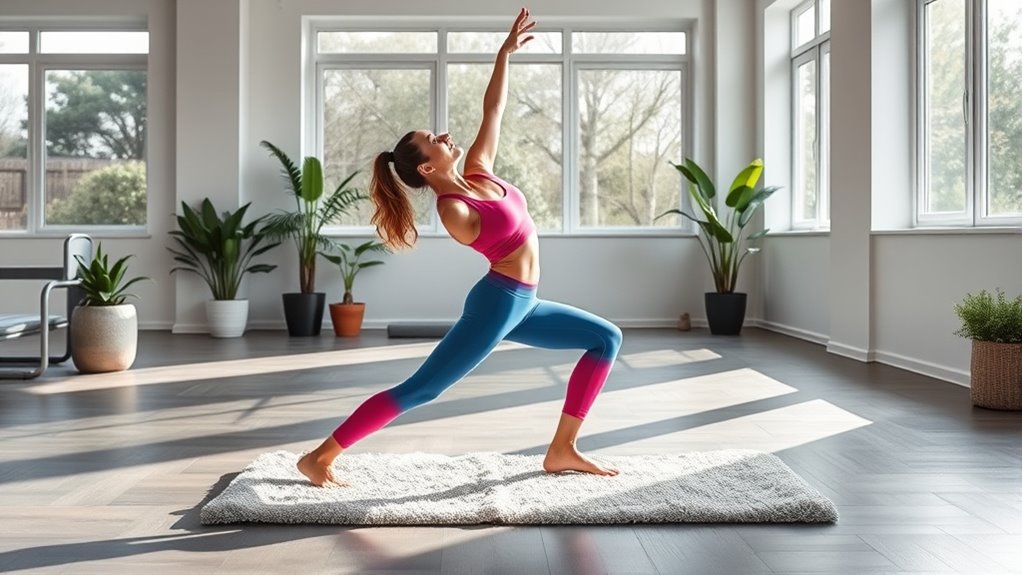

Combining stretch programs with self-massage techniques like foam rolling can markedly improve your flexibility, reduce muscle tension, and speed up recovery. By targeting tight spots and trigger points, you ease muscle restrictions and enhance blood flow, making stretching more effective and preventing injuries. Incorporating these practices into your routine supports overall muscle health and posture. Keep exploring to discover how to optimize your protocol and get the most benefits from your efforts.
Key Takeaways
- Incorporate foam rolling before stretching to increase muscle pliability and enhance stretch effectiveness.
- Use massage techniques post-stretching to reduce muscle soreness and promote recovery.
- Target trigger points with self-massage tools to improve flexibility and prevent tightness during routines.
- Combine dynamic stretches with foam rolling for warm-up, and static stretches with massage for cool-down.
- Consistently integrate both methods to maintain muscle health, prevent injuries, and improve overall flexibility.
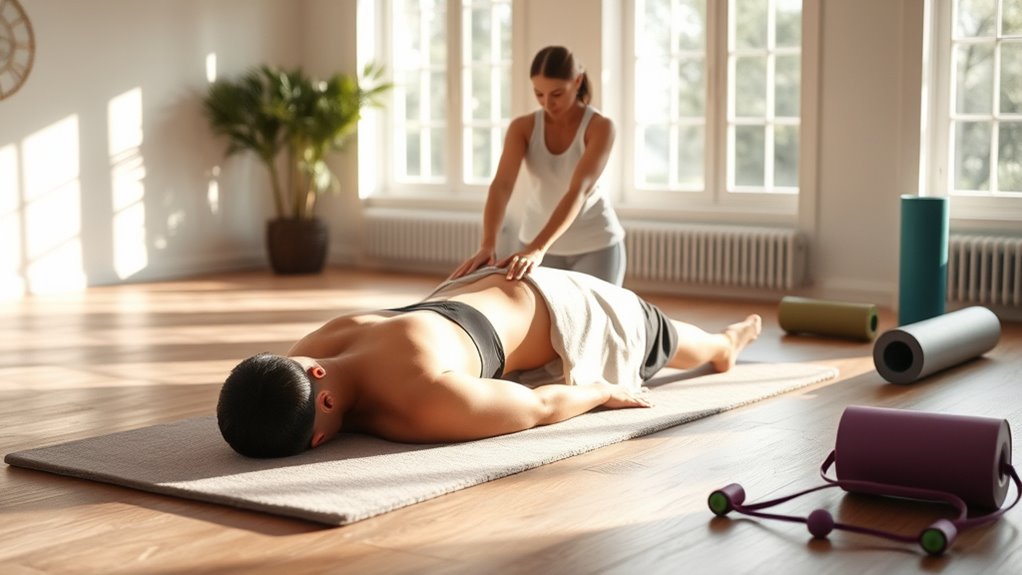
Have you ever wondered how stretching and massage can boost your overall well-being? When integrated into your routine, these techniques can considerably improve flexibility, reduce muscle tension, and promote faster recovery. One effective way to enhance your stretching routine is through foam rolling, which targets specific areas of tightness and helps release trigger points—those tender knots that form in muscles and fascia. By applying gentle pressure with a foam roller, you can break up these trigger points, alleviate pain, and improve blood flow, making your stretching sessions more effective. Think of foam rolling as a prelude to stretching: it prepares your muscles, making them more receptive and less prone to injury. When you release trigger points, you’re fundamentally easing muscle restrictions that might otherwise limit your range of motion or cause discomfort during stretches.
Incorporating foam rolling into your routine is straightforward. Start by targeting large muscle groups such as your quads, hamstrings, or calves. Roll slowly and apply pressure until you find tender spots, then pause and hold for 20-30 seconds. This helps to loosen tight fascia and muscle fibers, reducing stiffness and soreness. Once you’ve foam rolled, your muscles will be more pliable, allowing your stretches to deepen and become more effective. Regular foam rolling also helps prevent the formation of new trigger points and maintains muscle health over time, which is key to avoiding injuries and chronic pain.
In addition to foam rolling, paying attention to trigger points can dramatically improve your stretching outcomes. Trigger points often cause referred pain, where discomfort radiates to other areas. Recognizing these spots allows you to target them directly, either through self-massage or with tools like foam rollers and massage balls. When you work on trigger points, you’re not just easing pain temporarily—you’re addressing the root cause of tightness and muscle imbalance. This process enhances your flexibility, improves posture, and reduces the risk of strains during physical activity.
Frequently Asked Questions
How Often Should I Incorporate Stretching and Massage Into My Routine?
You should incorporate stretching and massage into your routine at least 3-4 times a week to meet your flexibility goals. Focus on consistent stretching routines that target key muscle groups, and include massages to help release tension and improve blood flow. Adjust the frequency based on your progress and comfort. Regular sessions will enhance flexibility, prevent injuries, and keep your muscles relaxed and healthy.
Can Stretch Programs Help With Injury Prevention?
Stretch programs can considerably help with injury prevention by improving flexibility and muscle balance. A benefit analysis shows that consistent stretching reduces the risk of strains and tears. Considering injury statistics, those who incorporate regular stretching experience fewer injuries overall. You should include targeted stretches in your routine to strengthen weak areas and maintain ideal movement, decreasing the likelihood of common injuries during physical activity.
Are There Specific Massage Techniques for Muscle Recovery?
Think of muscle recovery like untangling a knot; specific massage techniques like trigger point therapy and myofascial release target tight, knotted areas. These methods release tension, reduce soreness, and improve blood flow. Trigger point therapy focuses on pinpointed spots of pain, while myofascial release loosens fascia restrictions. Using these techniques regularly helps your muscles recover faster and prevents injury, much like carefully untangling a knot restores smoothness.
What Are the Best Stretches Before and After Exercise?
Before exercise, focus on dynamic flexibility stretches like leg swings or arm circles to prepare muscles for activity and promote muscle elongation. Afterward, opt for static stretches such as hamstring or quadriceps stretches to cool down and enhance flexibility. Incorporating both types supports muscle recovery, reduces soreness, and maintains ideal muscle elongation, helping you perform better and minimize injury risks.
Is Professional Massage Therapy Necessary or Are Self-Massages Effective?
Thinking like a modern-day healer, you don’t always need a professional massage—self-massage benefits are substantial and convenient. Using massage equipment options like foam rollers or massage balls, you can target sore muscles, improve flexibility, and reduce tension. While professional therapy offers expert touch, self-massages are effective for routine relief. With consistent effort, you’ll find they’re a practical way to stay limber and recover faster.
Conclusion
Incorporating stretch programs and massage into your routine can transform your body faster than you ever imagined—making soreness vanish and flexibility soar. By consistently blending these practices, you’ll uncover a level of relaxation so profound, it feels like you’ve discovered a secret superpower. Don’t wait for pain to take over; take charge now and experience the incredible benefits firsthand. Your body will thank you with a resilience that’s truly nothing short of legendary.