TL;DR

Get wellness gear delivered free with Prime
- Fast, free delivery on millions of items
- Prime Video, Amazon Music and more included
- Member-only deals all year
Fit&Well published a beginner-friendly, four-movement yoga flow created by Yogalina Studios founder Alina Boyett. The at-home sequence uses gentle poses and breathing to stretch areas that may feel tense after exercise or prolonged sitting; it is not a treatment for injury, and Boyett advises moving within a comfortable range.
Fit&Well has published a beginner-friendly, four-pose yoga flow created by Alina Boyett, founder of UK-based Yogalina Studios, for people seeking gentle movement after exercise or a day of sitting. The equipment-free sequence combines restful poses, forward folding and a seated twist, with Boyett advising people to move slowly and avoid stretching into pain.
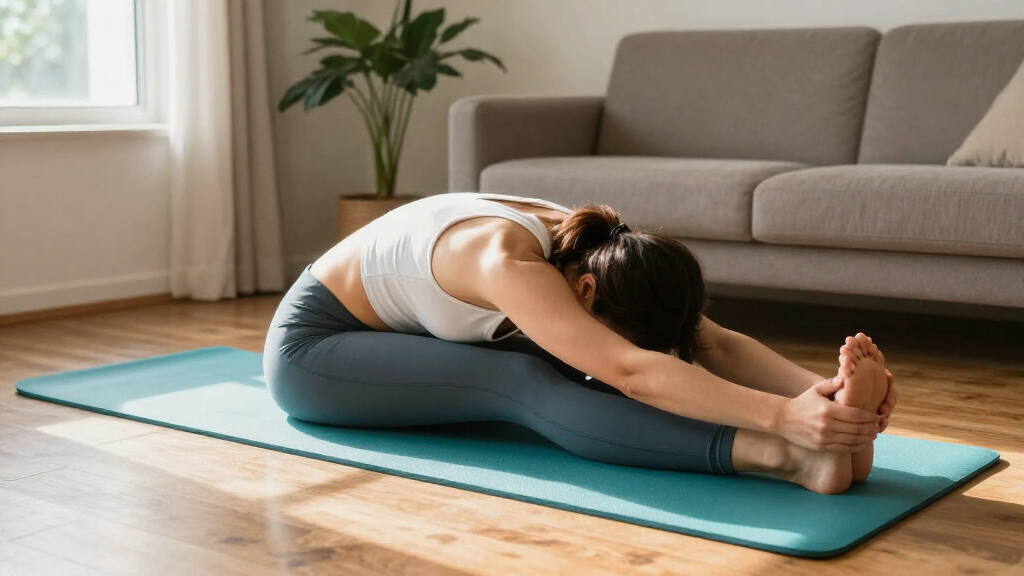
The sequence includes Waterfall pose, with the legs raised against a wall; Child’s pose; a relaxed standing forward fold known as a ragdoll variation; and a seated spinal twist on each side. The source lists each movement’s suggested breathing count or duration, rather than presenting the flow as a timed workout. The poses can be done at home and do not require previous yoga experience or advanced flexibility, according to Boyett.
Boyett said she selected the four movements to address areas that commonly feel tense after exercise, including the legs, hips, spine and shoulders. Fit&Well’s instructions recommend softening the knees during the forward fold and keeping the twist gentle. The sequence is intended to encourage slow movement and attention to bodily sensations, rather than pushing range or intensity.
Yogalina teacher Misha Clarke demonstrates the sequence in a video accompanying the Fit&Well report. Boyett describes recovery as more than stopping activity, saying that it involves giving the body what it needs. Her comments are guidance from a yoga instructor; the report does not provide clinical evidence that the routine prevents injury or treats pain.
A Gentle Option for Recovery Days
The report highlights a practical, low-equipment way to add gentle movement to a recovery period or break up time spent sitting. The sequence is short in format, with holds measured in a few breaths, and its poses have modifications such as bending the knees or choosing a comfortable seated position. That may make the instructions approachable for people who are new to yoga, though comfort and ability will vary.
Its broader point is that exercise routines also involve rest and adjusting effort. Boyett encourages participants to slow down and listen to their bodies instead of treating every session as a test of flexibility. The article does not establish that the flow will produce a particular flexibility gain or recovery outcome; it offers an instructor’s routine and advice for practising it carefully.
Products Worth Considering

Therabody JetBoots Prime Wireless Compression Boots (Short, Under 29-Inch Inseam)

Philips Sonicare DiamondClean 9900 Prestige Electric Toothbrush

Garmin Forerunner 570 GPS Running Smartwatch, 47mm, Aluminum, Black
As an affiliate, we earn on qualifying purchases.
Four Poses, No Equipment
Boyett told Fit&Well that people may use the flow after a challenging workout, a run or prolonged desk work. She said even a short period of mindful movement and breathing can affect how someone feels, but that is her assessment as a yoga teacher, not a measured result reported by the source.
The listed sequence begins with Waterfall pose, held for three to five breaths, followed by Child’s pose for three to five breaths. The ragdoll forward fold is listed for two sets of three to five breaths, while the seated twist is listed for two sets of two to three breaths per side. These are the source’s suggested instructions, not a requirement to hold a pose if it feels uncomfortable.
Boyett says the restorative positions, forward folds and gentle rotations are meant to offer a balanced, accessible approach to post-activity stretching. The report does not compare this routine with other recovery methods or describe a study testing its effects.
What the Routine Has Not Tested
The source presents an instructor-designed sequence, not findings from a clinical trial or a comparison of yoga routines. It gives no measured results for flexibility, soreness, recovery time or injury prevention, and does not establish that every person will experience the same effects. Boyett’s descriptions of how the poses may feel should be understood as her guidance, not as a medical guarantee.
The report also does not specify a publication date in the supplied material or explain how often readers should repeat the flow. Individual comfort can depend on mobility, health and any existing injury. Boyett advises people with an injury or relevant medical condition to seek appropriate professional guidance before trying the sequence.
Use Comfort as Your Guide
Readers who choose to try the flow can follow the Fit&Well video and written instructions, keeping movements gentle and adjusting or stopping any pose that causes pain. The article does not announce a follow-up study, programme or further evidence about the sequence. Its immediate next step for readers is simply to practise cautiously, using the suggested breaths as a guide rather than a target.
Anyone with an injury or relevant medical condition should consult an appropriate health professional before beginning. The report gives no specific modifications for particular conditions, so readers should not assume that every pose is suitable for them.
Key Questions
What is the yoga flow?
It is a four-pose sequence created by Yogalina Studios founder Alina Boyett: Waterfall pose, Child’s pose, a ragdoll forward fold and a seated spinal twist.
Do you need yoga experience or equipment?
Boyett describes the routine as suitable for beginners and says it requires no equipment or previous yoga experience. Waterfall pose uses a wall, and the instructions suggest adapting positions to comfort.
When does Boyett suggest doing the flow?
She suggests it as gentle movement after activities such as a workout or run, or after sitting at a desk. The report does not set a required schedule or say how often to repeat it.
Is the flow proven to improve flexibility or prevent injury?
The supplied report does not cite research measuring flexibility gains or injury prevention. It describes Boyett’s routine and her guidance; results are not guaranteed.
What should someone do if a pose hurts?
Boyett advises moving slowly, staying within a comfortable range and not pushing through pain. She recommends professional guidance before trying the sequence for anyone with an injury or relevant medical condition.
Source: fitandwell.com