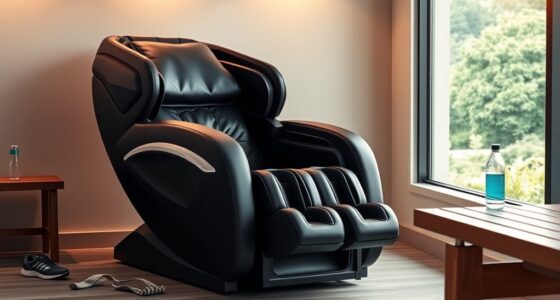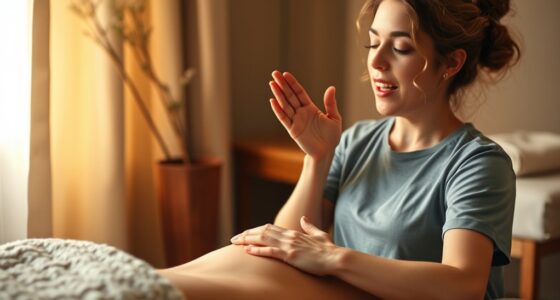
To boost circulation and flexibility with your massage chair, focus on routines targeting your back, shoulders, and neck. Use settings designed for trigger point therapy and posture correction to relax knots and realign your body. Incorporate gentle stretches and deep breaths afterward to enhance results. Consistent sessions, ideally every other day, will help you improve blood flow, reduce stiffness, and increase mobility over time. Keep exploring to discover more effective techniques for ideal circulation.
Key Takeaways
- Use targeted trigger point settings to release muscle knots and enhance local blood circulation.
- Incorporate posture correction programs to realign the body and improve overall blood flow.
- Focus on back, shoulders, and neck areas with regular routines to reduce tension and promote flexibility.
- Combine massage sessions with gentle stretching and breathing exercises for optimal circulation benefits.
- Schedule consistent sessions every other day to support gradual improvements in blood flow and mobility.
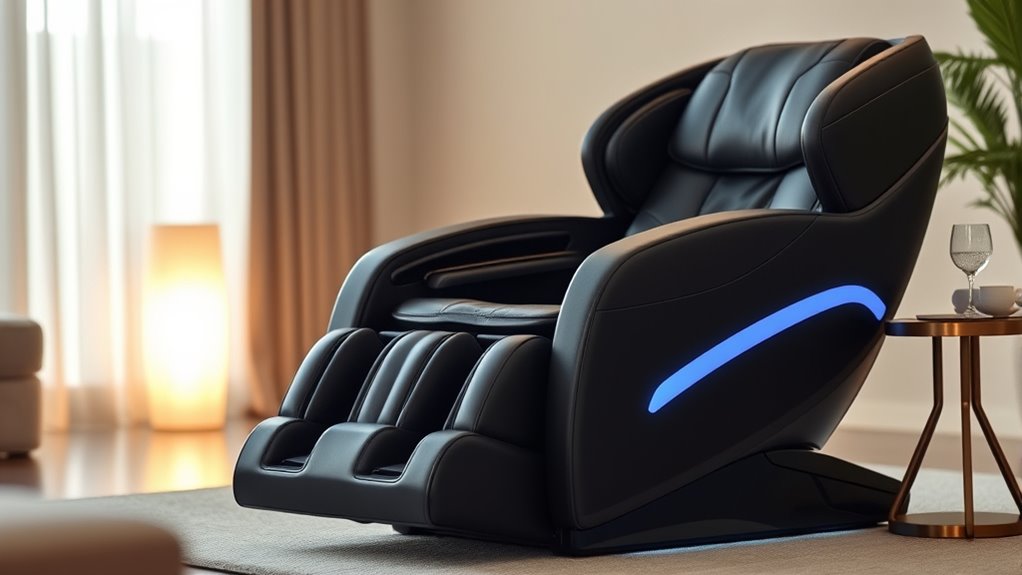
Regular use of a massage chair can considerably boost your blood flow, helping to reduce tension and improve overall health. When you sit back and let the chair work its magic, it stimulates circulation throughout your body, delivering oxygen and nutrients more efficiently to your muscles and tissues. This increased blood flow not only promotes faster recovery but also enhances your flexibility over time. One effective way to maximize these benefits is by targeting trigger points—those tight, knot-like areas that can cause pain and restrict movement. By addressing trigger points during your massage routines, you help release muscle tension that might be blocking proper blood flow and contributing to discomfort. Many massage chairs come equipped with specialized settings designed to locate and relax these knots, restoring smoother circulation and reducing pain. Additionally, incorporating proper ventilation considerations can enhance your massage experience and promote healthier circulation during your routines.
Posture correction is another key aspect of improving blood flow through massage routines. Poor posture—like slouching at your desk or leaning forward on your phone—can lead to muscle imbalances, restricted blood vessels, and increased strain on your spine and neck. A massage chair that emphasizes posture correction helps realign your body, reducing these issues and allowing blood to circulate more freely. When your posture improves, your muscles aren’t constantly working against improper alignment, which means less strain and better blood flow to your extremities. As you regularly use your massage chair with a focus on posture correction, you’ll notice a decrease in stiffness and an increase in overall mobility.
To get the most out of your routine, start with sessions that target your back, shoulders, and neck—areas prone to tension and poor posture. Use the chair’s features designed for trigger point therapy and posture alignment. Incorporate gentle stretching and breathing exercises afterward for enhanced flexibility and circulation. Consistency is essential; daily or every-other-day sessions can gradually improve your posture, release trigger points, and promote better blood flow. Over time, you’ll experience reduced muscle soreness, increased energy, and a greater sense of well-being. Keep in mind that a good massage routine isn’t just about relaxation—it’s a proactive approach to maintaining your health, improving flexibility, and preventing future discomfort. With patience and regular use, your massage chair can become an indispensable tool in supporting your overall circulation and mobility.
Frequently Asked Questions
How Often Should I Use a Massage Chair for Optimal Results?
You should use your massage chair about 3 to 4 times a week for ideal results. Maintaining a consistent usage frequency helps improve blood flow and flexibility effectively. It’s best to schedule sessions during the evening or after physical activity to maximize benefits. Listen to your body and avoid overusing it, as daily use may cause discomfort. Sticking to this routine ensures steady progress without overdoing it.
Can Massage Chairs Replace Traditional Physical Therapy Routines?
Can a massage chair truly replace traditional physical therapy routines? Not entirely. While massage chairs excel at manual therapy, easing muscle tension and improving circulation, they can’t replace the personalized approach of exercise routines designed for specific injuries or conditions. Think of it this way: massage chairs complement your therapy but shouldn’t be your sole treatment. Always consult a healthcare professional for a all-encompassing plan tailored to your needs.
Are There Any Health Conditions That Contraindicate Massage Chair Use?
You should avoid using a massage chair if you have certain health conditions. Chronic conditions like blood clots or heart issues can worsen with massage, and skin sensitivities may lead to irritation or allergic reactions. Always consult your doctor before using a massage chair if you have any ongoing health concerns. It’s important to prioritize safety and make certain that massage therapy won’t interfere with your health.
What Features Should I Look for in a Massage Chair to Enhance Blood Flow?
Look for a massage chair with ergonomic design, which guarantees comfort and proper support, promoting better blood flow. Adjustable intensity features let you customize the massage to suit your needs, enhancing circulation without discomfort. Prioritize models with targeted rollers and multiple massage modes, as these can stimulate blood flow more effectively. A chair that adapts to your body helps improve flexibility and overall circulation, making your massage sessions more beneficial.
How Long Should Each Session Last to Improve Flexibility Safely?
You should aim for sessions lasting about 15 to 30 minutes to improve flexibility safely. Following duration guidelines helps you avoid overstimulation or discomfort. Start with shorter sessions, around 15 minutes, and gradually increase as your body adapts. Pay attention to how you feel during and afterward, and if you experience any pain or discomfort, reduce the session length. Consistency and listening to your body are key for safe flexibility improvements.
Conclusion
By incorporating these massage chair routines into your daily life, you’ll notice your blood flowing like a lively river, carrying vigor to every part of your body. Regular use helps boost circulation and flexibility, making you feel more energized and relaxed. Think of your routine as a gentle tide, steadily washing away tension and stiffness. Embrace these simple steps, and watch your health and comfort flow smoothly, turning your daily moments into renewed vitality.