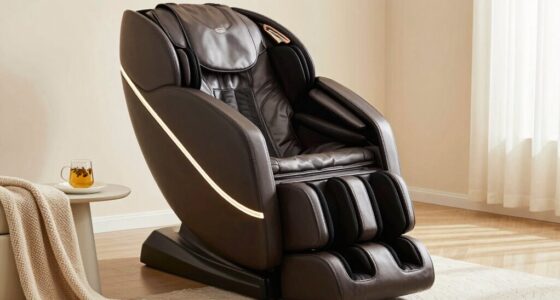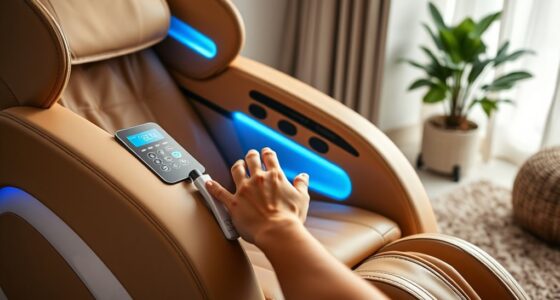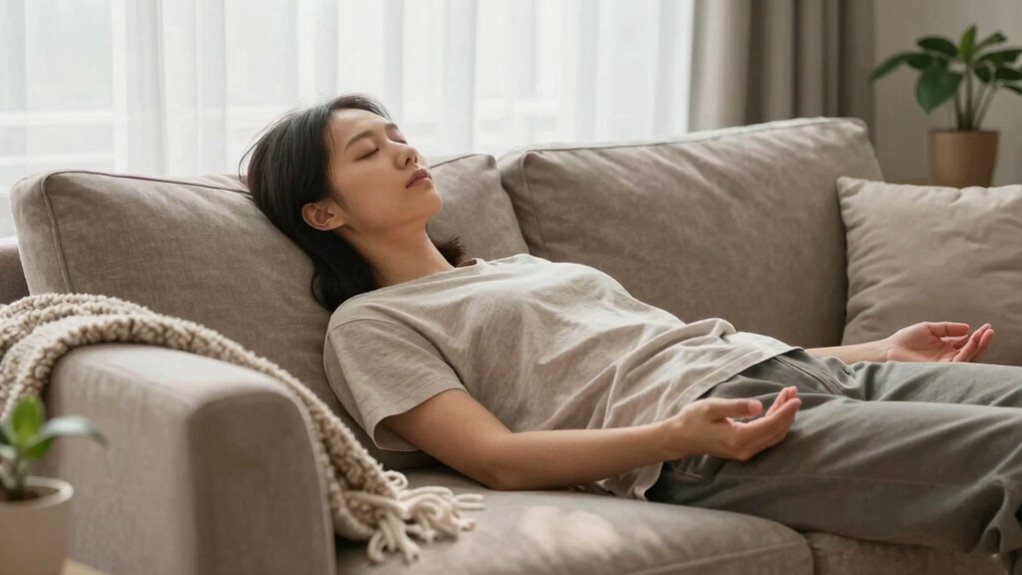
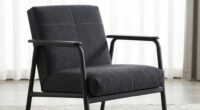
To pair breathwork with a reclined position for a calming session, find a quiet, comfortable space and lean back in a chair, couch, or bed. Take slow, deliberate breaths, focusing on the sensation of air entering and leaving your body. Use mindfulness to observe each inhale and exhale without judgment, allowing your thoughts to drift away naturally. Maintaining this steady rhythm enhances relaxation and promotes mental clarity, and you’ll discover more ways to deepen your practice as you continue.
Key Takeaways
- Choose a quiet, comfortable reclined position to enhance relaxation during breathwork.
- Focus on slow, deliberate breaths, observing each inhale and exhale mindfully.
- Incorporate structured techniques like box breathing to deepen calmness.
- Use mindfulness to stay present and prevent racing thoughts from disrupting relaxation.
- Regularly practice in recline to build resilience and promote long-term stress relief.
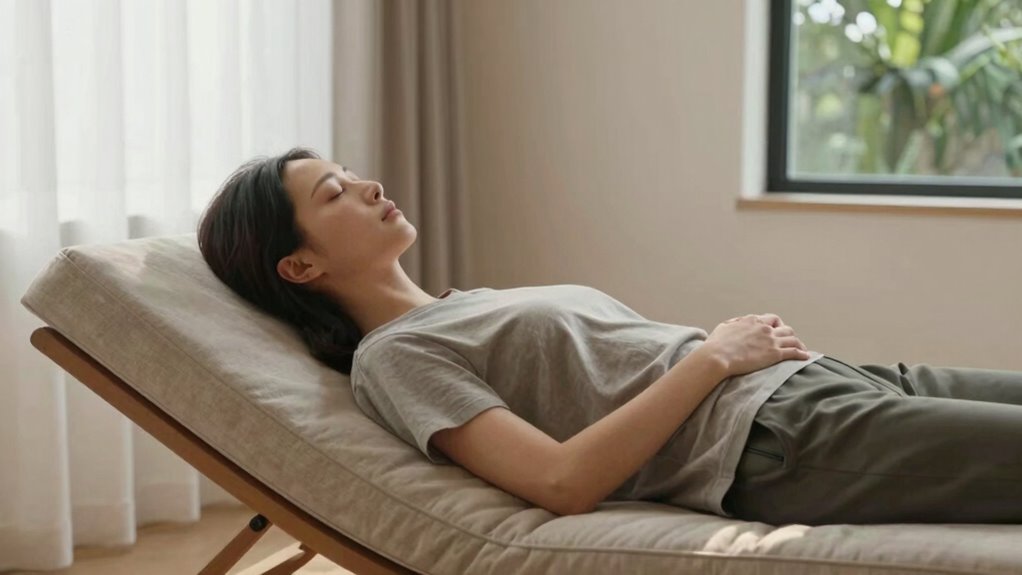
When life feels overwhelming, combining breathwork with a reclined position can be a powerful way to cultivate calm. This approach helps you create a peaceful environment where your mind can settle, and your body can release tension. By integrating mindfulness meditation into your breathwork practice, you deepen your focus and enhance stress reduction. The key is to make your environment comfortable and free from distractions, allowing you to fully immerse yourself in each breath. Find a quiet space, sit back, and lean into a reclined position—whether that’s in a chair, on a couch, or lying down on your bed. The reclined posture encourages relaxation and comfort, making it easier for you to settle into a calm state.
Once you’re comfortably reclined, start by taking slow, deliberate breaths. Focus your attention on the sensation of the air entering and leaving your body. This is where mindfulness meditation plays a vital role. By observing your breath without judgment, you create space between your thoughts and your reactions to stress. As you breathe in, notice the cool air filling your lungs, and as you breathe out, feel the warmth leaving your body. Keep your awareness gently anchored to your breath, allowing any racing thoughts to drift away without attachment. This simple act of mindful breathing can significantly reduce stress, helping you feel more centered and present.
Focus on your breath, observing each inhale and exhale without judgment to cultivate calm and presence.
To deepen your stress reduction, try a structured breathing technique like diaphragmatic or box breathing. Inhale slowly for a count of four, hold your breath for a count of four, then exhale for four counts, and pause again before repeating. This steady rhythm promotes relaxation and signals your nervous system to shift from stress mode to a calm state. As you practice, notice how your body begins to unwind, your muscles soften, and your mind quiets. Keeping your reclined position helps sustain this sense of ease, making it easier to stay engaged with your breath and meditation. Incorporating mindfulness meditation and understanding the psychological benefits of mindful breathing can further enhance your overall sense of well-being and resilience. Developing awareness of your autonomic nervous system responses can deepen your understanding of how breathwork influences your stress levels.
Over time, pairing breathwork with your reclined posture enhances your ability to manage stress effectively. It becomes a mindful habit that you can turn to whenever life feels hectic. This combination not only calms your nervous system but also cultivates a deeper awareness of your body and mind. With consistent practice, you’ll find yourself more resilient to daily stressors, experiencing greater clarity and peace. Remember, the goal isn’t to force anything, but to gently guide yourself into a state of calm through mindful breathing and comfortable posture. Developing this stress management skill can contribute significantly to graceful aging and overall wellness.
As an affiliate, we earn on qualifying purchases.
Frequently Asked Questions
Can Breathwork Help With Specific Health Conditions?
Yes, breathwork can help with specific health conditions like stress relief and anxiety management. When you focus on controlled breathing, you activate your parasympathetic nervous system, which calms your mind and body. Regular practice can reduce symptoms related to anxiety, improve overall mental clarity, and lower stress levels. Incorporating breathwork into your routine, especially when reclining, makes it easier to relax deeply and experience these health benefits.
What’s the Best Recline Angle for Beginners?
The best recline angle for beginners is around 45 degrees, offering reclining comfort while maintaining an open chest for easy breathing. This ideal angle helps you relax without straining your neck or back, allowing your breathwork to deepen naturally. Adjust your recliner until you feel comfortably supported and your breathing feels effortless. Remember, comfort and ease are key to maximizing the calming benefits of your breathwork practice.
How Long Should a Combined Session Last?
When it comes to duration planning, aim for a session lasting about 15 to 30 minutes. This timeframe is enough to relax without feeling overwhelmed. You should also consider session frequency—starting with 3 to 4 times a week helps develop a calming routine. Remember, slow and steady wins the race, so listen to your body and adjust the length as you get more comfortable with the practice.
Are There Any Contraindications for Breathwork?
You should be aware of contraindications for breathwork, especially if you have respiratory issues, cardiovascular problems, or mental health conditions like anxiety or trauma. Always consider alternative techniques and prioritize safety precautions, like practicing in a safe environment and avoiding intense sessions if you’re pregnant or experience dizziness. If unsure, consult a healthcare professional to guarantee breathwork is suitable for you, preventing any adverse effects.
How Often Should I Practice This Combined Method?
You should practice this combined breathwork and recline method 3 to 5 times a week, depending on your stress levels and schedule. Keep your session duration between 10 to 20 minutes to avoid fatigue. For effective frequency planning, listen to your body’s cues and gradually increase session time or frequency as you become more comfortable. Consistency is key for experiencing calming benefits over time.
As an affiliate, we earn on qualifying purchases.
Conclusion
By combining breathwork with reclining, you create a powerful duo that naturally calms your mind and relaxes your body. This pairing isn’t just a calming myth; it’s backed by science showing how deep breathing lowers stress hormones and activates your parasympathetic nervous system. So next time you need peace, try leaning back and focusing on your breath. It’s a simple, effective way to cultivate tranquility and improve your overall well-being.
As an affiliate, we earn on qualifying purchases.
relaxation recliner for stress relief
As an affiliate, we earn on qualifying purchases.
As an affiliate, we earn on qualifying purchases.