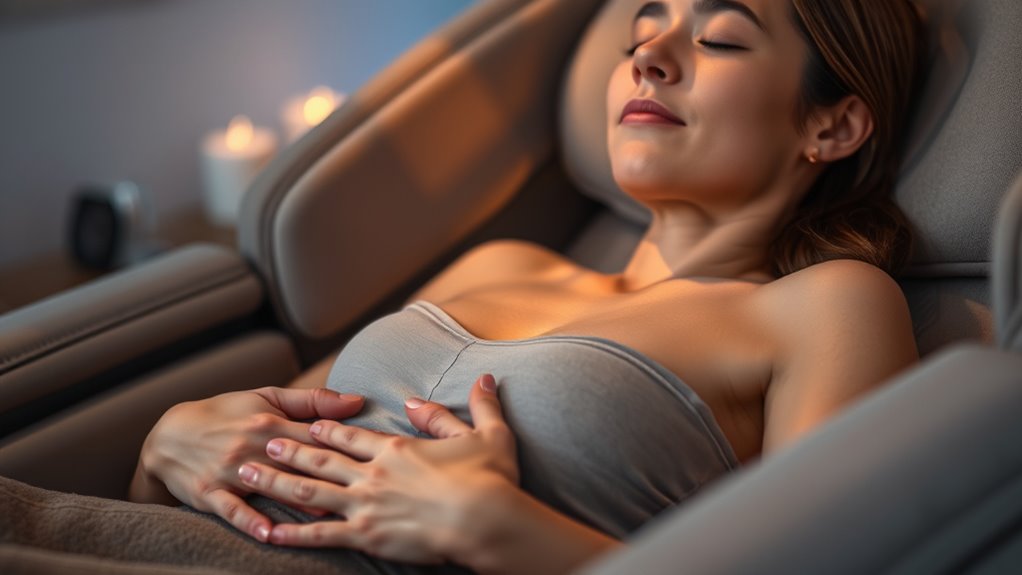

To deepen relaxation during your massage chair sessions, try mindful breathing exercises. Focus on your breath by inhaling slowly through your nose for about four seconds, then exhaling through your mouth or nose for six seconds. Match your breathing to the gentle vibrations or rhythms of the chair, creating a calming flow. Visualize stress leaving your body with each exhale and calm entering with each inhale. Keep practicing these techniques for more tips on maximizing your relaxation experience.
Key Takeaways
- Practice slow, deliberate breaths: inhale through the nose for four seconds, exhale through the mouth for six seconds.
- Synchronize your breathing with chair vibrations or gentle pulses to enhance relaxation.
- Visualize tension leaving your body with each exhale and calm entering with each inhale.
- Focus on maintaining a steady, rhythmic breathing pattern to deepen your sense of tranquility.
- Redirect your attention back to your breath if your mind wanders to maximize mindfulness benefits.

Incorporating breathing exercises into your massage chair session can enhance relaxation and maximize benefits. As you settle into the chair, take a moment to focus on your breath, using mindfulness techniques to center yourself. Paying attention to your breathing pace helps you stay present and deepen your sense of calm. Instead of rushing through your session, slow down and consciously control your breath. This intentional approach allows you to tap into a more profound state of relaxation, making the massage even more effective.
Start by simply observing your natural breathing pattern. Notice how you inhale and exhale without trying to change it right away. This mindfulness technique encourages you to become aware of tension held in your body and how your breath can help release it. Once you’re comfortable, gently guide your breathing to a slower, more deliberate pace. Inhale deeply through your nose for about four seconds, feeling your chest and abdomen expand. Then, exhale slowly through your mouth or nose for six seconds, emptying your lungs completely. Maintaining this breathing pace helps you relax your nervous system and enhances the massage’s soothing effects.
Observe your natural breath, then gently slow it down to deepen relaxation.
As you continue, try to synchronize your breath with the rhythm of the massage. If your chair offers adjustable settings or vibration modes, match your breathing to the gentle pulses or waves produced by the chair. This alignment creates a rhythmic harmony that deepens your sense of tranquility. Focus on each inhale and exhale, allowing your body to soften with each breath. If your mind starts to wander, gently bring your attention back to your breathing, reaffirming your mindfulness techniques.
Another helpful tip is to visualize stress leaving your body with each exhale. Imagine tension melting away as you breathe out, and picture a sense of calm entering with each inhale. This visualization, combined with a mindful breathing pace, amplifies the relaxing effects of your massage. It’s a simple yet powerful way to turn your session into a holistic relaxation ritual. Over time, practicing these breathing exercises can improve your overall stress management, even outside the massage chair.
Incorporating mindful breathing into your massage session isn’t complicated, but it requires intention and practice. By consciously adjusting your breathing pace and employing mindfulness techniques, you’ll find yourself more relaxed and more in tune with your body during each session. This simple addition can transform a routine massage into a deeply restorative experience, leaving you refreshed and centered long after you leave the chair. Somatic therapy techniques can support your ongoing relaxation practices and emotional well-being.
Frequently Asked Questions
Can Breathing Exercises Improve My Overall Relaxation During Massages?
Yes, breathing exercises can considerably improve your relaxation during massages. By practicing mindful breathing, you stay present and calm, enhancing the massage’s benefits. Focus on diaphragmatic relaxation, deepening your breath to release tension and promote a sense of tranquility. These techniques help you relax more fully, making your massage session even more restorative. Incorporating mindful breathing during your massage allows you to maximize relaxation and enjoy a more peaceful experience.
Are Specific Breathing Techniques Better for Stress Relief?
Certain breathing patterns, like deep diaphragmatic breaths, are proven to be more effective for stress relief. They activate your relaxation response faster than shallow or rapid breaths. Combining mindfulness techniques with these patterns helps you stay present, enhancing your calm. You’ll find that specific techniques, such as slow, intentional breathing, deepen your relaxation during massages, making the experience more restorative and reducing stress more efficiently.
How Often Should I Practice Breathing Exercises in a Session?
You should practice breathing patterns throughout your massage chair session, ideally for about 5 to 10 minutes, depending on your comfort and session duration. Break it into manageable intervals, such as 3 to 5 deep breaths every few minutes. This helps you stay relaxed and enhances the session’s benefits. Adjust the frequency based on how you feel, but consistent practice during the entire session maximizes stress relief.
Can Breathing Exercises Help With Pain Management During Massages?
Yes, mindful breathing and diaphragmatic breathing can help with pain management during massages. When you focus on slow, deep breaths, you activate your body’s relaxation response, reducing tension and discomfort. Practicing these breathing techniques during your massage allows you to stay present, ease muscle tightness, and enhance overall relief. Incorporate mindful breathing to make your massage session more effective and help manage pain more naturally.
Do Breathing Exercises Enhance the Benefits of Massage Therapy?
Did you know that practicing diaphragmatic breathing can boost your relaxation by up to 60%? Breathing awareness during massage therapy definitely enhances its benefits. When you focus on diaphragmatic breathing, you activate your parasympathetic nervous system, reducing stress and muscle tension. This deep, controlled breathing helps you stay present, maximize relaxation, and extend the positive effects of your massage. So, incorporate these techniques for a more restorative experience.
Conclusion
Incorporating these breathing exercises into your massage chair sessions transforms each moment into an oasis of unparalleled tranquility. You’ll find yourself effortlessly transcending ordinary relaxation, opening depths of calm so profound that even the busiest mind feels reborn. With every breath, you elevate your experience to a domain where stress dissolves like mist at dawn, leaving you utterly rejuvenated. Embrace these techniques, and watch as your sessions become legendary sanctuaries of serenity beyond your wildest dreams.