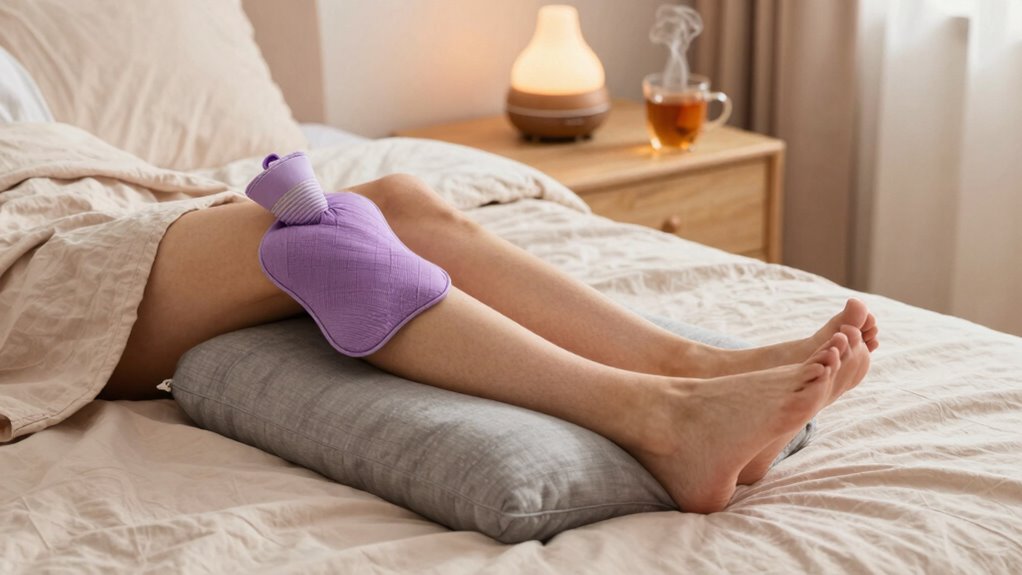

To improve your bedtime routine for tight legs, start by creating a calm environment—keep your room cool, dark, and quiet, and use blackout curtains or a sleep mask. Incorporate gentle stretches or light yoga for your lower body, holding each stretch for 20-30 seconds, and try warm baths or heat packs to soothe muscles. Consistently go to bed and wake up at the same time, and relax with calming activities like listening to soothing music or practicing mindfulness. If you continue, you’ll discover even more ways to relax and sleep better.
Listen free for 30 days with Audible
Thousands of audiobooks and originals — cancel anytime.
As an affiliate, we earn on qualifying purchases.
Key Takeaways
- Establish a consistent bedtime and wind down with calming activities like reading or listening to soothing music.
- Incorporate gentle lower-body stretches and deep breathing exercises to relax leg muscles before sleep.
- Use heat therapy, such as a warm bath or heating pad, to soothe tight muscles and promote relaxation.
- Create a cool, dark, quiet sleep environment with blackout curtains and white noise to enhance rest.
- Practice mindfulness or relaxation techniques to calm the nervous system and reduce muscle tension before bed.

If you struggle with tight legs at bedtime, establishing a calming and effective routine can make a significant difference. Your sleep environment plays a crucial role in easing discomfort and setting the stage for restful sleep. Make sure your bedroom is cool, dark, and quiet, removing any distractions that could hinder relaxation. Use blackout curtains or a sleep mask to block out light, and consider white noise machines or earplugs if noise is an issue. Creating a comfortable space helps your body unwind and signals that it’s time to rest.
A cool, dark, quiet bedroom signals your body to relax and prepares you for restful sleep.
Incorporating relaxation techniques into your nightly routine can help loosen tight leg muscles and calm your mind. Gentle stretching or light yoga focused on the lower body can be highly effective. Focus on slow, deliberate movements, stretching your calves, hamstrings, and quadriceps. Hold each stretch for 20-30 seconds, breathing deeply to enhance relaxation. You might also try progressive muscle relaxation, where you tense and then release different muscle groups, starting from your toes and working upward. This practice not only relaxes your muscles but also helps you become more aware of areas of tension, making it easier to target them. Additionally, incorporating proper muscle engagement can prevent further tightness over time. Engaging your muscles properly during stretches and exercises can also support muscle health and flexibility.
Warm baths or applying heat to your legs before bed can soothe tight muscles and improve flexibility. A warm compress or heating pad placed on your calves or thighs encourages blood flow and eases stiffness. Combining this with relaxation techniques like deep breathing or mindfulness meditation further calms your nervous system. These methods promote overall relaxation, making it easier to drift off. Avoid caffeine or stimulating activities close to bedtime, as these can increase muscle tension and interfere with your sleep environment. Additionally, relaxation techniques can enhance your overall sleep quality and muscle relaxation.
Consistency is key to establishing an effective bedtime routine. Going to bed and waking up at the same time each day helps regulate your body’s internal clock, making it easier for your muscles to relax naturally. Incorporate calming activities like reading a book, listening to soothing music, or practicing gentle breathing exercises. These activities support your relaxation techniques and reinforce a sense of calm. Over time, your body will associate these habits with sleep, reducing the likelihood of tight legs disrupting your rest. Developing a routine that includes mindfulness exercises can also improve your overall sense of relaxation and readiness for sleep.
As an affiliate, we earn on qualifying purchases.
Frequently Asked Questions
Can Stretching Before Bed Improve Leg Tightness Overnight?
Yes, stretching before bed can improve leg tightness overnight. It promotes leg relaxation by loosening tight muscles and reducing tension. The stretching benefits include increased flexibility and better blood flow, which can ease discomfort and promote restful sleep. Incorporate gentle stretches into your bedtime routine to help your legs relax, making it easier to fall asleep and wake up feeling more refreshed.
Are There Specific Foods to Avoid Before Bedtime for Leg Relaxation?
You should avoid spicy, caffeinated, and heavy foods before bedtime, as they can disturb your sleep environment and make your legs feel tighter. Instead, opt for light, calming bedtime snacks like bananas or yogurt, which contain magnesium and tryptophan to promote relaxation. Steering clear of these foods helps your body wind down, reduces leg discomfort, and improves your chances of a restful night.
How Long Should a Bedtime Routine Last for Best Results?
You should aim for a bedtime routine lasting about 30 to 60 minutes to maximize relaxation. During this time, focus on calming activities like gentle stretches or adjusting your sleep position for comfort. Maintaining consistent bedtime habits helps signal your body it’s time to unwind. Keep your routine steady each night, avoiding hurried pre-sleep activities, so your muscles can fully relax and prepare for restful sleep.
Is It Safe to Use Heat Therapy Nightly for Tight Legs?
Nightly heat therapy for tight legs can be safe if you follow proper heat therapy safety guidelines, like avoiding excessive heat and limiting session duration. The nightly heat benefits include relaxing muscles, reducing stiffness, and improving circulation. Just make certain you’re not overusing heat, as prolonged exposure can cause skin irritation or burns. Always check your skin and consult a healthcare professional if you have any medical conditions or concerns.
When Should I See a Doctor About Persistent Leg Tightness?
You should see a doctor about persistent leg tightness if it worsens, lasts more than a few days, or interferes with your sleep—because even your favorite medications, supplements, or exercise routines can’t fix everything. If you notice swelling, redness, or warmth, don’t ignore these red flags. Trust your instincts; when in doubt, consult a healthcare professional to rule out underlying issues and get personalized advice.
As an affiliate, we earn on qualifying purchases.
Conclusion
Creating a calming bedtime routine can help ease tight leg muscles and improve your sleep. Imagine Sarah, who struggled with nightly cramps; after incorporating gentle stretches and warm baths into her routine, she noticed her legs felt more relaxed, and her sleep improved. Consistency is key—try a similar approach tonight. With patience and regular practice, you’ll find your legs loosen up, making bedtime a peaceful, restorative experience.
As an affiliate, we earn on qualifying purchases.
As an affiliate, we earn on qualifying purchases.
Flea & tick season Picks
flea and tick prevention
As an affiliate, we earn on qualifying purchases.