TL;DR
A personal trainer featured by Fit&Well describes a routine with a four-minute warm-up and a six-minute circuit of six dumbbell exercises. The trainer says it works the chest, back, shoulders and arms while also challenging core stability; those benefits are the trainer’s description, not results established by the report.
Fit&Well has published a personal trainer’s 10-minute upper-body routine, combining a four-minute warm-up with a six-minute circuit of dumbbell exercises. The trainer says the circuit targets the chest, back, shoulders and arms, while also asking the exerciser to stabilize the core; the report provides instructions and easier or harder variations, but does not present evidence that the workout produces a particular strength gain.

Get wellness gear delivered free with Prime
- Fast, free delivery on millions of items
- Prime Video, Amazon Music and more included
- Member-only deals all year
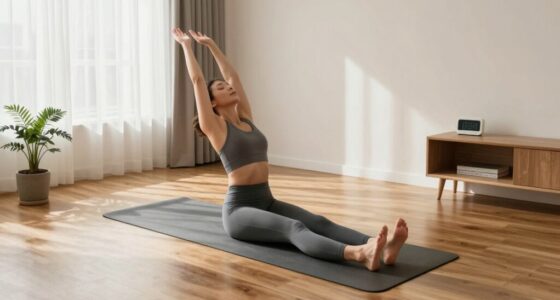
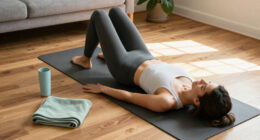
The routine opens with four 45-second warm-up movements, each followed by 15 seconds to change position: a thread-the-needle stretch on each side, a kneeling or standing Y-T-W arm sequence, and a kneeling push-up. Fit&Well says the warm-up is intended to mobilize the shoulders and spine before the main work.
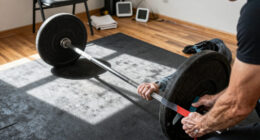
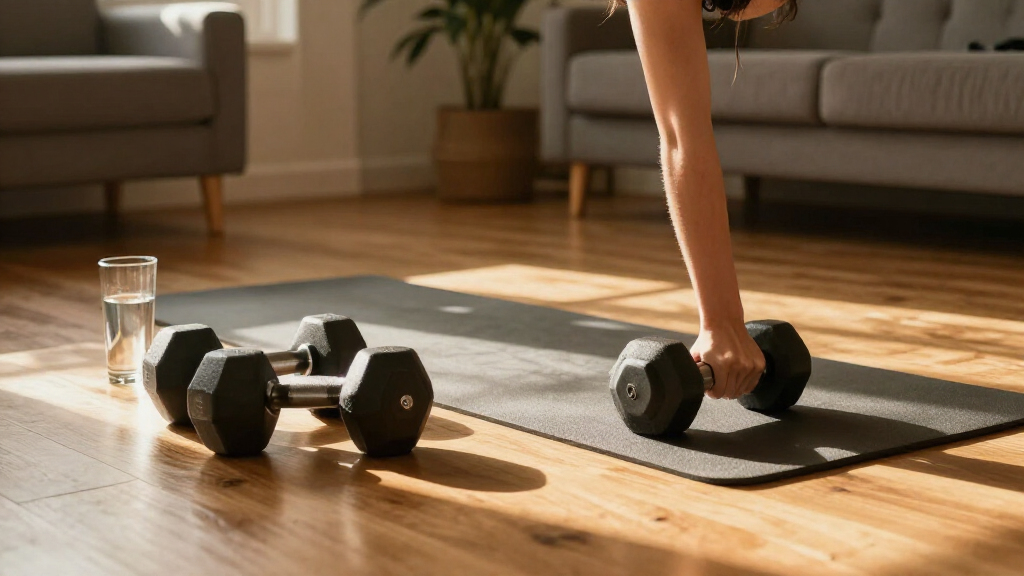
The six-minute circuit uses the same timing for each exercise: 45 seconds of work and 15 seconds of rest. Its movements are a deficit push-up, renegade row, kneeling Arnold press, kneeling biceps curl, kneeling triceps extension and upright row. The trainer recommends choosing dumbbells that allow controlled movement and good form throughout each interval.
The trainer says the circuit can be completed once or repeated two or three times, depending on a person’s ability and strength goals. That means the advertised 10 minutes covers the warm-up and one pass through the circuit; repeating the six-minute circuit adds time. The supplied report lists easier and harder versions for several exercises, including knee-supported push-ups and rows, single-arm pressing, and slower lowering phases.
A Short Circuit With Scalable Options
The routine offers readers a defined sequence and timer for a brief resistance-training session using a pair of dumbbells. Its mix of pushing, rowing and arm movements may be useful to people looking for a compact workout plan, while the suggested variations give some guidance on adjusting difficulty.
That is not the same as evidence that the circuit will strengthen every upper-body muscle or suit everyone. The source describes the trainer’s program and intended muscle groups; it does not report participant testing, measured strength outcomes or a comparison with other workouts. Exercise choice and load should be adjusted to the individual, and pain or loss of control is a reason to stop rather than push through.
Products Worth Considering

Philips Sonicare DiamondClean 9500 Electric Toothbrush, Black, with 3 Brush Heads

Blueair Blue Pure 211i Max Smart Air Purifier for Large Rooms

Withings Body Smart Accurate Scale for Body Weight, Fat Percentage and Body Composition
As an affiliate, we earn on qualifying purchases.
How the Trainer Structures the Session
The trainer describes the circuit as a personal signature workout used with clients of different abilities when a pair of dumbbells was available. The six main exercises are ordered from larger muscle groups toward smaller ones, according to the report, with core stability involved during movements such as the renegade row.
Each move is prescribed for a fixed interval rather than a set number of repetitions. The trainer’s guidance is to slow the tempo if the weights feel light, increasing the time spent under tension, or take a brief five-second pause midway through an interval if the weights feel too heavy to use with good form. The article also includes regressions and progressions, though the supplied material does not give complete step-by-step instructions for the final upright row and triceps extension.
Results and Exercise Details Not Reported
The supplied report does not say how much strength a person might gain, how quickly results could appear, or whether the routine was tested in a study. It also does not provide a specific dumbbell weight, a detailed progression plan, or full instructions for every listed movement in the source material provided here. The number of rounds is left to the exerciser, so total workout time varies if the circuit is repeated.
The trainer’s description does not establish that the workout is suitable for every fitness level or health condition. Readers with injuries, relevant medical conditions, or uncertainty about technique may need advice from a qualified fitness or health professional before attempting loaded movements.
Readers Can Follow the Published Circuit
The source describes a workout rather than a scheduled event, and it names no follow-up study or planned update. Readers using the routine can begin with the warm-up, select a manageable weight and complete one six-minute circuit, then decide whether to repeat it based on their ability and goals. The source recommends keeping movement controlled and preserving good form; it does not establish a single appropriate number of rounds for everyone.
Key Questions
What exercises are in the dumbbell circuit?
The six listed exercises are the deficit push-up, renegade row, kneeling Arnold press, kneeling biceps curl, kneeling triceps extension and upright row. Each is assigned 45 seconds, followed by 15 seconds of rest.
Does the workout take exactly 10 minutes?
One round takes 10 minutes as described: four minutes of warm-up and one six-minute circuit. Repeating the circuit two or three times adds six or 12 minutes, respectively, before any extra breaks.
What dumbbell weight should someone use?
The trainer does not name a specific weight. The guidance is to use dumbbells that allow good form for each 45-second interval; take a short pause if a weight feels too heavy, or slow the tempo if it feels light.
Is the routine proven to strengthen the upper body?
The trainer says the exercises challenge the chest, back, shoulders and arms, but the supplied report does not include a study or measured strength results. The claimed training focus should not be read as a guarantee of a particular outcome.
Source: fitandwell.com