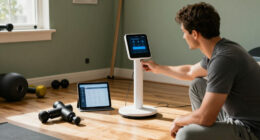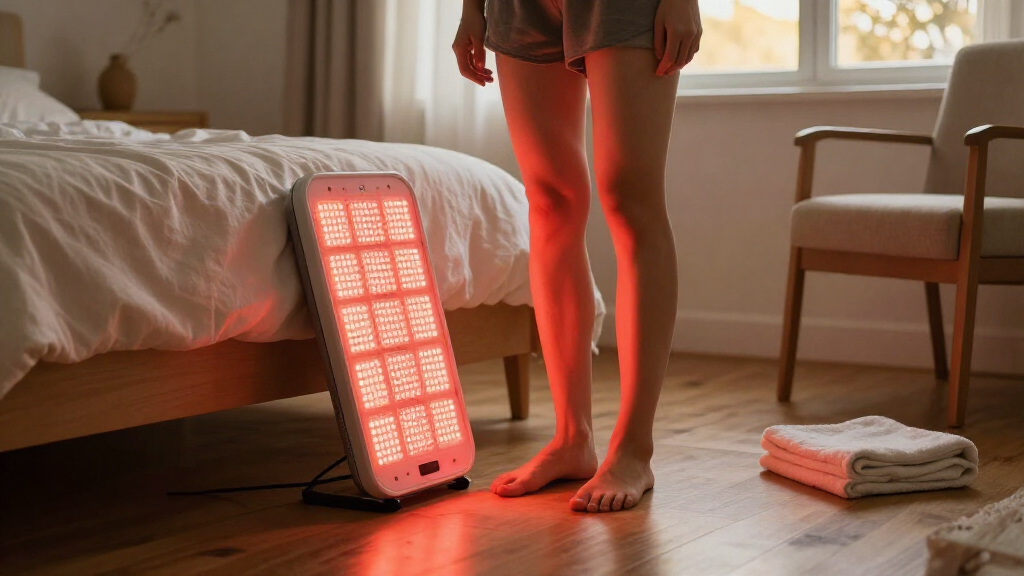
Choosing the right red light therapy panels requires balancing power output, wavelength precision, and physical coverage area. The Hooga PRO300 stands out as the best overall choice for serious users due to its high irradiance and robust build quality, while the BestQool BQ60 offers an excellent entry point for those prioritizing value and dual-wavelength capability. Buyers often struggle with deciding between compact units for localized treatment and larger panels for full-body sessions, a tradeoff that dictates both cost and session efficiency. This guide cuts through the spec sheets to highlight which models actually deliver therapeutic doses of light. Continue reading to see how these fifteen options stack up against one another in real-world application scenarios.

Get wellness gear delivered free with Prime
- Fast, free delivery on millions of items
- Prime Video, Amazon Music and more included
- Member-only deals all year
Key Takeaways
- Irradiance (mW/cm²) matters more than total wattage; high-wattage panels with poor beam angles deliver less effective light to the skin.
- Dual-wavelength panels (660nm/850nm) are the standard for general use, but tri-wavelength units adding 940nm offer deeper penetration for joint pain.
- Tabletop stands significantly improve usability for seated users, preventing the awkward positioning required by wall-mounted or floor-standing only units.
- Smaller panels under 50W are often insufficient for full-body treatment, requiring longer sessions that can lead to inconsistent usage habits.
- Fan noise is a common pain point in high-power panels; quieter models often sacrifice cooling efficiency or require larger, heavier heatsinks.
| Hooga HG200 Red and Near-Infrared Light Therapy Panel |  | Best for a Compact Setup | Wavelengths: 660 nm red and 850 nm near-infrared | LEDs: 40 | Power: 48 watts | VIEW LATEST PRICE | See Our Full Breakdown |
| BestQool BQ60 Red Light Therapy Panel, 660nm Red and 850nm Near-Infrared, 105W |  | Best for Flexible Mounting | Power: 105W | Wavelengths: 660 nm red and 850 nm near-infrared | Irradiance: 95.6 mW/cm² at 3 inches | VIEW LATEST PRICE | See Our Full Breakdown |
| MitoMIN 2.0 Red Light Therapy Panel |  | Best for Targeted Sessions | LED count: 60 | Wavelengths: 660 nm red and 850 nm near-infrared | Dimensions: 12 × 9 × 3 inches | VIEW LATEST PRICE | See Our Full Breakdown |
| Hooga PRO300 Red Light Therapy Panel with Tabletop Stand |  | Best for More Extensive Tabletop Coverage | Model: PRO300 | LEDs: 60 dual-chip LEDs | Wavelengths: 660 nm red and 850 nm near-infrared | VIEW LATEST PRICE | See Our Full Breakdown |
| Morfone Tri-Wavelength Red Light Therapy Panel (660nm, 850nm, 940nm) |  | Best for Multiple Wavelength Options | Wavelengths: 660 nm, 850 nm, and 940 nm | LED count: 120 | Panel size: 14.2 × 6.3 inches | VIEW LATEST PRICE | See Our Full Breakdown |
| BestQool Pro300 Red Light Therapy Panel, 4 Wavelengths |  | Best for Expandable Coverage | Wavelengths: 630 nm, 660 nm, 850 nm, and 940 nm | LED count: 300 | Irradiance: Over 106 mW/cm² at 3 inches | VIEW LATEST PRICE | See Our Full Breakdown |
| 45W LED Red Light Therapy Panel with 660nm Red and 850nm Near-Infrared Light |  | Best for Simple, Flexible Placement | Power: 45W | Wavelengths: 660 nm deep red and 850 nm near-infrared | Use: At-home light therapy | VIEW LATEST PRICE | See Our Full Breakdown |
| MitoMAX 2.0 Red Light Therapy Panel |  | Best for Broad Coverage and Documented Output | Dimensions: 36 x 9 x 3 inches | LED count: 200 diodes | Wavelengths: 660 nm red and 850 nm near-infrared | VIEW LATEST PRICE | See Our Full Breakdown |
| Viconor Red Light Therapy Lamp for Face and Body with Stand |  | Best for Adjustable Positioning | LED count: 120 | Wavelengths: 660 nm red and 850 nm near-infrared | Included accessories: Stand, hook, and 1.8 m power cord | VIEW LATEST PRICE | See Our Full Breakdown |
| Hooga HG300 Red and Near-Infrared Light Therapy Panel |  | Best Compact Starter Panel | Wavelengths: 660 nm red and 850 nm near-infrared | LED count: 60 | Irradiance: Over 73 mW/cm² at 6 inches | VIEW LATEST PRICE | See Our Full Breakdown |
| BestQool Pro100 Red Light Therapy Panel, 4 Wavelengths, 160W |  | Best for Expandable Setups | Wavelengths: 4 | Power: 160W | Dimensions: 19.7 × 8.4 × 2.6 inches | VIEW LATEST PRICE | See Our Full Breakdown |
| Viconor Red Light Therapy Panel (660nm/850nm, 300W, 60 Dual Chip LEDs) |  | Best for Mounting Flexibility | Wavelengths: 660nm red and 850nm near-infrared | LED count: 60 dual-chip LEDs (120 total beads) | Power: 300W | VIEW LATEST PRICE | See Our Full Breakdown |
| INIA Red Light Therapy Panel & Belt 2-in-1 (1064nm + 850nm Dual NIR) |  | Best Panel-and-Wearable Combo | Wavelengths: 630nm, 660nm, 850nm, and 1064nm | LED count: 360 | Design: 2-in-1 panel and wearable belt | VIEW LATEST PRICE | See Our Full Breakdown |
| Viconor Red Light Therapy Lamp for Face and Body |  | Best for Flexible, Close-Range Placement | LED count: 120 | Wavelengths: 660nm red and 850nm near-infrared | Adjustability: 180 degrees | VIEW LATEST PRICE | See Our Full Breakdown |
| MitoMEGA 2.0 Red Light Therapy Panel |  | Best for Broad Coverage | Dimensions: 36 × 12 × 3 inches | LED count: 300 high-powered LED diodes | Wavelengths: 660nm red and 850nm near-infrared | VIEW LATEST PRICE | See Our Full Breakdown |
| red light therapy panel | Wavelengths | LED count |
|---|---|---|
| Hooga HG200 Red and Near-Infra | 660 nm red and 850 nm near-infrared | — |
| BestQool BQ60 Red Light Therap | 660 nm red and 850 nm near-infrared | — |
| MitoMIN 2.0 Red Light Therapy | 660 nm red and 850 nm near-infrared | 60 |
| Hooga PRO300 Red Light Therapy | 660 nm red and 850 nm near-infrared | — |
| Morfone Tri-Wavelength Red Lig | 660 nm, 850 nm, and 940 nm | 120 |
| BestQool Pro300 Red Light Ther | 630 nm, 660 nm, 850 nm, and 940 nm | 300 |
| 45W LED Red Light Therapy Pane | 660 nm deep red and 850 nm near-infrared | — |
| MitoMAX 2.0 Red Light Therapy | 660 nm red and 850 nm near-infrared | 200 diodes |
| Viconor Red Light Therapy Lamp | 660 nm red and 850 nm near-infrared | 120 |
| Hooga HG300 Red and Near-Infra | 660 nm red and 850 nm near-infrared | 60 |
| BestQool Pro100 Red Light Ther | 4 | — |
| Viconor Red Light Therapy Pane | 660nm red and 850nm near-infrared | 60 dual-chip LEDs (120 total beads) |
| INIA Red Light Therapy Panel & | 630nm, 660nm, 850nm, and 1064nm | 360 |
| Viconor Red Light Therapy Lamp | 660nm red and 850nm near-infrared | 120 |
| MitoMEGA 2.0 Red Light Therapy | 660nm red and 850nm near-infrared | 300 high-powered LED diodes |
More Details on Our Top Picks
Hooga HG200 Red and Near-Infrared Light Therapy Panel
The Hooga HG200 is a sensible pick when you want a small panel for targeted use rather than broad body coverage. Its 40 LEDs offer 660 nm red and 850 nm near-infrared light, with separate or combined modes, so you can choose how to use the available wavelengths. The built-in timer and adjustable tabletop stand make positioning and session control more straightforward than with a bare panel. Compared with the Hooga PRO300, the HG200 takes up less space and is easier to place on a desk, but its compact format covers a smaller area. The cooling fan may also be audible, and this corded panel is for indoor use only. It requires eye protection; do not look directly at the LEDs. Its three-year warranty adds reassurance for buyers planning regular home use.
Pros:- Offers red-only, near-infrared-only, and combined light modes
- Compact body and adjustable tabletop stand suit limited spaces
- Built-in timer and cooling fan support controlled home sessions
- Three-year manufacturer warranty
Cons:- Small panel limits coverage compared with the Hooga PRO300
- Indoor-only design is not water resistant
- Eye protection is required, and users should not look directly at the LEDs
Best for: People seeking a space-saving tabletop panel for targeted sessions at home, such as on the face or a small body area.
Not ideal for: Buyers who want to cover a large area in one setup, or who need a water-resistant panel for use outside.
- Wavelengths:660 nm red and 850 nm near-infrared
- LEDs:40
- Power:48 watts
- Irradiance:Over 90 mW/cm² at 6 inches
- Dimensions:9.8 × 6.3 × 1.2 inches
- Mounting:Table mount with adjustable stand
- Features:Built-in timer, cooling fan, red and near-infrared modes
- Warranty:3 years
Our verdict“Choose the HG200 if a compact tabletop footprint matters more than broad coverage.”
BestQool BQ60 Red Light Therapy Panel, 660nm Red and 850nm Near-Infrared, 105W
The BestQool BQ60 stands out for giving buyers two practical placement options: an adjustable stand for tabletop use and a wall-hanging kit for a more fixed setup. Its touchscreen controls and red-only, near-infrared-only, or combined modes make it more configurable than the simpler tabletop approach of the Hooga HG200. The listed irradiance is 95.6 mW/cm² at 3 inches, but that measurement is tied to a specific distance and should not be treated as a direct comparison with figures measured farther away. A cooling system supports at-home operation, while the portable design leaves room to reposition the panel. The tradeoff is that the supplied description does not provide independent evidence for its wellness claims, and it gives less detail about panel dimensions and warranty than some alternatives.
Pros:- Includes both an adjustable stand and a wall-hanging kit
- Touchscreen controls offer a direct way to select settings
- Provides red, near-infrared, and combined light modes
- Cooling system supports use in a portable home setup
Cons:- Description provides no independent evidence for the wellness benefits mentioned
- Irradiance figure is specified at 3 inches, limiting direct comparison with measurements at other distances
- Product details provided do not specify dimensions or warranty
Best for: Home users who want the choice of tabletop or wall-mounted placement and prefer touchscreen controls.
Not ideal for: Buyers who need detailed independent evidence for performance claims or want clearly documented dimensions and warranty coverage before choosing.
- Power:105W
- Wavelengths:660 nm red and 850 nm near-infrared
- Irradiance:95.6 mW/cm² at 3 inches
- Light modes:Red, near-infrared, or both
- Mounting:Adjustable U-shaped stand and wall-hanging kit
- Controls:Touchscreen
- LEDs:Flicker-free
- Cooling:Cooling system
Our verdict“Pick the BQ60 if flexible mounting and touchscreen operation matter more than extensive performance documentation.”
MitoMIN 2.0 Red Light Therapy Panel
The MitoMIN 2.0 is designed for targeted coverage, with a 12 × 9-inch panel that suits buyers focusing on one area at a time rather than trying to illuminate a larger portion of the body. Its 60 LEDs provide 660 nm red and 850 nm near-infrared light, with controls for either wavelength or both. A digital timer and quiet fans add useful session control without the larger-panel footprint. Compared with the Hooga HG200, the MitoMIN is bigger and reports independent testing of irradiance and spectral output; however, the supplied data does not include specific test results or an irradiance figure for direct comparison. Its stated energy output is 21,720 joules in a 10-minute session, but this does not establish a particular personal outcome. The compact size remains a limit for buyers seeking broad coverage.
Pros:- Three light modes cover red, near-infrared, or both
- Compact 12 × 9-inch panel suits targeted placement
- Digital timer and quiet fans support controlled sessions
- Manufacturer reports independent testing of irradiance and spectral output
Cons:- Panel size is intended for targeted rather than large-area coverage
- Reported testing is not accompanied here by specific irradiance or spectral results
- Wellness claims may not reflect an individual user’s experience
Best for: People who want a targeted panel for face, neck, or individual body areas and value a digital timer and quiet fans.
Not ideal for: Buyers seeking broad-area coverage in fewer placements or those expecting wellness claims to predict individual results.
- LED count:60
- Wavelengths:660 nm red and 850 nm near-infrared
- Dimensions:12 × 9 × 3 inches
- Modes:Red only, near-infrared only, or both
- Timer:Digital control panel with timer
- Reported energy output:21,720 joules in a 10-minute session
- Fans:Whisper-quiet fans
- Eligibility:FSA/HSA eligible
Our verdict“Choose the MitoMIN 2.0 for targeted sessions and quiet operation, not for broad body coverage.”
Hooga PRO300 Red Light Therapy Panel with Tabletop Stand
The Hooga PRO300 suits buyers who want a larger tabletop panel with more control over each wavelength. Its 60 dual-chip LEDs emit 660 nm red and 850 nm near-infrared light, and independent controls let you select either band or use both. That flexibility is useful if you do not want every session to use the same combination. Compared with the compact Hooga HG200, the PRO300 is a more substantial setup, with a listed length of 61.2 inches and a 60-degree beam angle; its size may provide a different coverage arrangement, but requires considerably more room. It can also connect to other PRO Series panels, making expansion possible. The tradeoffs are a corded power source, a 4.3 kg weight, and cooling fans that may make operating noise.
Pros:- 60 dual-chip LEDs combine red and near-infrared output
- Independent wavelength controls allow separate or combined use
- Adjustable tabletop stand and digital timer are included
- Can connect with other PRO Series panels
Cons:- Listed 61.2-inch length calls for substantial space
- Corded power and 4.3 kg weight limit portability
- Cooling fans may produce operating noise
Best for: Home users with room for a larger tabletop panel who want independent control of red and near-infrared light.
Not ideal for: People with limited space, those seeking a lightweight portable option, or anyone who needs cordless operation.
- Model:PRO300
- LEDs:60 dual-chip LEDs
- Wavelengths:660 nm red and 850 nm near-infrared
- Power:300 watts
- Beam angle:60 degrees
- Dimensions:61.2 × 15.7 × 3.1 inches
- Weight:4.3 kg
- Mounting:Table mount with adjustable stand
- Warranty:3 years
Our verdict“The PRO300 is a fit for buyers prioritizing a larger, expandable tabletop setup over compactness.”
Morfone Tri-Wavelength Red Light Therapy Panel (660nm, 850nm, 940nm)
The Morfone Tri-Wavelength Panel is the lineup’s distinct choice for buyers who want three listed wavelengths rather than the two found on the Hooga PRO300. It combines 660 nm red with 850 nm and 940 nm infrared wavelengths, plus five modes and pulse settings for different operating configurations. The 14.2 × 6.3-inch panel and 180-degree adjustable aluminum bracket make it easier to aim at different areas, though this size is not the same as a large panel intended to cover much of the body at once. Its 120 LED beads are more numerous than the 60 LEDs in the PRO300, but LED count alone does not establish comparative output or results. The tradeoffs are limited supplied performance data, a one-year warranty, and the possibility that infrared modes will appear dark because those wavelengths are invisible.
Pros:- Offers 660 nm, 850 nm, and 940 nm wavelengths
- Five modes include pulse settings
- 180-degree adjustable aluminum bracket aids positioning
- Includes protective sunglasses
Cons:- Supplied product data does not state power or irradiance
- One-year warranty is shorter than the three-year warranties listed for Hooga panels
- Infrared light is invisible, so some modes may not appear illuminated
Best for: Buyers who want a compact, adjustable panel with 660 nm, 850 nm, and 940 nm options and multiple modes.
Not ideal for: People who want detailed irradiance or power measurements, a longer warranty, or a large panel for broad coverage.
- Wavelengths:660 nm, 850 nm, and 940 nm
- LED count:120
- Panel size:14.2 × 6.3 inches
- Modes:5 modes, including pulse
- Voltage:110V
- Bracket material:Aviation-grade aluminum
- Rotation:180-degree adjustable
- Warranty:1 year
Our verdict“Choose Morfone if three wavelength options and adjustable positioning matter more than documented output or longer warranty coverage.”
BestQool Pro300 Red Light Therapy Panel, 4 Wavelengths
The BestQool Pro300 is the most adaptable choice here for buyers who may want to expand their setup later. Its four wavelengths—630, 660, 850, and 940 nm—give it a broader light mix than the two-wavelength Hooga HG300, while the modular design lets compatible panels connect as coverage needs grow. A built-in fan helps manage heat during use, and the stated irradiance is over 106 mW/cm² at 3 inches. That figure is tied to a close distance, though, so it does not tell you the output at other positions. The panel can also be used with a compatible mobile stand, but that stand is a separate accessory. Choose this model for flexibility; skip it if you want a ready-to-position stand included or prefer a simple, fixed-size setup.
Pros:- Four wavelengths, including two red and two infrared options
- Modular design allows compatible panels to connect
- Built-in fan helps dissipate heat
- Specified irradiance exceeds 106 mW/cm² at 3 inches
Cons:- Compatible mobile stand is a separate accessory
- Irradiance figure is provided only for a 3-inch distance
- Expansion may require additional panels and setup space
Best for: Buyers who want four wavelengths now and the option to connect additional panels as their coverage needs change.
Not ideal for: People who need an included mobile stand or want irradiance information specified at several treatment distances.
- Wavelengths:630 nm, 660 nm, 850 nm, and 940 nm
- LED count:300
- Irradiance:Over 106 mW/cm² at 3 inches
- Beam angle:30 degrees
- Cooling:Built-in cooling fan
- Design:Modular; panels can connect together
Our verdict“Choose the Pro300 if expandable coverage and four wavelengths matter more than an included stand or distance-specific output data.”
45W LED Red Light Therapy Panel with 660nm Red and 850nm Near-Infrared Light
This 45W panel makes the most sense for someone who wants a basic red-and-near-infrared unit without a complicated setup. It combines 660 nm red and 850 nm near-infrared light, and can either hang or sit independently, giving it more placement flexibility than a tabletop-only design such as the Hooga HG300. The tradeoff is sparse product information: there are no stated dimensions, treatment-area measurements, or irradiance figures, so it is harder to judge how much of the body it can cover or how far away to position it. The MitoMAX 2.0 offers clearer size and session-output details, but this model may appeal to buyers who simply need a straightforward home panel. Treat the advertised wellness uses as claims, not established results from the supplied specifications.
Pros:- Combines 660 nm red and 850 nm near-infrared wavelengths
- Can be hung or placed independently
- 45W power specification is provided
- Simple setup is suited to home use
Cons:- No dimensions or treatment-area details are provided
- No irradiance or recommended treatment distance is specified
- Advertised skin and discomfort benefits are not supported by evidence in the supplied product information
Best for: At-home buyers seeking a basic two-wavelength panel that can be hung or placed on a surface.
Not ideal for: Shoppers who need published dimensions, treatment-area guidance, or irradiance data to plan sessions and compare output.
- Power:45W
- Wavelengths:660 nm deep red and 850 nm near-infrared
- Use:At-home light therapy
- Placement:Can be hung or placed independently
Our verdict“Pick this panel for straightforward flexible placement, but choose the MitoMAX 2.0 if documented size and output details are a priority.”
MitoMAX 2.0 Red Light Therapy Panel
The MitoMAX 2.0 is the strongest fit in this group for buyers prioritizing a large panel and clearly stated session output. At 36 x 9 inches with 200 diodes, it offers a broader treatment surface than the compact Hooga HG300, which is designed for targeted areas rather than wider coverage. Its 660 nm red and 850 nm near-infrared modes can be used separately or together, and a digital timer and quiet cooling fans add practical control for home sessions. The product information also lists third-party testing and 68,040 joules per 10-minute session. That size calls for dedicated setup space, and the supplied details do not give a treatment distance or irradiance measurement to help compare positioning with the BestQool Pro300. This is a coverage-first option, not a compact starter panel.
Pros:- 36 x 9-inch panel provides a larger coverage area than compact tabletop options
- Red-only, near-infrared-only, and combined modes
- Digital timer and whisper-quiet cooling fans
- Product information lists third-party testing and session energy output
Cons:- Large dimensions require more room for setup and storage
- No irradiance value or treatment distance is specified in the supplied details
- Its broad-panel format may be unnecessary for buyers treating only small areas
Best for: Home users who want a wide panel, selectable red and near-infrared modes, and stated session-energy and testing details.
Not ideal for: Buyers with limited setup space or those who need a compact panel for small, targeted areas.
- Dimensions:36 x 9 x 3 inches
- LED count:200 diodes
- Wavelengths:660 nm red and 850 nm near-infrared
- Modes:Red Only, Near Infrared Only, Both
- Energy output:68,040 joules per 10-minute session
- Controls and cooling:Digital control panel with timer; whisper-quiet fans
- Eligibility:FSA/HSA eligible
- Testing:Third-party tested
Our verdict“Choose the MitoMAX 2.0 for a larger treatment surface and documented session details, provided you have room for its full-size design.”
Viconor Red Light Therapy Lamp for Face and Body with Stand
The Viconor lamp stands out for buyers who want a ready-to-position light rather than a panel that needs separate mounting hardware. It includes a stand that adjusts up to 180 degrees, plus a hook and 1.8 m power cord; the curved 120-LED panel can also be hung or placed independently. That makes its setup more flexible than the 45W panel, whose supplied details mention hanging or placement but no included stand. Both use 660 nm red and 850 nm near-infrared light, while the Viconor adds explicit positioning accessories. Its small panel is a limitation for anyone seeking broad body coverage, and the suggested 15–30-minute daily session is not evidence that claimed benefits will occur. Compared with the larger MitoMAX 2.0, this is a compact convenience pick rather than a coverage-focused panel.
Pros:- Includes a stand adjustable up to 180 degrees
- Comes with a hook and 1.8 m power cord
- Curved panel can be hung or placed independently
- Uses both 660 nm red and 850 nm near-infrared light
Cons:- Small panel is less suited to broad treatment coverage
- Product information does not substantiate claimed skin or therapy benefits
- No irradiance or treatment-area measurement is provided
Best for: Buyers who want an adjustable stand and multiple placement options for directing a compact panel at specific areas.
Not ideal for: People seeking broad body coverage or relying on verified evidence for advertised skin and therapy benefits.
- LED count:120
- Wavelengths:660 nm red and 850 nm near-infrared
- Included accessories:Stand, hook, and 1.8 m power cord
- Stand adjustment:Up to 180 degrees
- Recommended session:15–30 minutes daily
- Panel design:Curved; can be hung or placed independently
Our verdict“Choose the Viconor for adjustable positioning and included accessories when targeted use matters more than wide-area coverage.”
Hooga HG300 Red and Near-Infrared Light Therapy Panel
The Hooga HG300 is the clearest pick for targeted sessions in a compact tabletop format. Its 12.6 x 4.92-inch body and adjustable stand make it easier to position on a desk or counter than the full-size MitoMAX 2.0, though the smaller treatment area is a poor match for buyers wanting broad coverage. Independent red and near-infrared controls let you choose 660 nm, 850 nm, or both, and the built-in timer and active cooling add useful control. Hooga specifies irradiance of over 73 mW/cm² at 6 inches, giving buyers a distance reference unlike the 45W panel’s supplied details. It also includes protective eyewear. The tradeoff is scale: this is a focused-use panel, not a substitute for a larger setup.
Pros:- Compact 12.6 x 4.92-inch size with an adjustable tabletop stand
- Independent red and near-infrared controls
- Irradiance is specified at a 6-inch distance
- Includes protective eyewear, timer, and active cooling
Cons:- Small treatment area limits coverage compared with the MitoMAX 2.0
- Tabletop format is less suited to buyers seeking a large freestanding panel
- Supplied description does not specify a separate treatment-area measurement
Best for: First-time buyers and home users who want a compact, adjustable panel for targeted areas with stated output at a defined distance.
Not ideal for: People seeking full-body or broad-area coverage from a single panel.
- Wavelengths:660 nm red and 850 nm near-infrared
- LED count:60
- Irradiance:Over 73 mW/cm² at 6 inches
- Dimensions:12.6 x 4.92 x 2.44 inches
- Power:300 watts
- LED lifespan:50,000+ hours
- Beam angle:60 degrees
- Controls and accessories:Independent red and near-infrared controls; adjustable tabletop stand, protective eyewear, power cord, and user manual
- Warranty:3 years
Our verdict“Choose the HG300 for a compact, well-specified panel for targeted sessions, but opt for the MitoMAX 2.0 if you need broader coverage.”
BestQool Pro100 Red Light Therapy Panel, 4 Wavelengths, 160W
The BestQool Pro100 suits buyers who want more than a fixed-size entry panel but are not ready to commit to a large unit. Its three lighting modes give you options for choosing how red and near-infrared light are used, while the 60-degree beam angle shapes the coverage. The standout is its modular design: you can link additional PRO series panels to widen the treatment area later. That flexibility separates it from the self-contained Viconor 300W panel, which offers mounting hardware but no stated expansion system. The tradeoff is that adding panels requires extra devices, so expansion brings more setup and cost. Its irradiance figure is also measured only at three inches, giving less distance context than the Viconor figure measured at six inches. At 6.61 pounds, it remains manageable to position for home sessions.
Pros:- Modular design allows compatible PRO series panels to expand coverage.
- Three lighting modes provide flexibility for different session preferences.
- 60-degree beam angle helps define the illuminated area.
- Weighs 6.61 pounds, making it easier to reposition than a large full-body panel.
Cons:- Expansion requires additional panels and devices.
- The 109 mW/cm² irradiance figure is specified only at three inches.
- Its 19.7-by-8.4-inch size provides less coverage than the MitoMEGA 2.0.
Best for: Home users who want a mid-size panel now and may expand their treatment area with compatible PRO series panels later.
Not ideal for: Buyers who need broad coverage from one purchase or want irradiance figures specified at a more usable distance.
- Wavelengths:4
- Power:160W
- Dimensions:19.7 × 8.4 × 2.6 inches
- Weight:6.61 pounds
- Irradiance:109 mW/cm² at 3 inches
- Beam angle:60 degrees
- Lighting modes:3
- Light types:Red and near-infrared
Our verdict“Choose the BestQool Pro100 if you value a panel that can grow with your setup more than broad coverage straight out of the box.”
Viconor Red Light Therapy Panel (660nm/850nm, 300W, 60 Dual Chip LEDs)
The Viconor 300W panel is a practical pick for people who want one unit that can be hung or carried into position. Its hanging kit and handle offer more placement options than the BestQool Pro100, whose main setup advantage is connecting compatible panels rather than varied mounting. Sixty dual-chip LEDs provide both 660nm red and 850nm near-infrared light, and the listed irradiance is measured at six inches—a useful distance reference when comparing it with the Pro100’s three-inch measurement. A built-in timer and cooling fan add convenience during sessions. The compromise is a simpler wavelength selection: the listing gives two wavelengths, while the Pro100 specifies four. The 300W figure also does not by itself tell you how much area the panel covers, so buyers should not treat power as a substitute for coverage details.
Pros:- Hanging kit and handle support multiple ways to position the panel.
- Dual-chip LEDs deliver both 660nm red and 850nm near-infrared light.
- Irradiance is listed at six inches, providing a defined measurement distance.
- Built-in timer and cooling fan support convenient session setup.
Cons:- The listed wavelengths are limited to 660nm and 850nm, unlike the four-wavelength BestQool Pro100.
- Panel dimensions and treatment-area coverage are not supplied.
- The 300W power figure alone does not establish usable coverage or performance.
Best for: Home users who want a red and near-infrared panel with both hanging and handheld placement options.
Not ideal for: Buyers seeking several wavelength choices or clear coverage dimensions before choosing a panel.
- Wavelengths:660nm red and 850nm near-infrared
- LED count:60 dual-chip LEDs (120 total beads)
- Power:300W
- Irradiance:140 mW/cm² at 6 inches
- Timer:5–30 minutes
- Cooling:Built-in cooling fan
- Mounting and handling:Hanging kit and handle
- Included protection:Eye protection
Our verdict“Pick the Viconor if flexible hanging or handheld placement matters more to you than having a broader choice of wavelengths.”
INIA Red Light Therapy Panel & Belt 2-in-1 (1064nm + 850nm Dual NIR)
The INIA panel-and-belt combo is the most versatile format here: use the panel for broader exposure, then switch to the wearable belt when you want a hands-free, targeted setup. Its four listed wavelengths—630nm, 660nm, 850nm, and 1064nm—also give it a different mix from the two-wavelength Viconor 300W panel. Three modes, including 10Hz and 40Hz pulsing, add another way to configure sessions. Those options make sense for buyers who want one device for different routines, rather than the straightforward panel-only approach of the BestQool Pro100. The tradeoff is that the supplied details omit power, dimensions, and a numerical irradiance figure, making coverage and output harder to compare. The belt’s wireless, wearable format is useful for targeted placement, but does not replace a large panel when broad exposure is the priority.
Pros:- Combines a panel and wearable belt in one device.
- Lists four wavelengths, including 850nm and 1064nm near-infrared.
- Offers steady, 10Hz pulse, and 40Hz pulse modes.
- Wearable belt supports targeted, hands-free use.
Cons:- Power and numerical irradiance are not provided in the supplied specifications.
- Panel dimensions and coverage area are not stated.
- The two-part format may be more involved than a simple panel such as the BestQool Pro100.
Best for: People who want both a broad-use panel and a wearable belt for hands-free, targeted sessions at home or away from home.
Not ideal for: Buyers who prioritize clearly specified output, panel dimensions, or a single large treatment surface.
- Wavelengths:630nm, 660nm, 850nm, and 1064nm
- LED count:360
- Design:2-in-1 panel and wearable belt
- Modes:Steady, pulse 10Hz, and pulse 40Hz
- Near-infrared wavelengths:850nm and 1064nm
- Wearable format:Wireless belt
Our verdict“Choose the INIA if you want panel versatility plus wearable targeting and can accept limited published output details.”
Viconor Red Light Therapy Lamp for Face and Body
This Viconor lamp is the simplest option in this group for buyers who need an adjustable light source rather than a larger fixed panel. Its 180-degree angle adjustment, included stand and hook, and three-metre power cord give you several ways to position it around a home. The curved panel holds 120 LEDs, each combining 660nm red and 850nm near-infrared light. Compared with the larger MitoMEGA 2.0, this lamp is easier to place in a smaller space, but it does not offer the same stated broad coverage or selectable modes. The key limitation is missing output information: no irradiance or power figure is supplied, so it is harder to judge intensity or compare session setup with the Viconor 300W panel. This is a placement-first choice, not the most data-rich option.
Pros:- 180-degree adjustment makes it easier to direct the panel.
- Includes both a stand and a hook for different placement setups.
- Three-metre power cord gives flexibility around the room.
- Combines 660nm red and 850nm near-infrared light.
Cons:- No power or irradiance figure is provided.
- Coverage dimensions and treatment area are not specified.
- No selectable modes or timer are listed, unlike the MitoMEGA 2.0.
Best for: People who want a compact, repositionable lamp for home use and value adjustable placement over published output measurements.
Not ideal for: Buyers who need quantified irradiance, broad full-body coverage, or multiple selectable operating modes.
- LED count:120
- Wavelengths:660nm red and 850nm near-infrared
- Adjustability:180 degrees
- Power cord length:3 m
- Included accessories:Stand and hook
- Panel shape:Curved
Our verdict“Choose this lamp if adjustable placement and a compact home setup matter more than measured output or wide-area coverage.”
MitoMEGA 2.0 Red Light Therapy Panel
For buyers who want a large panel rather than a compact lamp or modular starter unit, the MitoMEGA 2.0 has the clearest coverage case in this group. Its 36-by-12-inch panel and 300 LEDs are designed to illuminate a much larger area than the BestQool Pro100 or either Viconor option. You can select red only, near-infrared only, or both, making it more configurable than the Viconor 300W panel’s listed two-wavelength setup. The digital timer and third-party testing of power and spectral output add useful control and verification details. That scale comes with a real space tradeoff: the panel measures three feet tall and weighs on setup and storage more than a compact lamp. Its stated 106,560 joules in a 10-minute session is specific to the listing, but does not replace individual irradiance or distance data.
Pros:- 36-by-12-inch panel offers broader coverage than the compact options in this batch.
- Three modes allow red-only, near-infrared-only, or combined operation.
- Third-party testing is stated for power and spectral output.
- Digital timer and whisper-quiet fans support controlled sessions.
Cons:- Large dimensions require more setup and storage space than the BestQool Pro100 or Viconor lamp.
- No irradiance figure at a specified distance is provided.
- The listing does not specify the panel’s weight.
Best for: Buyers who have room for a large panel and want broad coverage, selectable light modes, and third-party output testing.
Not ideal for: People with limited storage or setup space, or buyers who need irradiance stated at a specific treatment distance.
- Dimensions:36 × 12 × 3 inches
- LED count:300 high-powered LED diodes
- Wavelengths:660nm red and 850nm near-infrared
- Modes:Red only, near-infrared only, or both
- Energy output:106,560 joules in a 10-minute session
- Controls:Digital control panel with timer
- Cooling:Whisper-quiet fans
- Eligibility:FSA/HSA eligible
Our verdict“Choose the MitoMEGA 2.0 if broad panel coverage and verified output matter more than a compact footprint.”
How We Picked
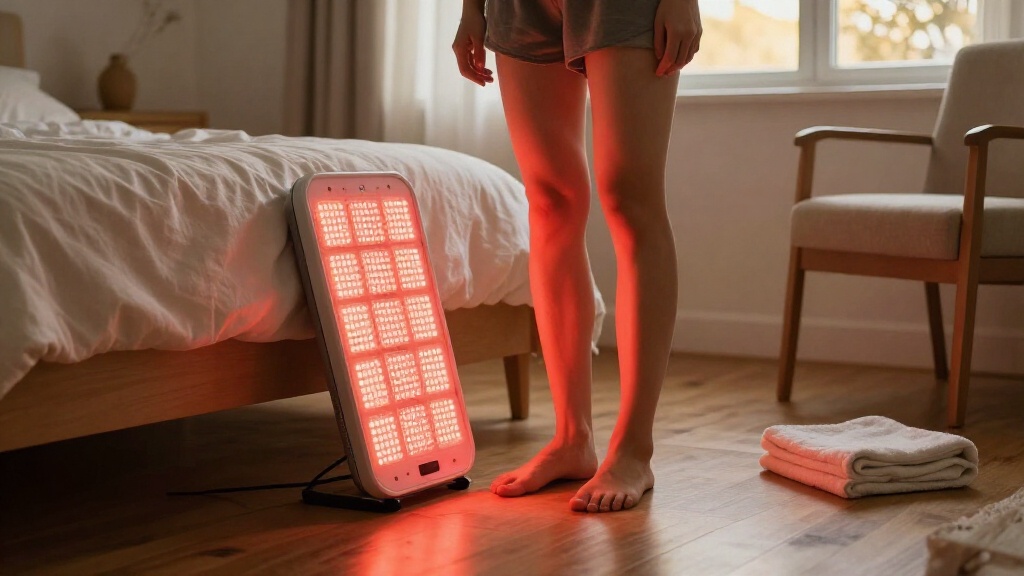
My selection process focused on three primary metrics: irradiance at distance, wavelength accuracy, and build durability. I prioritized panels that provide verifiable data on light output at typical usage distances (6–12 inches), as many manufacturers list wattage without specifying how much light actually reaches the skin. Panels lacking clear spectral data or independent testing were excluded, regardless of marketing claims.
I also evaluated practical usability factors such as mounting options, timer flexibility, and noise levels. A high-powered panel that is difficult to position or too loud to sit next to for 10 minutes fails in the real world. The ranking reflects a balance between therapeutic efficacy and user experience, favoring devices that encourage consistent daily use over those that are merely technically impressive but cumbersome.
Factors to Consider When Choosing Red Light Therapy Panels
Selecting a red light therapy panel involves more than just picking the biggest light. You need to match the device’s capabilities to your specific health goals and lifestyle constraints. Here are the key factors that will determine which panel works best for you.Irradiance vs. Total Wattage
Many buyers fixate on the total wattage listed on the box, but this number is misleading without context. Irradiance, measured in milliwatts per square centimeter (mW/cm²), tells you how much light energy actually hits your skin at a specific distance. A 300W panel with poor optics might deliver less irradiance than a well-designed 100W unit. When comparing specs, look for charts that show irradiance at 6 inches and 12 inches. If a manufacturer only provides total wattage, assume the efficiency is lower, which means you will need longer sessions or closer proximity to get a therapeutic dose.Wavelength Selection: Dual vs. Tri
The standard combination for most users is 660nm (red) for skin surface issues and 850nm (near-infrared) for deeper tissue and muscle recovery. This dual setup covers the majority of common complaints like wrinkles, inflammation, and soreness. However, if your primary goal is addressing deep joint pain or tendon issues, a tri-wavelength panel adding 940nm may offer better penetration. Keep in mind that adding more wavelengths often reduces the power available for each individual wavelength unless the total wattage is scaled up significantly. For general wellness, dual-wavelength panels remain the most efficient choice.Coverage Area and Session Efficiency
The physical size of the panel dictates how much of your body you can treat in one session. A small compact panel might only cover a knee or shoulder, requiring you to move it around for full-body treatments. This leads to fragmented sessions that people are less likely to complete consistently. Larger panels allow you to stand in front of the device and treat the torso, arms, and legs simultaneously. If you have limited space, consider whether you can mount a larger panel on a wall or if you need a freestanding unit with a sturdy base. Space constraints often force a compromise between coverage and footprint.Cooling Systems and Noise Levels
High-power LEDs generate significant heat, requiring active cooling systems. Most quality panels use internal fans to maintain optimal operating temperatures. However, fan noise can be a dealbreaker if you plan to use the panel while reading, working, or relaxing. Cheaper panels often use small, high-RPM fans that produce a high-pitched whine. Premium models utilize larger, slower fans or passive heatsinks to keep noise levels down. If you are sensitive to background noise, check user feedback specifically regarding audio levels at maximum power settings before purchasing.Mounting and Positioning Flexibility
How you position the panel affects the angle of light incidence, which impacts absorption. Tabletop stands and adjustable arms allow you to position the panel at eye level or angled toward specific body parts without holding it manually. Wall mounts are space-efficient but require you to stand at a fixed distance and angle. Some users find it difficult to get adequate coverage on their back or legs with a wall-mounted unit. A panel with a versatile stand or a heavy base that allows for easy repositioning will likely see more consistent use than one that is fixed in place.Frequently Asked Questions
Do I need a panel with high irradiance if I only want to treat my face?
Not necessarily. Facial skin is thinner and closer to the surface than muscle tissue, so it absorbs red light (660nm) efficiently even at lower irradiance levels. A compact panel with 50-100mW/cm² at 6 inches is often sufficient for skin health and anti-aging goals. However, if you also want to treat neck or chest areas, a slightly more powerful panel ensures you don’t have to extend your session time excessively. For pure facial use, prioritize a panel with good beam angles that distribute light evenly across the face rather than just raw power.Is it safe to look directly at the red light from a high-wattage panel?
While red and near-infrared light do not emit UV radiation, staring directly at high-intensity LEDs can still cause temporary afterimages or eye strain. Most manufacturers recommend wearing protective goggles, especially with panels over 200W. The light is not harmful in the way UV light is, but the brightness can be uncomfortable. If you are using a lower-wattage panel for facial treatments, you can keep your eyes closed, but for full-body standing sessions, wearing the provided goggles is the safest and most comfortable approach to protect your retinas from intense visible light exposure.How does the distance from the panel affect the treatment time?
Light intensity drops off rapidly as you move away from the source, following the inverse-square law. If a panel delivers 100mW/cm² at 6 inches, it might only deliver 25mW/cm² at 12 inches. This means you would need to double your session time to achieve the same total energy dose (joules) at the greater distance. For full-body panels, most users stand 6-12 inches away. If you are using a smaller panel for localized treatment, holding it closer (2-4 inches) allows for shorter, more intense sessions. Always check the manufacturer’s recommended distance to calculate your specific treatment time.Can I use a red light therapy panel through clothing?
Red light penetrates thin fabrics like cotton or polyester reasonably well, but thick materials like denim, wool, or heavy athletic gear will block or significantly attenuate the light. For the most effective treatment, direct skin contact is recommended. Near-infrared (850nm) penetrates slightly deeper than red light (660nm), but it still struggles to pass through dense clothing. If you are treating a large area like the back or legs, wearing thin, loose-fitting clothing or going shirtless is the best way to ensure the light reaches the target tissue without unnecessary barriers.What is the difference between LED chips and COB in red light panels?
Most consumer panels use discrete Surface Mount Device (SMD) LEDs, which are individual chips arranged on a board. This allows for precise control over the mix of red and near-infrared wavelengths. Chip-on-Board (COB) technology packs multiple chips into a single package, often creating a more uniform light source but sometimes making it harder to mix different wavelengths effectively. For therapy panels, SMD LEDs are generally preferred because they allow manufacturers to optimize the ratio of 660nm to 850nm LEDs. COB panels are more common in general lighting, so if a therapy panel advertises COB, verify that it still provides distinct, targeted wavelengths rather than a broad spectrum.Conclusion
The Hooga PRO300 is the best overall choice for most users, offering a reliable balance of power, coverage, and build quality that supports consistent full-body sessions. For those on a tighter budget, the BestQool BQ60 serves as the best value option, providing essential dual-wavelength therapy without the premium price tag. If you are new to red light therapy and want a gentle introduction, the 45W LED Panel is the best for beginners due to its manageable size and lower heat output. For users with specific deep-tissue pain concerns, the Morfone Tri-Wavelength Panel is the best for specific needs, adding the 940nm wavelength for deeper penetration. Finally, the MitoMEGA 2.0 is the best premium option for those who want maximum irradiance and coverage in a single, high-end unit.
Halloween Picks

Vexalify 11-Inch Halloween Pumpkin Fog Machine with 12-Color Lights

MGparty 14.5 ft Halloween Inflatable Walk-In Pumpkin House with LED Lights

HOPOCO Halloween Pumpkin Fog Machine with 12 LED Colors and 4 Light Modes
As an affiliate, we earn on qualifying purchases.