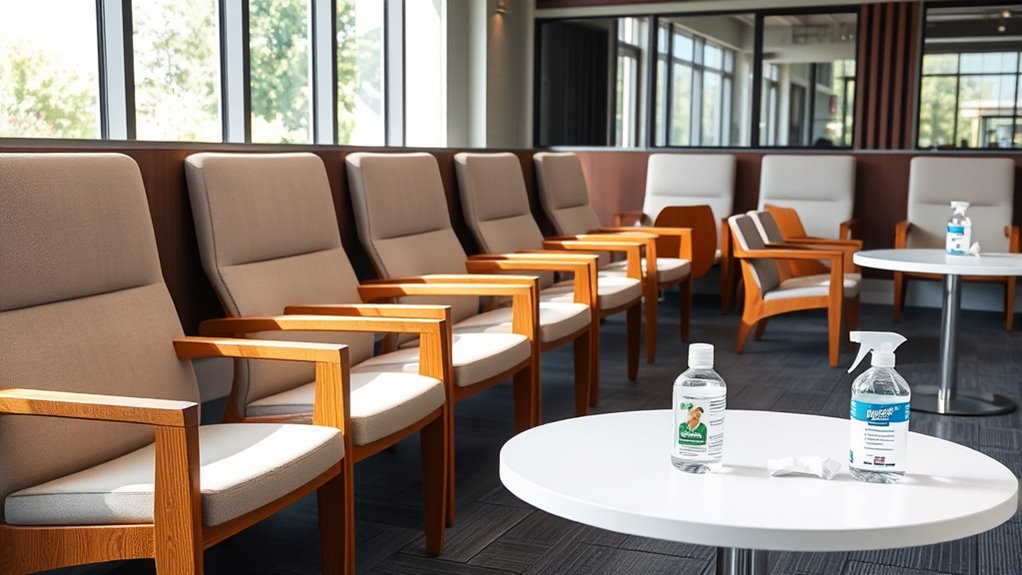

To guarantee the safe use of shared chairs, you should implement regular disinfection protocols, focusing on high-touch areas like armrests and seats with proven-effective disinfectants. Arrange chairs with ample space between them to minimize contact and make cleaning easier. Use non-porous, easy-to-clean materials or wipeable covers for quick sanitation. Maintaining consistent hygiene routines and proper seating setups not only keep germs at bay but also promote a safer environment for everyone. Explore further tips to improve shared chair safety and sanitation.
Key Takeaways
- Implement strict disinfection protocols after each use, focusing on high-touch areas like armrests and seat surfaces.
- Arrange chairs to ensure adequate spacing, reducing contact and minimizing pathogen transmission among multiple users.
- Use chairs with non-porous, easy-to-clean surfaces or removable covers to facilitate quick sanitation.
- Provide disinfectant wipes or spray stations nearby to encourage immediate cleaning after each use.
- Train staff and users on proper sanitation practices to maintain a hygienic environment and prevent cross-contamination.
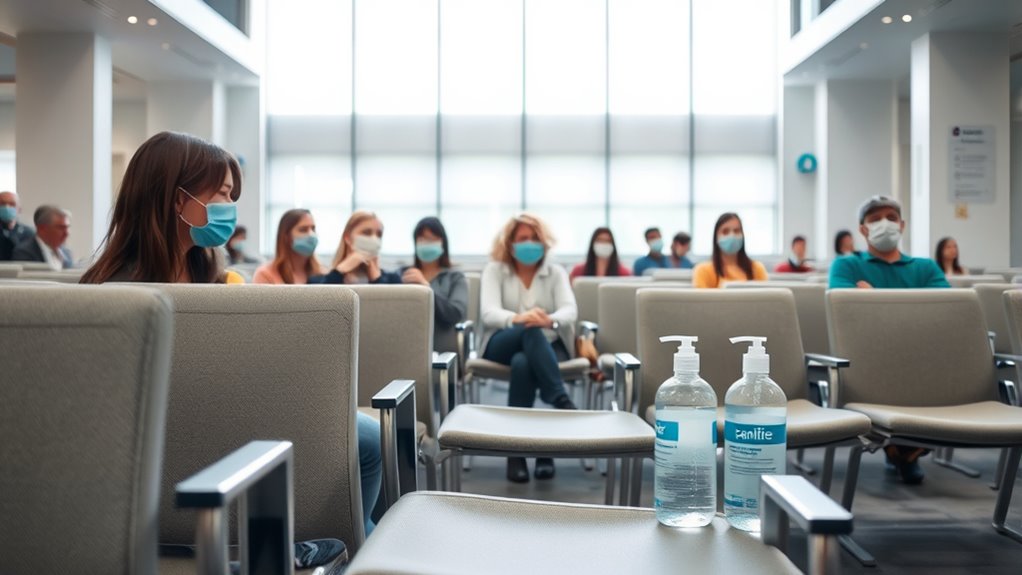
Have you ever wondered how the cleanliness of shared chairs impacts sanitation in different settings? It’s more important than you might think, especially when considering how bacteria and viruses can spread through contact with surfaces. To reduce these risks, implementing effective disinfection protocols is essential. Regularly cleaning chairs with appropriate disinfectants helps eliminate germs that accumulate from daily use. But disinfection alone isn’t enough. The way seating arrangements are organized also plays a key role in maintaining hygiene. Spacing chairs apart minimizes contact between users, reducing transmission of pathogens. In places like waiting rooms, cafeterias, or conference halls, thoughtful seating arrangements can make a real difference in controlling the spread of illnesses.
Clean shared chairs prevent germs and promote hygiene through proper disinfection and thoughtful seating arrangements.
When you’re managing shared spaces, you need to establish clear disinfection protocols. This involves training staff or users to clean chairs thoroughly after each use or at regular intervals. Using disinfectants proven effective against common pathogens, like COVID-19 or influenza, ensures surfaces are safe for the next person. It’s essential to focus on high-touch areas, such as armrests and seat cushions, which are more likely to harbor germs. Incorporating disinfectant wipes or spray stations nearby can make it easier for everyone to participate in maintaining hygiene standards. Additionally, setting a routine schedule for deep cleaning—especially in high-traffic areas—can greatly reduce the risk of contamination.
Seating arrangements also impact sanitation by influencing how easily chairs can be cleaned and maintained. Opting for chairs with smooth, non-porous surfaces makes disinfecting more effective because these materials don’t trap dirt or microbes as easily as fabric or porous materials. Arranging chairs in a way that allows ample space between users not only promotes comfort but also encourages better hygiene practices. For example, spaced-out seating in waiting areas helps prevent accidental contact, while designated cleaning zones for chairs can streamline sanitation efforts. In some settings, using removable or wipeable covers can facilitate quick sanitation between users without the need for full furniture replacement.
In essence, keeping shared chairs clean involves a combination of disciplined disinfection protocols and strategic seating arrangements. You’re responsible for creating an environment where sanitation is prioritized, which in turn protects everyone who uses those chairs. By staying consistent with cleaning routines and thoughtful about how chairs are positioned, you can greatly reduce health risks. It’s about fostering a culture of hygiene and awareness—because the way you manage shared seating directly influences the overall health and safety of your space.
Frequently Asked Questions
How Often Should Shared Chairs Be Sanitized for Optimal Safety?
You should sanitize shared chairs at least after each use to guarantee maximum safety. Regular chair maintenance includes cleaning with disinfectants that kill germs and viruses. Encourage good user hygiene by reminding everyone to wash their hands before and after sitting. This routine minimizes the risk of cross-contamination. For high-traffic areas, consider sanitizing more frequently, such as hourly or after every few users, to keep the environment safe and hygienic.
Are There Specific Cleaning Products Recommended for Shared Chair Sanitation?
You should use cleaning products that are effective against bacteria and viruses, such as EPA-registered disinfectants, for shared chair sanitation. Make certain your cleaning schedule is consistent, ideally after each use or at least daily, to maintain product effectiveness. Opt for products with proven antimicrobial properties, and follow manufacturer instructions for proper contact time. This approach ensures your chairs stay safe and hygienic for every user.
What Signs Indicate a Shared Chair Needs Immediate Cleaning?
You should clean a shared chair immediately if you notice visible stains or sticky residue. These signs indicate contamination and potential health risks. Promptly addressing these issues helps prevent the spread of germs. Use appropriate sanitation products to thoroughly disinfect the surface. Regularly inspecting chairs for these signs ensures a safe, hygienic environment for everyone who uses them. Staying vigilant keeps shared spaces clean and healthy.
Can Shared Chairs Be Used Safely Without Disinfectants?
You can’t rely on shared chairs being safe without disinfectants because disinfection protocols are essential for preventing germs. Visualize a surface untouched by disinfectants—germs can survive on materials, especially if they’re durable but porous. While some materials resist damage from cleaning, using disinfectants ensures proper sanitation. Without them, you risk pathogen transmission, so always follow recommended protocols to keep shared chairs safe for everyone.
How Do I Prevent Cross-Contamination Between Users?
To prevent cross-contamination, follow strict hygiene protocols like disinfecting chairs between users and encouraging hand washing. Promote user etiquette by asking everyone to use a clean cloth or disposable cover before sitting. You should also set clear guidelines on sanitization routines and remind users to avoid touching their face or sharing personal items. Consistent cleaning and emphasizing hygiene practices help keep shared chairs safe for everyone.
Conclusion
Think of shared chairs as a garden where each person plants a seed. When you sanitize properly and set clear boundaries, you nurture a healthy space for everyone to flourish. Just like tending to plants prevents weeds from taking over, your careful actions protect others from harm. Remember, a well-maintained garden isn’t just about individual effort—it’s about creating a thriving community. By respecting these settings, you help guarantee the garden of shared spaces remains safe and vibrant for all.