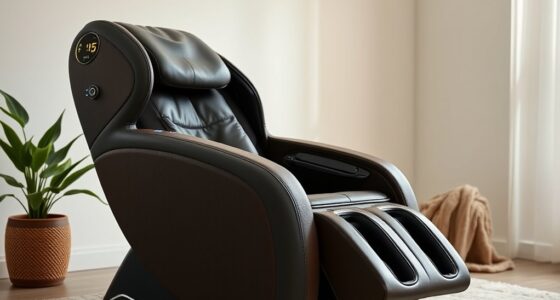
During a massage chair session, watch for signs like sharp or persistent pain, discomfort, or numbness that could signal harm. Unusual noises, such as rattling or grinding, may indicate mechanical issues, while overheating or strange smells suggest electrical problems. If the massage feels irregular or too aggressive, or if performance declines, these are warning signs. Ignoring these cues can lead to injury or device damage; knowing more helps you stay safe and protect your well-being.
Key Takeaways
- Experience persistent or worsening pain, numbness, or tingling during or after a session.
- Hear unusual noises like squeaking, grinding, or rattling indicating mechanical issues.
- Notice excessive heat, burning smells, or electrical odors during operation.
- Observe uneven or overly aggressive massage patterns that cause discomfort.
- Detect decline in device performance or signs of wear requiring maintenance or repair.
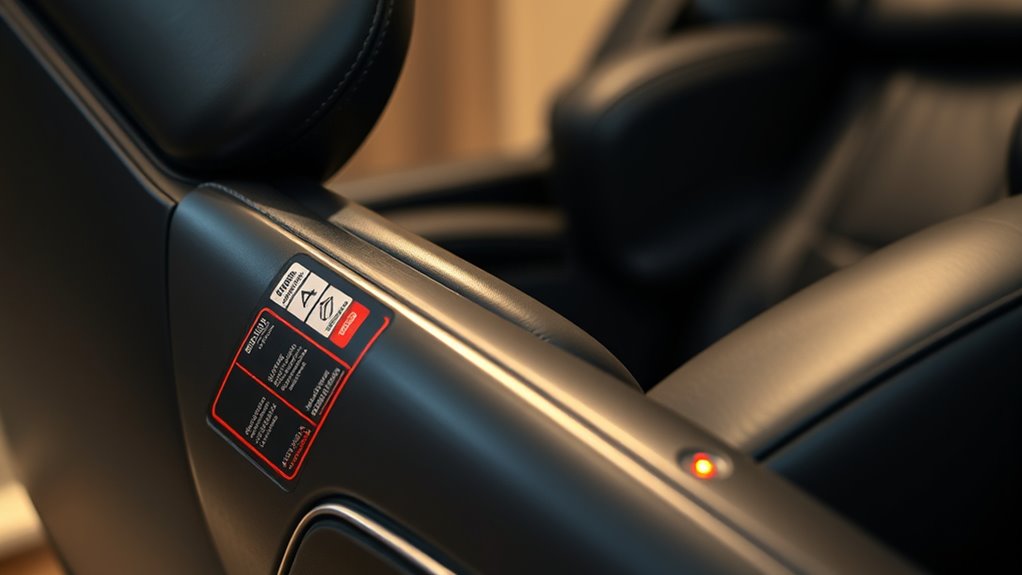
Massage chairs can provide relaxation and relief, but it’s important to stay alert for warning signs that something may be wrong. While these devices are designed to enhance your well-being, ignoring signs of discomfort or malfunction can lead to more serious issues. Your focus should be on maintaining user comfort during every session and ensuring proper device maintenance to keep everything running smoothly.
If you start feeling unusual pain, numbness, or tingling during a massage, don’t dismiss these signals. A well-designed massage chair should promote relaxation, not cause discomfort or exacerbate existing issues. Pay close attention to how your body responds; persistent pain or a sensation of sharpness indicates that something’s amiss. This could be due to excessive pressure, improper positioning, or mechanical problems within the device. Discomfort that lasts after a session is a clear warning sign that it’s time to stop and assess what’s happening.
Another key indicator is irregular or unusual noises coming from the chair. Rattling, squeaking, or grinding sounds may suggest that device maintenance is overdue or that mechanical parts are wearing out. These sounds can also be a sign of loose components or internal damage, which could compromise your safety. If you notice any odd noises, it’s best to turn off the chair and inspect it thoroughly or contact a professional for repairs. Continuing to use a malfunctioning device increases the risk of injury or further damage.
You should also be mindful of overheating or electrical issues. If the chair’s motors or control panels become excessively warm, or if it emits a burning smell, these are urgent warning signs. Overheating can indicate electrical faults, which not only impair device performance but also pose fire hazards. In such cases, disconnect the chair immediately and seek professional help. Regular device maintenance, including cleaning and inspecting electrical components, can minimize these risks and extend the lifespan of your massage chair.
Furthermore, pay attention to how the massage feels. If the rollers or airbags aren’t working correctly, or if the massage pattern feels uneven or overly aggressive, it’s a sign that something’s off. These irregularities can compromise user comfort and indicate the need for technical adjustments or repairs. Never force the device to work harder if it’s not functioning properly; instead, prioritize safety and consult with a technician.
Additionally, be aware that a decrease in device performance over time may indicate that filters or internal components need replacement, which is essential for maintaining optimal operation and safety.
Frequently Asked Questions
Can Massage Chairs Cause Long-Term Muscle Damage?
Massage chairs generally don’t cause long-term muscle damage if used properly, but overuse risks do exist. If you use the chair excessively or apply too much pressure, you might experience muscle strain or soreness. To avoid this, limit sessions to recommended durations, listen to your body, and avoid aggressive settings. Proper use helps prevent long-term issues and ensures you enjoy the benefits without risking muscle damage.
Are There Specific Health Conditions That Contraindicate Massage Chair Use?
Think of your health as a delicate garden—certain conditions are like weeds that can harm it. If you have contraindicated conditions like blood clots, osteoporosis, or recent surgeries, massage chairs could do more harm than good. Always follow safety precautions and consult your healthcare provider before use. Ignoring these warnings risks aggravating your condition, so be cautious and prioritize your well-being above all.
How Often Should I Use a Massage Chair Safely?
You should use your massage chair with proper usage and adhere to recommended frequency limits. Generally, it’s safe to enjoy a session 2-3 times a week, but avoid overusing it to prevent strain or discomfort. Listen to your body, and if you experience pain or unusual symptoms, reduce frequency or consult a healthcare professional. Proper usage and moderation ensure you gain benefits without risking harm.
What Safety Features Do Modern Massage Chairs Include?
Modern massage chairs include safety features like emergency stop buttons and sensors that detect improper positioning, guaranteeing your safety. They follow strict safety certification standards to ensure reliable performance. Good massage chair ergonomics are designed to support your body comfortably while preventing strain. These features work together to give you a safe, relaxing experience, minimizing risks and ensuring the chair responds appropriately to your movements during each session.
Can Children or Elderly Individuals Safely Use Massage Chairs?
You shouldn’t assume children or the elderly can use massage chairs safely without precautions. Child safety is paramount, so always supervise kids and choose models with age-appropriate settings. For the elderly, take elderly precautions by consulting a doctor first and selecting chairs with gentle, adjustable massage options. Ignoring these steps could turn a relaxing experience into a health hazard—so prioritize safety to avoid any unnecessary risks.
Conclusion
If you notice any warning signs like dizziness, pain, or numbness during a massage chair session, stop immediately. For example, Jane ignored her discomfort and continued, leading to a strained muscle that required medical attention. Always listen to your body—it’s better to pause and consult a professional than risk injury. Remember, massage chairs are meant to relax, not harm. Stay alert, and prioritize your safety for a truly beneficial experience.