
If you have high blood pressure, using a massage chair can be safe if you take proper precautions. Start with short sessions at low intensities and monitor how your body reacts. Be cautious with features like kneading or shiatsu, as they may cause temporary blood pressure fluctuations. Always consult your healthcare provider before use, especially if you’re on medication or unsure about your condition. Knowing how to use these chairs safely guarantees you benefit without risking your health—more details await you.
Key Takeaways
- Always consult a healthcare provider before using a massage chair if you have high blood pressure.
- Start with short, low-intensity sessions and gradually increase to monitor your body’s response.
- Be aware that massage features may cause temporary blood pressure fluctuations during sessions.
- Avoid massage sessions if you experience symptoms like dizziness, chest pain, or shortness of breath.
- Use massage chairs as a complement to, not a replacement for, prescribed hypertension treatments.

High blood pressure, or hypertension, affects millions of people worldwide, and many seek natural ways to manage it. One popular option is using a massage chair, which offers relaxation and potential health benefits. However, before you plunge into regular massage chair sessions, it’s essential to understand the safety considerations, especially regarding medication interactions and massage chair features. If you’re on blood pressure medication, you need to be aware that certain massage techniques or chair settings might influence how your body responds, potentially affecting your medication’s effectiveness or side effects.
Massage chairs come equipped with various features like kneading, shiatsu, and rolling motions, each designed to target different muscle groups and promote relaxation. While these features generally help reduce stress and improve circulation, they can also cause temporary fluctuations in blood pressure levels. For some individuals, particularly those with uncontrolled hypertension, these fluctuations might be concerning. It’s wise to start with shorter sessions at lower intensities and gradually increase as you observe how your body reacts. Always consult your healthcare provider if you’re unsure whether a specific massage chair feature is safe for your condition.
Massage chair features like kneading and shiatsu may cause blood pressure fluctuations; consult your healthcare provider before use.
Medication interactions are another critical aspect to think about. Certain blood pressure medications, especially those that influence heart rate or circulation, could interact with the physical effects of massage. For example, vasodilators, which widen blood vessels, might amplify the effects of massage-induced blood flow changes, possibly leading to dizziness or lightheadedness. If you’re taking medications like beta-blockers or diuretics, you should be cautious since these drugs can alter your body’s response to massage therapy. It’s best to discuss your plans with your doctor to ensure that massage chair use won’t interfere with your medication’s efficacy or cause adverse reactions.
Additionally, pay attention to your body’s signals during and after massage sessions. If you experience dizziness, chest pain, or unusual shortness of breath, stop immediately and seek medical attention. Remember that while massage chairs can be a helpful tool for relaxation, they shouldn’t replace your prescribed treatment plan. Combining medical advice with cautious use of a massage chair can provide a safe, enjoyable way to help manage stress and support your overall health. Being aware of the effects of massage on blood pressure and how it interacts with your medications can help you use these devices more safely.
Frequently Asked Questions
Can Massage Chairs Replace Medication for Hypertension?
Massage chairs can’t replace medication for hypertension, but they may serve as an effective complementary therapy. While they help reduce stress and promote relaxation, which can lower blood pressure temporarily, relying solely on massage chairs risks medication dependence and inadequate blood pressure control. Always consult your healthcare provider before making changes to your treatment plan, and use massage as part of a broader approach to managing your hypertension safely.
Are There Specific Massage Chair Features Safe for High Blood Pressure?
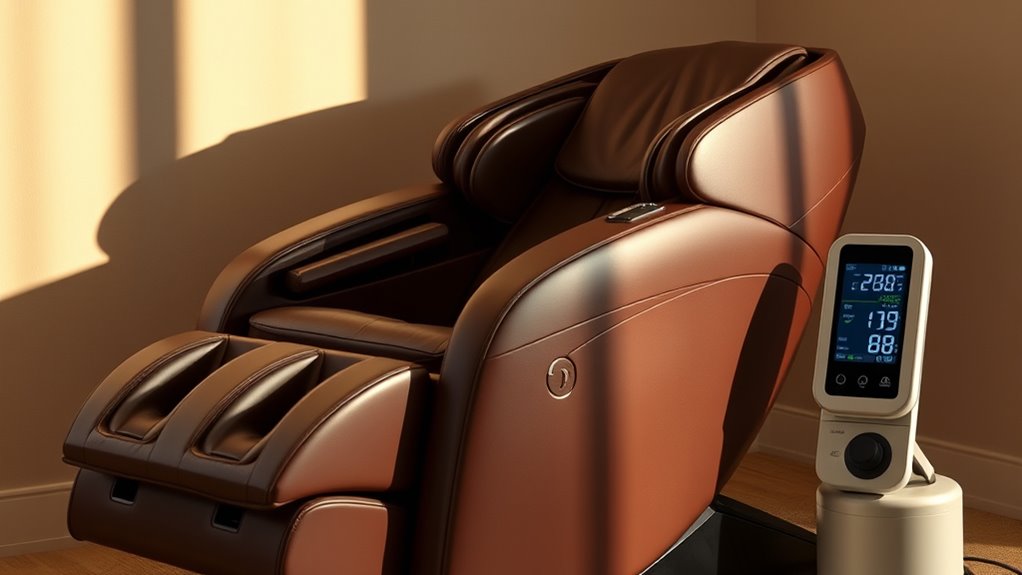
Think of massage chair safety as a delicate dance, where each step must be carefully coordinated. For hypertension features, look for gentle, adjustable settings that avoid deep pressure—these are your safety partners. Chairs with customizable intensity and built-in pressure sensors guarantee you remain in a safe, comfortable zone. Always choose models with clear hypertension features, so you can enjoy relaxing massages without risking your health.
How Often Should Hypertensive Individuals Use Massage Chairs?
You should limit your massage chair sessions to about once or twice a week, especially if you have high blood pressure. Always monitor your blood pressure before and after use to make sure it stays within a safe range. Keep an eye on how your body responds and consult your healthcare provider for personalized advice. Maintaining regular blood pressure monitoring helps you safely enjoy massage chair benefits without risking your health.
Can Massage Chairs Cause Sudden Blood Pressure Spikes?
Massage chairs can cause blood pressure fluctuations if the massage intensity is too high or if you have underlying health issues. Sudden spikes are possible, especially if you experience discomfort or overstimulation. To minimize risks, start with gentle settings and gradually increase intensity. Always listen to your body, and consult your healthcare provider if you notice any unusual blood pressure changes during or after use.
Are There Age Restrictions for Hypertensive Users of Massage Chairs?
Age limitations for hypertensive users of massage chairs vary, but generally, seniors should consult their healthcare provider before use. For senior safety, manufacturers often recommend avoiding massage chairs if you have severe hypertension or other cardiovascular issues. If you’re over a certain age, it’s crucial to verify these restrictions and get medical approval to ensure safe, comfortable massage experiences without risking blood pressure spikes or other health concerns.
Conclusion
If you have high blood pressure, it’s important to be cautious with massage chairs. Studies show that nearly 30% of adults worldwide suffer from hypertension, highlighting the importance of safety. Always consult your healthcare provider before use, especially if you have concerns. Remember, while massage chairs can help relax muscles, they might also cause blood pressure spikes if not used properly. Stay informed and prioritize your health to enjoy the benefits safely.