Massage chairs can be safe for children if used correctly and with supervision. Make sure to choose gentle, age-appropriate settings, limit sessions to about 10-15 minutes, and always supervise your child during use. Avoid vigorous modes and check for any signs of discomfort. It’s important to follow manufacturer guidelines and discuss concerns with a healthcare professional, especially for children with health issues. Keep these safety tips in mind to ensure a positive experience. You’ll discover more guidelines to keep your child protected.

Get wellness gear delivered free with Prime
- Fast, free delivery on millions of items
- Prime Video, Amazon Music and more included
- Member-only deals all year
Key Takeaways
- Massage chairs can promote relaxation and support physical development when used with gentle, age-appropriate settings.
- Always supervise children during use and limit sessions to 10-15 minutes for safety.
- Verify manufacturer’s age restrictions and avoid use by children under six unless supervised.
- Consult healthcare professionals for children with health conditions or special needs before use.
- Regularly inspect the chair for damage and follow safety guidelines to ensure a secure, positive experience.
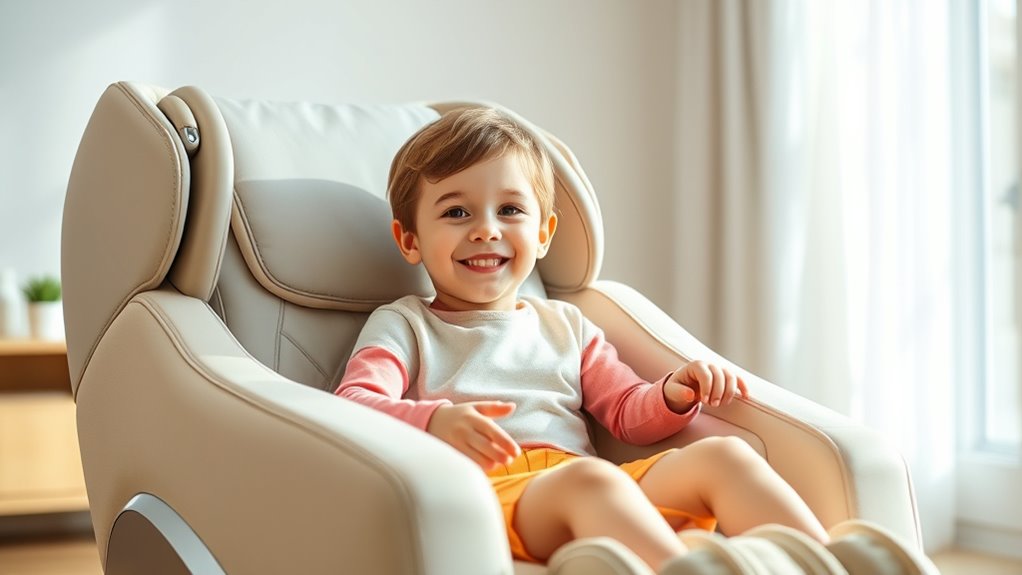
While massage chairs are typically marketed for adults, they can also offer benefits for children when used appropriately. Pediatric massage has gained recognition for its ability to promote relaxation, improve circulation, and reduce anxiety in young kids. These benefits can help children manage stress, enhance sleep quality, and even support physical development. When considering using a massage chair for a child, it’s important to understand that their bodies are still growing, so gentle, age-appropriate settings are essential. Proper use can turn a massage chair into a helpful tool for promoting overall well-being in children, but safety always comes first.
Before introducing a massage chair to a child’s routine, you should be aware of safety precautions for kids. Unlike adults, children have more delicate skin and developing musculoskeletal systems, which makes cautious use vital. Always start with low-intensity settings, avoiding vigorous or deep massage modes. Many massage chairs have adjustable features, so choose options that deliver gentle pressure and shorter session times—typically no longer than 10 to 15 minutes. It’s best to supervise the session and ensure your child remains comfortable and relaxed throughout. Never leave your child unattended in a massage chair, and be attentive to any signs of discomfort or distress during use.
Start with gentle settings, supervise sessions, and never leave your child unattended in a massage chair.
Another safety precaution involves age restrictions. Manufacturers often specify age limits for their products, so check the user manual before allowing a child to use the chair. Young children, especially those under the age of six, may not benefit from or tolerate massage chairs designed for older kids or adults. For very young children, pediatric massage administered by a trained therapist could be a safer alternative. Additionally, avoid placing children with health conditions such as osteoporosis, bleeding disorders, or skin infections on a massage chair without consulting a healthcare professional. Incorporating mindfulness techniques such as guided relaxation can further enhance the calming effects of massage for children.
It’s also wise to educate your child about what they should expect from a massage session. Teach them to communicate if they feel uncomfortable at any point, so you can immediately stop the session. Regularly inspect the massage chair for any signs of wear or malfunction, as damaged equipment can pose safety risks. Incorporating these safety precautions guarantees that your child’s experience with a massage chair remains positive and safe. Overall, with gentle settings, supervision, and adherence to safety guidelines, massage chairs can be a helpful addition to a child’s relaxation routine, offering many of the benefits of pediatric massage in a convenient, at-home format.
children's massage chair with gentle settings
As an affiliate, we earn on qualifying purchases.
As an affiliate, we earn on qualifying purchases.
Frequently Asked Questions
Can Children Use Massage Chairs Daily Without Health Risks?
Children shouldn’t use massage chairs daily without health risks. You need to prioritize child safety by limiting their use and monitoring how they respond. An ergonomic design helps guarantee comfort, but overuse can cause strain or discomfort. It’s best to consult a healthcare professional before letting children use massage chairs regularly. Always supervise their use and follow manufacturer guidelines to protect their health and well-being.
What Age Is Appropriate for Children to Start Using Massage Chairs?
You should wait until your child is at least 12 years old before allowing them to use a massage chair. Child safety and developmental impact are vital considerations, as younger children’s bodies are still developing and may react differently to massage pressures. While massage chairs can promote relaxation, early use might interfere with growth or cause discomfort. Always consult a pediatrician to guarantee your child’s safety and appropriateness of use.
Are There Specific Massage Chair Features Safe for Children?
You should look for massage chairs with child safety features and ergonomic design to guarantee safe use for kids. Focus on models with adjustable settings, soft padding, and secure straps to prevent injury. Avoid chairs with intense vibrations or deep tissue massage functions, as they may not be suitable for children. Always supervise your child during use and consult the manufacturer’s guidelines to prioritize their safety and comfort.
How Do I Ensure the Massage Chair Is Properly Adjusted for My Child’s Size?
Sure, adjusting the massage chair for your child’s size is a breeze—just like fitting a tiny suit! Focus on child safety by ensuring the settings match their height and weight. Check the seat height, armrests, and massage zones for proper adjustment. Always supervise, and never leave your child unattended. With these simple steps, you’re making sure their safety is a top priority while enjoying the relaxing benefits.
Are There Potential Long-Term Effects of Children Using Massage Chairs?
Using massage chairs can pose potential long-term health and developmental concerns for children if used improperly or excessively. You should monitor your child’s duration and frequency to avoid impacting their spine or growth. While occasional use may not cause harm, overuse could affect their development or lead to discomfort. Always consult a healthcare professional before allowing children to use massage chairs regularly, ensuring safety and supporting healthy growth.
kids massage chair safety features
As an affiliate, we earn on qualifying purchases.
As an affiliate, we earn on qualifying purchases.
Conclusion
So, while massage chairs might seem like a harmless way to relax, you should think twice before letting your child use one. Are they truly safe, or could there be hidden risks you’re unaware of? The truth is, the answer isn’t as clear-cut as you’d hope. Before you decide, consider what could happen if safety isn’t your top priority. Sometimes, the biggest surprises come from what you least expect—so stay cautious.
age-appropriate massage chair for children
As an affiliate, we earn on qualifying purchases.
As an affiliate, we earn on qualifying purchases.
massage chair for kids relaxation
As an affiliate, we earn on qualifying purchases.
As an affiliate, we earn on qualifying purchases.
Halloween Picks
halloween
As an affiliate, we earn on qualifying purchases.