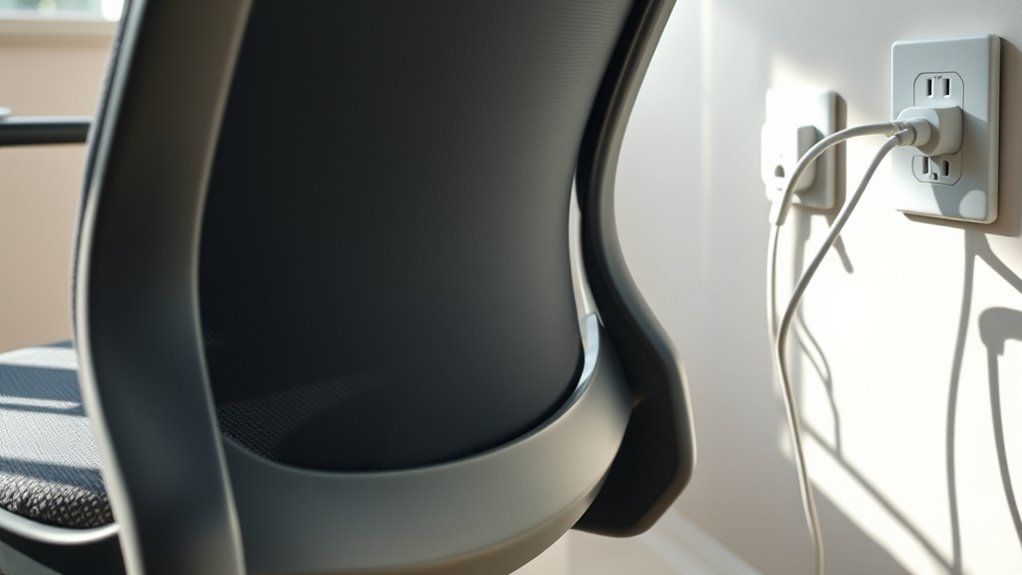

To guarantee electrical safety with your chair, start by inspecting cords and plugs for damage before connecting. Always use grounded outlets and fully insert plugs without forcing them. Avoid overloading outlets or daisy-chaining power strips, which can cause overheating or fires. Regularly test circuit breakers and keep connections clean and secure. Using proper grounding and safe plugging practices helps protect you from shocks or malfunctions. Continue exploring to learn essential tips for maintaining safe power and preventing hazards.
Key Takeaways
- Inspect the power cord and plug for damage before connecting your chair to ensure safety.
- Use a grounded outlet and plug to prevent electrical shocks and ensure proper grounding.
- Fully insert the plug into the outlet without forcing to establish a secure connection.
- Avoid overloading outlets or power strips to prevent overheating and fire hazards.
- Regularly test circuit breakers and maintain cords to ensure ongoing electrical safety.
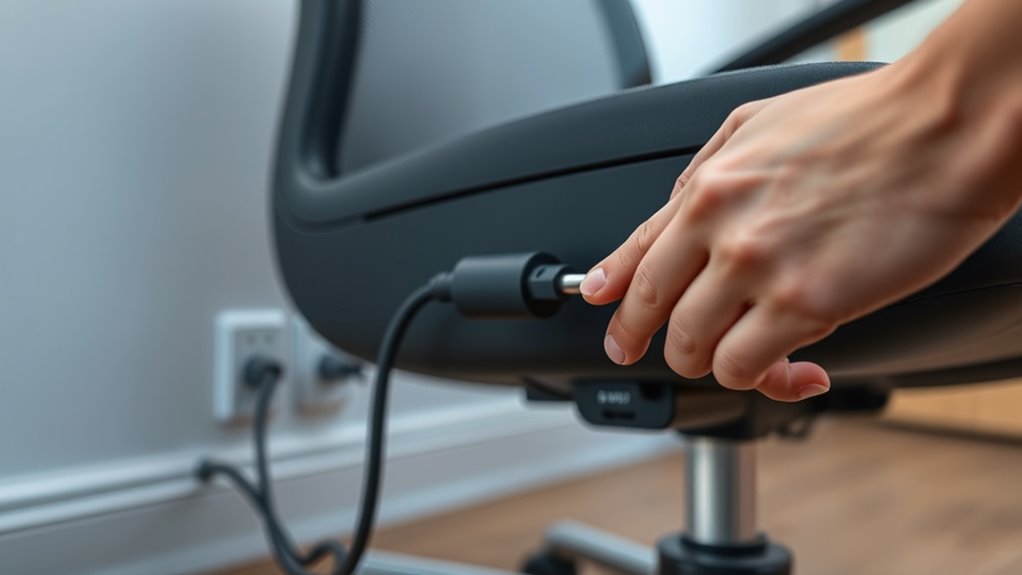
Have you ever considered how essential electrical safety is in your daily life? Whether you’re plugging in your favorite electronic device or powering a motorized chair, understanding the right procedures can prevent accidents and keep you safe. One of the most fundamental aspects of electrical safety is proper grounding techniques. Grounding provides a safe path for excess electricity to travel into the earth if a fault occurs. This reduces the risk of electric shock and prevents damage to your equipment. When plugging in devices, always ensure that the outlet and plug are properly grounded. If you’re unsure, consider having a qualified electrician inspect your outlets and wiring. Using grounded outlets and plugs is a simple yet effective way to enhance safety.
Proper grounding is essential for electrical safety and preventing shocks.
Another critical safety measure involves the use of circuit breakers. Circuit breakers are designed to automatically shut off power when they detect an overload or a short circuit. This prevents overheating and reduces the risk of electrical fires. Before powering your chair or any appliance, make sure the circuit breaker associated with the outlet is functioning correctly. Test it periodically to confirm it trips when necessary, and never bypass or disable it. Proper use of circuit breakers acts as an essential safeguard, especially when dealing with high-power devices or equipment that may draw significant current.
When plugging in your chair or any electrical device, double-check the condition of the cord and plug. Avoid using damaged or frayed cords, as they can lead to short circuits or electric shocks. Always insert plugs fully into outlets, ensuring they fit snugly without forcing them. Loose connections can generate heat and pose fire hazards. If your device has a grounding prong, verify that it aligns with the outlet’s grounding slot. If grounding isn’t possible, consider using a grounding adapter or consulting an electrician to install the appropriate outlet.
In addition to grounding and circuit breaker use, adopting safe plugging-in habits can make a significant difference. Never overload an outlet by plugging in multiple high-wattage devices at once. Use power strips with built-in circuit breakers if you need to extend your power supply, but avoid daisy-chaining multiple strips together. When turning your chair on or off, do so gently and avoid sudden jolts that could damage the plug or outlet. Always unplug devices by holding the plug, not the cord, to prevent wear and tear.
Frequently Asked Questions
Can I Use Extension Cords With My Electric Chair?
You can use an extension cord with your electric chair, but make sure to prioritize extension cord safety. Choose a heavy-duty cord rated for your device’s power needs, and avoid daisy-chaining multiple cords. Check your power outlet types to ensure compatibility and prevent overloads. Always inspect the cord for damage and keep it away from water or sharp objects. Properly rated extension cords help keep you safe and your chair functioning smoothly.
What Should I Do if My Chair Won’T Turn On?
When your chair won’t turn on, think of it as a silent guardian waiting to serve you. Start with troubleshooting steps like checking the battery maintenance—ensure the batteries are charged and properly connected. If it still doesn’t work, try resetting the power or inspecting for loose wires. Keep calm, and follow these steps; often, a simple fix restores your chair’s strength and independence.
Are There Specific Outlets Recommended for Powering My Chair?
You should use outlets that meet compatibility and power source standards for your chair. Look for grounded outlets designed for your device’s voltage and amperage requirements. Avoid extension cords or outlets that seem loose or damaged. Ensuring you’re plugged into a proper, compatible outlet minimizes risks and guarantees peak performance. Always check your chair’s manual for specific outlet recommendations, and if unsure, consult an electrician to verify compatibility.
How Often Should I Inspect the Power Cord for Damage?
You should inspect your power cord for damage at least once a month. Look for signs of cord wear, such as fraying, cracking, or exposed wires. Regular damage inspection helps prevent electrical hazards and guarantees your chair operates safely. If you notice any damage, stop using the cord immediately and replace it or have it repaired by a professional. Staying vigilant keeps you safe and maintains your chair’s performance.
Is It Safe to Charge My Chair Overnight?
Charging your chair overnight is like leaving a fire unattended — it can be risky. Your best bet is to follow good charging habits and battery maintenance to keep it safe. Modern batteries are designed to handle overnight charging, but it’s wise to unplug once fully charged. This prevents overcharging and prolongs your chair’s battery life, ensuring safe and reliable use every day.
Conclusion
Remember, treating electrical outlets and plugs like fragile glass keeps you safe—one misplaced connection can turn a simple task into a dangerous storm. Always double-check that your chair’s plug is secure and the outlet is in good condition. By staying vigilant, you’re steering clear of sparks and shocks, keeping your environment safe and sound. Think of proper plugging as the steady heartbeat of electrical safety—powering your chair without risking a dangerous jolt.