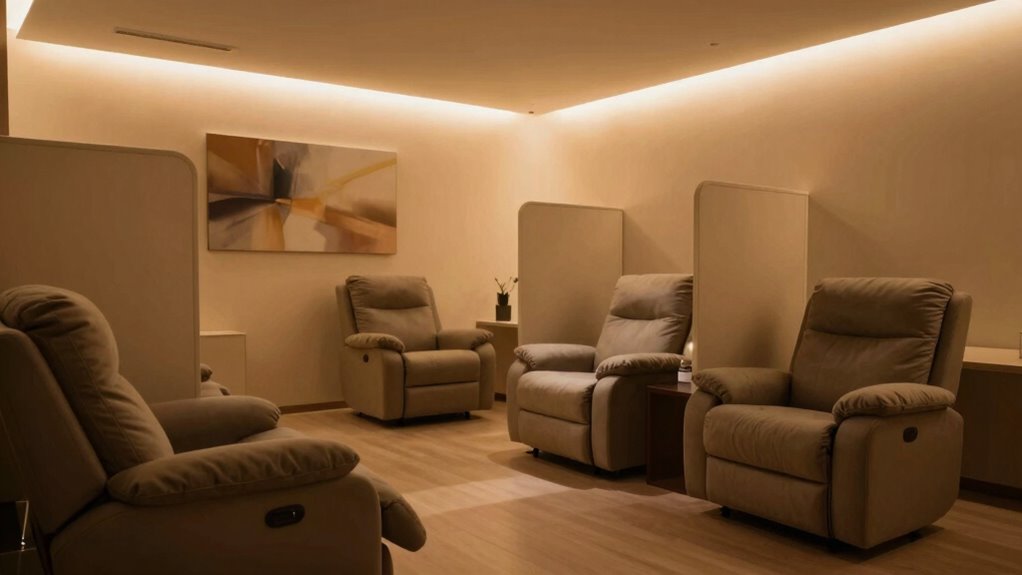
Ambient lighting helps make a recovery space feel more private by smoothly controlling light levels and creating a calm, secure environment. When you use softer, layered lighting, shadows form subtly, making the space feel less exposed and more intimate. Dimming options and warm tones signal a shift to relaxation and privacy, helping individuals feel protected. If you want to discover more ways this lighting fosters comfort and healing, keep exploring the details below.
Listen free for 30 days with Audible
Thousands of audiobooks and originals — cancel anytime.
As an affiliate, we earn on qualifying purchases.
Key Takeaways
- Soft, layered lighting creates shadows and reduces glare, enhancing a sense of seclusion.
- Lower light levels signal privacy and encourage relaxation, making individuals feel more secure.
- Warm color temperatures evoke comfort and intimacy, fostering a private atmosphere.
- Adjustable lighting controls allow customization, helping to delineate private zones within the space.
- Gentle, diffuse lighting minimizes harshness, promoting a safe environment conducive to healing.
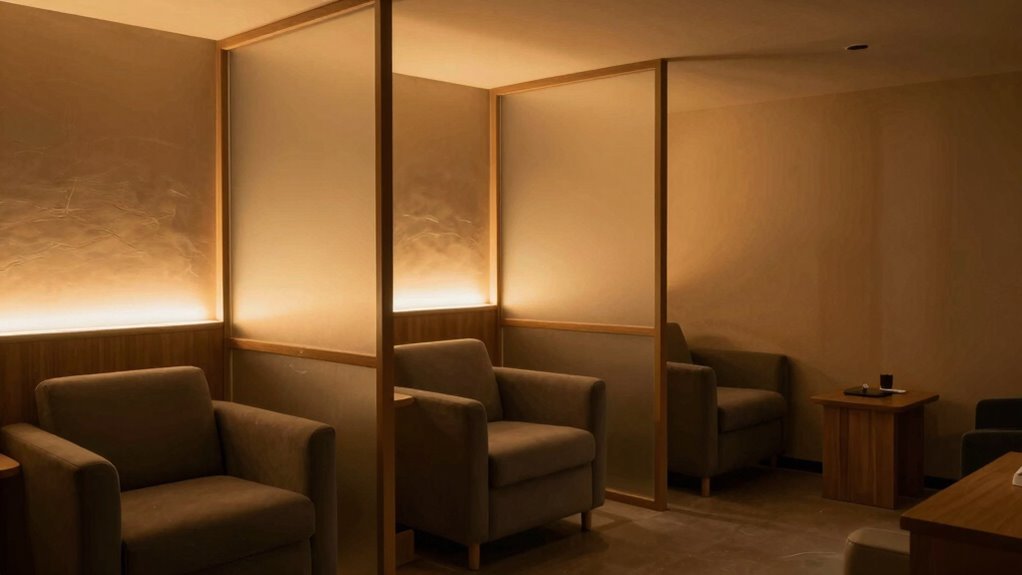
Ambient lighting plays a essential role in creating a calming and welcoming environment in recovery spaces. When you’re designing or adjusting the lighting, understanding how color temperature and light intensity influence the atmosphere can make all the difference. These elements work together to foster a sense of privacy and comfort, which are indispensable for anyone seeking recovery.
Color temperature, measured in Kelvins, largely determines the mood of a space. Cooler temperatures, around 5000K to 6500K, emit a bluish-white light that feels more clinical and energizing. While suitable for certain functional areas, cooler tones can sometimes feel stark or impersonal in recovery environments. On the other hand, warmer color temperatures—around 2700K to 3000K—produce a soft, yellowish glow that feels more intimate and soothing. When you choose warm lighting, it helps diminish harshness and encourages relaxation, making individuals feel safer and more at ease. This warmth can subtly signal privacy, inviting individuals to open up and feel less exposed.
Warm lighting around 2700K to 3000K creates an intimate, soothing atmosphere that fosters relaxation and signals privacy in recovery spaces.
Light intensity, or brightness, also plays a fundamental role. High light levels can be overwhelming, making a space feel exposed or sterile. Conversely, lower light intensity creates pockets of shadows and subdued illumination, which naturally fosters a sense of seclusion. By dimming the lights to a comfortable level, you help people feel less observed and more inclined to unwind or share personal thoughts. Strategically adjusting light intensity in different parts of the recovery space allows you to designate zones—brighter areas for activities and softer lighting for reflection or rest. This layered approach enhances the feeling of privacy without making the environment feel closed off or uninviting. Additionally, understanding how biodiversity influences the natural harmony of an environment can inspire the integration of plant life or natural elements that further promote tranquility. Incorporating natural elements can also help reinforce the calming atmosphere and contribute to a sense of well-being. Moreover, utilizing layered lighting techniques can help create dynamic environments that adapt to different needs and moments throughout the recovery process. Incorporating natural light where possible can further enhance these layered effects, adding to the sense of openness and serenity. Furthermore, paying attention to the quality of light can prevent visual discomfort and create a more inviting space, while also supporting the mental health benefits of a well-lit environment.
In addition, the way you control light intensity—through dimmers or layered lighting—can give you flexibility to adapt the environment as needed. When you lower the light levels during sensitive moments, it signals a shift into a more private, intimate space. This not only influences the psychological feeling of privacy but also encourages trust and openness. Combining warm color temperatures with softer light intensity creates an environment that feels safe and personal, indispensable for recovery settings. Properly managing these lighting elements can also help prevent discomfort or fatigue, ensuring that the space remains welcoming over time.
Ultimately, by thoughtfully managing color temperature and light intensity, you craft an ambiance that subtly communicates privacy. This intentional lighting design helps individuals feel protected and comfortable, making recovery spaces truly supportive environments where healing can flourish.
As an affiliate, we earn on qualifying purchases.
Frequently Asked Questions
How Does Ambient Lighting Impact Patient Comfort During Recovery?
Ambient lighting considerably impacts your comfort during recovery by creating a calming visual ambiance, which helps reduce stress and anxiety. When the lighting is soft and gentle, it fosters emotional comfort, making you feel more relaxed and secure. This soothing environment can enhance your overall recovery experience, helping you feel less exposed and more at ease, ultimately supporting faster healing and a better sense of well-being during your stay.
Can Ambient Lighting Reduce Anxiety in Recovery Environments?
Yes, ambient lighting can reduce anxiety in recovery environments by promoting mood enhancement and psychological comfort. When you use soft, warm lighting, it creates a calming atmosphere that eases tension and helps you feel more secure. This gentle illumination distracts from medical surroundings, allowing your mind to relax. As a result, ambient lighting fosters a peaceful space, making your recovery experience less stressful and more emotionally supportive.
What Types of Lighting Are Most Effective for Privacy?
You should choose lighting customization and privacy-enhancing fixtures for the best privacy. Opt for dimmable, soft ambient lights that you can adjust to create a cozy, secluded atmosphere. Use fixtures with diffusers or frosted covers to obscure direct views, ensuring privacy without sacrificing comfort. Incorporating layered lighting, like task and accent lights, helps you control the space’s ambiance, making it feel more intimate and private for recovery.
How Does Ambient Lighting Influence Staff Efficiency?
Ambient lighting boosts staff efficiency by creating a comfortable environment that reduces eye strain and fatigue. When you customize lighting levels, you can optimize visibility for different tasks, improving focus and productivity. Additionally, ambient lighting promotes energy efficiency, helping you save on electricity costs while maintaining a well-lit space. This thoughtful approach guarantees staff stay alert and effective, especially in recovery areas where comfort and efficiency are essential.
Are There Any Safety Concerns With Ambient Lighting in Recovery Rooms?
Yes, there are safety concerns with ambient lighting in recovery rooms. You need to guarantee emergency preparedness by installing lighting that can switch to brighter, more visible modes during emergencies. Regular lighting maintenance is vital to prevent dim or flickering lights, which could hinder staff response times and patient safety. Properly maintained ambient lighting creates a safe environment, supporting staff efficiency and patient comfort without compromising safety.
warm white recovery room lighting
As an affiliate, we earn on qualifying purchases.
As an affiliate, we earn on qualifying purchases.
Conclusion
Just as a lighthouse guides sailors safely through darkness, ambient lighting in recovery spaces creates a sanctuary where you can find comfort and privacy. It’s a gentle reminder that even in moments of vulnerability, you’re not alone — the soft glow whispers hope, peace, and reassurance. When you step into a space bathed in warm light, you reclaim your sense of safety and dignity, knowing that healing begins in the quiet comfort of your own sanctuary.
layered soft lighting for relaxation
As an affiliate, we earn on qualifying purchases.
As an affiliate, we earn on qualifying purchases.
adjustable ambient light fixtures
As an affiliate, we earn on qualifying purchases.
As an affiliate, we earn on qualifying purchases.
Fall Picks
fall essentials
As an affiliate, we earn on qualifying purchases.