
When deciding whether to repair or replace worn-out pads and cushions, consider their condition, your budget, and eco goals. Repairing is usually quicker and cheaper for minor damage and extends the life of your existing items. However, if cushions are heavily sagging, damaged beyond fixing, or you want improved comfort, replacement might be more cost-effective long-term. Keep exploring to find out how you can best make this choice.
Key Takeaways
- Assess the extent of wear and damage to determine if minor repairs can restore comfort and appearance.
- Consider repairing cushions to extend their lifespan, especially if damage is limited and repairs are cost-effective.
- Evaluate long-term costs: replacing with durable, high-quality cushions may be more economical over time.
- Prioritize repair for eco-friendly reasons, reducing waste and supporting sustainable choices.
- Opt for replacement when cushions are extensively damaged, emit persistent odors, or no longer meet comfort needs.
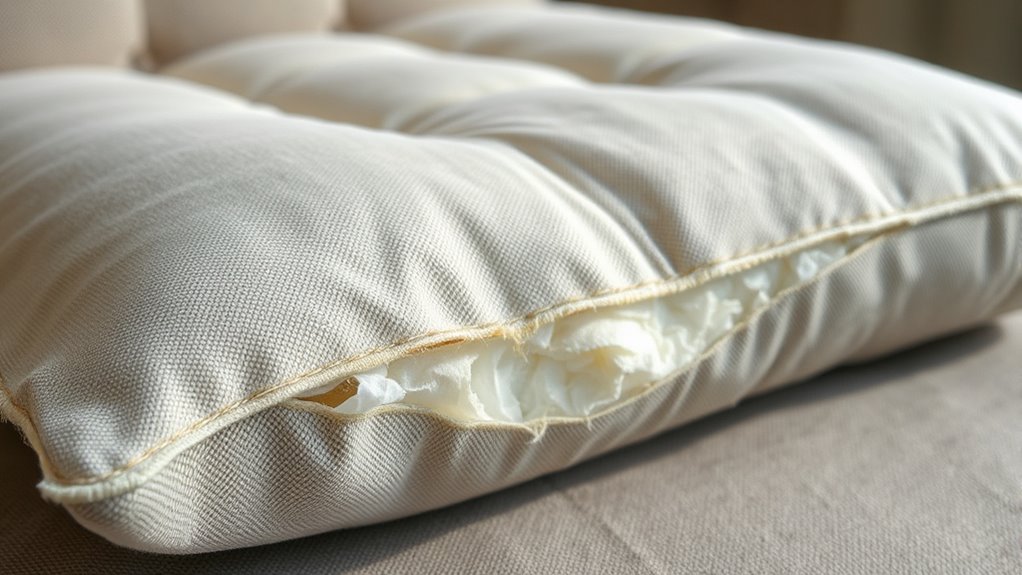
When your pads and cushions start showing signs of wear, you face a common dilemma: should you repair them or replace them altogether? It’s a decision many people confront, especially when considering sustainability and budget considerations. Repairing can seem like an eco-friendly choice, reducing waste and extending the lifespan of your current items. Plus, it might be more cost-effective upfront. However, sometimes repairs aren’t enough, and replacement becomes the better long-term solution.
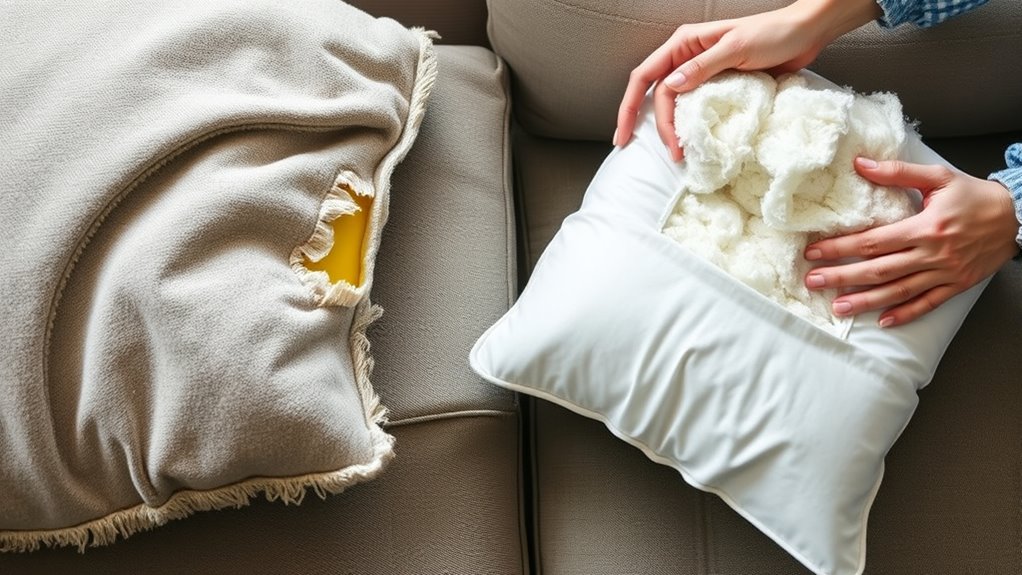
If you’re leaning toward repair, explore sustainable options. Some cushions and pads can be refurbished with simple fixes, like reupholstering or replacing worn-out covers and foam. This approach minimizes waste and supports eco-conscious choices. Repairing can also be quicker, often requiring less time and money than buying new items. Additionally, repairing allows you to maintain the original comfort and aesthetic, especially if the damage is minor. For example, replacing just the foam core or sewing up tears extends the life of your cushion without the need for a full replacement. Considering the environmental impact of your choices can further guide your decision-making process.
On the other hand, consider the durability and overall condition of your cushions. If they’re extensively worn, sagging, or have persistent odors that cleaning can’t eliminate, replacing might be the smarter move. Newer cushions often incorporate better materials, offering increased comfort and longevity. While a full replacement can seem costly at first, it could save you money in the long run by avoiding frequent repairs. Also, newer models might provide improved support, especially if you’ve outgrown the old ones or if your needs have changed.
When weighing your options, think about your budget considerations. Repairing tends to be less expensive initially, which appeals if funds are tight. Yet, investing in a high-quality replacement might be more cost-effective over time, as it reduces ongoing repair costs and replacements. Consider how much you value sustainability—if minimizing environmental impact is a priority, repairing with eco-friendly materials or selecting sustainably produced cushions can be appealing. Conversely, if your current cushions are beyond repair or no longer serve your comfort needs, allocating funds toward a new, better-quality cushion might be justified.
Ultimately, your choice depends on the extent of wear, your budget, and your environmental priorities. Repairing can be a practical, eco-friendly solution for minor issues, but don’t hesitate to replace if the cushions no longer meet your comfort or durability expectations. Either way, making an informed decision helps ensure your seating remains comfortable, functional, and aligned with your values.
Frequently Asked Questions
How Can I Prevent My Cushions From Wearing Out Quickly?
To prevent your cushions from wearing out quickly, focus on proper cushion care and wear prevention. Rotate your cushions regularly to distribute weight evenly, and avoid jumping or placing sharp objects on them. Use slipcovers to protect against spills and dirt, and keep cushions out of direct sunlight to prevent fading and fabric deterioration. These simple steps help extend their lifespan and keep your cushions looking fresh and comfortable.
Are There Eco-Friendly Options for Cushion Replacements?
Yes, you can find eco-friendly cushion replacements made from sustainable materials like organic cotton, hemp, or bamboo. Look for biodegradable options that break down naturally, reducing environmental impact. These eco-conscious choices not only support sustainability but also often offer durability and comfort. When shopping, prioritize brands committed to environmentally friendly practices, ensuring your cushions are both sustainable and long-lasting, helping you make greener choices for your home.
What Are the Costs Associated With Professional Cushion Repairs?
You’ll find that professional cushion repairs typically cost between $50 and $200, depending on the damage, cushion size, and repair complexity. The repair process involves inspecting the pad, removing worn-out material, and replacing or reupholstering it. This cost estimation includes labor and materials, offering a budget-friendly alternative to full replacement. By understanding these aspects, you can decide whether to repair or replace, saving money and extending your cushion’s life.
How Long Does It Typically Take to Repair Worn-Out Cushions?
It usually takes about one to two weeks to repair worn-out cushions, depending on the repair shop’s workload and the cushion’s condition. The repair timeline considers the cushion lifespan, as older cushions may need more extensive work. You’ll want to plan ahead, especially if you’re aiming to restore comfort and appearance quickly. Keep in mind, timely repairs can extend your cushion’s lifespan and save you money in the long run.
Can Damaged Cushions Affect Overall Furniture Stability?
Imagine a sofa with sagging cushions made of foam. Damaged cushions can indeed affect furniture stability, especially if the cushion material deteriorates and no longer provides proper support. When cushions are worn out, they can shift or cause uneven weight distribution, making the furniture less stable and more prone to wobbling or collapse. Replacing or repairing cushions guarantees your furniture remains safe, supportive, and secure.
Conclusion
When deciding whether to repair or replace your worn-out pads and cushions, consider their age, condition, and your budget. Sometimes, a simple repair can breathe new life into your furniture, but if it’s too far gone, replacement might be the smarter choice. Remember, a stitch in time saves nine—addressing issues early prevents bigger problems later. Trust your judgment, and you’ll find the best solution to keep your space comfortable and inviting.