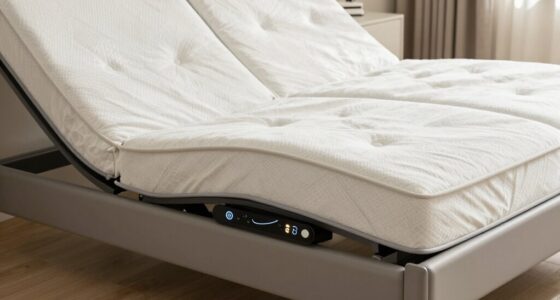
To prevent cable wear around reclining furniture, make certain you route cables along furniture edges and avoid tight, tense bends. Use cable clips and organizers to keep cables secure and away from foot traffic. Elevate cables with furniture risers or mats and regularly inspect for damage or cracks. Keep furniture positioned away from areas with high movement, and buffer cables with protective sleeves. Want more tips? Continue exploring how to guarantee safe, long-lasting cable setups.

Get wellness gear delivered free — and shop member deals
- Fast, free delivery on millions of items
- Access to Prime Big Deal Days deals on October 6–7
- Prime Video, Amazon Music and more included
Key Takeaways
- Route cables along furniture edges with slack to avoid tension and wear from movement.
- Use cable protectors or sleeves in high-traffic or pressure points to prevent insulation damage.
- Keep reclining furniture away from heavy foot traffic areas to reduce cable stress.
- Regularly inspect cables for cracks or frays and replace damaged ones immediately.
- Elevate cables using furniture risers or mounted outlets to prevent crushing or pinching.
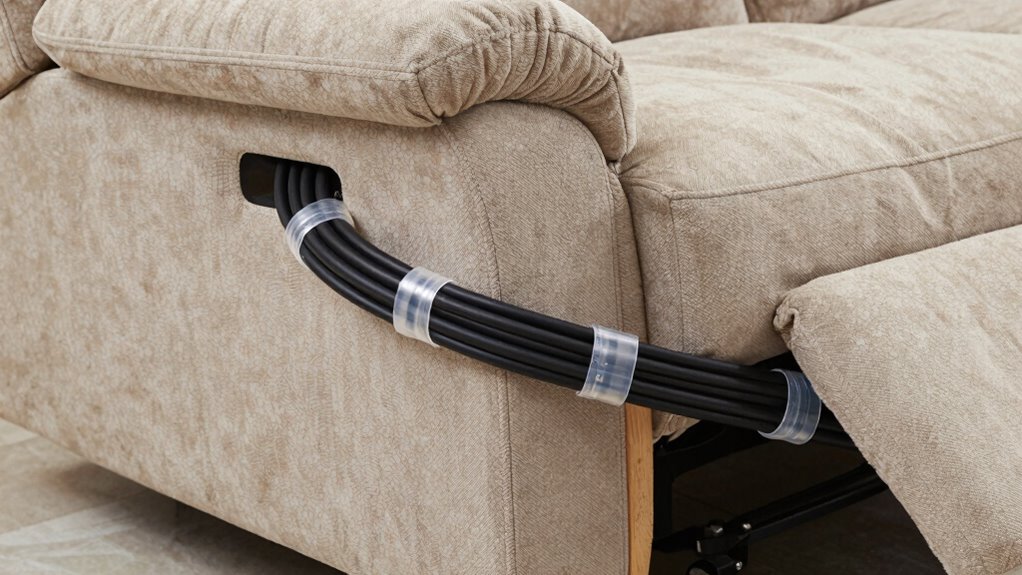
Reclining furniture adds comfort and convenience to your home, but it can also pose a risk to nearby cables if you’re not careful. When you lean back or adjust your furniture, you might unknowingly put strain or pressure on cables running underneath or beside it. Over time, this can cause wear on the cable insulation, leading to exposed wires and potential safety hazards. To prevent this, you need to pay attention to your furniture arrangement and how your cables are positioned.
First, consider how your furniture is placed in relation to your electronic devices and power outlets. You want to avoid having cables stretched tightly across walking paths or pinched under heavy furniture. Instead, arrange your furniture so that cables have some slack and are tucked away safely. Using cable clips or cord organizers helps keep cables in place and prevents them from tangling or pulling loose when you move your furniture. Be sure to route cables along the edges of your furniture, avoiding sharp bends or tension points that can wear down the cable insulation over time. Ensuring proper cable management reduces the risk of damage caused by furniture movement and prolongs cable lifespan.
Cable insulation is essential in protecting your wires from damage, especially when furniture is frequently moved or adjusted. If you notice any cracks, cuts, or frays in the insulation, replace the damaged cables immediately. When setting up your space, opt for cables with thicker insulation or those designed for heavy-duty use, which are more resistant to wear and tear caused by furniture movement. Additionally, consider using protective covers or sleeves over cables in high-traffic areas or where furniture frequently shifts position. These coverings act as a buffer, absorbing pressure and preventing the cable insulation from deteriorating.
Your furniture arrangement plays an important role in prolonging the lifespan of your cables. Keep your reclining furniture away from areas with high foot traffic or where you often move things around. Use furniture risers or mats to lift the furniture slightly off the ground, creating space for cables to run underneath without being pinched or crushed. If possible, install wall-mounted power strips or outlet strips to keep cables elevated and out of the way of furniture movement. Regularly check the condition of your cables and the placement of your furniture to identify any signs of wear early on.
cable clips and organizers for furniture
As an affiliate, we earn on qualifying purchases.
As an affiliate, we earn on qualifying purchases.
Frequently Asked Questions
What Types of Cables Are Most Susceptible to Wear?
You’re most susceptible to wear in cables with minimal shielding and those made from less durable, wear-resistant materials. Cables like power cords and HDMI cables, especially if unshielded or thin, can easily fray or break when repeatedly bent around furniture. To prevent this, choose cables with robust cable shielding and wear-resistant materials. Regularly inspect and replace damaged cables, and use protective conduits or sleeves to extend their lifespan around reclining furniture.
How Often Should I Inspect My Cables for Damage?
You should inspect your cables at least once every three to six months to catch damage early. Cable material varies; rubber and plastic coatings can degrade faster, especially around reclining furniture. Regular inspections help identify fraying, cracks, or wear before they cause failure. Following a consistent inspection schedule keeps your cables safe, prolongs their lifespan, and prevents potential hazards caused by unnoticed damage. Always prioritize safety with routine checks.
Can Cable Protectors Be Hidden Effectively?
Yes, cable protectors can be hidden effectively with some DIY hiding techniques. You can use furniture, rugs, or decorative covers to conceal them, achieving aesthetic concealment without sacrificing safety. Taping or zip-tying the protectors along baseboards or under furniture also helps keep them out of sight. With a little creativity, you’ll guarantee your cables stay protected and hidden, maintaining a tidy, stylish space.
Are Wireless Alternatives a Viable Option?
Wireless alternatives are definitely a viable option for reducing cable wear around reclined furniture. You can explore wireless innovations that offer reliable connectivity, making setup simple and clutter-free. Battery-powered options provide flexibility, so you don’t have to worry about cords or outlets. These solutions help protect your cables from wear and tear while maintaining convenience and a clean look, especially when paired with modern wireless technology.
What Tools Are Best for Cable Management?
You might think cable management tools are unnecessary, but they’re your best friends here. Use cable labeling to keep wires organized and easy to identify, saving you hassle later. Surge protectors are essential, not just for safety but to prevent wear from electrical surges. Investing in cable clips or sleeves helps keep everything tidy and secure. These tools guarantee your cables stay intact and your space looks neat—irony at its finest!
cable protectors and sleeves for high traffic areas
As an affiliate, we earn on qualifying purchases.
As an affiliate, we earn on qualifying purchases.
Conclusion
So there you have it—your foolproof plan to keep those cables pristine and your furniture intact. Because nothing says “living the dream” like meticulously managing every wire around your reclining throne. Just remember, if you ignore these tips, your cables might rebel, and you’ll be stuck with a tangled disaster more complicated than assembling IKEA furniture without instructions. Stay vigilant, stay cable-conscious, and keep your lounging zone as glamorous as your Netflix binge sessions deserve.
furniture risers for cable management
As an affiliate, we earn on qualifying purchases.
As an affiliate, we earn on qualifying purchases.
As an affiliate, we earn on qualifying purchases.
Fall Picks
fall essentials
As an affiliate, we earn on qualifying purchases.