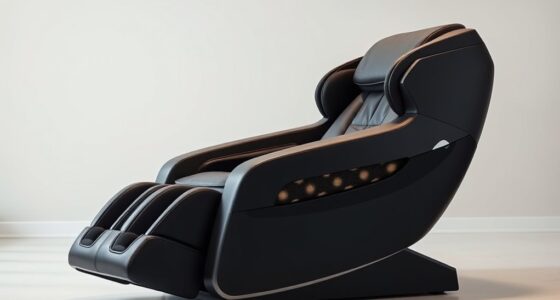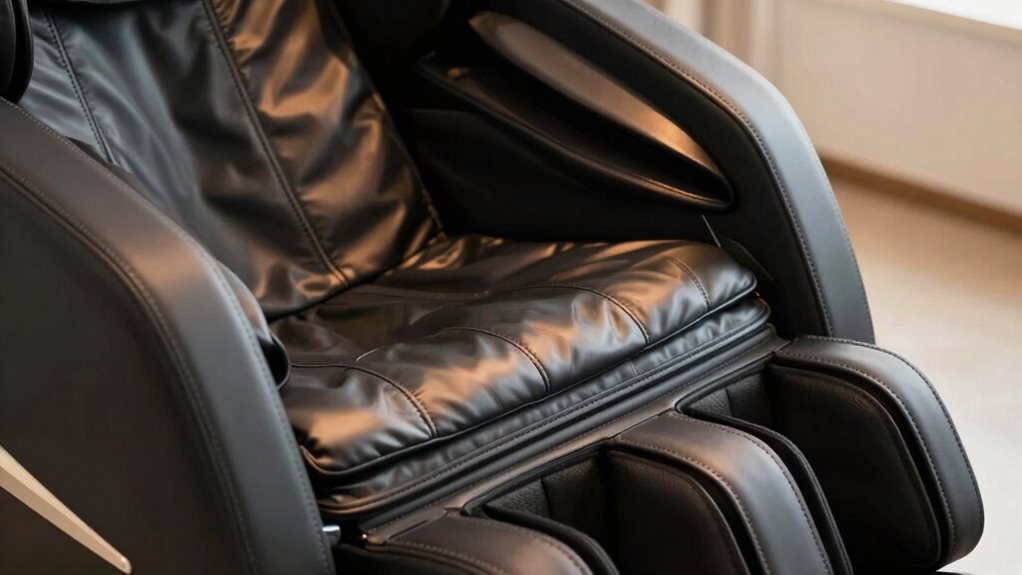

To properly align your lower back in a massage chair, start by identifying the lumbar support feature and adjust it to match your natural spine curve. Make sure the support isn’t too tight or too loose—fine-tune it for custom comfort. Use ergonomic cushions if needed, and test your position to prevent slouching. Small adjustments can make a big difference in comfort and posture, so keep exploring to learn other simple support secrets.
Key Takeaways
- Proper lumbar support maintains the spine’s natural curve, reducing strain and promoting healthy posture in massage chairs.
- Adjust lumbar support using knobs or cushions to ensure a snug fit that aligns with your lower back’s natural shape.
- Recognize signs of inadequate support, such as persistent discomfort or poor posture, to make necessary adjustments.
- Customize support for different body types by adjusting height, depth, and firmness to prevent strain and improve comfort.
- Regularly troubleshoot and fine-tune lumbar support to sustain optimal alignment and prevent long-term back issues.
Why Proper Lumbar Support Is Key to Your Back Comfort

Proper lumbar support is indispensable because it helps maintain the natural curve of your lower spine, preventing unnecessary strain and discomfort. An ergonomic design ensures that your chair or massage chair aligns with your body’s shape, promoting proper posture correction. When your lumbar region is supported, your spine stays in a healthy position, reducing the risk of aches and long-term issues. Good lumbar support encourages you to sit upright naturally, avoiding slouching or hunching that can cause muscle fatigue. By choosing chairs with proper ergonomic features, you actively protect your lower back and improve overall comfort. Ergonomic features can further enhance lumbar support and overall posture, ensuring sustained back health over time. This support not only alleviates immediate pain but also helps preserve your spine’s health over time, making proper lumbar support a crucial aspect of back care. Additionally, posture correction benefits from proper support, helping prevent chronic discomfort and promoting long-term spinal health. Incorporating ergonomic principles into your chair selection can lead to a more sustainable and comfortable sitting experience, especially during prolonged sessions.
How to Tell If Your Lumbar Support Isn’t Right?
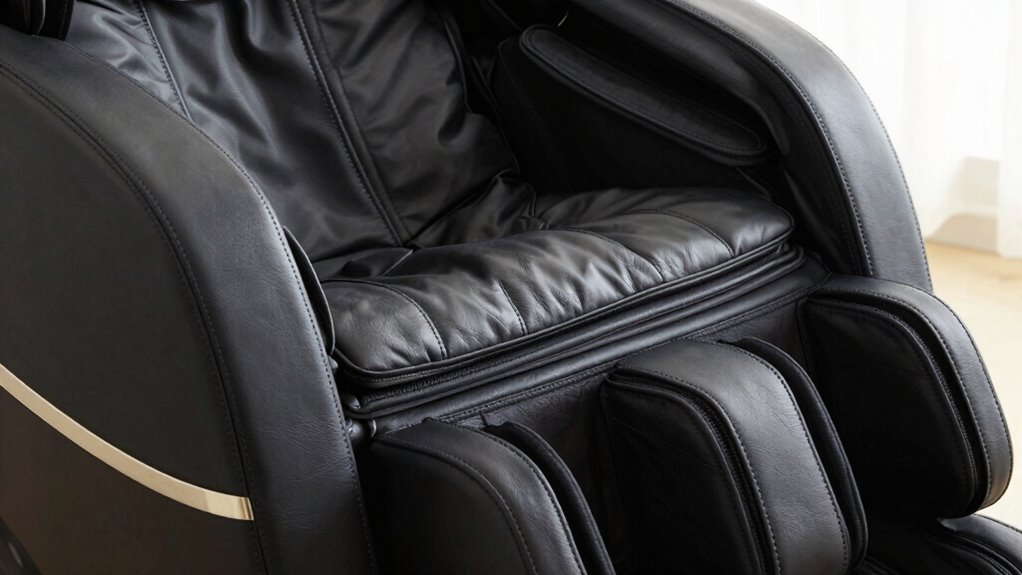
If you notice persistent discomfort or pain after sitting, your lumbar support might not be right. Poor posture alignment or limited adjustability can also be signs that your support isn’t providing the right fit. Pay attention to these cues to make certain your back stays comfortable and well-supported. Additionally, ensuring your lumbar support is properly verified with regulators can help prevent potential issues with inadequate support. Regularly assessing the ergonomic standards of your massage chair can further ensure that the lumbar support remains effective and safe. Incorporating evidence-based guidelines in the design and testing process can enhance the reliability of lumbar support features, safeguarding your health. Proper product testing and certification can provide additional assurance of quality and safety. Being aware of support adjustability features can help you customize your lumbar support to better match your individual needs.
Persistent Discomfort or Pain
Persistent discomfort or pain after adjusting your lumbar support often signals that it isn’t providing the right fit. If you feel persistent aching or soreness, your lumbar support may not be aligned properly with your lower back’s natural curve. A poorly designed or improperly positioned support can hinder effective posture correction, leading to strain rather than relief. Look for signs like ongoing tightness, numbness, or a sense of pressure that doesn’t ease over time. An ergonomic design should promote comfort, not cause discomfort. If adjusting the support doesn’t alleviate these symptoms, it’s a clear indication that your lumbar support isn’t suited to your body. Proper fit is essential for reducing pain and ensuring that your lower back remains properly supported during your massage sessions. Proper fit is crucial to ensure the support effectively alleviates discomfort rather than exacerbating it. Additionally, understanding your body’s natural curve can help in selecting the most suitable lumbar support for your needs, as body alignment plays a vital role in overall comfort. Being aware of how ergonomic principles influence support can guide you toward better alignment and comfort, especially as advances in nanotechnology are beginning to influence ergonomic designs for enhanced support.
Poor Posture Alignment
Poor posture alignment is a clear sign that your lumbar support isn’t fitting correctly. When your lower back isn’t properly supported, your spinal curvature can become exaggerated or misaligned, leading to poor posture. You might notice your shoulders slumping forward or your lower back feeling strained after sitting for a while. An ergonomic design aims to promote natural spinal curves, but if the support isn’t right, those curves get distorted. This misalignment not only causes discomfort but can also lead to long-term issues with your posture. To tell if your lumbar support isn’t right, check if your lower back feels unsupported or if you’re constantly adjusting your position. Proper lumbar support should help maintain your spine’s natural curve, encouraging healthy posture. Additionally, choosing the right support can prevent long-term spinal issues and improve overall comfort during extended sitting periods, especially when considering the importance of ergonomic design principles in support devices. Ensuring your lumbar support aligns with proper ergonomic standards can make a significant difference in maintaining back health. Regularly reviewing and adjusting your chair settings can also help prevent posture deterioration over time. Paying attention to support customization options can further optimize your sitting experience and prevent discomfort.
Limited Support Adjustability
Limited support adjustability is a key sign that your lumbar support isn’t fitting properly. If you can’t easily customize the position or firmness to match your lower back’s natural curve, it may not be designed for your body. An ergonomic design should allow smooth adjustments to align your spine comfortably. If the cushion firmness feels too hard or too soft, it won’t provide the necessary support, leading to discomfort. When the lumbar support isn’t adjustable enough, you might experience persistent soreness or a lack of proper spinal alignment. Pay attention to how easily you can modify the support; if it’s stiff or limited, it’s a clear indicator that it’s not suited to your needs. Proper support requires flexibility to ensure comfort and correct posture. Additionally, choosing high-quality materials can enhance the durability and effectiveness of the lumbar support over time. Being aware of website performance metrics can help manufacturers improve product features and user satisfaction. Ensuring your lumbar support has adjustable features tailored to your body is essential for long-term comfort and spinal health. Regularly testing the support’s ease of adjustment can help identify whether it truly adapts to your unique needs.
Simple Steps to Adjust Your Massage Chair’s Lumbar Support
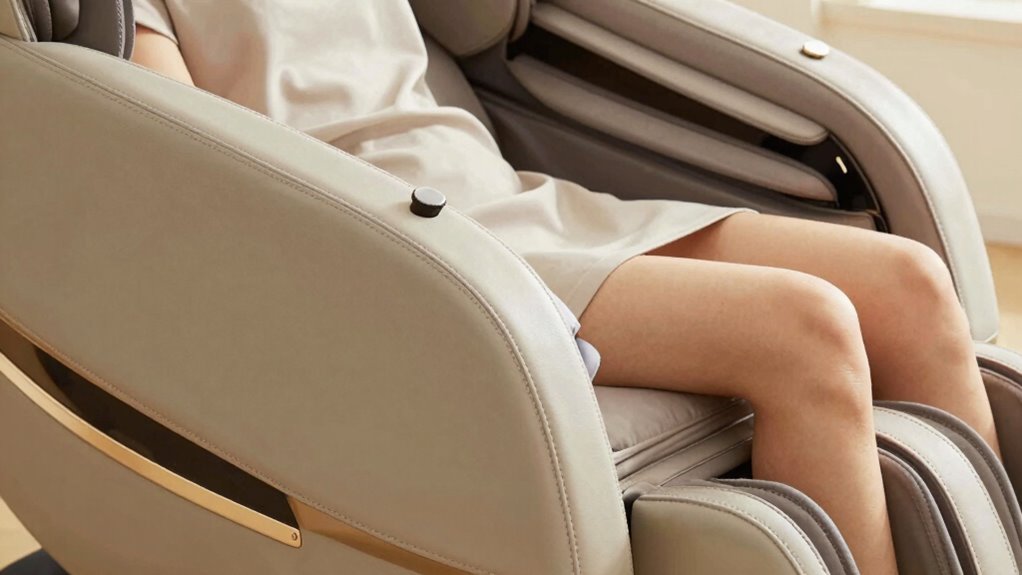
Adjusting your massage chair’s lumbar support is straightforward and essential for maximum comfort. Begin by locating the lumbar adjustment knob or lever, usually positioned on the side or back of the chair. Use ergonomic accessories like lumbar cushions if your chair lacks built-in support, though built-in adjustability is preferable for seamless posture correction. Gently increase or decrease the support to fill the curve of your lower back, ensuring it’s snug but not tight. Sit upright and lean back to feel how the support aligns with your spine. Make small adjustments until you feel supported and relaxed. Proper lumbar support helps maintain good posture, reduces strain, and enhances your massage experience. Regularly fine-tune the support for ongoing comfort and ideal lower back health.
Customizing Support for Different Body Types

Have you ever noticed how a one-size-fits-all lumbar support might not provide ideal comfort for everyone? That’s because body types and flexibility vary greatly. To optimize support, look for ergonomic designs that can be adjusted to fit your unique shape. If you have more body flexibility, you might need a support that adapts easily to different positions, ensuring continuous lumbar contact. Conversely, if your body is less flexible, you may prefer firmer, more precise support to maintain proper alignment. Customizing your lumbar support involves adjusting the height, depth, and firmness to match your body’s contours. By tailoring these features, you ensure your lower back receives the right amount of support, reducing strain and enhancing comfort during your massage chair sessions.
Common Mistakes When Setting Up Lumbar Support

Many people make mistakes when setting up lumbar support, which can compromise comfort and effectiveness. Incorrect lumbar pillow placement or poorly chosen ergonomic cushions can lead to discomfort or strain. Common errors include positioning the lumbar support too high or low, which fails to support the natural curve of your lower back. Overly firm cushions can cause pressure points, while too soft ones offer little support. To avoid these pitfalls, guarantee your ergonomic cushions are aligned with your lumbar curve and adjusted to fit snugly. Here’s a quick overview of typical mistakes:
| Mistake | Consequence | Solution |
|---|---|---|
| Placing lumbar pillow too high | Strains upper back | Adjust to lower lumbar area |
| Using a cushion too soft | Insufficient support | Opt for firmer ergonomic cushions |
| Over-tightening support | Restricts movement | Loosen for comfort |
| Ignoring body differences | Poor ergonomic fit | Customize placement |
| Not testing support first | Uncomfortable posture | Always test before prolonged use |
Troubleshoot and Improve Your Back Support
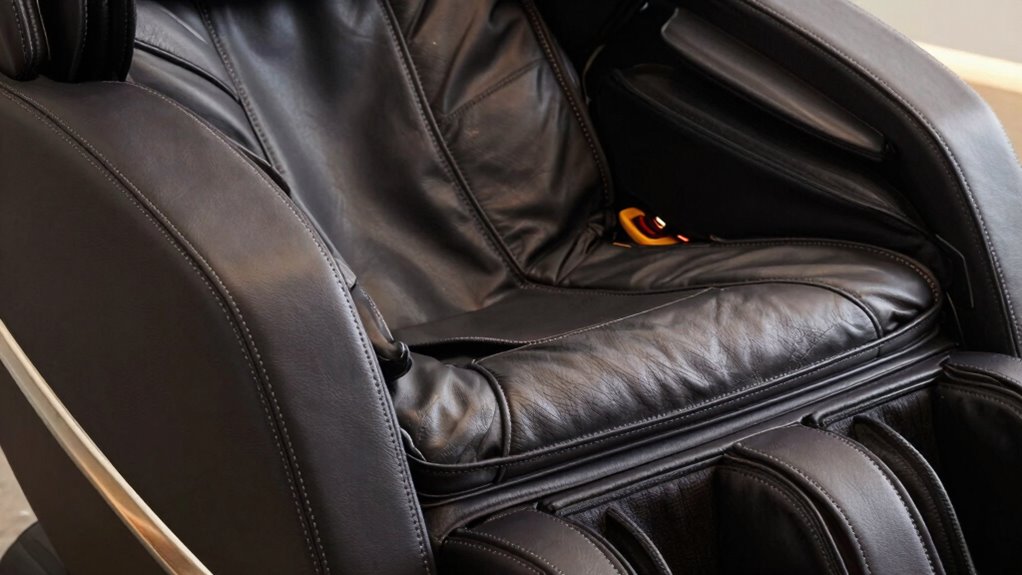
If you’re experiencing persistent back discomfort despite setting up lumbar support, troubleshooting can help you identify and fix the issue. Start by checking if your ergonomic cushions are properly positioned to support your lower back’s natural curve. Adjust the cushion’s height or firmness until you feel a gentle, consistent pressure that promotes good posture correction. Sometimes, the support may be too firm or too soft, so experiment with different settings or add a small pillow if needed. Make certain your back is aligned against the chair’s backrest, and your shoulders are relaxed. Regularly re-evaluate your positioning during your session to prevent slouching or strain. These small tweaks can greatly improve your back support and reduce discomfort over time.
Frequently Asked Questions
Can Lumbar Support Prevent Long-Term Back Issues?
Yes, lumbar support can prevent long-term back issues by helping you maintain an ergonomic posture. When you use lumbar support correctly, it reduces strain on your lower back and minimizes the risk of developing chronic pain. By consistently aligning your spine, you promote better spinal health and prevent issues that arise from poor posture over time. Keep in mind, proper support is key to avoiding long-term back problems.
Is Adjustable Lumbar Support Suitable for All Body Sizes?
Adjustable lumbar support is generally suitable for most body sizes because of its ergonomic design and size compatibility. You can customize the support to fit your lower back, ensuring proper alignment and comfort. However, if you have unique needs or very specific size requirements, it’s best to check the chair’s adjustability features. This way, you’ll get the most effective fit, reducing strain and promoting better posture during long periods of sitting.
How Often Should I Readjust My Lumbar Support?
Think of your lumbar support as a trusted navigator guiding your posture through a sea of discomfort. You should readjust it whenever you feel your lower back shift from its ideal alignment—probably every 30 to 60 minutes. This keeps the ergonomic benefits flowing and guarantees your posture improves, preventing strain. Regular adjustments help your chair become an extension of your body, promoting comfort and reducing fatigue throughout your day.
Are There Different Types of Lumbar Supports for Massage Chairs?
Yes, there are different types of lumbar supports for massage chairs. You’ll find supports made from various lumbar materials like foam, gel, or adjustable air cushions. Support placement is key—some supports are fixed, while others let you customize height and depth. Choose a support that fits your lower back’s shape and feels comfortable, ensuring proper alignment and relief during your massage sessions.
Does Lumbar Support Affect Massage Effectiveness or Comfort?
Yes, lumbar support greatly affects massage effectiveness and comfort. An ergonomic design ensures your lower back is properly aligned, enhancing relaxation and reducing strain. Durable materials maintain support over time, preventing sagging that could diminish comfort. When your lumbar support is well-designed and sturdy, you’ll experience a more effective massage, feeling relaxed and supported. Proper lumbar support transforms your massage chair experience, making it both more comfortable and beneficial for your back health.
Conclusion
When you properly align your lower back with the right lumbar support, you might notice less pain and more comfort. Some believe that a perfect fit is just about the chair’s design, but it’s really about how you customize it for your body. Think of your lumbar support as the foundation of a building—when it’s solid and well-adjusted, everything else feels steadier. So, take the time to tweak and trust that your back will thank you.