If your massage chair feels too intense, start by adjusting the intensity and speed controls on the remote or control panel, opting for lower settings and softer modes. Use built-in features like zone customization to target sensitive areas gently, and consider sitting in a more relaxed position or adding cushions. External tools like foam rollers can also help reduce muscle tension beforehand. For continued comfort tips and troubleshooting, keep exploring to find the best way to customize your massage experience.
Key Takeaways
- Adjust the massage chair’s intensity and speed settings via control panel or remote to lower pressure levels.
- Customize massage zones to reduce pressure on sensitive areas for a gentler experience.
- Use built-in intensity levels and zone controls to tailor the massage strength to comfort needs.
- Incorporate external tools like foam rollers and proper body positioning to minimize pressure.
- Stop use and consult support if discomfort persists, ensuring safety and proper adjustment.
How Can I Tell If My Massage Chair Is Too Intense?
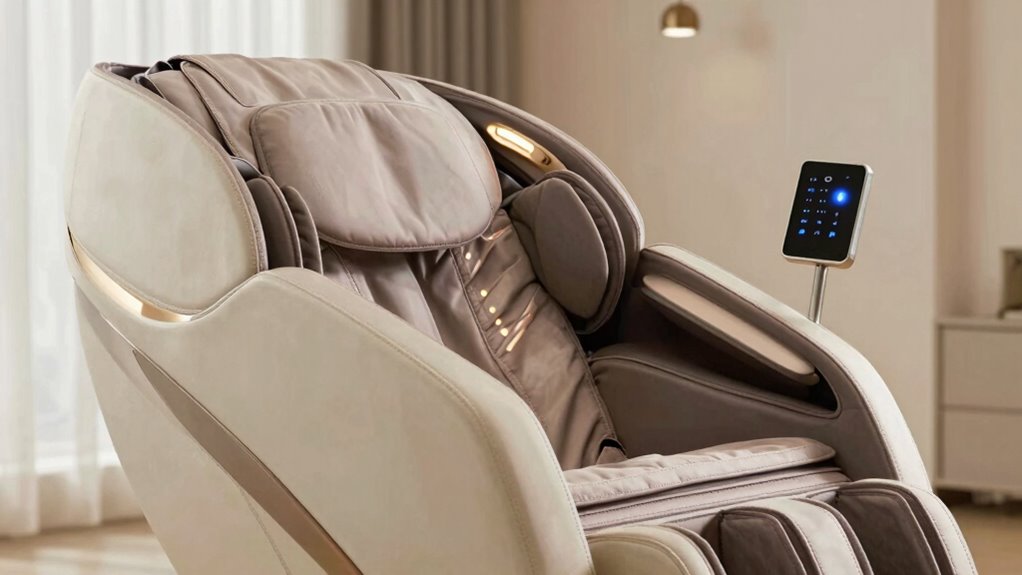
If your massage chair feels too intense, you’ll likely notice discomfort or pain rather than relaxation. During massage therapy, your body should respond with relief, not soreness. Pay attention to how the pressure affects your pressure points—if they feel overly tender or painful, the intensity might be too high. You might experience sharp sensations or a sense of bruising afterward, indicating the massage is too aggressive. Notice if your muscles tighten or if you feel anxious rather than calm. These signs suggest the massage is pushing beyond comfortable limits. Remember, a good massage should ease tension, not create new discomfort. Being aware of these cues helps you determine if your massage chair needs adjusting to better suit your comfort level. Additionally, understanding how massage techniques work can help you select settings that promote relaxation rather than discomfort. Adjusting the pressure settings to match your individual sensitivity is essential for a truly relaxing experience, as personal comfort varies from person to person. Recognizing the importance of feedback mechanisms in massage chairs can help you fine-tune the experience for optimal relaxation. Incorporating user preferences and listening to your body’s responses can further enhance your comfort during each session.
Why Adjusting Massage Intensity Is Key to Comfort
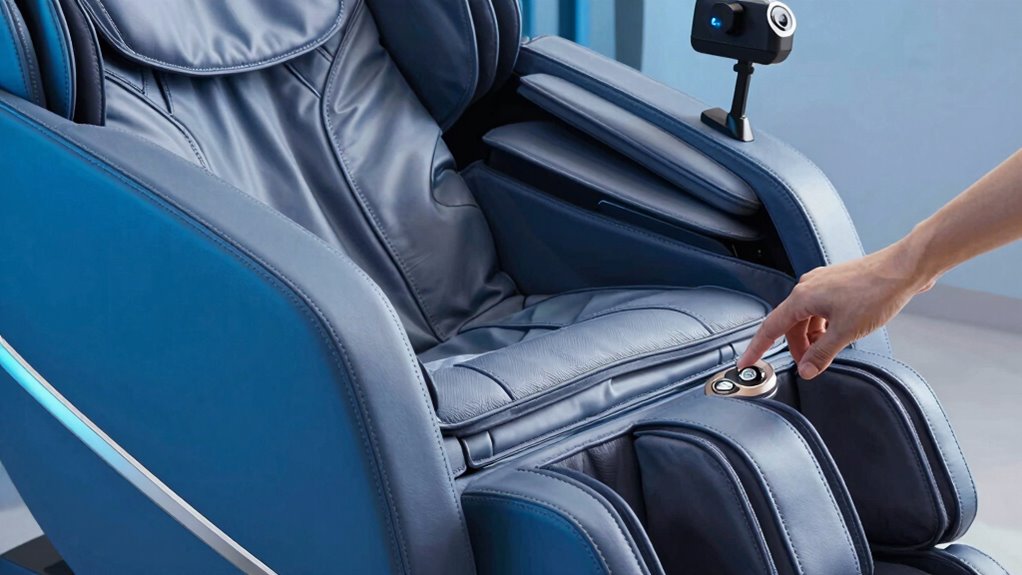
Adjusting the massage intensity on your chair guarantees you get the most benefits without discomfort. Proper pressure management allows you to customize your experience, ensuring relaxation instead of pain. When you tailor the intensity, you prevent overstimulation and make the massage more effective. To visualize your options, consider this table:
| Intensity Level | Description | Ideal for |
|---|---|---|
| Low | Gentle pressure, soft touch | Sensitive areas, beginners |
| Medium | Moderate pressure, comfortable | Regular use, relaxation |
| High | Firm pressure, deep tissue | Tension relief, muscle knots |
Additionally, understanding energy-efficient technology can help you choose a massage chair that balances power and comfort effectively. Knowing how to adjust pressure settings is essential for achieving a personalized massage experience. Incorporating customizable settings can further enhance your comfort level and overall satisfaction. Being aware of pressure modulation features allows you to fine-tune your massage to prevent overstimulation and optimize relaxation. Furthermore, integrating smart automation features can enable your chair to adapt to your preferences automatically, creating a seamless and tailored massage experience.
How Do I Dial Down the Settings for a Softer Massage?
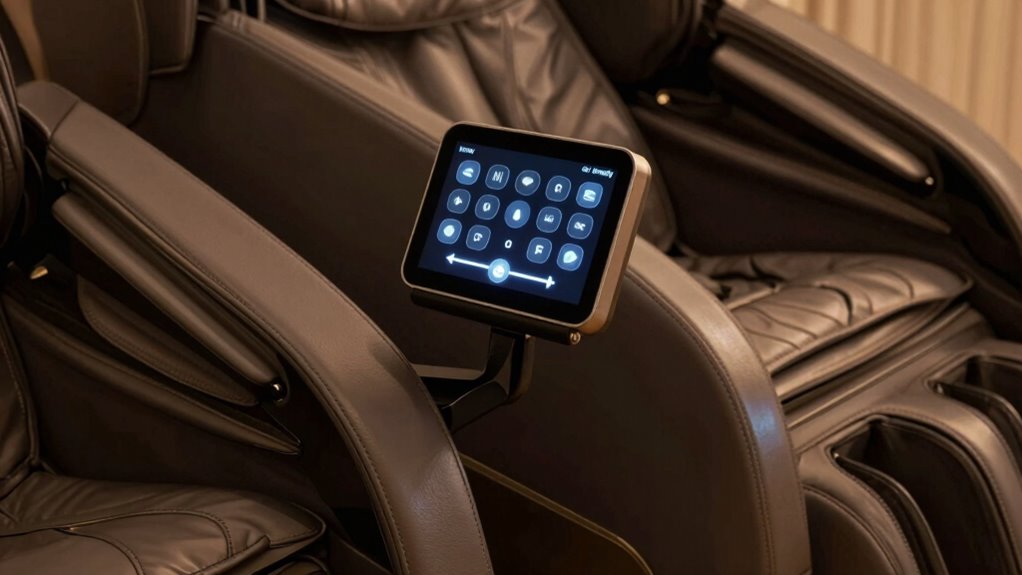
To make your massage softer, start by adjusting the intensity settings to lower levels. You can also switch to slower speed modes for a gentler experience, and customize massage zones to target areas with lighter pressure. These simple changes help create a more relaxing, soothing massage tailored to your comfort. Additionally, paying attention to the safety features of your massage chair can help ensure it operates within safe parameters while providing a gentle massage. Checking the operating instructions can also guide you in making appropriate adjustments for a softer experience. Remember that understanding the how the massage functions work can help you make more informed adjustments to achieve the desired softness. Exploring temperature controls may also enhance comfort by allowing a balance between warmth and gentle stimulation. Understanding load calculations can help ensure your chair’s settings are optimized for safe, effective operation while adjusting massage intensity.
Adjust Intensity Settings
Many massage chairs let you customize the intensity to create a gentler experience, but figuring out how to dial down the settings can be confusing at first. To reduce the intensity, check your chair’s control panel or remote for the dedicated adjustment buttons or sliders. Often, these will be labeled with symbols or words like “Intensity” or “Soft.” Adjusting these controls allows you to tailor the massage therapy to your comfort level. Keep in mind that an ergonomic design in your chair often makes it easier to access these controls, either on the armrest or via a touchscreen. Start with the lowest setting and gradually increase until you find a gentle, relaxing massage that suits your preferences without feeling overwhelming.
Use Lower Speed Modes
Lowering the massage speed mode is an effective way to create a gentler experience. When you select soft settings or lower speed modes, the massage becomes more soothing and less intense, making it ideal for gentle therapy. Many chairs have adjustable speed controls—look for buttons labeled “speed” or “mode” and dial them down. Slower movements reduce the force and vibration, helping you relax without feeling overwhelmed. This simple adjustment allows you to enjoy a calming massage, especially if you’re sensitive to strong sensations. Keep experimenting with different speed levels until you find the perfect balance for comfort. Using lower speed modes can considerably enhance your massage experience, turning a potentially overwhelming session into a relaxing, gentle therapy session.
Customize Massage Zones
Adjusting the massage zones allows you to target specific areas for a gentler experience. With massage zone customization, you can focus on parts that need lighter pressure, like your shoulders or back, while avoiding overly intense spots. Many chairs let you select zones such as neck, shoulders, or lower back, so you can dial down the intensity where it feels too strong. Use the controller to modify settings for pressure point targeting, reducing the force in zones that feel uncomfortable. This precise control helps create a softer, more relaxing massage tailored to your comfort level. Understanding massage zone controls empowers you to fine-tune your massage experience even further. Additionally, some chairs feature adjustable pressure settings that allow you to customize the overall intensity across all zones, enhancing your ability to achieve a gentle massage.
Using Built-In Intensity Settings to Make Your Massage Gentler
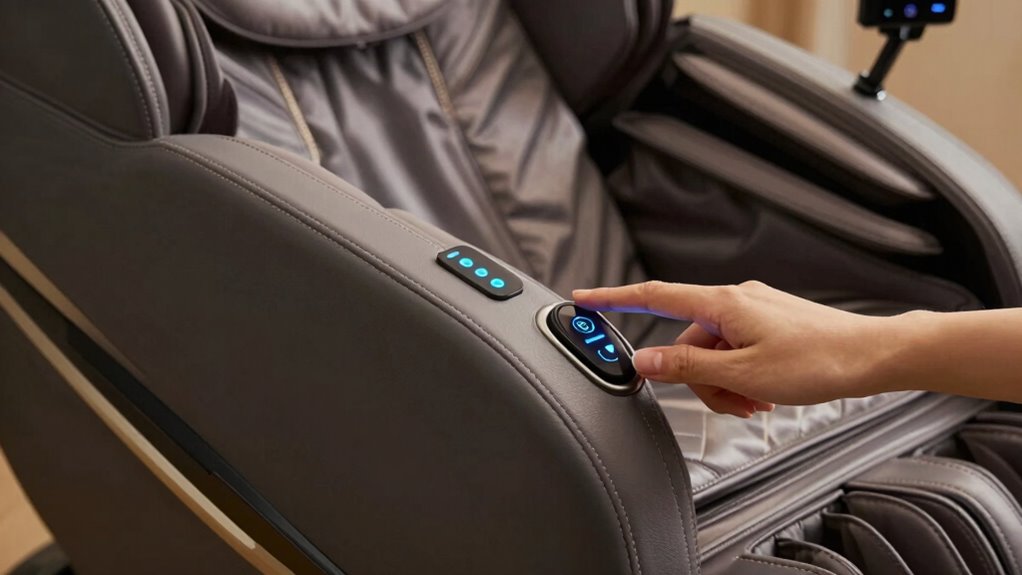
You can make your massage gentler by adjusting the built-in intensity levels on your chair. Lowering the settings allows you to relax without feeling overwhelmed, and you can also customize massage zones for targeted comfort. Experiment with these options to find a calming, personalized experience. Understanding the fundamentals of air-based technology can help you better operate and optimize your massage chair for maximum comfort.
Adjust Intensity Levels
Many massage chairs come equipped with built-in intensity settings that let you customize your experience. Adjusting these levels helps you find a more comfortable, gentler massage. To do this effectively:
- Start with the lowest intensity setting and gradually increase until you reach a comfortable level.
- Use relaxation techniques, such as deep breathing, to enhance comfort.
- Make ergonomic adjustments, like repositioning your body or seat, to optimize pressure distribution.
- Remember, your goal is a soothing experience, so don’t hesitate to reduce intensity if it feels too strong.
- Incorporating visual and auditory cues can also help you better gauge your comfort level during the massage.
- Utilizing the built-in intensity settings effectively allows you to tailor each session to your preferences and reduce discomfort.
- Being aware of pressure distribution can help prevent discomfort and make the massage more comfortable overall.
- Adjusting the massage duration can also help you find a gentler experience without sacrificing relaxation.
Customize Massage Zones
Have you considered customizing the massage zones to create a gentler experience? Many massage chairs let you adjust specific zones through massage zone customization, allowing you to target areas that feel too intense. By selecting personalized massage settings for each zone—such as shoulders, back, or legs—you can reduce pressure and intensity where needed. This massage zone customization helps prevent discomfort while maintaining a relaxing overall massage. Check your chair’s control panel for options to customize zones individually. Focusing on gentle settings in sensitive areas ensures a more comfortable experience without sacrificing the benefits of massage therapy. With personalized massage settings, you have full control over how your massage feels, making it easier to enjoy a soothing, less overwhelming session. Additionally, user-friendly controls can simplify the process of adjusting settings to suit your comfort level.
Can External Tools Like Foam Rollers Help Reduce Massage Pressure?
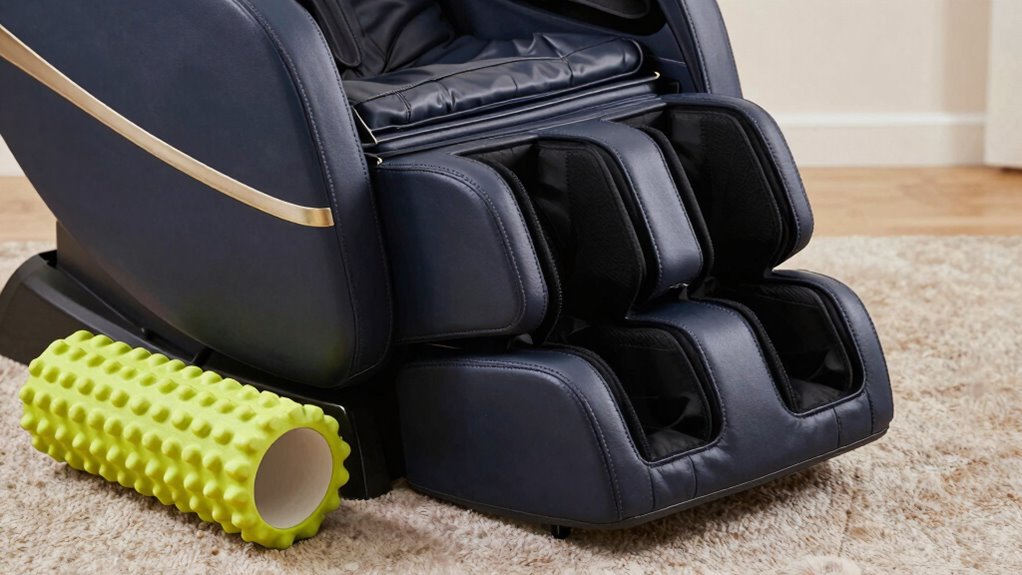
External tools like foam rollers can be effective in helping to reduce massage pressure, especially if you find massages too intense. Using foam rollers for pressure relief targets tight muscles and releases built-up tension, making subsequent massages feel gentler. Here are ways foam rollers assist with pressure relief:
- Loosen tight muscles before the massage begins.
- Break up knots that cause discomfort.
- Improve blood flow, reducing overall muscle tension.
- Increase your awareness of sensitive areas, allowing better communication with your therapist or adjusting your chair settings.
How Should I Position Myself to Minimize Pressure During a Massage?
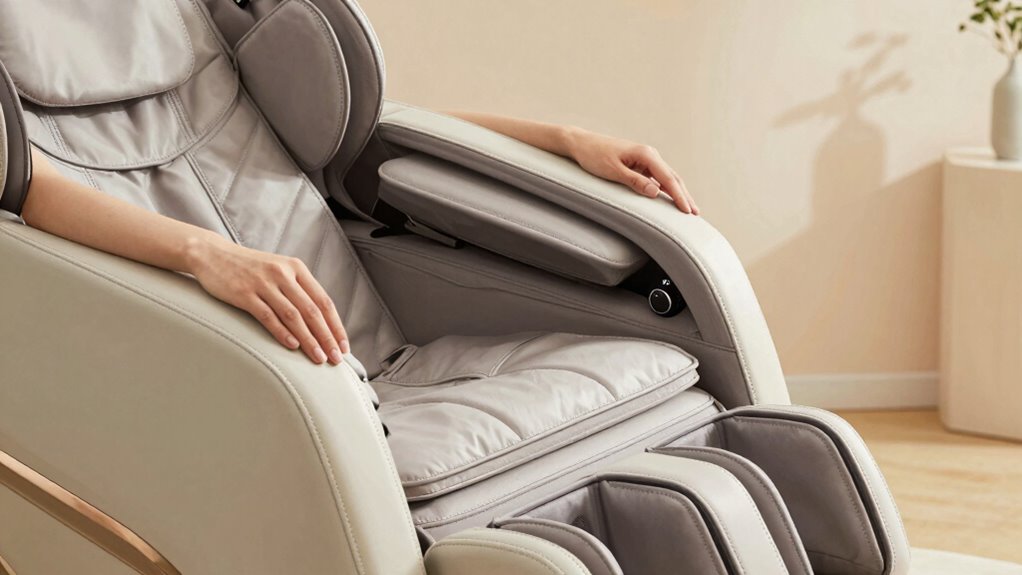
To minimize pressure during a massage, your positioning plays a essential role. Proper body positioning helps avoid unnecessary strain and targets pressure points more effectively. Adjust your seat and backrest to sit upright or slightly reclined, reducing the intensity of contact. Use cushions or pillows to support sensitive areas and create space around tight pressure points. Relax your muscles and avoid tensing up, which can increase discomfort. Here’s a quick guide:
| Body Positioning Tip | Focus Area | Benefit |
|---|---|---|
| Sit upright or slight recline | Back and shoulders | Less pressure on spine |
| Use cushions | Neck, lower back | Softens contact points |
| Keep limbs relaxed | Arms, legs | Reduces tension |
| Adjust chair settings | Overall body | Customizes pressure points |
This approach helps you control pressure levels and makes your massage more comfortable.
When Should I Seek Professional Help or Contact the Manufacturer?
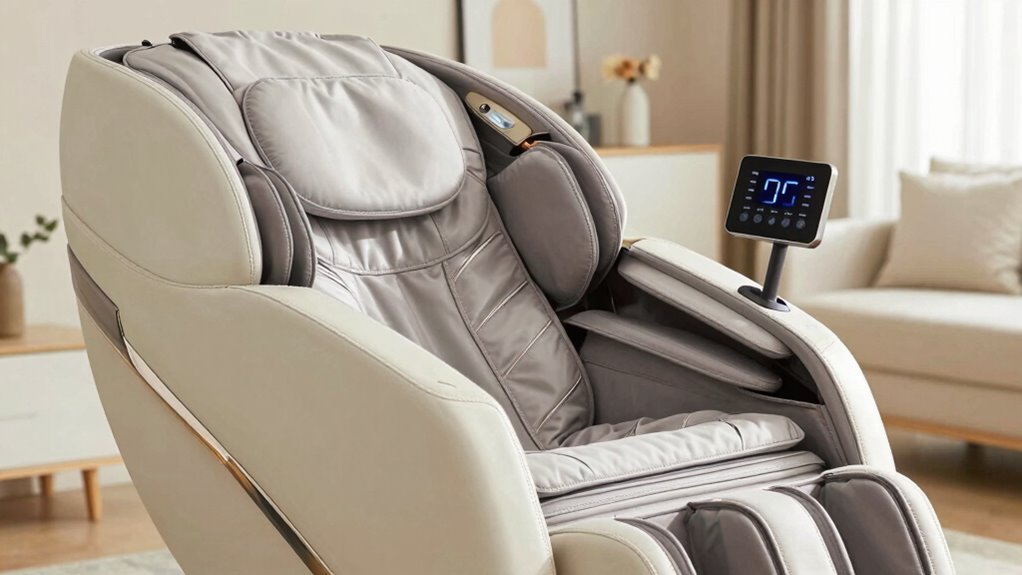
If you notice persistent discomfort or unusual sensations during your massage, it’s a good idea to consult a professional or contact the manufacturer. Use your remote control to adjust settings first, but if issues persist, consider these steps:
- Review your user manual for troubleshooting tips and safety warnings.
- Stop using the chair if pain continues or worsens.
- Contact the manufacturer’s customer service for guidance or repairs.
- Seek medical advice if discomfort persists beyond the massage session.
What Features Should I Look for in a Massage Chair for Sensitive Users?
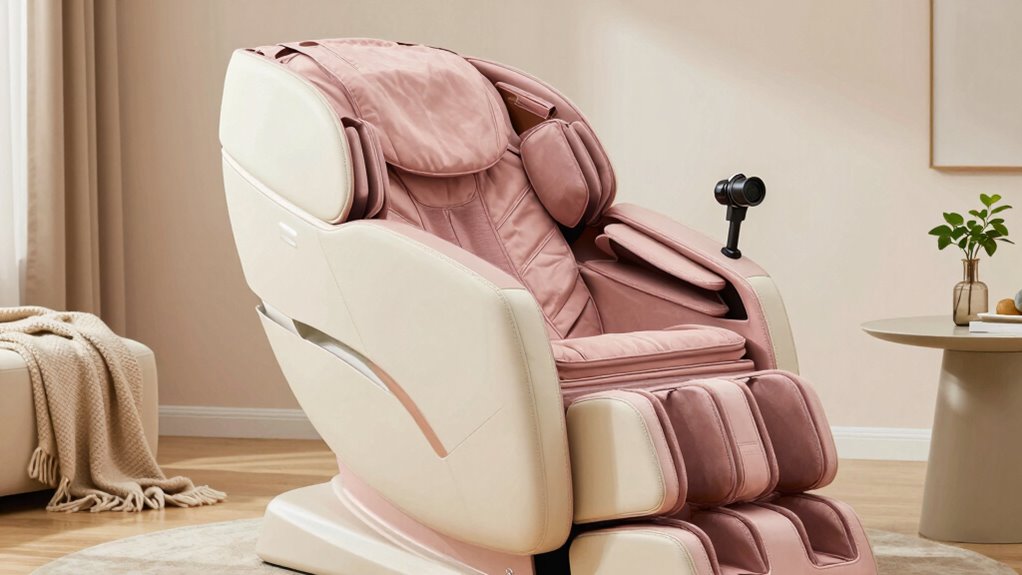
When choosing a massage chair for sensitive users, prioritizing gentle features can make a significant difference in comfort and safety. Look for models with adjustable massage chair ergonomics, allowing you to customize pressure levels and target areas carefully. Features like soft, slow rollers, and gentle kneading or shiatsu massage techniques help prevent overstimulation. Some chairs offer multiple intensity settings or a “gentle mode,” giving you control over the massage strength. Additionally, consider chairs with airbags or light percussion options that provide soothing compression without excessive force. These features assure the massage therapy techniques used are adaptable to your comfort level, reducing the risk of discomfort or pain. Ultimately, a well-designed ergonomic setup and gentle massage options empower you to enjoy relaxation safely and effectively.
Tips to Keep Your Massage Chair Comfortable and Well-Maintained
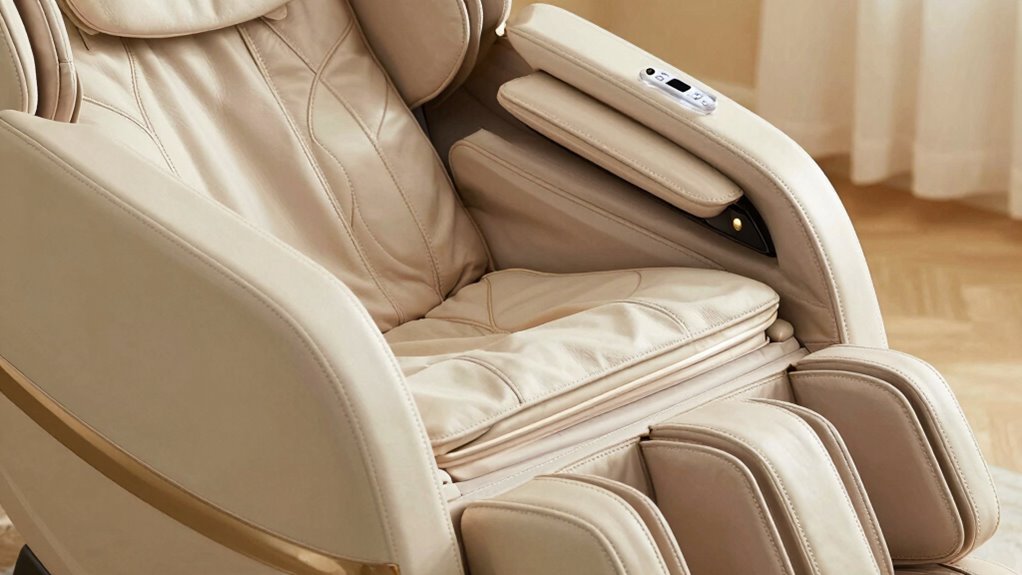
Keeping your massage chair comfortable and in top condition guarantees you get the best relaxation experience every time. Regular maintenance ensures ideal massage therapy and preserves its ergonomic design. To keep your chair in great shape:
Maintaining your massage chair ensures maximum comfort and long-lasting performance.
- Clean the upholstery weekly with a soft cloth and gentle cleaner to prevent dust buildup.
- Check and tighten bolts and screws monthly to maintain structural integrity.
- Use the manufacturer’s recommended lubricants on moving parts to ensure smooth operation.
- Cover your chair when not in use to protect it from dust and sunlight, which can degrade materials.
These simple steps help prevent wear and tear, keep the massage functions smooth, and maintain the ergonomic features that make your massage therapy sessions comfortable and effective.
Frequently Asked Questions
Can I Customize Massage Programs for a Gentler Experience?
Yes, you can customize massage programs for a gentler experience. Most massage chairs offer options for massage program customization, allowing you to select settings that emphasize gentle massage techniques. Look for controls or preset options that focus on lighter pressure, slower movements, or soothing patterns. By adjusting these features, you’ll create a more relaxing, gentle massage that suits your preferences perfectly.
Are There Specific Massage Chair Brands Better Suited for Sensitive Users?
Imagine gently caressing your shoulders with a soft breeze—some brands like Panasonic or Human Touch are known for their gentle touch, making them ideal for sensitive users. You should check brand compatibility and read user reviews to find models praised for their mild, soothing massages. These brands often offer customizable settings, so you can tailor the intensity to suit your comfort level, ensuring a relaxing experience every time.
How Often Should I Adjust Settings to Prevent Discomfort?
You should adjust the settings regularly during your session, especially if you notice discomfort around pressure points. Start with shorter sessions and gradually increase duration as your body gets used to the massage. Pay attention to how each area responds and modify intensity levels accordingly. Taking breaks and adjusting the pressure points helps prevent discomfort, ensuring a relaxing experience without feeling overwhelmed. Consistent adjustments make the session more enjoyable and tailored to your comfort.
Do Massage Chairs With Heat Features Help Reduce Intensity?
Yes, massage chairs with heat features can help reduce intensity. Heat therapy relaxes your muscles, making massage sensations feel gentler and more comfortable. You should also use the sensory adjustment settings to customize the massage strength. Combining heat with lower intensity settings creates a soothing experience, preventing discomfort. Always start with mild heat and gentle settings, then adjust as needed for your comfort.
Is It Safe to Use External Tools Alongside My Massage Chair?
They say, “Better safe than sorry,” and that’s true when using external tools with your massage chair. You can use external device safety, but always check tool compatibility first. Make sure your tools are designed for use with massage equipment and won’t interfere with your chair’s functions. If unsure, consult the manufacturer or a professional to avoid any damage or safety issues.
Conclusion
If you find your massage chair too intense, remember that over 60% of users prefer adjustable settings for comfort. By tweaking the intensity, using built-in controls, or adding external tools like foam rollers, you can enjoy a relaxing experience tailored to your needs. Always listen to your body and seek help if discomfort persists. Making small adjustments guarantees your massage chair remains a soothing, beneficial tool rather than a source of discomfort.