Using a massage chair as an office chair can offer great support and relaxation, reducing fatigue and promoting better posture during long work sessions. It has a stylish, modern design that can enhance your workspace, but it may lack the support and flexibility of traditional ergonomic chairs. Plus, its size and cost might limit your room or budget. If you want to discover more about whether it’s right for you, keep exploring the details.
Key Takeaways
- Massage chairs provide ergonomic support, but may lack the adjustable features of traditional office chairs for long-term comfort.
- Their modern, sleek design enhances workspace aesthetics but can be bulky and less adaptable for different tasks.
- Fixed sitting positions in massage chairs may cause stiffness or discomfort during extended use as an office chair.
- Higher cost and larger size impact workspace layout and budget, limiting flexibility and mobility.
- Best suited for short-term relaxation rather than prolonged work, and may not support proper posture for all-day use.
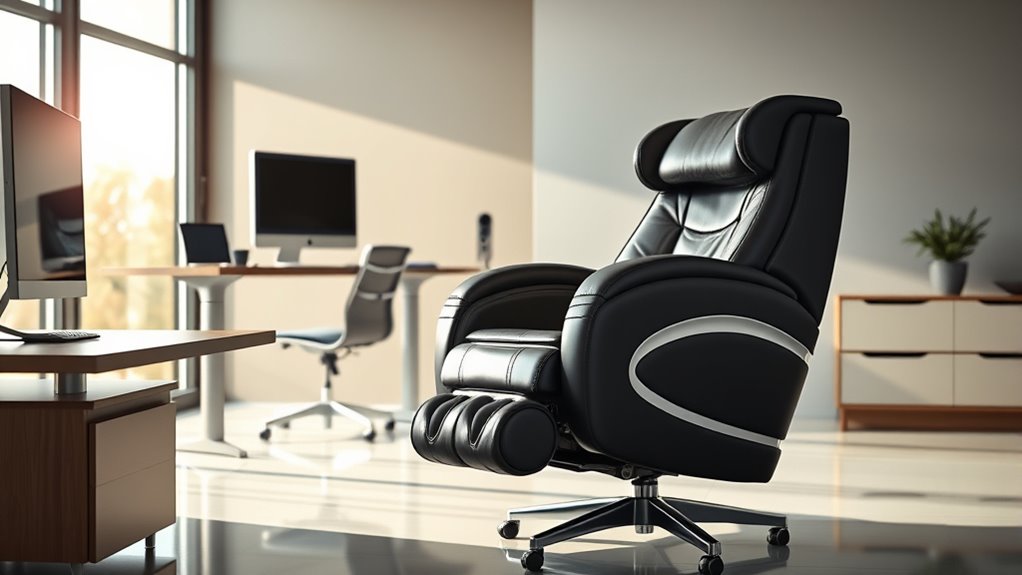
If you’re considering using a massage chair as your office chair, you’re likely looking for a way to combine relaxation with productivity. While it might seem unconventional, a massage chair can offer some unique advantages—especially when it comes to ergonomic benefits and aesthetic appeal. These chairs are designed to support your body in ways that traditional office chairs often can’t, promoting better posture and reducing strain on your back, neck, and shoulders. Many models come with adjustable features that allow you to customize the fit to your body, helping you maintain proper alignment even during long work sessions. This focus on ergonomics can decrease discomfort and fatigue, making it easier to stay focused and productive throughout the day. Additionally, integrating modern technology into your workspace can enhance your overall comfort and efficiency.
Beyond ergonomic benefits, a massage chair also boasts a modern, sleek aesthetic appeal that can elevate your workspace’s look. Unlike bulky traditional chairs, these chairs often feature minimalist designs with clean lines and high-quality materials, giving your office a contemporary, stylish vibe. If aesthetic appeal matters to you, a massage chair can serve as both a functional piece and a statement of sophistication. Its futuristic appearance can transform your office into a space that feels more inviting and innovative. Plus, since many massage chairs come in neutral colors like black, gray, or beige, they blend seamlessly into various decor styles, adding to the overall visual appeal.
A massage chair’s sleek, modern design and neutral colors enhance your workspace’s stylish and inviting atmosphere.
However, there are some considerations you should keep in mind. While the ergonomic benefits are significant, a massage chair may not provide the same level of support as a traditional ergonomic office chair with adjustable lumbar support and mobility. Sitting in a fixed position for extended periods can sometimes lead to stiffness or discomfort if the chair isn’t perfectly suited to your body. Additionally, the aesthetic appeal is subjective—what looks modern and stylish to one person might feel out of place in a more traditional office setting.
Furthermore, massage chairs tend to be larger and more expensive than standard office chairs, which could impact your workspace layout and budget. They also might not offer the same mobility and flexibility needed for tasks requiring frequent movement or collaboration. While a massage chair can enhance your workspace’s look and promote better posture, it’s essential to weigh these benefits against potential drawbacks like size, cost, and support levels. Ultimately, if you prioritize comfort, style, and ergonomic support in your home or personal office, a massage chair could be a worthwhile investment—just make sure it aligns with your specific needs and workspace demands.
Frequently Asked Questions
Can a Massage Chair Replace Ergonomic Office Furniture Effectively?
A massage chair can’t effectively replace ergonomic office furniture because it leans more toward luxury versus practicality. While it offers relaxation benefits, it doesn’t provide the necessary support for long work hours like an ergonomic chair does. The cost versus benefit favors traditional office furniture for daily use, as massage chairs are expensive and better suited for short-term comfort rather than sustained productivity and posture support.
How Does Using a Massage Chair Impact Long-Term Posture?
Using a massage chair can positively impact your long-term posture by promoting muscle relaxation, which helps reduce tension and strain. It encourages posture correction by easing tight muscles that often lead to poor alignment. However, relying solely on a massage chair isn’t enough; you should combine it with ergonomic practices and regular movement. This way, you support better posture over time, preventing discomfort and potential musculoskeletal issues.
Are There Safety Precautions for Extended Massage Chair Use During Work Hours?
Think of your body as a delicate garden needing careful tending. To guarantee ergonomic safety, limit massage chair use during work hours and take regular breaks. Avoid prolonged sessions that could cause strain or numbness, and listen to your body’s signals. Prioritize health considerations by adjusting settings for comfort and consulting ergonomic guidelines. This way, you protect your well-being while enjoying the relaxing benefits without risking overstress or injury.
What Maintenance Is Required to Keep a Massage Chair Functional as an Office Chair?
To keep your massage chair functional as an office chair, you should follow a regular cleaning schedule, wiping down surfaces and upholstery to prevent dust buildup. Additionally, perform mechanical inspections monthly to check for loose parts, worn-out components, or electrical issues. Lubricate moving parts as needed and keep the area around the chair clean to guarantee smooth operation. Proper maintenance extends the life of your chair and keeps it safe and comfortable to use.
Is It Acceptable to Use a Massage Chair in a Shared Office Space?
Using a massage chair in a shared office space isn’t ideal because it can raise privacy concerns and cause noise disruptions. Your coworkers might find the noise distracting, and the massage functions could invade their privacy or disturb their work. If you want to use it, consider designated quiet zones or private areas, and be mindful of your surroundings to prevent interruptions and maintain a respectful workspace.
Conclusion
While a massage chair offers unmatched relaxation and comfort, it can’t substitute the support and practicality of a proper office chair. Imagine feeling pampered during your breaks, yet struggling to maintain good posture during long hours. The luxury of a massage might soothe your muscles temporarily, but neglecting ergonomic support can lead to lasting discomfort. Ultimately, balancing indulgence with functionality ensures your workspace remains both enjoyable and healthy.