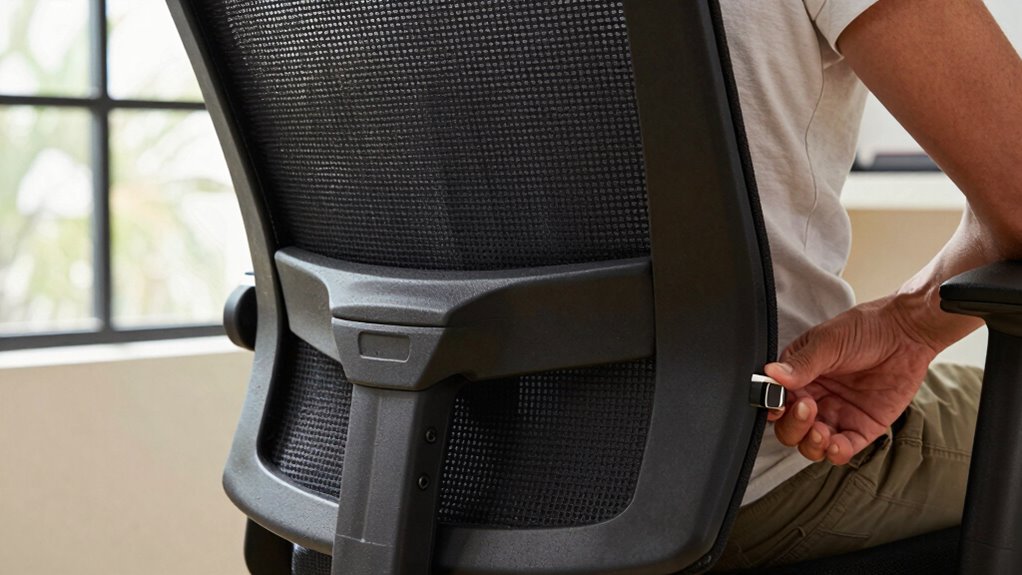

To fine-tune your chair for lower back stiffness, first make sure your feet rest flat on the floor or a footrest, and your knees are at a 90° angle. Adjust the lumbar support or add a cushion to support your natural spine curve, and keep a slight gap between your knees and seat front. Set armrests to relax your shoulders and maintain proper posture. For more detailed tips on relieving stiffness, keep exploring these simple adjustments.

Get wellness gear delivered free with Prime
- Fast, free delivery on millions of items
- Prime Video, Amazon Music and more included
- Member-only deals all year
Key Takeaways
- Adjust lumbar support to fit the natural curve of your lower back for optimal comfort.
- Ensure the chair height allows feet flat on the floor and knees at 90° to reduce lower back strain.
- Use a cushion or seat pad to improve seat depth and prevent pressure on the lower back area.
- Keep armrests at elbow height to maintain relaxed shoulders and reduce upper back tension.
- Take regular breaks to stretch and reposition to alleviate stiffness and promote circulation.
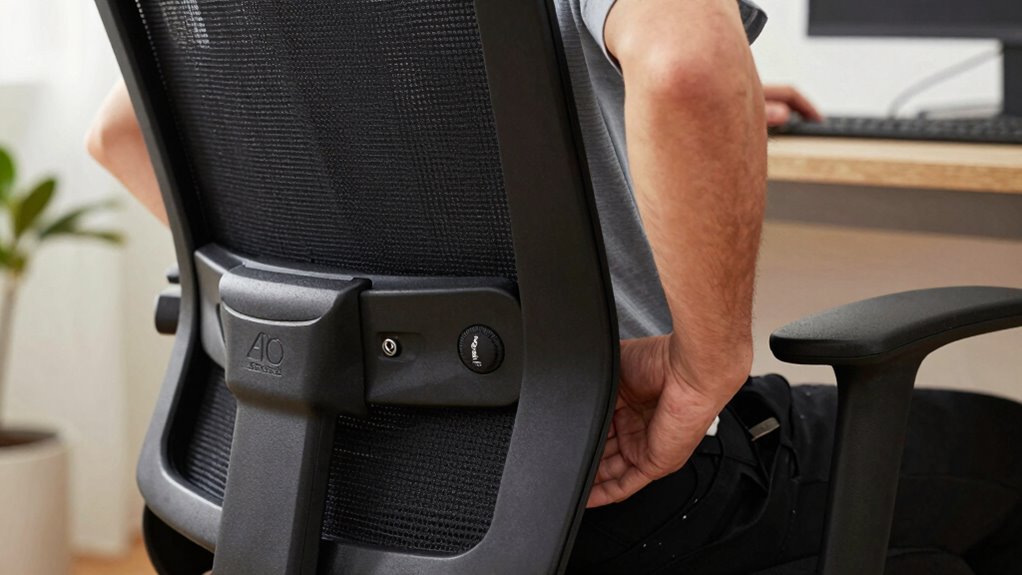
After long hours at your desk, lower back stiffness can become a persistent problem, but adjusting your chair properly can make a significant difference. The key lies in making ergonomic modifications that support your lower back and reduce strain. Start by examining your chair’s height. When seated, your feet should rest flat on the floor, with your knees bent at about a 90-degree angle. If your feet aren’t touching the ground, use a footrest. Proper height ensures your pelvis stays in a neutral position, preventing undue pressure on your lower back.
Next, focus on the lumbar support. Many chairs come with adjustable lumbar support, or you might need to add a cushion support if yours doesn’t. Placing a small, firm cushion or lumbar roll behind your lower back helps maintain the natural curve of your spine. This support prevents you from slouching forward, which exacerbates stiffness and discomfort. When adjusting the lumbar support, make sure it contours comfortably to your lower back, providing consistent pressure without causing pain. Incorporating ergonomic principles into your chair adjustments can further enhance comfort and reduce strain. Being mindful of proper sitting posture can also help prevent discomfort and promote better spinal health. Additionally, regularly checking and adjusting your chair setup throughout the day can help maintain optimal support and prevent recurring stiffness.
The seat depth is another essential aspect. Adjust the seat so that there’s about a two to three-inch gap between the back of your knees and the front edge of the seat. This spacing avoids unnecessary pressure behind your knees and promotes better circulation. If your chair doesn’t have adjustable depth, consider adding a seat cushion to elevate your position slightly, ensuring your hips are higher than your knees. Additionally, ensuring your seat height is correctly adjusted helps distribute your weight evenly and minimizes lower back pressure.
Adjusting the armrests can also relieve tension in your shoulders and upper back, indirectly benefiting your lower back. Set the armrests so your shoulders are relaxed, and your elbows rest comfortably at a 90-degree angle. Proper arm support reduces the tendency to lean or twist your torso, which can contribute to lower back stiffness. When armrests are well-positioned, they also help promote a more neutral sitting position, reducing strain on your back muscles.
Finally, don’t forget to check your sitting posture regularly. Keep your back straight and shoulders relaxed, and avoid leaning forward or slouching. Incorporate ergonomic accessories like lumbar cushions or footrests to enhance comfort. Take short breaks every 30 minutes to stretch and change positions. Combining ergonomic modifications with cushion support and mindful habits can dramatically reduce lower back stiffness, making your workday more comfortable and less painful.
ergonomic lumbar support cushion
As an affiliate, we earn on qualifying purchases.
As an affiliate, we earn on qualifying purchases.
Frequently Asked Questions
How Often Should I Adjust My Chair During Work Hours?
You should adjust your chair as often as needed, ideally every 30 to 60 minutes, to maintain good posture awareness. Regular tweaks help prevent lower back stiffness, especially if you use ergonomic accessories like lumbar supports or footrests. Stay mindful of your body’s signals; if you feel discomfort or stiffness, make small adjustments to your seat height, backrest, or armrests to keep your posture aligned and comfortable throughout your workday.
Can Specific Chair Adjustments Prevent Lower Back Stiffness?
Sure, specific chair adjustments can prevent lower back stiffness—if you enjoy feeling like a medieval princess with perfect posture. By customizing your ergonomic posture and properly aligning lumbar support, you’ll keep your spine happy and reduce stiffness. Adjust the height, tilt, and lumbar support to fit your body, making your chair a throne of comfort rather than a torture device. Say goodbye to back pain and hello to productivity!
What Is the Ideal Lumbar Support Height for Comfort?
The ideal lumbar support height is when the support aligns with the natural curve of your lower back, typically at or just above your belt line. Adjust the support positioning so it fills the hollow of your lower back without pressing too hard. You want it to provide consistent support, encouraging good posture and reducing stiffness. Experiment with different lumbar height settings until you find the most comfortable support positioning for your body.
Are There Recommended Exercises to Complement Chair Adjustments?
Think of your body as a machine that needs regular tune-ups. You should do stretching routines like hip flexor stretches, spinal twists, and gentle backbends to complement your ergonomic posture. These exercises help loosen tight muscles, improve circulation, and reduce stiffness. Incorporate them into your daily routine, especially after long desk hours, to keep your lower back flexible and comfortable, preventing stiffness from taking root.
How Do I Know if My Chair Is Properly Tuned?
You’ll know your chair is properly tuned when your posture feels natural, and you don’t experience discomfort or stiffness. Use ergonomic accessories like lumbar supports or adjustable armrests to enhance support. Keep posture awareness in check by regularly checking that your feet are flat on the ground, your back is supported, and your shoulders are relaxed. Adjust your chair until these cues feel comfortable, promoting good alignment and reducing lower back stiffness.
adjustable footrest for desk chair
As an affiliate, we earn on qualifying purchases.
As an affiliate, we earn on qualifying purchases.
Conclusion
Remember, a well-tuned chair can be your best friend after long hours at the desk. Take the time to adjust your lumbar support, seat height, and backrest angle to suit your comfort. Don’t forget, “A stitch in time saves nine”—addressing your chair’s settings now can prevent bigger back issues later. Keep tweaking until you feel the relief, and your back will thank you for it!
As an affiliate, we earn on qualifying purchases.
As an affiliate, we earn on qualifying purchases.
Fall Picks
fall essentials
As an affiliate, we earn on qualifying purchases.