
To find a good chair for tight hips, look for adjustable features like seat height, tilt, and lumbar support to customize your fit. Make sure the seat has enough depth to support your thighs comfortably without pressure behind the knees. Firm padding and proper support help reduce strain and improve posture. Taking the time to test and tweak your chair ensures long-term comfort. Keep exploring to discover even more tips for easing hip tightness effectively.

Get wellness gear delivered free with Prime
- Fast, free delivery on millions of items
- Prime Video, Amazon Music and more included
- Member-only deals all year
Key Takeaways
- An adjustable seat height and depth to accommodate individual hip flexibility and prevent pressure on the thighs.
- Proper lumbar support to maintain natural spinal curves and reduce hip tension.
- Firm, supportive padding that cushions hips without causing sinking or restriction.
- Ergonomic adjustments that promote correct posture and reduce strain on hips and lower back.
- The chair should be tested and fine-tuned for comfort, ensuring long-term support for tight hips.
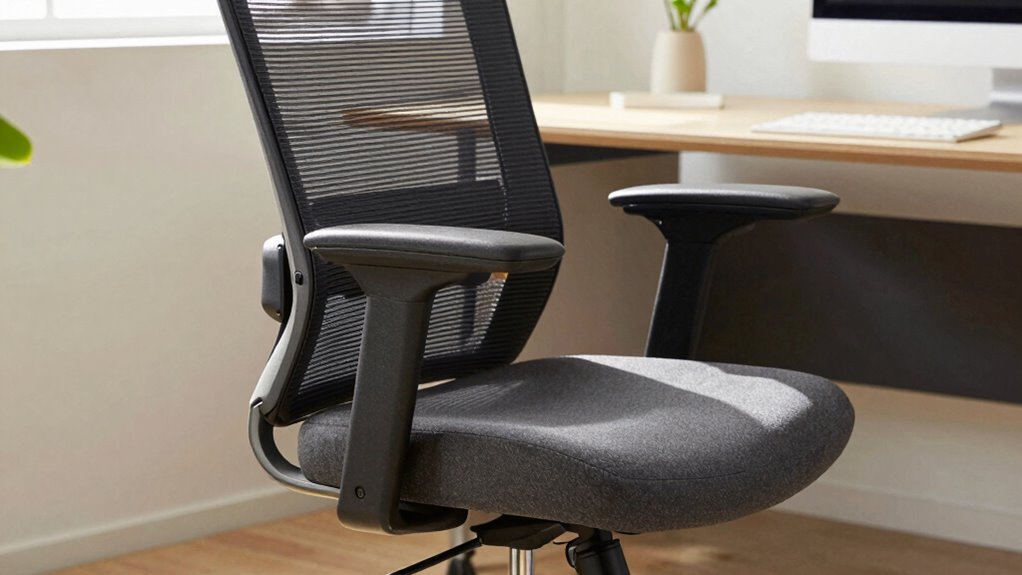
Have you ever felt discomfort or stiffness after sitting at your desk for hours? If so, you’re not alone. Many desk workers with tight hips struggle to find a chair that offers the right support and comfort. The key lies in choosing a chair that allows for proper ergonomic adjustments and provides adequate lumbar support. When your hips feel tight, sitting can become painful or uncomfortable, but selecting the right chair can make a significant difference.
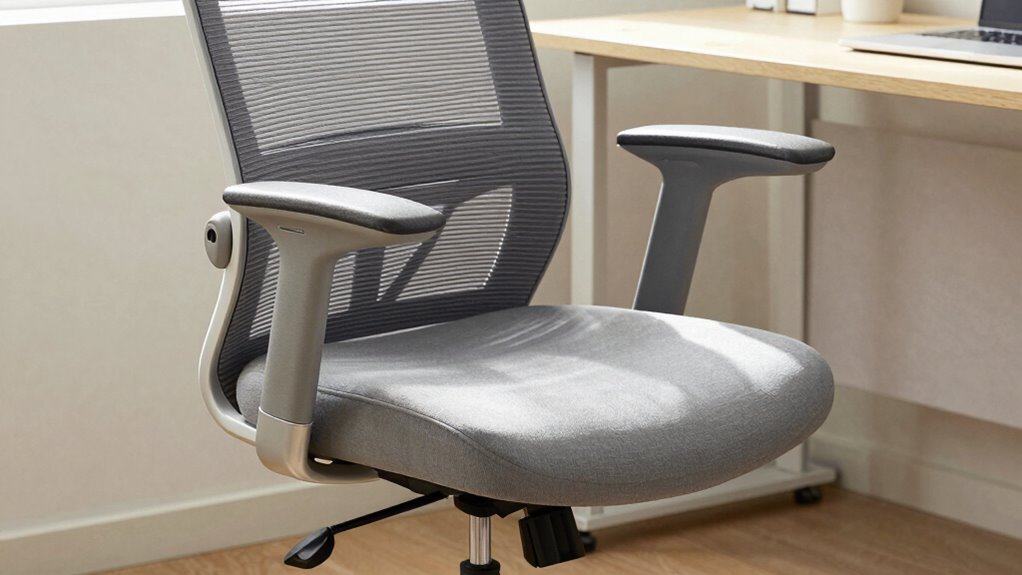
A good chair for you should have adjustable features that let you customize your sitting position. Look for chairs with adjustable seat height, tilt, and backrest angle. These options allow you to fine-tune the chair to match your body’s needs, reducing unnecessary strain on your hips and lower back. Proper ergonomic adjustments ensure your hips are in a comfortable, natural position, preventing tightness from worsening over time. When you can adjust the seat height, for example, you can keep your feet flat on the ground and knees at a 90-degree angle, which minimizes hip stress. Incorporating ergonomic principles into your chair selection can further enhance your comfort and support.
Lumbar support is vital, especially for tight hips, because it helps maintain the natural curve of your lower spine. When the lumbar support is adjustable, you can position it precisely where your lower back needs it most, promoting better spinal alignment. This support reduces the pressure and tension transferred to your hips, easing discomfort. Some chairs come with built-in lumbar support, while others have removable or adjustable pads, giving you flexibility to find what works best for your body.
Beyond just lumbar support and adjustability, consider the seat’s depth and padding. A seat that’s too deep can put pressure on the back of your thighs, aggravating hip tightness. A chair with a seat depth that allows you to sit comfortably with a couple of inches of space behind your knees is ideal. The padding should be firm yet cushioned enough to support your hips without sinking too much. This balance helps prevent additional strain and fatigue.
Lastly, take your time to test the chair before settling on it. Sit in it for a few minutes, adjusting the settings as you go. Pay attention to how your hips and lower back feel. If you notice any discomfort or stiffness, keep tweaking the ergonomic adjustments until you find the most comfortable position. Remember, a well-fitting chair isn’t just about comfort; it’s about supporting your body in a way that promotes good posture and reduces tightness over the long haul.
ergonomic desk chair with adjustable lumbar support
As an affiliate, we earn on qualifying purchases.
As an affiliate, we earn on qualifying purchases.
Frequently Asked Questions
How Often Should I Adjust My Chair During Work Hours?
You should adjust your chair regularly, about every 30 to 60 minutes, to stay comfortable and maintain good posture. Check your chair height to keep your feet flat on the floor and guarantee your knees are at a 90-degree angle. Don’t forget to adjust the lumbar support so your lower back stays supported, especially if you feel tight hips. Frequent adjustments prevent strain and help keep you comfortable throughout your workday.
Are Ergonomic Cushions Beneficial for Tight Hips?
Ergonomic cushions can be beneficial for tight hips. They enhance ergonomic design by providing targeted support and relieving pressure points. The right cushion firmness guarantees comfort without sacrificing support, helping you maintain proper posture. By promoting better blood flow and reducing discomfort, these cushions make long hours at your desk more manageable. So, yes—investing in an ergonomic cushion can truly transform your sitting experience and soothe tight hips effectively.
What Specific Chair Features Help Improve Hip Mobility?
To improve hip mobility, look for chairs with adjustable seat depth and a flexible, ergonomic design that promotes movement. Features like a swivel base, tilt tension, and lumbar support help maintain proper posture while encouraging hip flexibility. You want chair ergonomics that allow you to change positions easily, stretch, and avoid stiffness. This combination supports your hips’ natural movement and reduces strain during long desk hours.
Can Stretching Before Work Enhance Chair Comfort?
Yes, incorporating pre work stretches can enhance your chair comfort by improving hip flexibility. When you do targeted stretches before sitting at your desk, you loosen tight muscles, making it easier to sit comfortably for longer periods. This improved flexibility reduces strain and discomfort, allowing you to maintain better posture. Consistently practicing pre work stretches helps your hips move more freely, ultimately making your chair feel more supportive and less restrictive throughout the day.
How Do I Know if My Chair Is Causing Hip Pain?
You’ll know your chair causes hip pain if your hip alignment feels misaligned or uncomfortable after sitting. Pay attention to persistent tightness or aching in your hips, especially if it worsens over time. Make sure your chair provides proper lumbar support, which can help maintain correct posture and reduce strain. If discomfort persists despite adjustments, it’s a sign your chair might not be the right fit, and you should consider alternatives.
office chair with adjustable seat height and depth
As an affiliate, we earn on qualifying purchases.
As an affiliate, we earn on qualifying purchases.
Conclusion
Choosing the right chair is like planting a sturdy tree—you want roots that support your growth and branches that lift you higher. For desk workers with tight hips, a good chair acts as a bridge, guiding you over the chasm of discomfort toward a healthier, more comfortable day. Remember, the right fit isn’t just about comfort; it’s about building a foundation that nurtures your well-being, helping you stand tall through every task.
supportive ergonomic office chair for tight hips
As an affiliate, we earn on qualifying purchases.
As an affiliate, we earn on qualifying purchases.
mesh ergonomic chair with tilt and backrest adjustment
As an affiliate, we earn on qualifying purchases.
As an affiliate, we earn on qualifying purchases.
Halloween Picks
halloween
As an affiliate, we earn on qualifying purchases.