
Choosing between leather and faux leather for upholstery matters because each impacts your environment, budget, and lifestyle differently. Leather offers durability and an elegant look but raises sustainability concerns, while faux leather is more affordable and hypoallergenic, though it may not last as long and has environmental costs from plastic production. Your decision depends on your priorities for longevity, allergies, and eco-friendliness. Keep going to discover how these factors can help you pick the right material for you.
Key Takeaways
- Material choice impacts environmental sustainability, with genuine leather having a higher ecological footprint than faux leather’s plastic-based production.
- Faux leather is hypoallergenic and easier to clean, making it suitable for sensitive individuals and low-maintenance needs.
- Genuine leather offers superior durability, aging well and developing a desirable patina over time, while faux leather may crack or peel.
- Cost varies significantly, with faux leather being more affordable but potentially less long-lasting than genuine leather.
- Both materials influence style and longevity; considering lifestyle, allergies, and environmental values helps determine the best option.
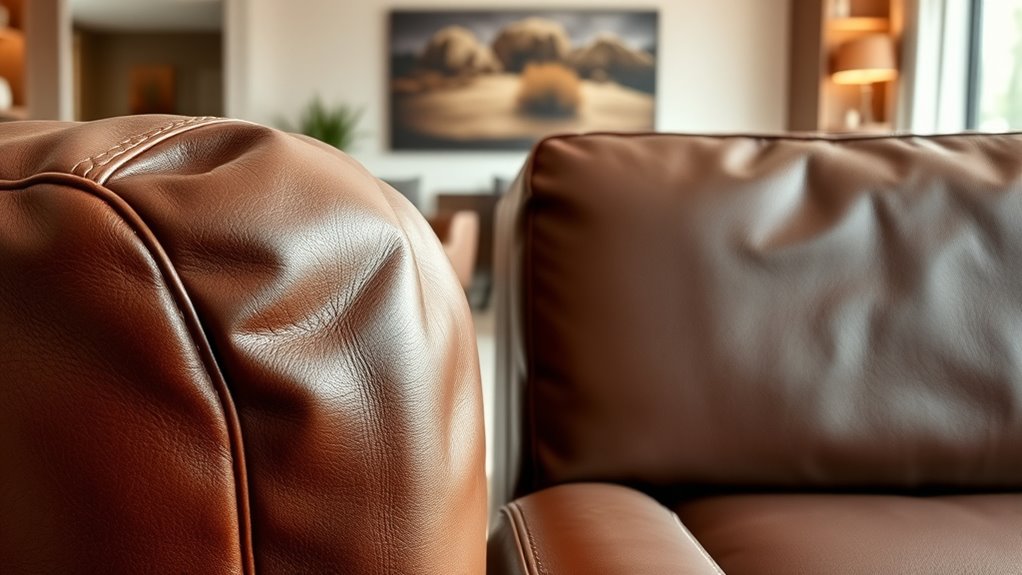
When choosing between leather and faux leather, understanding their differences is essential to making an informed decision. You need to factor in not just appearance and price but also factors like sustainability concerns and allergy considerations. Genuine leather is a natural material made from animal hides, which means its production involves raising livestock and processing hides into durable upholstery. This process raises sustainability concerns because it contributes to environmental issues such as deforestation, water consumption, and greenhouse gas emissions. If reducing your ecological footprint matters to you, faux leather might seem appealing since it’s typically made from synthetic materials like polyurethane or PVC, which don’t require animal farming. However, it’s worth noting that many faux leathers are derived from plastics, which pose their own environmental challenges, especially in terms of non-biodegradability and chemical pollution.
Beyond environmental impacts, allergy considerations come into play. Some people are sensitive or allergic to natural leather, often reacting to the chemicals used in tanning or the natural oils in animal hides. Faux leather, being synthetic, tends to be hypoallergenic for many individuals, especially those with sensitivities to animal products. But, it’s not entirely risk-free—some synthetic materials can trap dust, pet dander, or mold, potentially aggravating allergies. If you have known sensitivities, it’s wise to test both options or look for hypoallergenic versions.
Leather’s natural origin gives it certain advantages. It tends to be more breathable, which helps regulate temperature and prevents sweating or discomfort during extended use. Its durability is well-known; with proper care, leather furniture often ages gracefully, developing a rich patina that many find attractive. Faux leather has improved considerably over the years, offering a close visual resemblance to real leather at a lower cost. It’s generally easier to clean—just wipe with a damp cloth—making it practical for households with children or pets. However, faux leather can be prone to cracking or peeling over time, especially if exposed to sunlight or extreme temperatures, which might influence your long-term satisfaction.
In the end, your choice hinges on what matters most to you—whether it’s environmental impact, allergy concerns, maintenance, or cost. Leather offers natural qualities and longevity but raises sustainability concerns. Faux leather provides affordability and hypoallergenic benefits but may not last as long and has its own environmental footprint. Weigh these factors carefully, and you’ll find the upholstery material that best suits your lifestyle and values.
Frequently Asked Questions
How Eco-Friendly Are Faux Leather Options Compared to Genuine Leather?
Faux leather is generally more eco-friendly than genuine leather because it involves less sustainable sourcing and has a lower environmental impact during production. You avoid the ethical concerns linked to animal agriculture and reduce emissions associated with raising livestock. While faux leather isn’t perfect and can contain plastics, it typically uses fewer resources overall. By choosing faux leather, you’re making a more environmentally conscious decision, especially if sustainability is a priority for you.
Which Material Is Better for Allergy Sufferers?
Faux leather is generally better for allergy sufferers because it doesn’t harbor dust mites or allergens as easily as genuine leather. If you’re concerned about allergy prevention, choosing faux leather can help reduce material sensitivities and minimize irritation. It’s also easier to clean and maintain, which further limits allergen buildup. So, if you have allergies, faux leather is a practical choice for creating a healthier, allergen-free environment.
Can Faux Leather Be Repaired Like Real Leather?
Yes, faux leather can be repaired, but it’s different from real leather restoration. For faux leather repair, you typically use specialized repair kits that fill in scratches or tears and restore its appearance. However, these repairs aren’t as durable or seamless as real leather restoration, which often involves professional techniques like re-dyeing or reconditioning. So, while repairs are possible, they may not last as long or look as perfect as genuine leather fixes.
How Does the Weight of Faux Leather Compare to Genuine Leather?
Faux leather is generally lighter than genuine leather due to its lower material density. When comparing weight, faux leather often feels less bulky and easier to handle, making it ideal for versatile furniture and accessories. This weight difference influences durability and comfort, with faux leather prioritizing lightweight convenience while genuine leather offers a denser, more substantial feel. So, if you seek lightweight furniture, faux leather’s your best bet.
Are There Differences in Fire Safety Ratings Between the Two Materials?
Yes, there are differences in fire safety ratings between genuine leather and faux leather. Faux leather often meets specific upholstery standards that make it more fire-resistant, while genuine leather naturally withstands ignition due to its dense composition. When choosing furniture, you should check the fire safety ratings on the tags or product details to ensure it complies with local regulations and provides safe, fire-resistant upholstery.
Conclusion
Ultimately, choosing between leather and faux leather depends on your priorities, but the belief that faux leather can’t match genuine leather’s durability isn’t entirely true. Advances in manufacturing have blurred the lines, making high-quality faux leather surprisingly resilient and stylish. So, while genuine leather may still hold a slight edge in longevity, modern faux options can often meet your needs without sacrificing ethics or budget. It’s worth considering that the true value lies in how well the material aligns with your lifestyle and values.