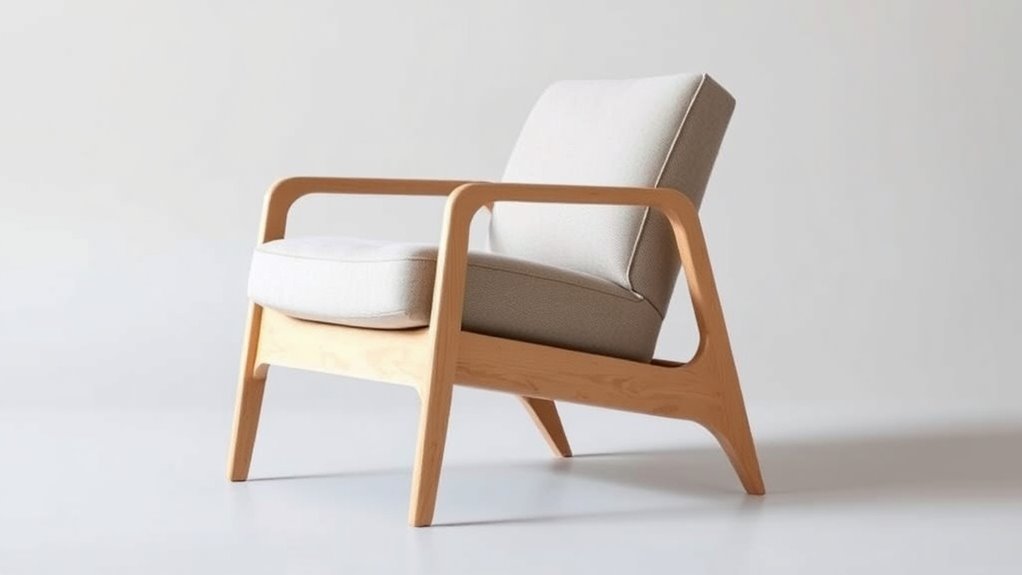

To make entry easier for people with limited mobility, choose chairs with a low, wide seat that offers stability and reduces the effort needed to sit or stand. Incorporate armrests, sturdy frames, and non-slip feet to boost safety and support. Use comfortable, supportive materials that are also easy to clean. Focusing on these design features helps improve independence and confidence—continue exploring to discover how to enhance chair safety and accessibility even further.
Key Takeaways
- Incorporate low, wide seats to facilitate easy sitting and standing transitions.
- Design with armrests and handles for additional support during entry and exit.
- Use non-slip surfaces and stable bases to prevent slipping during transfer.
- Ensure the chair height aligns with user needs for effortless sitting and standing.
- Opt for lightweight, durable materials to enable easy maneuverability and safety.

Have you ever struggled to sit comfortably in a chair due to limited mobility? If so, you’re not alone. Designing chairs that accommodate mobility challenges requires careful attention to stability considerations and material selection. These factors are essential in ensuring safety, comfort, and ease of use. When choosing or designing a chair for someone with limited mobility, stability should be your top priority. A stable chair prevents tipping or slipping, giving you confidence when sitting down or standing up. To achieve this, look for a broad, sturdy base that distributes weight evenly. Chairs with a low center of gravity are less likely to tip over, providing added security. Additionally, consider the shape of the base; a wider footprint enhances stability. Non-slip feet or rubber pads can also help keep the chair firmly in place on various surfaces. Stability considerations extend beyond the base; the overall structure should be durable and well-balanced. Reinforced frames made from sturdy materials help prevent wobbling or collapse, especially when transferring in or out of the chair. When it comes to material selection, you want options that combine strength with comfort. Metal frames, such as steel or aluminum, provide excellent durability and stability but should be paired with comfortable, supportive cushioning. Avoid lightweight or flimsy materials that compromise the chair’s integrity, increasing the risk of accidents. For the seat and backrest, choose materials that are firm yet comfortable, offering support without sacrificing softness. Foam padding covered in easy-to-clean fabric or vinyl is often ideal, especially for frequent use. If you’re designing a custom chair, consider using high-quality, impact-resistant plastics or reinforced composites that add durability without adding unnecessary weight. The choice of materials impacts not only stability but also ease of maintenance and longevity. Proper material selection also involves considering the environment where the chair will be used. For example, slip-resistant surfaces are indispensable in wet or slippery areas, while breathable fabrics enhance comfort during extended use. Additionally, selecting proper design features such as armrests and easy-to-grasp handles can further improve safety and independence for users. Ultimately, the goal is to create a chair that remains stable under various conditions and supports the user’s needs. Remember, a well-designed chair with appropriate stability features and carefully chosen materials can make all the difference in your daily life. It transforms the experience from one of struggle to one of independence and safety, making it easier to sit, stand, and move comfortably. By prioritizing stability considerations and thoughtful material selection, you can guarantee that the chair you choose or design truly serves its purpose—providing reliable support for those with limited mobility.
adjustable height mobility chair
As an affiliate, we earn on qualifying purchases.
As an affiliate, we earn on qualifying purchases.
Frequently Asked Questions
What Materials Are Best for Durable, Non-Slip Chair Surfaces?
For durable, non-slip chair surfaces, you should choose materials like textured rubber or vinyl, which provide excellent grip. Adding non-slip mats or applying anti-slip coatings enhances safety further by preventing slips. These materials are tough, easy to clean, and withstand daily wear. Using anti-slip coatings or placing non-slip mats on the seat guarantees stability, giving you confidence and safety whenever you sit down or get up.
How Do I Choose the Right Height for Ease of Transfer?
You should choose a chair with adjustable height to improve transfer ease. Opt for a height that allows your feet to rest flat on the ground and your knees to be level with or slightly higher than your hips. This positioning minimizes strain and makes transferring safer and more comfortable. Test different height adjustments to find what feels most stable and accessible, ensuring you can move smoothly in and out of the chair.
Are There Customizable Options for Specific Mobility Needs?
Yes, you can find chairs with customizable options to meet specific mobility needs. Look for models with adaptive features, such as adjustable armrests, footrests, and height settings, which help you transfer easily. Ergonomic adjustments allow you to personalize the chair for comfort and safety. These options guarantee you get the best support, making movement and transfers smoother and more comfortable tailored to your unique requirements.
What Maintenance Is Required for Specialized Mobility Chairs?
In the days of dial-up, keeping your specialized mobility chair in top shape is essential. You’ll need to follow cleaning protocols regularly to prevent dirt buildup and guarantee safe operation. Additionally, battery maintenance is critical—charge it overnight and check for corrosion. Don’t forget to inspect moving parts and lubricate hinges periodically. Proper upkeep helps your chair stay reliable, safe, and ready whenever you need it.
Can These Chairs Be Used Outdoors Safely?
Yes, you can safely use these chairs outdoors. To guarantee durability, look for outdoor weatherproofing features like sealed frames and rust-resistant materials. Applying slip-resistant coatings on the footrests and wheels helps prevent accidents on wet surfaces. Regular maintenance, such as cleaning and inspecting for damage, keeps the chair in good condition. With proper care and weatherproofing, your mobility chair remains safe and functional outside.
As an affiliate, we earn on qualifying purchases.
Conclusion
You step into a chair crafted with care, its arms inviting your grasp and its seat welcoming your weight. Every curve and cushion whispers comfort, easing your shift from standing to sitting. With thoughtful design, you feel the gentle support wrapping around you like a warm embrace, making mobility effortless. This chair isn’t just furniture; it’s a gateway to independence, turning everyday moments into ones of ease and dignity.
As an affiliate, we earn on qualifying purchases.
As an affiliate, we earn on qualifying purchases.