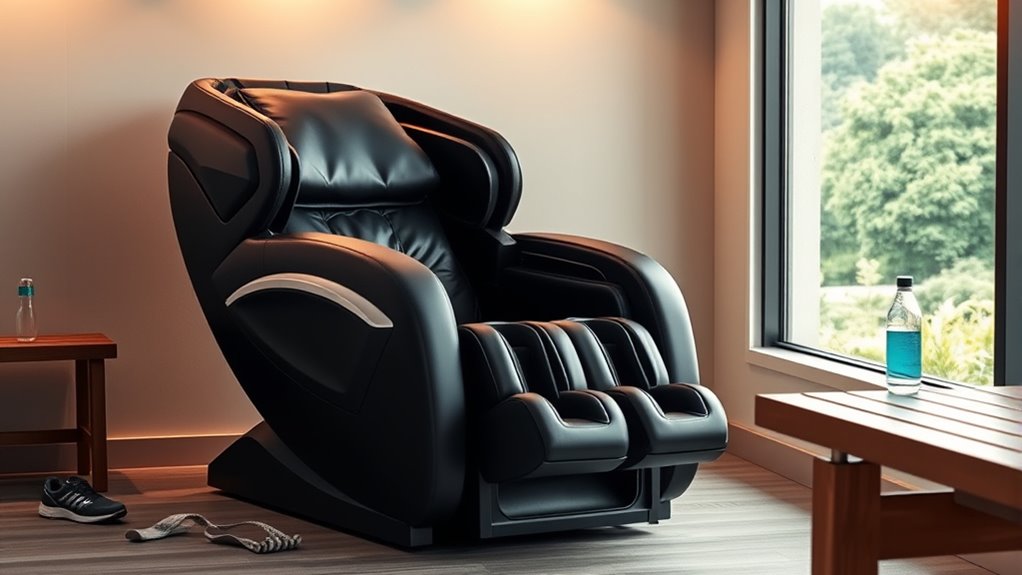

After exercising, spend about 10 to 15 minutes using your massage chair to target sore muscles. Focus on areas like your back, shoulders, calves, or thighs, and adjust the intensity for comfort. Techniques like kneading, tapping, and rolling help boost blood flow, reduce stiffness, and clear out metabolic waste. Keeping up with regular sessions makes recovery easier and keeps you motivated—continue exploring to discover how to get the most benefits from your massage chair.
Listen free for 30 days with Audible
Thousands of audiobooks and originals — cancel anytime.
As an affiliate, we earn on qualifying purchases.
Key Takeaways
- Use the massage chair for 10-15 minutes to effectively promote muscle relaxation and recovery.
- Target specific areas like calves, thighs, back, or shoulders for personalized relief.
- Adjust the intensity settings to match your comfort level and muscle needs.
- Incorporate techniques like kneading and tapping to boost blood flow and reduce soreness.
- Regular use after workouts supports faster muscle healing, decreases stiffness, and enhances overall well-being.

After a tough workout, your body needs proper recovery to rebuild muscles and prevent injury. One effective way to support this process is by using a massage chair, which offers targeted relief through various massage techniques. These techniques are designed to stimulate blood flow, reduce soreness, and promote muscle relaxation, helping your body recover faster and more efficiently. When you sit in a massage chair after exercise, you’re giving your muscles the attention they need to loosen up and heal, preventing stiffness and discomfort that can linger if ignored. Incorporating muscle recovery strategies can enhance the overall benefits of using a massage chair and support your fitness goals. Massage techniques employed by a quality massage chair can mimic the hands of a professional therapist, offering kneading, tapping, rolling, and compression. These movements work together to break up muscle tension and improve circulation. For example, kneading mimics the deep tissue massage, loosening tight knots and easing muscle tightness. Tapping stimulates nerve endings and encourages blood flow, while rolling techniques target larger muscle groups for overall relaxation. Compression massage gently squeezes muscles, helping to flush out metabolic waste products that build up during intense exercise. By combining these techniques, a massage chair provides all-encompassing muscle relaxation, which is essential after vigorous activity. Using a massage chair regularly after workouts helps to diminish delayed onset muscle soreness (DOMS), which can interfere with your training schedule if not addressed properly. The massage techniques improve lymphatic drainage, reducing swelling and promoting the removal of toxins accumulated during exercise. This not only speeds up recovery but also prepares your muscles for future workouts. As your muscles relax, you’ll notice a decrease in stiffness, making it easier to move freely and comfortably. Over time, consistent use can enhance your flexibility and overall muscle health, giving you a better foundation for your fitness goals. The best part is that a massage chair allows you to target specific areas that need extra attention, such as your calves, thighs, back, or shoulders. You can customize the intensity and focus, ensuring your muscles get the precise treatment they require. After exercise, taking just 10 to 15 minutes to sit in the chair can make a significant difference in how your body feels and recovers. It’s an efficient, convenient way to incorporate muscle relaxation into your routine, especially if professional massages aren’t always accessible. Plus, the soothing sensation can help reduce stress and improve your overall sense of well-being, making recovery a more enjoyable part of your fitness journey. In short, integrating massage techniques through a massage chair after your workouts optimizes muscle relaxation, accelerates recovery, and keeps you moving forward with less discomfort. It’s a smart, effective tool to help your body bounce back stronger each time you train.
massage chair for muscle recovery
As an affiliate, we earn on qualifying purchases.
As an affiliate, we earn on qualifying purchases.
Frequently Asked Questions
Can Massage Chairs Replace Professional Physical Therapy?
A massage chair can’t replace professional physical therapy because of its limitations, like not addressing specific injuries or complex conditions. While a massage chair offers benefits like muscle relaxation and improved circulation, it lacks the personalized treatment a physical therapist provides. You should see a professional for serious or ongoing issues, but for general recovery, a massage chair can be a helpful supplement to your routine.
How Long Should I Use a Massage Chair After Exercise?
They say “less is more,” and that’s true here. Use your massage chair for about 15-20 minutes after exercise, following duration guidelines for safe, effective recovery. The ideal timing is within 30 minutes post-workout, when muscles are warm and receptive. Stick to this routine to help relax muscles, reduce soreness, and promote circulation without overdoing it. Always listen to your body and adjust as needed.
Are There Any Risks Using a Massage Chair Post-Workout?
Using a massage chair post-workout can help reduce muscle soreness and improve circulation, but be cautious. If you have underlying health issues, such as blood clots or heart problems, it might pose risks. You should avoid intense massage if you’re feeling unwell or injured. Always listen to your body, start with gentle settings, and consult a healthcare professional if you’re unsure. This helps guarantee safe, effective recovery.
Is It Better to Use a Massage Chair Before or After Exercise?
Studies show that a proper warm-up can reduce injury risk by up to 50%. Using a massage chair after exercise enhances post-exercise relaxation by easing muscle tension and improving circulation. While a pre-exercise warm-up prepares your muscles, using a massage chair post-workout helps your body recover faster. So, it’s better to use the massage chair after exercise to maximize recovery and reduce soreness.
Can Massage Chairs Help Prevent Exercise-Related Injuries?
Yes, massage chairs can help prevent exercise-related injuries. By promoting muscle relaxation, they reduce tension that could lead to strains. Additionally, they enhance circulation, which helps deliver oxygen and nutrients to your muscles, speeding up recovery and reducing soreness. Regular use keeps muscles flexible and healthy, lowering injury risks. Incorporate a massage chair into your routine to maintain ideal muscle condition and support safe, effective workouts.
As an affiliate, we earn on qualifying purchases.
Conclusion
Remember, recovery is just as important as the workout itself. Using a massage chair helps soothe sore muscles, boost circulation, and speed up your progress. Think of it as watering a plant—you nurture it so it can grow stronger. So, next time you finish exercising, take a moment to unwind in your massage chair. Your body will thank you, and you’ll be ready to face your next challenge, stronger and more refreshed.
massage chair with kneading and tapping functions
As an affiliate, we earn on qualifying purchases.
As an affiliate, we earn on qualifying purchases.
targeted massage chair for sore muscles
As an affiliate, we earn on qualifying purchases.
As an affiliate, we earn on qualifying purchases.
Fall Picks
fall essentials
As an affiliate, we earn on qualifying purchases.