TL;DR

Get wellness gear delivered free — and shop member deals
- Fast, free delivery on millions of items
- Access to Prime Big Deal Days deals on October 6–7
- Prime Video, Amazon Music and more included
Fit&Well published a seven-exercise, 10-minute beginner Pilates flow from Sundrop Pilates instructor Hannah Lawrence. The routine uses controlled movements and stretches intended to support mobility; Lawrence advises moving slowly and stopping short of pain.
Fit&Well has published a 10-minute beginner Pilates flow from Sundrop Pilates instructor Hannah Lawrence, combining seven movements aimed at gently moving the back, hips and hamstrings. Lawrence advises readers to move slowly and treat each exercise as a stretch that does not cause pain; the source does not provide clinical evidence that the routine relieves stiffness or prevents joint problems.
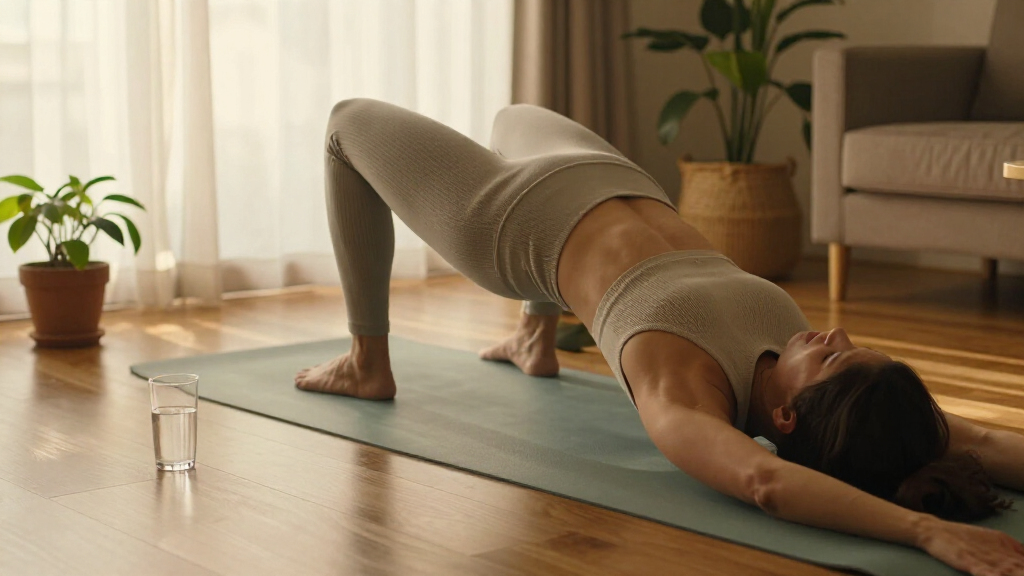
The sequence includes pelvic curls, cat-cow and mermaid side bends, followed by two seated or lying hamstring stretches, a standing Pilates roll down and supine knee rocks. Fit&Well lists repetitions or hold times for each move, generally ranging from a few repetitions to one minute per side. Together, the instructions describe a short routine that can be followed at home with a mat or floor space.
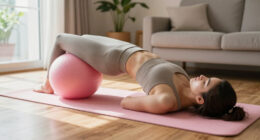
For the pelvic curl, participants lie on their backs with knees bent, lift the spine gradually as they exhale, then roll down. Cat-cow is performed on hands and knees, alternating between lifting the chest and rounding the back. The mermaid bend is done seated, reaching one arm overhead and leaning to the opposite side while keeping the buttocks on the floor.
The remaining exercises include a seated single-leg forward fold held for 30 to 60 seconds per side, a one-minute lying hamstring stretch per side, three to four standing roll downs and five knee rocks to each side. Fit&Well’s instructions say to bend the knees more during the roll down if the hamstrings are tight, and to keep the shoulders pressed into the mat during knee rocks.
A Short Routine for Daily Mobility
The routine offers readers a brief, structured sequence of movements focused on the spine, hips and backs of the legs. Its short duration and beginner framing may make it easier to fit into a daily movement break, although the supplied report does not establish how often it should be done or quantify any resulting change in mobility.
Lawrence says the exercises are intended to make positions such as sitting cross-legged and reaching toward the toes feel more comfortable and natural. That is an instructor’s stated aim, rather than a measured outcome reported in the article. Readers should distinguish this general mobility guidance from treatment for persistent or severe pain.
How the Seven Moves Fit Together
Fit&Well frames the flow around maintaining joint strength and mobility over time. The routine moves from a back-focused bridge and spinal flexion exercise to side bending, hamstring stretches and gentle rotation through knee rocks. It requires no equipment beyond a surface to lie or sit on, according to the exercise descriptions.
The source provides a sequence and basic form cues, but no study data, participant results or comparison with other exercise plans. It also does not specify a warm-up, a weekly schedule or modifications for particular health conditions. The guidance is therefore best understood as a general beginner workout outline.
Evidence and Individual Suitability
The supplied Fit&Well report does not cite research showing that this specific flow reduces back or hip stiffness, nor does it state how long or how regularly a person would need to do it to notice a change. It also does not explain whether the routine has been assessed for people with injuries, chronic pain or limited mobility.
Readers’ responses may differ, and the article’s general instructions cannot determine whether an exercise is suitable for an individual condition. Anyone who experiences pain during a movement should stop; persistent symptoms or concerns about exercise suitability merit advice from a qualified health professional.
Using the Flow With Care
Fit&Well presents the sequence as a beginner routine, with Lawrence’s advice to move slowly and avoid pain. Readers can follow the listed holds and repetitions, adjusting the roll down with more knee bend if their hamstrings are tight. The article does not set out a progression plan or say when to increase the duration or intensity.
For anyone trying the flow, the next practical step is to pay attention to comfort during and after each movement. The source offers no follow-up data on outcomes, so any claims about individual improvement would require further evidence.
Key Questions
What exercises are in the 10-minute Pilates flow?
The seven exercises are pelvic curls, cat-cow, mermaid side bends, a single-leg forward fold, a lying hamstring stretch, Pilates roll downs and supine knee rocks.
What does the instructor say about pain?
Hannah Lawrence advises moving slowly and keeping each movement within a comfortable stretch that does not cause pain. Stop if an exercise hurts.
Does the report prove the flow relieves back or hip stiffness?
No. Fit&Well presents the routine as a mobility-focused sequence, but the supplied report includes no study results or measured evidence that it relieves stiffness.
How long are the stretches held?
The seated forward fold is held for 30 to 60 seconds per side; the lying hamstring stretch is held for one minute per side. The mermaid side bend is listed at one minute per side.
Source: rss
Fall Picks
fall essentials
As an affiliate, we earn on qualifying purchases.