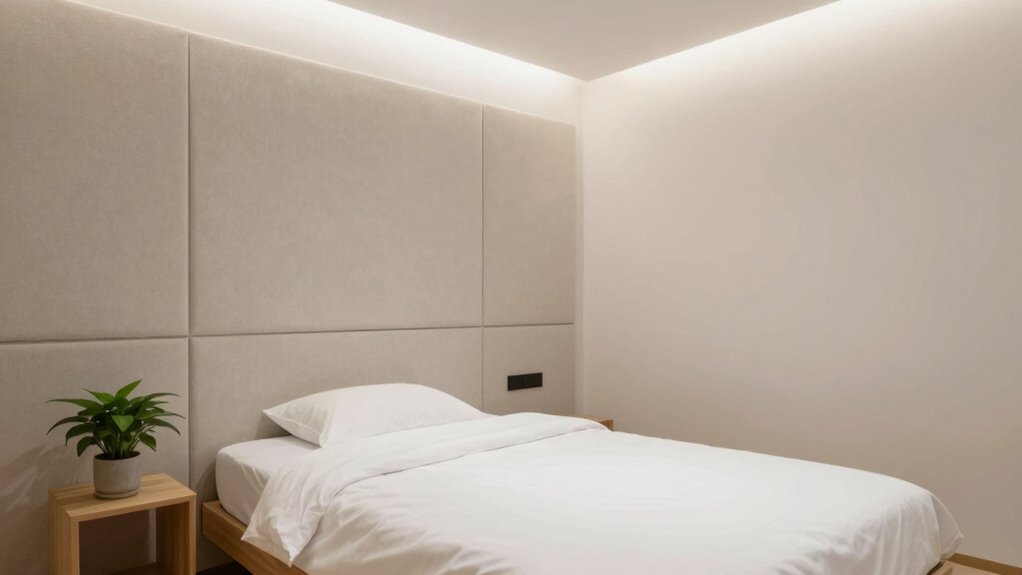

To reduce echo in your minimalist recovery room, incorporate sound-absorbing materials like acoustic panels, foam tiles, or thick curtains on walls and windows. Arrange furniture to break up sound waves, using upholstered pieces and rugs to absorb noise. Choose matte finishes and plush textures over reflective surfaces to minimize sound reflection. Make certain door and window gaps are sealed to keep outside noise out. Want to discover more ways to create a peaceful space? Keep exploring for tips.

Get wellness gear delivered free with Prime
- Fast, free delivery on millions of items
- Prime Video, Amazon Music and more included
- Member-only deals all year
Key Takeaways
- Install acoustic panels or foam tiles on walls to absorb sound reflections effectively.
- Use upholstered furniture, rugs, and heavy curtains to dampen echo and enhance comfort.
- Seal gaps around doors and windows with weatherstripping to prevent sound leakage.
- Choose matte finishes and plush textures to minimize reflective surfaces and diffuse sound.
- Arrange furniture to break up open spaces and create cozy, sound-absorbing zones.
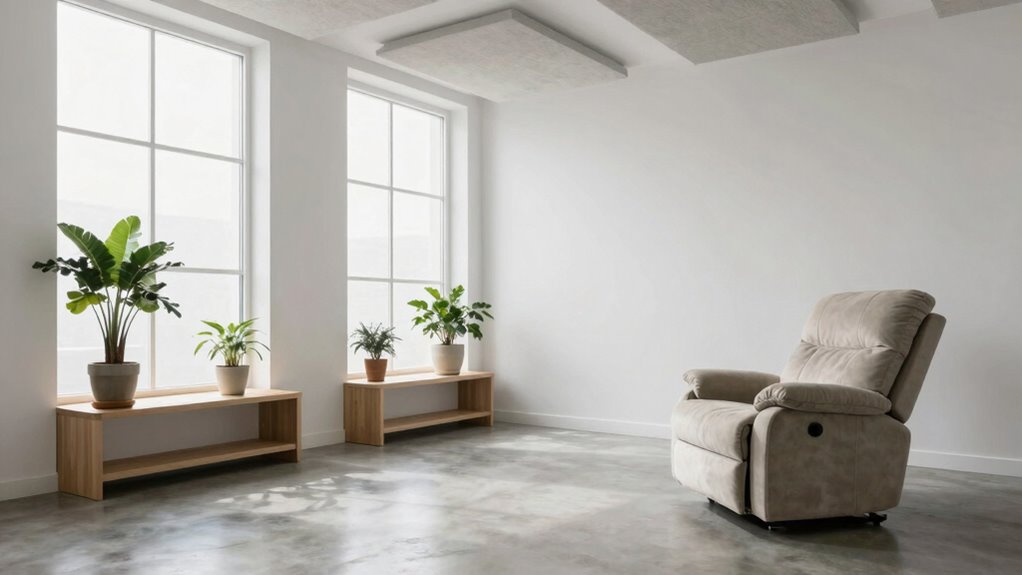
When designing a minimalist recovery room, reducing echo is essential for creating a calm and comfortable environment. Echoes can make the space feel harsh and unsettling, which isn’t ideal for recovery or relaxation. To minimize this, start with soundproofing materials that absorb sound rather than reflect it. You might consider installing acoustic panels or foam tiles on the walls, especially in areas where sound tends to bounce. These materials are effective at dampening reverberations and can be integrated seamlessly into a minimalist aesthetic, thanks to their simple, neutral designs. Thick curtains or fabric wall hangings can also serve as sound absorbers, adding texture without cluttering the space.
Reducing echo with soundproofing and textiles creates a calm, minimalist recovery space.
Furniture placement plays a crucial role in controlling echo. In a minimalist room, you want to avoid large, empty spaces that act like echo chambers. Instead, strategically placing furniture helps break up sound waves. For example, positioning a few well-chosen pieces—like a low-profile couch, side tables, or a bed—can absorb and diffuse sound, reducing echo. Keep larger objects away from the walls to prevent sound from bouncing back and forth. Instead, arrange furniture so it creates cozy zones, which naturally break up sound reflections. Soft furnishings and textiles not only add comfort but also help absorb sound, so opt for upholstered chairs, rugs, and bedding that complement the minimalist style. Incorporating soundproofing techniques further enhances the space’s acoustic comfort. Additionally, selecting furniture with sound-absorbing qualities can further improve the room’s overall sound environment. Using sound absorption principles in furniture and decor can significantly impact the room’s acoustics. Paying attention to room acoustics during the design process ensures a more effective and harmonious environment.
Lighting fixtures are another element to consider. Avoid overly reflective surfaces and opt for matte finishes on furniture and decor. This choice helps prevent unwanted sound reflections. Additionally, placing a rug with a plush texture on the floor can significantly cut down on echo, especially in rooms with hard flooring materials like wood or tile. Remember, in a minimalist design, less is more, so choose quality pieces that serve both aesthetic and acoustic functions. Incorporating acoustic-friendly lighting fixtures can subtly contribute to sound management by reducing reflective surfaces. Proper lighting choices not only enhance the ambiance but also support the room’s acoustic goals.
Finally, be mindful of doorways and windows. Seal gaps with weatherstripping or acoustic seals to prevent outside noise from entering and internal sound from escaping. If you have windows, consider adding simple, sound-absorbing window treatments. In a minimalist recovery room, every detail counts—by combining soundproofing materials, thoughtful furniture placement, and careful design choices, you’ll create a peaceful space that fosters healing and relaxation without the distraction of echo.
As an affiliate, we earn on qualifying purchases.
Frequently Asked Questions
Can Plants Help Absorb Sound in a Recovery Room?
Yes, plants can help absorb sound in a recovery room. Plant types like lush ferns, pothos, and snake plants are excellent for sound absorption because their leaves and structures break up sound waves. When you place these plants strategically, they soften echoes and improve acoustics. Not only do they enhance the room’s atmosphere, but they also contribute to a calmer, more comfortable environment for recovery.
Are Specific Colors Better for Reducing Echo?
Bright, light colors like soft blues and greens, aligned with color psychology, tend to reduce the perception of echo, making the space feel calmer. Darker shades can absorb sound better but might make the room feel smaller or more enclosed. To optimize sound absorption, combine these colors with acoustic panels, which are effective at controlling echo. This combination creates a soothing environment while minimizing sound reverberation.
How Does Room Shape Affect Sound Reflection?
Think of your room as a concert hall—its shape directly influences sound reflection. A rectangular space with parallel walls can create echo, while irregular shapes disperse sound waves. You should arrange furniture to break up sound paths and choose wall textures that absorb rather than bounce sound. By adjusting these elements, you control how sound travels, making the recovery room more soothing and echo-free for patients.
Is There an Ideal Ceiling Height for Minimal Echo?
The ideal ceiling height for minimal echo is around 8 to 10 feet. To enhance sound absorption, you should incorporate acoustic panels and ceiling insulation at this height. These materials help dampen sound reflections effectively, preventing echo buildup. If your ceiling is higher, adding more acoustic treatments or using textured surfaces can help control echo. Keep your design simple to maintain the minimalist aesthetic while optimizing acoustic performance.
Can Equipment Placement Influence Sound Quality?
Yes, equipment placement can influence sound quality. You should position noisy equipment away from walls and corners to minimize sound reflection. Use soundproof curtains and acoustic panels strategically around your recovery room to absorb echo and reduce noise transmission. Placing equipment thoughtfully guarantees sound waves don’t bounce excessively, creating a quieter environment. Combining proper placement with sound-absorbing materials helps maintain a calm, serene space ideal for recovery.
soundproof curtains for recovery room
As an affiliate, we earn on qualifying purchases.
As an affiliate, we earn on qualifying purchases.
Conclusion
By adding soft textures and gentle surfaces, you turn your recovery room into a cozy cocoon, whispering comfort instead of echo. Think of it as planting quiet gardens within your space, where sound softly blooms and fades. With these simple touches, your room becomes a sanctuary, a peaceful harbor from the storm of noise. Embrace these changes, and let the gentle hum of tranquility lull you into restful, restorative peace—your haven of calm awaits.
upholstered furniture for sound absorption
As an affiliate, we earn on qualifying purchases.
As an affiliate, we earn on qualifying purchases.
plush area rugs for sound dampening
As an affiliate, we earn on qualifying purchases.
As an affiliate, we earn on qualifying purchases.
Halloween Picks
halloween
As an affiliate, we earn on qualifying purchases.