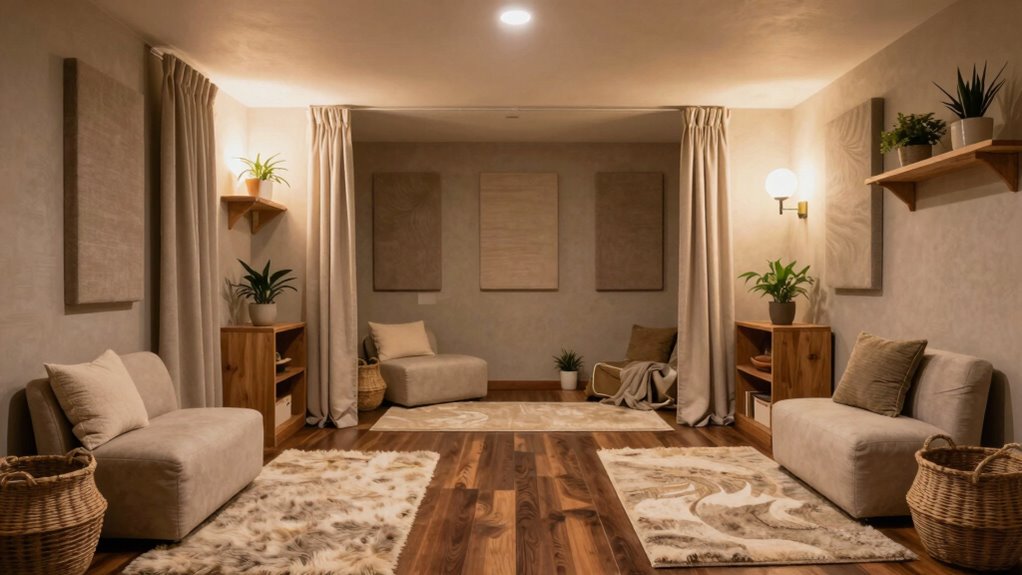

To make your basement wellness room less echoey, focus on adding soft furnishings like thick rugs, plush cushions, and hanging curtains to absorb sound. Strategically position acoustic panels on walls and ceilings, especially in reflection points, to break up sound waves. Sealing gaps around doors and windows with weatherstripping or caulk prevents sound leaks. Using sound-absorbing materials and optimizing room setup can substantially improve acoustics, creating a more peaceful space. Keep exploring to discover even more effective ways to enhance your room’s sound quality.
Open a free Amazon Business account
Business pricing, bulk buying and tax-exempt orders.
As an affiliate, we earn on qualifying purchases.
Key Takeaways
- Install acoustic panels on walls and ceilings to absorb sound reflections and reduce echo.
- Incorporate soft furnishings like rugs, cushions, and curtains to dampen sound waves.
- Seal gaps around doors, windows, and vents with weatherstripping or acoustic caulk to prevent sound leaks.
- Use soundproofing materials such as foam or bass traps for enhanced sound absorption.
- Follow acoustic design principles to balance sound absorption and reflection for a tranquil environment.
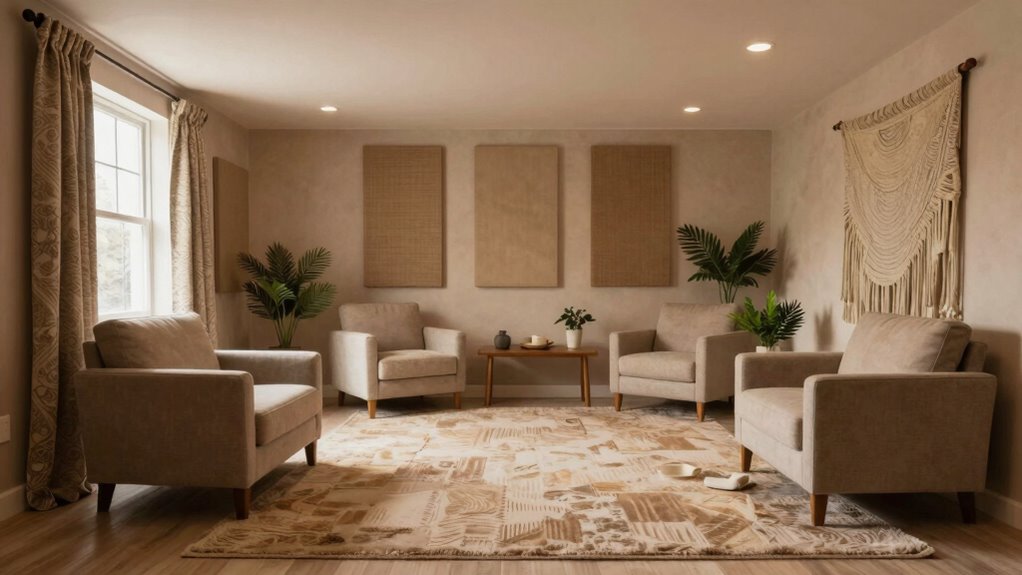
A basement wellness room can be be a peaceful retreat, but if it feels overly echoey, it can diminish that calming atmosphere. Echoes occur when sound waves bounce off hard surfaces like concrete walls and floors, creating a noisy, reflective environment. To make your space more tranquil, you need to address these reflections with effective soundproofing techniques. One of the most straightforward ways is to incorporate acoustic panel placement. By strategically positioning acoustic panels on walls and ceilings, you absorb excess sound waves, reducing echoes and creating a more serene environment.
Strategically place acoustic panels on walls and ceilings to absorb sound and reduce echoes in your basement wellness space.
When planning your acoustic panel placement, focus on areas where sound reflections are most prominent. Walls facing open spaces or directly opposite each other tend to bounce sound back and forth. Placing panels at these points helps break up the sound waves and prevents them from bouncing around endlessly. It’s also helpful to cover the ceiling, especially if it’s made of a reflective material like drywall or concrete. Ceiling-mounted panels or even hanging buffs can substantially cut down on echo.
Beyond acoustic panels, consider adding soft furnishings and textiles to your room. Thick rugs, plush cushions, and curtains help absorb sound and complement your acoustic treatment. These elements are particularly effective in a basement, where hard surfaces dominate. You want to create a balance where sound is absorbed rather than reflected, making your space feel cozy and peaceful. Incorporating sound-absorbing materials like foam or fabric can further enhance the effectiveness of your soundproofing efforts. Using soundproofing techniques such as bass traps and door seals can also improve overall sound quality and privacy.
Additionally, you can improve soundproofing by sealing gaps and cracks around doors, windows, and vents. Sound often leaks through small openings, so sealing these with weatherstripping or acoustic caulk can prevent external noise from entering and internal sound from escaping. Proper sealing not only reduces echo but also enhances the overall soundproofing of your room, creating a more tranquil environment. Employing appropriate soundproofing methods can make a significant difference in maintaining a quiet, relaxing space. To maximize effectiveness, consider consulting acoustic design principles to optimize your room setup. This step isn’t just about reducing echo but also about maintaining privacy and tranquility within your wellness room.
acoustic panels for basement walls
As an affiliate, we earn on qualifying purchases.
As an affiliate, we earn on qualifying purchases.
Frequently Asked Questions
How Can I Reduce Noise Transfer Between Rooms in My Basement?
To reduce noise transfer between your basement rooms, start by installing decorative wall panels, which absorb sound and add visual appeal. Pair them with acoustic ceiling tiles to further dampen sound waves from above. Seal any gaps or cracks with weatherstripping or acoustic sealant. These steps help contain noise, creating a quieter, more peaceful environment for your basement wellness space.
Are There Specific Materials Best for Sound Absorption?
You should choose materials like decorative wall panels and acoustic ceiling tiles for sound absorption. Decorative wall panels with sound-absorbing properties can break up sound waves and reduce echo, while acoustic ceiling tiles help absorb sound from above. Combining these materials creates a layered effect that minimizes reverberation, making your wellness room more comfortable. Opt for products specifically designed for sound absorption to achieve the best results.
How Does Room Size Affect Echo Reduction?
Think of your basement like a drum—smaller rooms can amplify echoes, while larger ones disperse sound better. To diminish echo, install acoustic panels on walls and ceiling, especially in tight corners. Use soundproof curtains over windows to further dampen noise. The bigger the room, the easier it is to manage sound, but strategic placement of acoustic panels and curtains ensures your wellness space stays calm and quiet, no matter the size.
Can Furniture Placement Improve Sound Quality?
Yes, furniture placement can improve sound quality in your basement wellness room. Positioning soft furnishings like sofas, chairs, and rugs helps absorb sound, reducing echoes. Incorporate decorative wall panels to add style and soundproofing, and use acoustic ceiling tiles to further dampen noise. By thoughtfully arranging furniture and adding these acoustic features, you create a more comfortable, less echoey space ideal for relaxation and wellness activities.
What Are Budget-Friendly Options for Soundproofing?
To soundproof your basement wellness room on a budget, consider adding decorative wall panels, which absorb sound and enhance aesthetics. Acoustic ceiling tiles are also effective and affordable, reducing echo and improving sound quality. You can also hang thick curtains or rugs to further dampen noise. These options are budget-friendly, easy to install, and make your space more comfortable without breaking the bank.
As an affiliate, we earn on qualifying purchases.
Conclusion
Creating a cozy basement wellness room is like tuning a musical instrument—you want every note to resonate just right. By adding soft furnishings, rugs, and acoustic panels, you’ll soften the echoes and make your space inviting. Think of your room as a gentle lake; when you sprinkle in some cushions and curtains, it silences the ripples, creating a peaceful oasis. With these touches, your wellness room transforms into a sanctuary that feels warm, calming, and perfectly tuned for relaxation.
As an affiliate, we earn on qualifying purchases.
As an affiliate, we earn on qualifying purchases.
NFL season / tailgating Picks
team gear
As an affiliate, we earn on qualifying purchases.