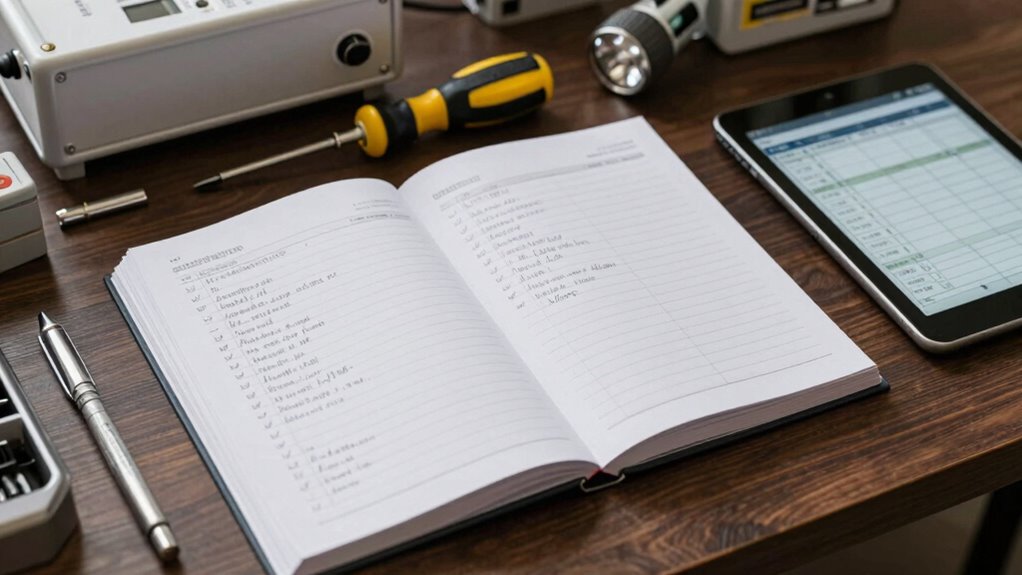

A good maintenance log for expensive recovery equipment is detailed, organized, and easy to update. It should include service dates, tasks performed, parts replaced, and the technician responsible. Clear entries help you track patterns, identify recurring issues, and plan preventive care. Consistent documentation maximizes equipment lifespan, minimizes downtime, and supports compliance. Keep your logs thorough; further insights will help you manage your equipment more effectively.
Key Takeaways
- Clearly documents date, technician, and specific tasks performed during each maintenance session.
- Includes detailed records of parts replaced, serial numbers, and warranty information.
- Organized chronologically with easy-to-reference entries for quick troubleshooting and review.
- Highlights recurring issues and patterns to support proactive maintenance planning.
- Ensures compliance with industry standards and provides evidence for warranty and insurance claims.

Have you ever wondered why keeping a detailed maintenance log is crucial for recovery equipment? It’s because this record isn’t just about tracking repairs; it’s an essential tool to extend the equipment’s lifespan and make smarter decisions about your investments. When you document every inspection, repair, and part replacement, you create a clear history that reveals how well the equipment performs over time. This history helps you identify recurring issues early, preventing small problems from escalating into major failures. As a result, you’re better able to plan maintenance proactively, which keeps the equipment running smoothly longer and maximizes its durability. That’s how a well-maintained log directly impacts the equipment’s longevity and overall value.
A good maintenance log should be precise and organized. It needs to include key details like the date of service, specific tasks performed, parts replaced, and the technician responsible. Not only does this help in tracking routine maintenance, but it also provides a quick reference if issues arise later. When you keep thorough records, it becomes easier to analyze the cost of repairs over time. This cost analysis lets you see patterns—perhaps certain parts wear out faster or specific components require frequent servicing. Armed with this information, you can make informed decisions about whether to repair, replace, or upgrade your recovery equipment. In turn, this minimizes unnecessary expenses and helps allocate your budget more effectively. Additionally, record-keeping plays a vital role in ensuring compliance with industry standards and regulations. Proper documentation practices can also assist in tracking the condition and performance of your equipment over its entire lifespan, which is essential for maintaining equipment reliability and operational integrity. Furthermore, maintaining detailed records supports preventive maintenance strategies that can significantly reduce costly downtime.
An extensive maintenance log also supports better planning. When you review the history, you can schedule preventive maintenance before a breakdown occurs, saving both time and money. Preventive care reduces unexpected downtime, which can be costly, especially with expensive recovery equipment. It also ensures consistent performance, giving you confidence that your equipment is always ready when needed. In addition, a detailed log serves as documentation for warranty claims or insurance purposes, providing proof of proper maintenance and care. Additionally, maintaining a comprehensive maintenance log can help you track the condition and performance of your equipment over its entire lifespan. Keeping accurate records is essential in demonstrating due diligence and proper care, which can be valuable in disputes or claims.
Ultimately, a good maintenance log is more than just a record; it’s a strategic tool that influences the overall cost analysis, equipment lifespan, and operational efficiency. By keeping accurate, detailed entries, you’re taking control of your recovery equipment’s future. You’ll avoid unnecessary expenses, extend the life of your investment, and ensure your recovery efforts are always supported by reliable, well-maintained machinery. It’s a simple practice that pays off in long-term savings and peace of mind, demonstrating that diligent record-keeping truly makes a difference.

LKTHSEEK Equipment Maintenance Log Book 8.5 x 11 Inch 110 Pages Maintenance Record Notebook Tracking Repairs and Service Spiral Bound For Equipment Inspection and Maintenance
- All-in-One Maintenance Log: Tracks equipment details and service records
- Scheduled Maintenance Fields: Records date, task, and costs
- Large Format and Pages: Provides ample space for detailed entries
As an affiliate, we earn on qualifying purchases.
As an affiliate, we earn on qualifying purchases.
Frequently Asked Questions
How Often Should Maintenance Logs Be Reviewed?
You should review maintenance logs regularly, ideally weekly or after each use, to make certain equipment calibration stays accurate and safety protocols are followed. Frequent reviews help catch issues early, prevent costly repairs, and maintain compliance. By actively monitoring logs, you stay aware of maintenance history and identify patterns that might indicate upcoming problems, keeping your recovery equipment reliable and safe for operation.
Who Is Responsible for Updating the Maintenance Log?
You’re responsible for updating the maintenance log, guaranteeing all records reflect recent equipment calibration and maintenance activities. Proper staff training helps you accurately document issues, repairs, and calibration dates. Regularly updating the log keeps everyone informed about the equipment’s condition and maintenance history. By taking ownership, you ensure the log remains thorough, supporting effective troubleshooting, compliance, and the longevity of your expensive recovery equipment.
What Details Are Essential in a Maintenance Record?
You should include key details like the date of service, specific maintenance performed, parts replaced, and technician notes. Record the equipment’s operational hours and any issues encountered to help track its lifespan. Keep track of costs associated with each maintenance to monitor expenses over time. This detailed record helps guarantee proper upkeep, extends equipment longevity, and supports accurate cost tracking for your expensive recovery equipment.
How Do You Ensure Accuracy in Maintenance Documentation?
You guarantee accuracy in maintenance documentation by double-checking entries and cross-referencing with equipment calibration records and safety protocols. Don’t overlook the importance of real-time updates; they prevent errors and keep records current. Visualize a well-maintained log that’s thorough and consistent, reducing downtime and ensuring safety. By staying vigilant and following standardized procedures, you create reliable records that support effective maintenance and safety compliance.
Can Digital Logs Replace Paper Records Effectively?
Digital logs can effectively replace paper records, especially when you utilize digital backups to prevent data loss. They offer easier access, better organization, and quick updates, making maintenance tracking more efficient. While paper records are tangible, digital logs streamline documentation and storage. To guarantee reliability, regularly back up your digital data and compare it with paper records periodically, maintaining accuracy and security in your maintenance history.
![MixPad Free Multitrack Recording Studio and Music Mixing Software [Download]](https://m.media-amazon.com/images/I/71ltIxIuz1L._SL500_.jpg)
MixPad Free Multitrack Recording Studio and Music Mixing Software [Download]
- Multitrack Recording and Mixing: Create mixes with audio, music, and voice tracks
- Track Customization: Apply effects and editing tools to tracks
- Music Creation Tools: Includes Beat Maker and MIDI Creator
As an affiliate, we earn on qualifying purchases.
As an affiliate, we earn on qualifying purchases.
Conclusion
A well-maintained log is like a trusted map guiding your recovery gear through daily adventures. It keeps your equipment ready, preventing surprises in critical moments. Think of it as your safety net, catching issues before they grow. When you keep detailed records, you’re painting a clear picture of your equipment’s health—like a gardener tending to each plant. With this, your recovery gear stays dependable, always ready to support you when you need it most.

Equipment Maintenance Log Book: Large Print Equipment Repair & Service Record Book | Track Maintenance, Inspections, Parts Replacement, Costs & Preventive Maintenance | 8.5 x 11 Inches
As an affiliate, we earn on qualifying purchases.
As an affiliate, we earn on qualifying purchases.

PREVENTIVE MAINTENANCE PLANNER: Equipment Service Scheduling Inspection and Maintenance Tracking (Industrial Maintenance/ Record Series)
As an affiliate, we earn on qualifying purchases.
As an affiliate, we earn on qualifying purchases.