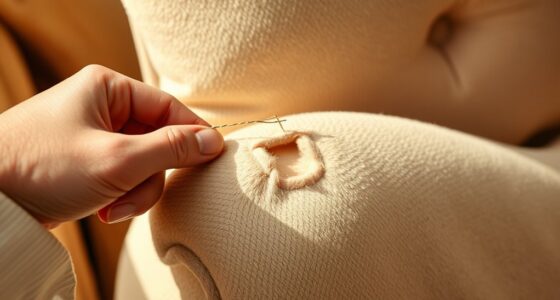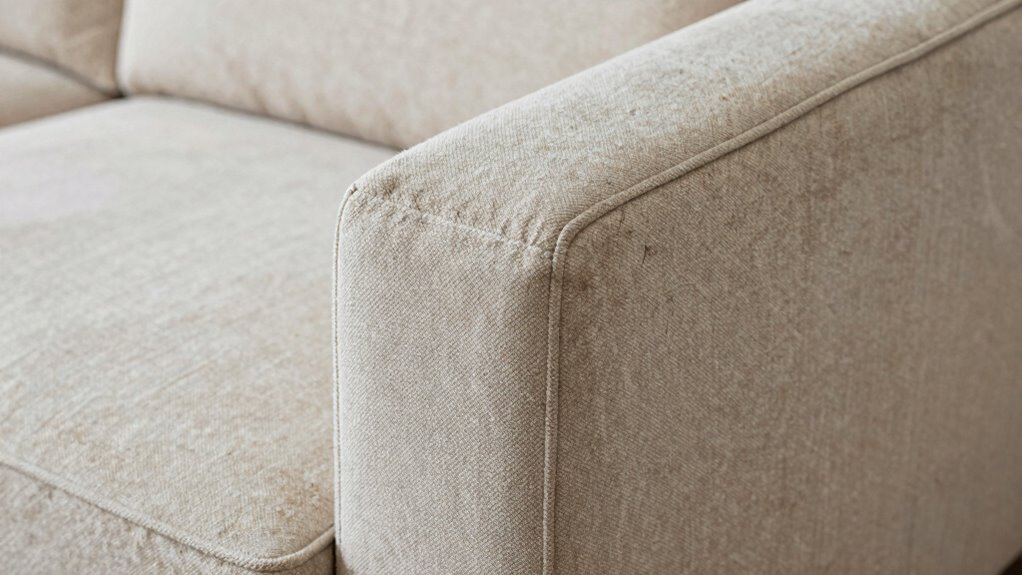

To spot early upholstery wear, look for signs like thinning fabric, frayed edges, and loose threads, especially in high-use areas. Check for fading or discoloration, which indicate fabric weakening, and inspect seams for small tears or fraying. Regularly vacuum and rotate cushions to prevent uneven wear. Catching these signs early helps you avoid peeling or unraveling, and if you keep exploring, you’ll learn how to maintain your furniture’s appearance and longevity effectively.
Key Takeaways
- Look for thinning fabric, fraying edges, or loose threads indicating weakening material.
- Check for early signs of pilling or fuzziness on high-use areas.
- Monitor fading or discoloration, especially in sun-exposed zones.
- Inspect seams and edges for small tears or unraveling.
- Address minor stains or spills promptly to prevent fabric deterioration.
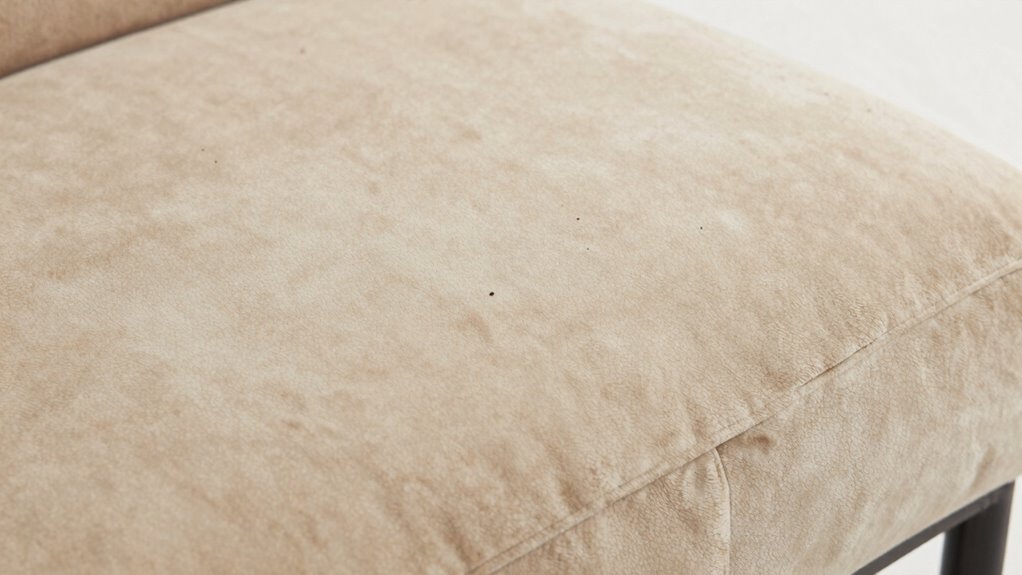
Upholstery may look fine at first glance, but catching early signs of wear can save you time and money in the long run. When you pay close attention to your furniture, you can prevent small issues from escalating into big, costly repairs. One of the key elements to watch for is fabric durability. Over time, even high-quality fabrics can show signs of stress, especially in areas that get frequent use. Look for fabric that appears thin, frayed, or shows slight pilling. These are early indicators that the material is weakening and could soon start peeling or unraveling. Recognizing these signs early allows you to take proactive steps, like applying fabric protectors or considering professional reupholstery before the damage becomes more severe.
Spot early signs of wear like thinning fabric or fraying to prevent costly repairs later.
Maintaining your upholstery properly is essential to extending its lifespan. Regular maintenance tips can help you spot wear early. For example, vacuum your furniture weekly to remove dust and debris that can cause abrasion, which accelerates fabric deterioration. Rotate cushions periodically to distribute wear evenly, preventing one area from becoming overly stressed. When you notice small stains or spills, address them promptly with gentle cleaning solutions suited for your fabric type. This prevents staining and fabric breakdown caused by prolonged exposure to liquids or dirt. You should also check for loose threads or seams that are beginning to fray. These tiny issues are often overlooked but can quickly lead to larger tears if not repaired early. Additionally, understanding fabric durability can help you select the right cleaning methods and protective measures specific to your upholstery material. Being aware of wear patterns can also help you identify potential problem spots before they worsen. It’s also helpful to note that fabric composition influences how well your upholstery withstands regular use and cleaning.
Another sign of early wear is fading or discoloration, especially in areas exposed to sunlight or high traffic. If certain parts of your upholstery are noticeably lighter or darker, it’s a sign that the fabric is losing its colorfastness, which can contribute to peeling over time. To prevent this, consider repositioning cushions or using UV-protective sprays for added defense against sun damage. Regularly inspecting your furniture for early signs of damage is crucial in maintaining its appearance and durability. Staying vigilant about these signs helps you intervene early, whether by deep cleaning, patching, or consulting a professional. The goal is to maintain the fabric’s integrity before peeling or unraveling occurs, saving you from the inconvenience and expense of full reupholstery. Additionally, understanding UV damage can help you take preventative measures to preserve your fabric’s appearance longer.
In essence, understanding fabric durability and applying simple maintenance tips can make a significant difference. By catching early signs of wear—like thinning fabric, fraying seams, fading, or pilling—you keep your furniture looking fresh and extend its life. Regular inspections and prompt action are your best tools to prevent minor issues from turning into major problems. Ultimately, a little proactive care goes a long way, ensuring your upholstery remains attractive and functional for years to come.
upholstery fabric protectors
As an affiliate, we earn on qualifying purchases.
As an affiliate, we earn on qualifying purchases.
Frequently Asked Questions
Can Cleaning Methods Damage Upholstery Fibers Over Time?
Cleaning methods can damage upholstery fibers over time if you use harsh cleaning chemicals or too much moisture. These chemicals may weaken fabric durability, causing fibers to break down prematurely. Always opt for gentle cleaners suited for your fabric type and avoid excessive scrubbing or soaking. Proper cleaning preserves your furniture’s longevity, maintaining both its appearance and durability without risking fiber damage.
How Often Should I Inspect My Furniture for Wear?
You should inspect your furniture every three to six months to catch early signs of wear. Regular inspections help you assess fabric durability, identify loose threads, and check for fading or fraying. Incorporating maintenance routines like gentle cleaning and protective treatments guarantees longevity. By staying proactive, you prevent small issues from escalating into peeling or significant damage, keeping your furniture looking fresh and well-maintained for years to come.
Are Certain Fabrics More Prone to Early Wear Than Others?
Yes, some fabrics are more prone to early wear than others. For instance, natural fabrics like linen or silk tend to have lower fabric durability and may show signs of wear faster. In contrast, synthetic materials like polyester or microfiber generally hold up better over time. When comparing materials, consider durability and how well it withstands daily use. Choosing a high-quality fabric suited to your lifestyle can delay early wear and peeling.
Does Sunlight Exposure Accelerate Upholstery Deterioration?
Yes, sunlight exposure accelerates upholstery deterioration. When your furniture is constantly in direct sunlight, it causes fabric fading and weakens fibers, leading to fabric brittleness over time. You might notice the color fading or the fabric becoming stiff and fragile. To protect your upholstery, keep it out of direct sunlight or use curtains and UV-protective sprays. Proper care helps extend the lifespan of your furniture and keeps it looking fresh longer.
When Should I Consider Professional Upholstery Repair Services?
You should consider professional upholstery repair services when your furniture shows significant wear, tears, or fabric thinning, which can shorten its lifespan. Don’t wait until peeling or severe damage occurs, as repairs become costlier. Early intervention can save money, so get a repair cost estimation promptly. If your upholstery’s condition hampers comfort or aesthetics, professional help guarantees your furniture stays functional and looks good longer.
furniture seam repair kit
As an affiliate, we earn on qualifying purchases.
As an affiliate, we earn on qualifying purchases.
Conclusion
Think of your upholstery as a trusted garden. With regular attention, you notice the first tender shoots of wear—those tiny frays and discolorations—before they grow into unruly weeds. By catching these early signs, you’re nurturing your furniture’s health, preventing the inevitable peeling like a garden left untended. With gentle care and timely action, you’ll keep your upholstery vibrant and inviting, just like a well-tended garden in full bloom.
fabric stain remover for upholstery
As an affiliate, we earn on qualifying purchases.
As an affiliate, we earn on qualifying purchases.
UV protection spray for furniture
As an affiliate, we earn on qualifying purchases.
As an affiliate, we earn on qualifying purchases.