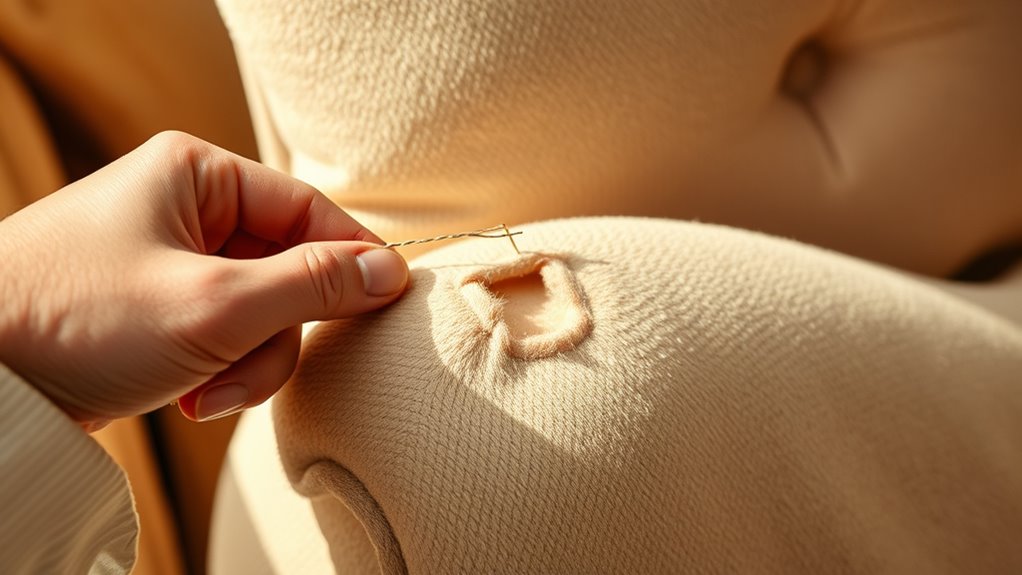

To fix minor upholstery damage like tears or loose stitches, start by cleaning the area with a mild fabric cleaner and let it dry thoroughly. Use a needle and matching thread to sew small tears from the inside, keeping stitches tight and even. For loose stitches, re-stitch carefully to reinforce the fabric. If needed, add a fabric patch behind larger tears for extra strength. Keep going to discover more tips for seamless, professional results.

Get wellness gear delivered free — and shop member deals
- Fast, free delivery on millions of items
- Access to Prime Big Deal Days deals on October 6–7
- Prime Video, Amazon Music and more included
Key Takeaways
- Inspect tears and loose stitches to assess fabric condition and determine appropriate repair methods.
- Clean the upholstery with a mild fabric cleaner to reveal true color and ensure proper adhesion.
- Use matching thread and small, tight stitches to sew tears from the inside, following original stitching patterns.
- Reinforce large tears with fabric patches or adhesive for added durability and seamless repair.
- Gently clean the repaired area afterward, maintaining regular maintenance to prevent future damage.
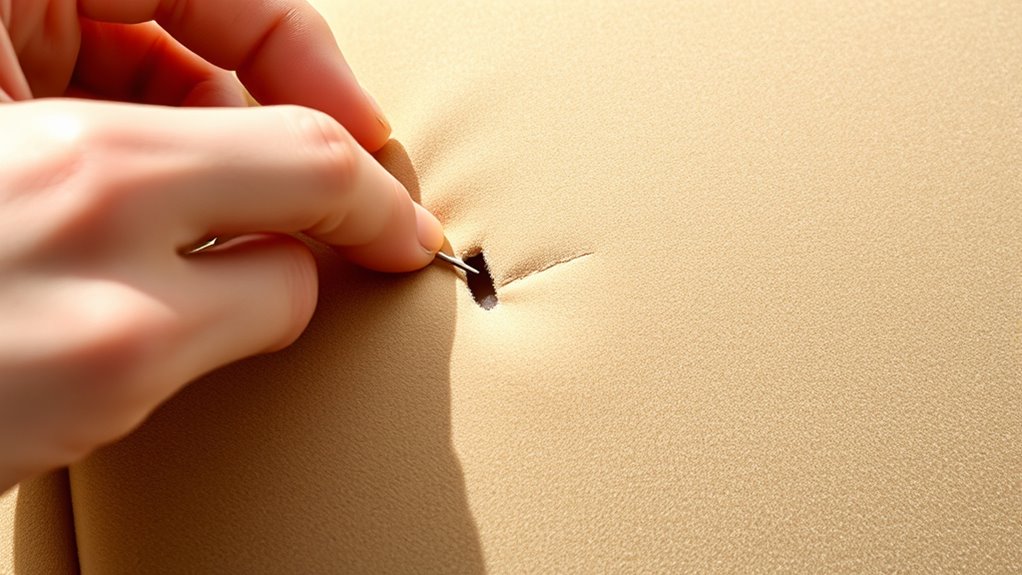
Have you ever wondered how to restore your worn-out furniture without replacing it entirely? Fixing minor upholstery damage, like tears or loose stitches, can give your furniture a fresh look without the hassle and cost of a full replacement. The key lies in understanding how to handle these small issues effectively. When addressing tears, start by carefully inspecting the damaged area to determine if the fabric around it has become frayed or weakened. If so, you might need to perform gentle fabric cleaning to remove dirt or oils that could hinder the repair process. Clean the area with a mild fabric cleaner, ensuring it’s completely dry before proceeding. This step helps you see the true color and condition of the fabric, which is essential for an accurate color match during repair. Additionally, considering the quality assessment of your upholstery can help you choose the most appropriate repair method for long-lasting results.
Next, gather the necessary tools, such as a needle, strong upholstery thread, and perhaps a fabric patch if the tear is sizable. When stitching, choose a thread color that closely matches your furniture’s fabric. This may require some patience and a bit of test stitching on an inconspicuous area or a scrap piece of fabric to ensure your color matching is precise. Using small, tight stitches, carefully sew the tear closed from the inside, keeping the stitches as even as possible for a seamless appearance. If the tear is large or the fabric is delicate, consider applying a fabric adhesive or patch behind the tear to reinforce it before stitching. This provides extra durability and prevents the tear from worsening over time.
For stitches that have come loose or pulled out, re-stitching is often enough. Ensure your stitches are tight but not so tight that they cause puckering. Take your time, and follow the original stitching pattern if possible, to maintain the upholstery’s aesthetic. After completing the repair, give the entire area a gentle fabric cleaning to remove any dirt or residue that might have accumulated during the repair process. This step also helps blend the repaired section with the rest of the furniture, making the repair less noticeable.
upholstery repair needle and thread kit
As an affiliate, we earn on qualifying purchases.
As an affiliate, we earn on qualifying purchases.
Frequently Asked Questions
Can I Repair Upholstery Tears Myself Without Prior Experience?
You can repair upholstery tears yourself, even without prior experience, if you follow the right steps. Start by securing loose stitches with a needle and thread, then use fabric dye to match the color. For larger tears, carefully remove upholstery staples and reattach the fabric with new staples. Practice on a scrap piece first to build confidence, and you’ll be surprised how manageable minor repairs can be.
What Tools Are Necessary for Minor Upholstery Repairs?
You’ll need a few essential tools for minor upholstery repairs, including a strong needle, matching thread, fabric glue, and small scissors. These tools help you fix tears or loose stitches effectively. Regular upholstery cleaning and fabric care are crucial to maintain your furniture’s appearance. Make sure to choose tools that suit your fabric type and repair needs, ensuring a smooth, professional finish without needing prior experience.
How Do I Match New Thread With Existing Upholstery Color?
To match new thread with your upholstery color, start by examining the existing thread closely under good lighting. Use color matching tools like a color chart or swatch for precise thread selection. Choose a thread that closely resembles the original shade, considering slight tonal differences. Test the thread on a hidden area first, ensuring it blends seamlessly. This approach helps your repair look clean and cohesive.
How Long Does a Typical Upholstery Repair Take?
Imagine your furniture as a story waiting to be restored. Typically, a repair takes between 30 minutes to a few hours, depending on the damage’s complexity. Using the right upholstery materials and repair techniques, you can expect a quick turnaround. Small tears or loose stitches often get fixed in under an hour, while more extensive damage might extend your project. Trust your skills or a professional to bring your furniture back to life swiftly.
Is Professional Repair More Cost-Effective Than DIY Fixes?
Professional repair can be more cost-effective than DIY fixes if you consider the skill requirements and potential for better results. While DIY might seem cheaper upfront, mistakes can lead to higher costs and repeated repairs. Professionals have the expertise to fix tears or loose stitches quickly and efficiently, saving you time and avoiding costly errors. Ultimately, a detailed cost comparison shows professional repairs often offer better value for minor upholstery damage.
fabric patch for furniture tears
As an affiliate, we earn on qualifying purchases.
As an affiliate, we earn on qualifying purchases.
Conclusion
Now that you know how to mend tears and tighten loose stitches, your furniture can regain its former glory. Think of your upholstery as a canvas—you hold the brush to restore its beauty. With patience and a steady hand, you’ll turn minor damage into a masterpiece of care. Remember, every stitch you sew is a step toward preserving your cherished furniture, proving that even small repairs can weave a story of love and renewal.
As an affiliate, we earn on qualifying purchases.
As an affiliate, we earn on qualifying purchases.
Fall Picks
fall essentials
As an affiliate, we earn on qualifying purchases.