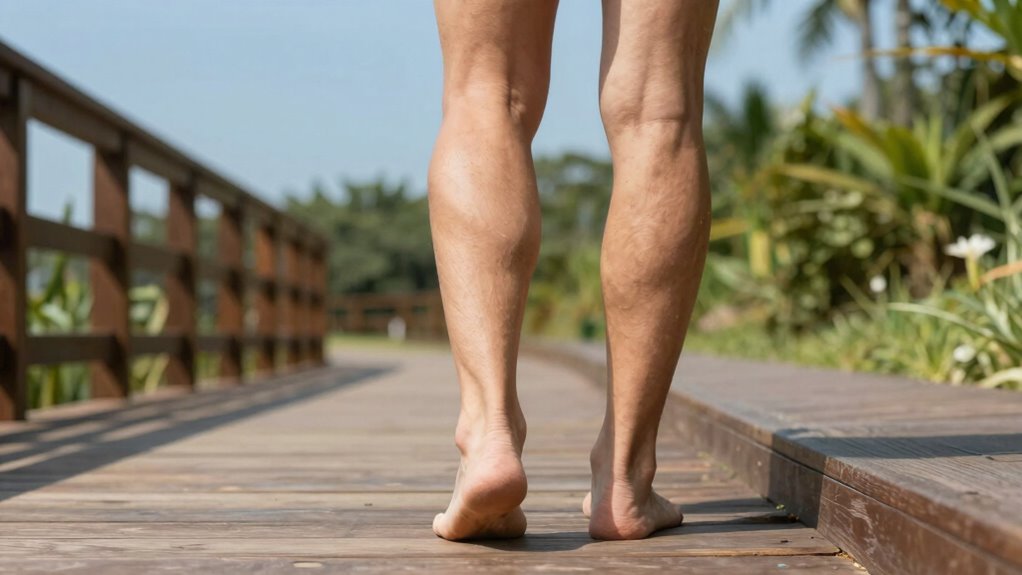

Calf stretch programs focus on enhancing your muscle flexibility to prevent injuries and improve movement efficiency. They target tight calf muscles, helping you avoid common issues like strains or Achilles tendinitis, especially during activity. Consistent stretching keeps your calves supple, supports better circulation, and prepares your muscles for sudden or intense movements. By sticking with these routines, you’ll boost your overall mobility and resilience, setting the stage for safer movement—if you’re curious about how to get the most from these exercises, keep exploring.
Key Takeaways
- Improve calf muscle flexibility to enhance movement efficiency and prevent stiffness.
- Reduce injury risk by maintaining proper muscle elasticity during physical activities.
- Promote long-term mobility, stability, and overall muscle health through consistent stretching.
- Support athletic performance and daily function by ensuring calves can move through full range of motion.
- Prevent common injuries like Achilles tendinitis and strains by maintaining balanced and resilient calf muscles.
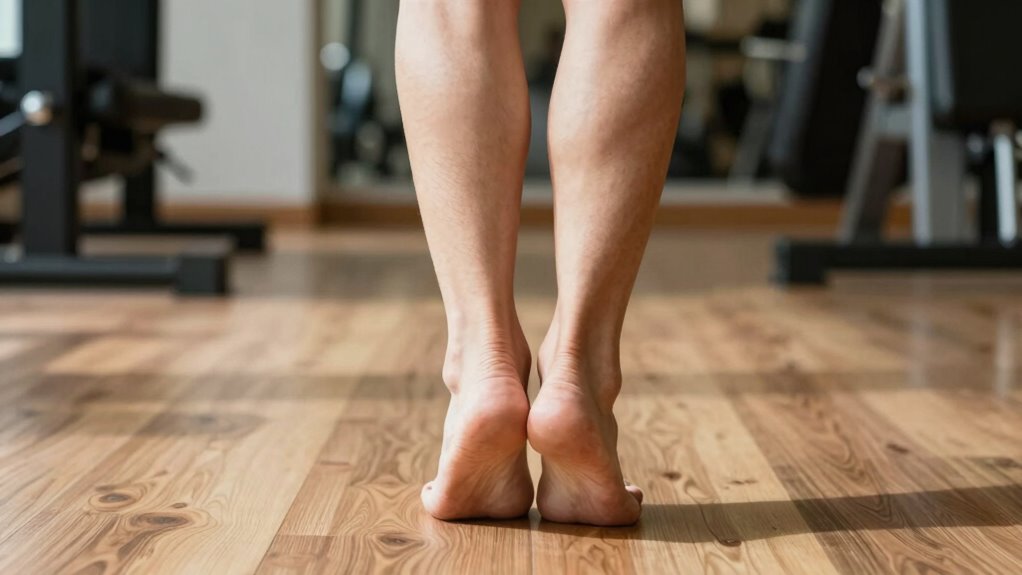
If you spend a lot of time on your feet or engage in activities like running or cycling, incorporating calf stretch routines into your regimen can make a noticeable difference. These routines are designed to target your calf muscles, helping you improve muscle flexibility and reduce the risk of injury. When your calves are tight, it can lead to strain not only in your legs but also in your knees and hips, which may cause discomfort or even long-term problems. Stretching regularly helps loosen those muscles, making your movements more efficient and less prone to pulling or tearing.
Regular calf stretching boosts flexibility and prevents injuries during running, cycling, or long periods on your feet.
The fundamental goal of calf stretch routines is to enhance muscle flexibility. When your calves are flexible, they work more effectively during physical activities, allowing you to move through a full range of motion without resistance. This flexibility isn’t just about feeling good; it’s an essential component of overall athletic performance and daily function. As you stretch, you lengthen the muscle fibers, which helps prevent them from becoming stiff and tight over time. This ongoing process keeps your calves supple and ready for activity, especially when you’re pushing your body during intense workouts or long periods of standing.
Injury prevention is another key focus of calf stretch routines. Tight calves are a common culprit behind various injuries, such as Achilles tendinitis, calf strains, or plantar fasciitis. When your muscles are too tight, they’re less capable of absorbing shock and can lead to overstretching or tearing. Regular stretching helps mitigate this risk by maintaining proper muscle elasticity. It prepares your muscles to handle sudden movements or increased loads, reducing the likelihood of strains or tears during vigorous activities or even everyday movements. Additionally, proper stretching can improve muscle elasticity, which is crucial for overall movement efficiency. Incorporating consistent stretching into your routine can also promote better circulation and faster recovery after exercise.
These routines often include simple, targeted stretches that you can do anywhere—whether at home, at the gym, or during a break at work. The goal isn’t just to stretch but to do so consistently and correctly, ensuring that your muscles stay balanced and resilient. Over time, you’ll notice not only improvements in flexibility but also better posture and stability, which are essential for both athletic pursuits and daily life. When you commit to a calf stretch routine, you’re investing in your body’s longevity, making it easier to stay active and avoid setbacks caused by preventable injuries. In essence, these routines are about more than just stretching—they’re about empowering your body to move safely and efficiently for the long haul.

Gaiam Restore Resistance Band Stretching Strap – Stretch Legs & Arms with Medium Resistance Loops, Multiple Holds for Increased Range of Motion, Flexibility or Strength Training
Stretching Strap – The Gaiam Restore stretch strap is the ideal resistance loop band for pre- and post-workout…
As an affiliate, we earn on qualifying purchases.
As an affiliate, we earn on qualifying purchases.
Frequently Asked Questions
How Long Should I Hold Each Calf Stretch?
You should hold each calf stretch for about 15 to 30 seconds to improve calf flexibility effectively. To see progress, aim for 2 to 3 repetitions per stretch, ensuring you don’t rush the stretch duration. This helps your muscles relax and lengthen properly. Consistency is key, so make stretching a regular part of your routine, gradually increasing stretch duration as your flexibility improves.
Can Calf Stretches Prevent All Types of Lower Leg Injuries?
Calf stretches can be a helpful part of injury prevention strategies, but they don’t guarantee to prevent all lower leg injuries. Their effectiveness depends on consistent practice and proper technique. While stretching improves flexibility and reduces strain, other factors like strengthening and overall conditioning also matter. You should incorporate a well-rounded approach to lower leg health, understanding that calf stretches are just one piece of the injury prevention puzzle.
Are There Specific Stretches for Different Foot Arch Types?
Yes, specific stretches can target different foot arch types. For high arches, you might focus on stretch variations that enhance flexibility and arch support, like calf stretches combined with arch rolls. For flat feet, gentle stretches that improve foot flexibility and strengthen the arch are beneficial. Incorporating arch support during these stretches can improve effectiveness. Tailoring your routine ensures you effectively address your foot’s unique structure and needs.
How Often Should I Incorporate Calf Stretches Into My Routine?
You should incorporate calf stretches into your routine at least 3-4 times a week to improve calf flexibility. Hold each stretch for about 30 seconds to 1 minute, ensuring you feel a gentle stretch without pain. Consistency is key, so aim for stretching duration that allows your muscles to relax and lengthen gradually. Regular stretching helps prevent injury and boosts overall flexibility, keeping your calves healthy and responsive.
Do Calf Stretches Help Improve Athletic Performance?
Think of your calves as the foundation of a building—strong and flexible muscles support your entire performance. Calf stretches improve muscle flexibility, which can lead to better agility and speed. They also aid in injury prevention by reducing strain during athletic activities. Regular stretching helps you move more efficiently, making you quicker on your feet and less prone to setbacks, ultimately boosting your overall athletic performance.

ProsourceFit High Density Foam Rollers 12 – inches long. Firm Full Body Athletic Massager for Back Stretching, Yoga, Pilates, Post Workout Trigger Point Release, Black
EXTRA SUPPORT – Firm high-density foam structure of the half-round foam rollers provide extra support for all body…
As an affiliate, we earn on qualifying purchases.
As an affiliate, we earn on qualifying purchases.
Conclusion
In the end, calf stretch programs aim to unleash your body’s full potential, transforming your mobility and preventing injuries like a magician pulling endless scarves from a hat. By consistently stretching, you’re not just easing tight muscles—you’re unlocking a wave of flexibility that can turn your daily movements into a smooth, effortless dance. Stick with it, and soon your calves will be as limber as a cat on a hot tin roof, ready to conquer any challenge that comes your way.

comness Foot and Calf Stretcher-Stretching Strap For Plantar Fasciitis, Heel Spurs, Foot Drop, Achilles Tendonitis & Hamstring. Yoga Foot & Leg Stretch Strap. (Black)
Alleviate pain effectively: The foot and calf stretcher helps improve blood circulation by stretching the plantar fascia and…
As an affiliate, we earn on qualifying purchases.
As an affiliate, we earn on qualifying purchases.

Vive Foot Rocker – Calf Stretcher for Achilles Tendinitis, Heel, Feet, Shin Splint, Plantar Fasciitis Pain Relief – Stretches Strained Leg Muscle – Ankle Wedge Stretch Improves Flexibility (Standard)
EFFECTIVE PAIN RELIEF: Alleviates discomfort from plantar fasciitis, Achilles tendonitis, arch pain, ankle strain, and tight calves. Improves…
As an affiliate, we earn on qualifying purchases.
As an affiliate, we earn on qualifying purchases.